
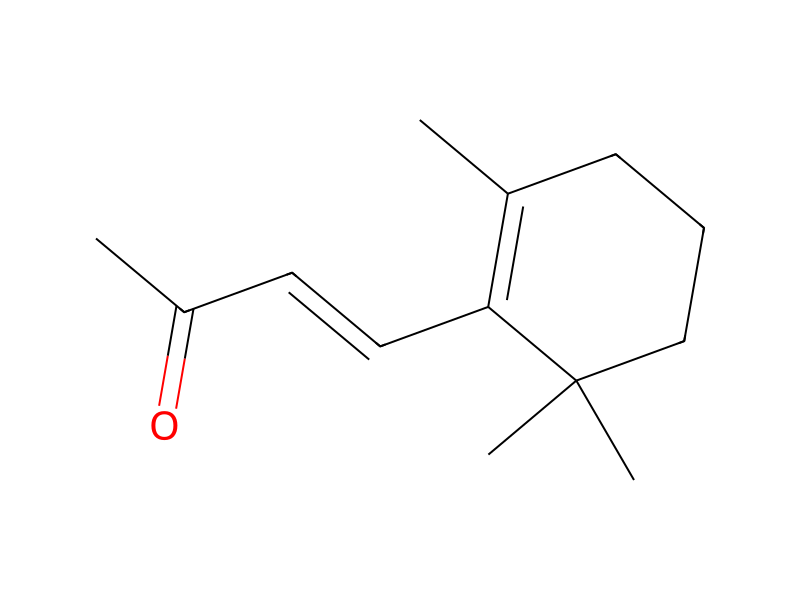
기본 정보
- 표준 SMILES
CC(=O)/C=C/C1=C(C)CCCC1(C)C- InChIKey
PSQYTAPXSHCGMF-BQYQJAHWSA-N- 분자식
- C13H20O
- 평균 분자량
- 192.3 g/mol
- 단동위원소 질량
- 192.15141526
개요
Beta-ionone is a colorless to light yellow liquid with an odor of cedar wood. In very dilute alcoholic solution the odor resembles odor of violets. Used in perfumery.
이름 및 식별자
- 우선 이름
- I2-Ionone
- IUPAC
- (E)-4-(2,6,6-trimethylcyclohexen-1-yl)but-3-en-2-one
- 현지명
- 베타-아이온온
- 영어명
- β-Lonone
- 분자식
- C13H20O
- 분자량
- 192.3
이름 및 동의어
BETA-IONONE(E)-beta-Iononetrans-beta-Ionone(3E)-4-(2,6,6-trimethylcyclohex-1-en-1-yl)but-3-en-2-one(E)-4-(2,6,6-trimethylcyclohexen-1-yl)but-3-en-2-one4-(2,6,6-Trimethyl-1-cyclohexenyl)-3-buten-2-oneFEMA No. 2595DTXSID4021769A7NRR1HLH6(E)-4-(2,6,6-Trimethyl-1-cyclohexen-1-yl)-3-buten-2-one3-Buten-2-one, 4-(2,6,6-trimethyl-1-cyclohexen-1-yl)-, (E)-NSC-46137
이름 더 보기
베타-아이온온베타-이오논OIL(E)-β-IononeIONONE BETAB-IONONEtrans-β-IononeFEMA 2595(E)-4-(2,6,6-triMethylcyclohex-1-en-1-yl)but-3-en-2-one3-BUTEN-2-ONE, 4-(2,6,6-TRIMETHYL-1-CYCLOHEXEN-1-YL)
NSC-402758DTXCID901769CHEBI:32325[E]-4-[2,6,6-trimethyl-1-cyclohexen-1-yl]-3-buten-2-oneI2-IononeRefChem:5601201-224-3238-969-9
데이터베이스 식별자
- CAS
14901-07-6、79-77-6、85949-43-5- PubChem CID
- 638014
- DTXSID
DTXSID4021769- ChEMBL
CHEMBL559945- ChEBI
CHEBI:32325- UNII
- A7NRR1HLH6
- EC Number
- 201-224-3、288-959-3
- Nikkaji
- J4.392C、J70.102E
물성
구조 계산 물성
- XLogP
- 2.9
- 극성 표면적
- 17.1 Ų
- 수소 결합 공여자 수
- 0
- 수소 결합 수용자 수
- 1
- 회전 가능 결합 수
- 2
- 무거운 원자 수
- 14
- 형식 전하
- 0
- 복잡도
- 292
실험 및 물리화학적 성질
Fragrances
Fragrance Ingredient ((E)-.beta.-Ionone) -> IFRA transparency List
Fragrance Ingredient (beta-Ionone) -> IFRA transparency List
LogPlog Kow = 4.0 at 25 °C
Odor
Warm woody, dry, and fruity odor
Odor reminiscent of cedar wood; violet-like upon dilution
TasteWoody, berry, floral, green and fruity
Food AdditivesFLAVORING AGENT OR ADJUVANT -> FDA Substance added to food
Density
0.9462 (NTP, 1992) - Less dense than water; will float
0.9461 at 20/4 °C
0.940-0.947
Flavoring AgentsEU Flavoring substances
Color/FormColorless to pale, straw-colored liquid
Solubility
Slightly soluble (NTP, 1992)
In water, 169 mg/L at 25 °C
Soluble in alcohol, most fixed oils, propylene glycol. Insoluble in glycerin
Miscible with absolute alcohol. Soluble in 2 to 3 parts of 70% alcohol, ether, chloroform, benzene. Very slightly soluble in water. /mixed ionone isomers/
soluble in alcohol, propylene glycol, most fixed oils; insoluble in glycerol and water
1 ml in 3 ml 70% alcohol (in ethanol)
Flash Point
greater than 235 °F (NTP, 1992)
> 113 °C (> 235 °F) - closed cup
Boiling Point
284 °F at 18 mmHg (NTP, 1992)
271 °C at 760 mm Hg
Pale yellow to yellow liquid; Specific gravity: 0.933-0.937 25/25 °C; Boiling point: 126-128 °C at 12 mm Hg /mixed ionone isomers/
266.00 to 269.00 °C. @ 760.00 mm Hg
239 °C
DecompositionWhen heated to decomposition it emits acrid smoke and fumes.
물리화학적 성질
- 녹는점
- -49 °C · -49°C
- 끓는 점
- 126 · 126-128 °C12 mm Hg(lit.)
- 밀도
- 0.945 g/mL · 0.945 g/mL at 25 °C(lit.)
- 증기압
- 1 hPa · <1 hPa (25 °C)
- FEMA
- 2595 · 2595 | BETA-IONONE
- 굴절률
- 20 · n20/D 1.52(lit.)
- 인화점
- 230 °F · 230 °F
- 저장 조건
- 30 °C · Store below +30°C.
- 용해도
- 0.11 g/l · 0.11g/l 불용성
- 물리적 상태
- 기름
- 색상
- 무색투명~연황색
- 냄새
- 10 % · 디프로필렌 글리콜 중 10.00%. 드라이 파우더리 플로럴 우디 오리스 베리 시디
- 냄새 유형
- 꽃향기
- 수용성
- 물에 용해됩니다(20°C에서 0.11mg/mL).
- JECFA Number
- 389 · 389
- Merck
- 14 · 14,5056
- BRN
- 1909544 · 1909544
- Henry's Law Constant
- 1.2 · 1.2×100 mol/(m3Pa) at 25℃, Fichan et al. (1999)
- Dielectric constant
- 12 · 12.0(20℃)
- 안정성
- 감광성
- 주요 응용
- 청소용품화장품향료 및 향음식 및 음료개인 위생 관리
- 화장품 원료 기능
- 향수수렴제
- InChI
- 1S/C13H20O/c1-10-6-5-9-13(3,4)12(10)8-7-11(2)14/h7-8H,5-6,9H2,1-4H3/b8-7+
- InChIKey
- PSQYTAPXSHCGMF-BQYQJAHWSA-N
- SMILES
- O=C(C)\C=C\C1=C(CCCC1(C)C)C
- LogP
- 4 at · 4 at 25℃
- NIST
- 3 · 3-Buten-2-one, 4-(2,6,6-trimethyl-1-cyclohexen-1-yl)-, (E)-(79-77-6)
- EPA
- .beta.-Ionone (79-77-6)
화학적 성질
Clear Colorless to Pale Yellow Oil
안전 및 규제
GHS 분류
GHS Classification
This chemical does not meet GHS hazard criteria for 2.2% (40 of 1855) of reports.
H411 (97.8%): Toxic to aquatic life with long lasting effects [Hazardous to the aquatic environment, long-term hazard]
P273, P391, and P501 (click each P-code to see the statement)
Aggregated GHS information provided per 1855 reports by companies from 8 notifications to the ECHA C&L Inventory.
H401: Toxic to aquatic life [Hazardous to the aquatic environment, acute hazard]
P273, P391, and P501 (click each P-code to see the statement)
유해성 정보
Regulatory Information
Chemical: 3-Buten-2-one, 4-(2,6,6-trimethyl-1-cyclohexen-1-yl)-, (E)-
Regulation (EC) No 1831/2003 (amended)
3-Buten-2-one, 4-(2,6,6-trimethyl-1-cyclohexen-1-yl)-, (3E)- is listed on the EPA's Chemical Data Reporting (CDR) system. Manufacturers and importers of 3-Buten-2-one, 4-(2,6,6-trimethyl-1-cyclohexen-1-yl)-, (3E)- are required to report information about their production and use of this chemical to the EPA under the Toxic Substances Control Act (TSCA). (40 eCFR Part 711)
Status: Active Update: 14-07-2022 https://echa.europa.eu/registration-dossier/-/registered-dossier/13900
beta-Ionone: Does not have an individual approval but may be used under an appropriate group standard
3-Buten-2-one, 4-(2,6,6-trimethyl-1-cyclohexen-1-yl)-, (3E)-: Does not have an individual approval but may be used under an appropriate group standard
Other Safety InformationIMAP assessments - Ionones: Human health tier II assessment
Fire PotentialCombustible liquid.
Health HazardsACUTE/CHRONIC HAZARDS: Toxic. May cause allergic reaction. (NTP, 1992)
FDA Requirements
beta-Ionone is a food additive permitted for direct addition to food for human consumption as a synthetic flavoring substance and adjuvant in accordance with the following conditions: a) they are used in the minimum quantity required to produce their intended effect, and otherwise in accordance with all the principles of good manufacturing practice, and b) they consist of one or more of the following, used alone or in combination with flavoring substances and adjuvants generally recognized as safe in food, prior-sanctioned for such use, or regulated by an appropriate section in this part.
Reactive GroupKetones
Reactivity ProfileBETA-IONONE may react vigorously with oxidizing agents. May react exothermically with reducing agents to release hydrogen gas.
Air and Water ReactionsSlightly water soluble (NTP, 1992).
NFPA Hazard Classification
0 - Materials that, under emergency conditions, would offer no hazard beyond that of ordinary combustible materials.
1 - Materials that must be preheated before ignition can occur. Materials require considerable preheating, under all ambient temperature conditions, before ignition and combustion can occur.
0 - Materials that in themselves are normally stable, even under fire conditions.
Toxic Combustion ProductsSpecial hazards arising from the substance or mixture: Carbon oxides.
Hazard Classes and Categories
Aquatic Chronic 2 (97.8%)
Skin irritation - category 2
Hazardous to the aquatic environment (Acute) - Category 2
Hazardous Reactivities and IncompatibilitiesIncompatible materials: Strong oxidizing agents.
안전 및 보호
Fire FightingTo extinguish a fire involving this chemical you may use a dry chemical, carbon dioxide, foam or halon extinguisher; a water spray may also be used. (NTP, 1992)
First Aid
EYES: First check the victim for contact lenses and remove if present. Flush victim's eyes with water or normal saline solution for 20 to 30 minutes while simultaneously calling a hospital or poison control center. Do not put any ointments, oils, or medication in the victim's eyes without specific instructions from a physician. IMMEDIATELY transport the victim after flushing eyes to a hospital even if no symptoms (such as redness or irritation) develop.
Fire Fighting Procedures
Suitable extinguishing media: Use water spray, alcohol-resistant foam, dry chemical or carbon dioxide.
Advice for firefighters: Wear self-contained breathing apparatus for firefighting if necessary.
Extinguishing methods: Alcohol foam. Water or foam may cause frothing.
Storage ConditionsConditions for safe storage, including any incompatibilities: Keep container tightly closed in a dry and well-ventilated place. Containers which are opened must be carefully resealed and kept upright to prevent leakage.
Cleanup Methods
ACCIDENTAL RELEASE MEASURES: Personal precautions, protective equipment and emergency procedures: Use personal protective equipment. Avoid breathing vapors, mist or gas. Ensure adequate ventilation.; Environmental precautions: Prevent further leakage or spillage if safe to do so. Do not let product enter drains. Discharge into the environment must be avoided.; Methods and materials for containment and cleaning up: Soak up with inert absorbent material and dispose of as hazardous waste. Keep in suitable, closed containers for disposal.
Nonfire Spill Response
SMALL SPILLS AND LEAKAGE: If you spill this chemical, use absorbent paper to pick up all liquid spill material. Your contaminated clothing and absorbent paper should be sealed in a vapor-tight plastic bag for eventual disposal. Solvent wash all contaminated surfaces with alcohol followed by washing with a strong soap and water solution. Do not reenter the contaminated area until the Safety Officer (or other responsible person) has verified that the area has been properly cleaned.
Disposal Methods
SRP: Recycle any unused portion of the material for its approved use or return it to the manufacturer or supplier. Ultimate disposal of the chemical must consider: the material's impact on air quality; potential migration in air, soil or water; effects on animal, aquatic and plant life; and conformance with environmental and public health regulations. If it is possible or reasonable use an alternative chemical product with less inherent propensity for occupational harm/injury/toxicity or environmental contamination.
Product: Offer surplus and non-recyclable solutions to a licensed disposal company. Contact a licensed professional waste disposal service to dispose of this material. Contaminated packaging: Dispose of as unused product.
Preventive Measures
Precautions for safe handling: Avoid contact with skin and eyes. Avoid inhalation of vapor or mist.
Appropriate engineering controls: Handle in accordance with good industrial hygiene and safety practice. Wash hands before breaks and at the end of workday.
Gloves must be inspected prior to use. Use proper glove removal technique (without touching glove's outer surface) to avoid skin contact with this product. Dispose of contaminated gloves after use in accordance with applicable laws and good laboratory practices. Wash and dry hands.
Personal Protective Equipment (PPE)
RECOMMENDED RESPIRATOR: Where the neat test chemical is weighed and diluted, wear a NIOSH-approved half face respirator equipped with an organic vapor/acid gas cartridge (specific for organic vapors, HCl, acid gas and SO2) with a dust/mist filter.
Eye/face protection: Safety glasses with side-shields conforming to EN166. Use equipment for eye protection tested and approved under appropriate government standards such as NIOSH (US) or EN 166(EU).
Skin protection: Handle with gloves.
Body Protection: Impervious clothing. The type of protective equipment must be selected according to the concentration and amount of the dangerous substance at the specific workplace.
Respiratory protection: Where risk assessment shows air-purifying respirators are appropriate use a full-face respirator with multipurpose combination (US) or type ABEK (EN 14387) respirator cartridges as a backup to engineering controls. If the respirator is the sole means of protection, use a full-face supplied air respirator. Use respirators and components tested and approved under appropriate government standards such as NIOSH (US) or CEN (EU).
독성 정보
Interactions
A possible role of metabolic activation by cytochrome P450 (P450) in thioacetamide-induced hepatotoxicity was investigated in male BALB/c mice. The mice were pretreated with the P450 inducer, beta-ionone, subcutaneously at 600 mg/kg, 72 and 48 hr prior to an intraperitoneal administration of either 100 or 200 mg/kg of thioacetamide. The elevated activities of serum alanine aminotransferase and serum aspartate aminotransferase by thioacetamide were greatly potentiated by the pretreatment with beta-ionone. Moreover, the potentiation of thioacetamide-induced hepatotoxicity was also observed in the histopathological examination of livers. The hepatic necrosis by thioacetamide was potentiated when mice were pretreated with beta-ionone. In liver microsomes, the activities of P450 2B-specific pentoxyresorufin O-depentylase and benzyloxyresorufin O-debenzylase were significantly induced by the treatment with beta-ionone. Beta-ionone also induced other P450-associated monooxygenases. Because the pretreatment with beta-ionone was not hepatotoxic at the dose inducing P450s. our present results suggest that beta-ionone may be a useful model inducer of P450 enzyme(s) in studying toxic mechanism of certain chemicals which require metabolic activation by P450s in mice.
Female ICR mice were treated with cocaine either alone or in combination with one of several cytochrome P450 (CYP) inducers, i.e. phenobarbital, beta-ionone, dexamethasone and beta-naphthoflavone. Cocaine-induced hepatotoxicity was first observed by pretreatment with phenobarbital, beta-ionone or dexamethasone in accordance with significant elevation of cocaine N-demethylation, the first step of cocaine bioactivation. The hepatic lesions occured in the periportal region (zone 1) by phenobarbital and beta-ionone and in the perivenular region (zone 3) by dexamethasone. The activities of the enzyme specific for CYP isozyme were determined to elucidate the effects of pretreatment with CYP inducers. Beta-naphthoflavone induced CYP1A and 2B but had no effects on hepatotoxicity by cocaine. On the other hand, beta-ionone enhanced hepatotoxicity without induction of CYP3A. Activities of cocaine N-demethylase correlated well with CYP2A (r=0.83) and CYP2B (r=0.81). Cocaine N-demethylation was inhibited particularly by addition of the CYP2A specific inhibitor, 8-methoxypsoralen. Moreover, pretreatment with 8-methoxypsoralen produced a marked inhibition of the hepatotoxicity induced by cocaine in phenobarbital-treated mice. These results suggest that cocaine-induced hepatotoxicity in female mice was mediated in part by CYP2A, participating in cocaine N-demethylation.
beta-Ionone demonstrates potent anticancer activity both in vitro and in vivo. We determined tumor incidence and the number of rats bearing tumors as well as cell proliferation and apoptosis in a rat mammary cancer model induced by 7, 12-dimethylbenz[a]anthracene (DMBA). Rats were fed an AIN-76A diet containing beta-ionone (0, 9, 18 or 36 mmol/kg), starting 2 weeks before DMBA administration and continuing for 24 weeks. A dose-dependent inhibition of mammary carcinogenesis by dietary beta-ionone was observed. Corresponding tumor incidence values were 82.1, 53.3, 25.9 and 10.0% (p < 0.01 or 0.05). Time to tumor appearance increased and tumor multiplicity decreased with increasing dietary beta-ionone. Histopathological and immunohistochemical evaluations of tumors were performed on the 64, 31, 15 and 3 tumors, respectively, identified in rats from the respective groups of 30. The proportions of adenocarcinomas, adenomas and benign masses were equally distributed in the latter group. In proportions within the other groups, the proportions of adenocarcinomas and benign masses decreased and increased with increasing dietary beta-ionone. Proliferating cell nuclear antigen (PCNA), cyclin D1 and Bcl-2 expression decreased, and Bax expression and nuclear fragmentation increased with increasing dietary beta-ionone. These results demonstrate the potent capacity of dietary beta-ionone to suppress DMBA-initiated mammary cancer in rats.
Beta-ionone (BI) is a degraded (C 13) sesquiterpene found in plant essential oils. It has been used in the synthesis of perfume chemicals and vitamin A. Recently, it was reported that BI is a rather potent in vitro inhibitor of CYP2B1-catalysed reactions in rat liver microsomes. The present study was performed to investigate whether inhibition of CYP2B1 reactions by BI could lead to an attenuation of cyclophosphamide (CP)-induced embryotoxicity in the rat. In a preliminary experiment, a dose-dependent prolongation of pentobarbital sleeping time in male and female Wistar rats suggested that BI inhibits CYP2B1 in vivo as well. In a second experiment, rats were treated by gavage with BI (0, 250, 500, 750 or 1000 mg/kg body wt) 45 min prior to a subcutaneous injection of either CP (7.5 mg/kg body wt) or its vehicle (saline) on day 11 of pregnancy. BI alone, at the highest dose tested, caused a high proportion of resorptions. Lower doses of BI, however, clearly attenuated CP-induced embryolethality and teratogenicity. These results seem to support the view that, as far as rats are concerned, CYP2B1 plays an important role in the conversion of CP into its embryolethal and teratogenic metabolites.
Environmental Fate
TERRESTRIAL FATE: Based on a classification scheme(1), an estimated Koc value of 670(SRC), determined from a structure estimation method(2), indicates that beta-ionone is expected to have low mobility in soil(SRC). Volatilization of beta-ionone from moist soil surfaces is expected to be an important fate process(SRC) given an estimated Henry's Law constant of 8.1X10⁻⁵ atm-cu m/mole(SRC), derived from its vapor pressure, 0.054 mm Hg(3), and water solubility, 169 mg/L(3). Even though the vapor pressure is low environmentally at standard temperature and pressure, there is a detectable odor; therefore, beta-ionone may volatilize from dry soil(SRC). A 79% of theoretical BOD using activated sludge in the OECD 301F test(5) suggests that biodegradation is an important environmental fate process in soil(SRC). beta-Ionone was also classified as readily biodegradable by the results of a CO2-evolution test where beta-ionone achieved 46% and 73% CO2 evolution after 7 and 28 days respectively(5). beta-Ionone absorbs at wavelengths >290 nm(6) and, therefore, may be susceptible to direct photolysis on soil surfaces exposed to sunlight(SRC).
AQUATIC FATE: Based on a classification scheme(1), an estimated Koc value of 670(SRC), determined from a structure estimation method(2), indicates that beta-ionone is expected to adsorb to suspended solids and sediment(SRC). Volatilization from water surfaces is expected(3) based upon an estimated Henry's Law constant of 8.1X10⁻⁵ atm-cu m/mole(SRC), derived from its vapor pressure, 0.054 mm Hg(4), and water solubility, 169 mg/L(4). Using this Henry's Law constant and an estimation method(3), volatilization half-lives for a model river and model lake are 19 hours and 10 days, respectively(SRC). According to a classification scheme(5), an estimated BCF of 202(SRC), from its log Kow of 4.0(6) and a regression-derived equation(2), suggests the potential for bioconcentration in aquatic organisms is high(SRC). A 79% of theoretical BOD using activated sludge in the OECD 301F test(6) suggests that biodegradation is an important environmental fate process(SRC). beta-Ionone was also classified as readily biodegradable by the results of a CO2-evolution test where beta-ionone achieved 46% and 73% CO2 evolution after 7 and 28 days respectively(6). In a spiked river water die-away test, beta-ionone, at 6.28 ug/L, was degraded about 95% after 20 hours of incubation(6). beta-Ionone is not expected to undergo hydrolysis in the environment due to the lack of functional groups that hydrolyze under environmental conditions(3). beta-Ionone is an olefin and olefins in surface waters exposed to sunlight react with photo-oxidants (such as hydroxyl radicals, peroxy radicals and singlet oxygen) with a half-life on the order of 25 days(7).
ATMOSPHERIC FATE: According to a model of gas/particle partitioning of semivolatile organic compounds in the atmosphere(1), beta-ionone, which has a vapor pressure of 0.054 mm Hg at 25 °C(2), is expected to exist solely as a vapor in the ambient atmosphere. Vapor-phase beta-ionone is degraded in the atmosphere by reaction with photochemically-produced hydroxyl radicals(SRC); the half-life for this reaction in air is estimated to be 3.3 hours(SRC), calculated from its rate constant of 1.18X10⁻¹⁰ cu cm/molecule-sec at 24 deg(3). beta-Ionone is also degraded in the atmosphere by reaction with ozone and nitrate radicals. The half-life for the reaction with ozone is estimated to be 14 hours(SRC), calculated from its rate constant of 1.9X10⁻¹⁷ cu cm/molecule-sec at 24 °C(3). The half-life for the reaction with nitrate radicals is estimated to be 0.8 hours(SRC), calculated from its rate constant of 9.4X10⁻¹² cu cm/molecule-sec at 24 °C(4). The nitrate radical (NO3) is the dominant atmospheric oxidant during the night-time in most atmospheric environments(5), therefore, night-time degradation appears to be a major fate process for beta-ionone(SRC). beta-Ionone absorbs at wavelengths >290 nm(6) and, therefore, may be susceptible to direct photolysis by sunlight(SRC).
Food Survey Values
In addition to variety of fruits, beta-ionone has detected in milk powder, beef, cognac, whiskies, grape wines, tea, rice bran, buckwheat, and corn oil(1). beta-Ionone was detected in popcorn at a concentration of 2 ug/kg(2). beta-Ionone was detected in the volatile compounds from edible Korean Chamchwi (Aster scaber Thunb)(3).
Toxicity Summary
IDENTIFICATION AND USE: Beta-ionone (BI) is a colorless to pale, straw-colored liquid. BI is of use, not only in perfumery, but also as a key intermediate in the synthesis of Vitamins A, E, and K. HUMAN EXPOSURE AND TOXICITY: At 1% BI produced no irritation or sensitization in patients. At 5% concentration, 2 patients showed questionable positive irritation reactions, but there was no sensitization. ANIMAL STUDIES: No evidence of sensitization was observed in guinea pigs. In rabbits application of neat beta-ionone produced very slight to well-defined erythema on the abraded and intact skin at 24 hr and well defined erythema at 72 hr. Very slight conjunctival irritation was observed in all three rabbits at 0, 1, 2, and 4 hr with neat BI. In 90 day feeding study in rats BI did not produce adverse effects. In development study in BI-treated pregnant rats compared to the untreated controls, the uterus weight, the ratio of resorptions per implantations and the percentage of resorptions per implantation per litter were substantially increased, and the ratio of live fetuses per implantations per litter was drastically decreased with 1000 mg/kg; with 250, 500 and 750 mg/kg, no effects were produced. BI exhibited no mutagenic activity in Salmonella typhimurium (strains TA98, TA100, TA1535 and TA1537) at concentrations up to approximately 180 ug/plate with and without metabolic activation. ECOTOXICITY STUDIES: Ultrastructural examination by transmission electron microscopy indicated that the thylakoids were distorted, and the thylakoid membrane stacks began to collapse when M. aeruginosa NIES-843 was exposed to BI at a concentration of 22.5 and 33.75 mg/L.
Average Daily IntakeUS per capita intake of beta-ionone was 110 ug/day in 1989(1). Individual: 0.001709 mg/kg/day(2).
Ecotoxicity Excerpts
/AQUATIC SPECIES/ In order to explore the potential targets of toxicity of beta-ionone on the photosynthetic system of Microcystis aeruginosa, the polyphasic rise in chlorophyll a (Chl a) fluorescence transient and transcript expression for key genes in photosystem II (PSII) of M. aeruginosa NIES-843 were studied. The EC50 value of beta-ionone on M. aeruginosa NIES-843 was found to be 21.23+/-1.87 mg/L. It was shown that beta-Ionone stress can lead to a decrease in pigment content of M. aeruginosa NIES-843 cells, and that carotenoids were more sensitive to beta-ionone stress than Chl a. The normalized Chl a fluorescence transients were slightly decreased at 6.67 and 10 mg/L beta-ionone, but significantly increased at 15, 22.5 and 33.75 mg/L. There was no significant variation on transcript expression of psbA and psbO at a concentration of 6.67 mg/L beta-ionone, but they were down-regulated at 22.5 mg/L. Ultrastructural examination by transmission electron microscopy indicated that the thylakoids were distorted, and the thylakoid membrane stacks began to collapse when M. aeruginosa NIES-843 was exposed to beta-ionone at a concentration of 22.5 and 33.75 mg/L. Our results indicate that the reaction center of PS II and the electron transport at the acceptor side of PS II are the targets responsible for the toxicity of beta-ionone on the PS II of M. aeruginosa NIES-843.
Plant Concentrations
beta-Ionone occurs in different types of plants, such as tobacco, the rutacean Boronia megastigma, the caryophyllacean Cerastium candidissimum, the cistacean Cistus monspeliensis, the brassicacean Lepidium meyenii, the fabacean Medicago marina, the oleacean Osmanthus fragrans, the rosacean Rosa bourboniana, the labiatean Thymus serpyllum and in different algae species(1). Apricots (Prunus armeniaca L.) and plums (Prunus salicina Lindl.) were found to contain beta-ionone concentrations of 3-437 ug/kg of fresh fruit tissue(2). beta-Ionone was detected in paprika oleoresin at a concentration of 7.9 mg/kg(3). beta-Ionone was identified in yellow sweet corn (Zea mays var. saccharat)(4).
beta-Ionone detections in plants(1).[Table#8262]
Soil Adsorption/Mobility
Using a structure estimation method based on molecular connectivity indices(1), the Koc of beta-ionone can be estimated to be 670(SRC). According to a classification scheme(2), this estimated Koc value suggests that beta-ionone is expected to have low mobility in soil.
Natural Pollution Sourcesbeta-Ionone is very widespread in nature being found in, among others, rose, osmanthus, raspberries, cherries, tobacco, carrots, and capsicums(1). beta-Ionone occurs in a wide variety of plants(2).
Human Toxicity Excerpts
/HUMAN EXPOSURE STUDIES/ In a multicenter study, extending over a three-year period, dermatological patients were tested for their sensitivity to fragrance materials. Sensitization due to beta-ionone was tested in 205 consecutive patients. Patch tests were performed with 1% and 5% beta-ionone in petrolatum using Finn Chambers on Scanpor tape applied for two days on the back of each patient. Reactions were recorded according to ICDRG /(International Contact Dermatitis Research Group)/ on days 2 and 3 or on days 2 and 4. beta-Ionone at 1% produced no irritation or sensitization. At 5% concentration, 2 patients showed questionable positive irritation reactions, but there was no sensitization
Fish/Seafood Concentrations
beta-Ionone was detected in salt-fermented big eyed herring (Harengula zunasi) and hair tail (Trichiurus japonica) viscera at respective concentrations of 463 and 923 ng/g; samples were obtained from fish market in Masan, Korea(1). beta-Ionone was detected in crabmeat (Charybdis feriatus) in the body (0.8 ug/kg) and carapace (32.2 ug/kg)(2). beta-Ionone was identified in the volatiles of clam corbicula(3).
Artificial Pollution Sources
beta-Ionone's production and use as an intermediate in the synthesis of Vitamins A, E, and K(1) and as a flavoring compound in foods(2) may result in its release to the environment through various waste streams(SRC). Its use as a fragrance ingredient in perfumery, in cosmetics and personal care products, in household cleaners and detergents(3) will result in its direct release to the environment(SRC). beta-Ionone has been identified as a component of tobacco smoke(4).
규제 정보
FDA Requirements
beta-Ionone is a food additive permitted for direct addition to food for human consumption as a synthetic flavoring substance and adjuvant in accordance with the following conditions: a) they are used in the minimum quantity required to produce their intended effect, and otherwise in accordance with all the principles of good manufacturing practice, and b) they consist of one or more of the following, used alone or in combination with flavoring substances and adjuvants generally recognized as safe in food, prior-sanctioned for such use, or regulated by an appropriate section in this part.
안전 데이터
- wgk
- 2
- tsca
- TSCA listed
- rtecs
- EN0500000
- ridadr
- UN 3082 9/PG 3
- 독성
- LD50 orally in Rabbit: 2920 mg/kg
- HS 번호
- 2914 23 00
- risk_code
- 38-51/53-36
- hazard_code
- Xi,N
- safety_code
- 61-36/37-26
- 기존화학 물질
- KE-34479
- Hazard Classifications
- Aquatic Chronic 2
- 스토리지 클래스
- 10 - Combustible liquids
화학 및 산업
약리 정보
Metabolism/Metabolites
A 3 kg male rabbit was orally administered a total of 23 g beta-ionone for 7 days (approx. 1000 mg/kg bw/day). Urine was collected daily and for 4 days after the final dose. Allylic ring oxidation and ketone reduction yielded 3-oxo-ionone, 3-oxo-beta-ionol, dihydro-3-oxo-beta-ionol, and 3-hydroxy-beta-ionol, which were detected in the urine. Unchanged beta-ionone and the glucuronic acid conjugates of 3-oxo-beta-ionol and dihydro-3-oxo-beta-ionol were also detected.
/Researchers/ fed beta-ionone to three rabbits in daily increasing doses of 2-5 g with a total dose of about 30 g in one week. In another test, feeding continued for two weeks in daily doses of 4 g, which increased to 5 g towards the end. In this schedule, the dose was not administered on some days. Urine was collected from all animals and analyzed for the presence of metabolites. The metabolites identified included 3-oxo-beta-ionone, bionol, dihydro-beta-ionol, oxy-beta-ionol, oxy-dihydro-beta-ionol, and oxy-dihydro-beta-ionone. Tetrahydro derivatives and multiple unsaturated products formed by dehydrogenation were not seen. Two separate feeding tests conducted in the spring and in the fall showed that conversion products of beta-ionone which are hydrogenated to the -hydroxyl and -carbonyl groups were excreted in the spring but not in the fall.
Cellular LocationsExtracellular
용도 및 제조
Uses
Fragrance ingredient in perfumery, in cosmetics and personal care products, in household cleaners and detergents. Flavoring agent in beverages, baked goods, and candies. /Ionone/
beta-Ionone is of use, not only in perfumery, but also as a key intermediate in the synthesis of Vitamins A, E, and K.
Reported uses (ppm):
U.S. Production
2023: 1,000,000 - <5,000,000 lb
Non-confidential 2012 Chemical Data Reporting (CDR) information on the production and use of chemicals manufactured or imported into the United States. Chemical: 3-Buten-2-one, 4-(2,6,6-trimethyl-1-cyclohexen-1-yl)-. National Production Volume: Withheld.
Consumer UsesOther
Industry UsesOther
Methods of ManufacturingBy condensing citral with acetone to form pseudoionone, which is then cyclized by acid-type reagents.
Household Products
Information on 88 consumer products that contain Beta-Ionone in the following categories is provided:
Information on 12 consumer products that contain beta-Ionone in the following categories is provided:
Use Classification
Fragrance Ingredients
Fragrance Ingredients
Flavouring Agent -> FLAVOURING_AGENT -> JECFA Functional Classes
Flavoring Agents -> JECFA Flavorings Index
Flavouring Agent -> FLAVOURING_AGENT -> JECFA Functional Classes
General Manufacturing Information
Plastics Material and Resin Manufacturing
3-Buten-2-one, 4-(2,6,6-trimethyl-1-cyclohexen-1-yl)-, (3E)-: ACTIVE
... Alpha- and beta-ionones account for 57% of the volatile components of violet flowers (Viola odorata).
응용 분야
용도An aroma compound commonly found in essential oils such as rose oil. β-Lonone is an important fragrance chemical used in perfumery. β-Ionone is effective in the chemoprevention of rat mammary carcinogenesis.
상·하류 제품 정보
상류 원료
하류 제품
공급사50 곳
国药集团化学试剂有限公司86-21-63210123 · [email protected]
Shandong chuangyingchemical Co., Ltd.18853181302 · [email protected]
河北创海生物科技有限公司+86-86-13131129325 · [email protected]
Baoji Guokang Healthchem co.,ltd+8615604608665 15604608665 · [email protected]
Dayang Chem (Hangzhou) Co.,Ltd.+86-0571-88938639 17705817739 · [email protected]
北京安司莫森技术有限公司010-82954736 13391601435 · [email protected]
上海将来实业股份有限公司400-0066400 13621662912 · [email protected]
Syntechem Co.,Ltd[email protected]
阿法埃莎(中国)化学有限公司400-6106006 · [email protected]
安耐吉化学&3A(安徽泽升科技股份有限公司)400-0056266 · [email protected]
上海瀚鸿科技股份有限公司021-54306202 13764082696 · [email protected]
成都普思生物科技股份有限公司028-85370565-229 18080489829 · [email protected]
郑州研德生物科技有限公司0371-63682289 15538176268 · [email protected]
山东西亚化学有限公司13355009207 13355009207 · [email protected]
四川库利南科技有限公司400-1166-196 18981987031 · [email protected]
天津希恩思生化科技有限公司400 638 7771 · [email protected]
Xiamen AmoyChem Co., Ltd+86-86-5926051114 · [email protected]
青岛保税区鲁联国际贸易有限公司0532-83893697 18561902820 · [email protected]
上海贤鼎生物科技有限公司4009209199 · [email protected]
无锡中坤生化科技有限公司+86 0510-85629785
上海将来实业股份有限公司400-0066400 13621662912 · [email protected]
上海将来实业股份有限公司021-61552785 · [email protected]
美岚实业(上海)有限公司021-58958189 · [email protected]
上海爱蝶实业有限公司021-58957966 18930537195 · [email protected]
四川省维克奇生物科技有限公司028-81700200 18116577057 · [email protected]
成都零六生物科技有限公司400-1166-196 13458535857 · [email protected]
广拓化学(上海)有限公司021-60899189-8001 18918189673 · [email protected]
上海麦克林生化科技股份有限公司15221275939 15221275939 · [email protected]
杭州杰恒化工有限公司0571-87396432 · [email protected]
上海有朋化工有限公司021-69005955 13701776567 · [email protected]
北京海力扬化学科技有限公司13718199399 · [email protected]
北京欣赛维化学科技有限公司010-56218822 13717722232 · [email protected]
四川海诺威科技有限公司13708085536 13708085536 · [email protected]
江苏艾康生物医药研发有限公司025-66028182 17714375163 · [email protected]
上海凯赛化工有限公司021-33516722 13701817765 · [email protected]
上海彤源化工有限公司021-021-69182866 13701855675 · [email protected]
上海孚一生物科技有限公司+86 (21) 61124340
上海兴鲁化工科技有限公司02120970332 · [email protected]
凯试(上海)科技有限公司021-50135380 · [email protected]
北京华扬致成科技有限公司13716033033 · [email protected]
上海蓝润化学有限公司021-69515658 ; 69515628 13701998368 · [email protected]
上海容立化学科技有限公司021-69992220 13701886816 · [email protected]
上海康拓化工有限公司021-69185552 13701777608 · [email protected]
湖北巨胜科技有限公司027-59599241 18871490274 · [email protected]
Sigma-Aldrich西格玛奥德里奇(上海)贸易有限公司021-61415566 800-8193336 · [email protected]
桦特昇生物科技(武汉)有限公司027-59207879 1972026995 18140587686 · [email protected]
TargetMol中国(陶术生物)021-021-33632979 15002134094 · [email protected]
武汉天植生物技术有限公司18607101326 15172504745 · [email protected]
厦门志信化学有限公司+86-5922680277 +86-13806087780 · [email protected]
广东翁江化学试剂有限公司0751-2886766 13927870850 · [email protected]
추가 설명
정의ChEBI: An ionone that is but-3-en-2-one substituted by a 2,6,6-trimethylcyclohex-1-en-1-yl group at position 4.
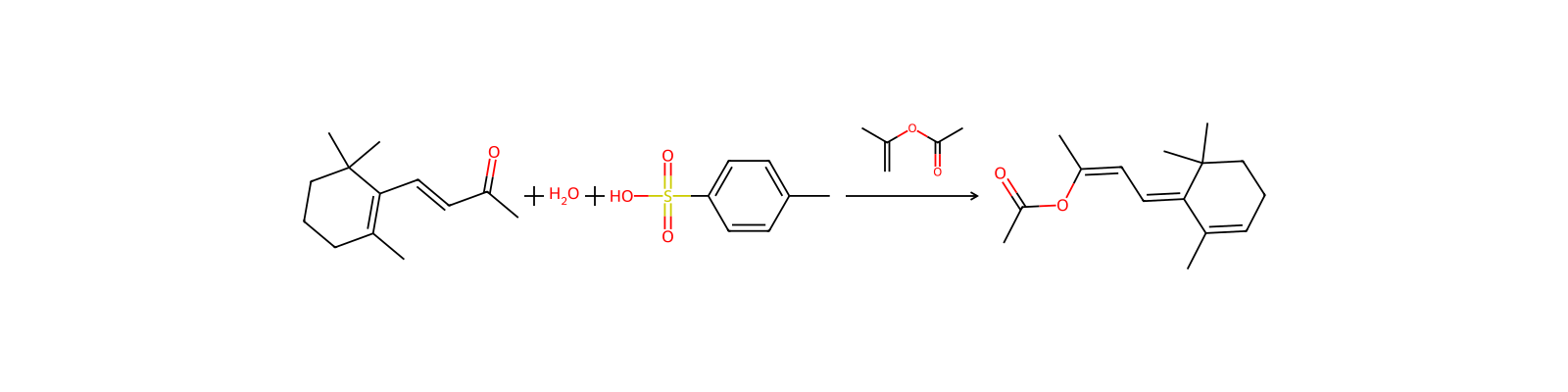
관련 반응
20건




연결된 노트
불러오는 중…