
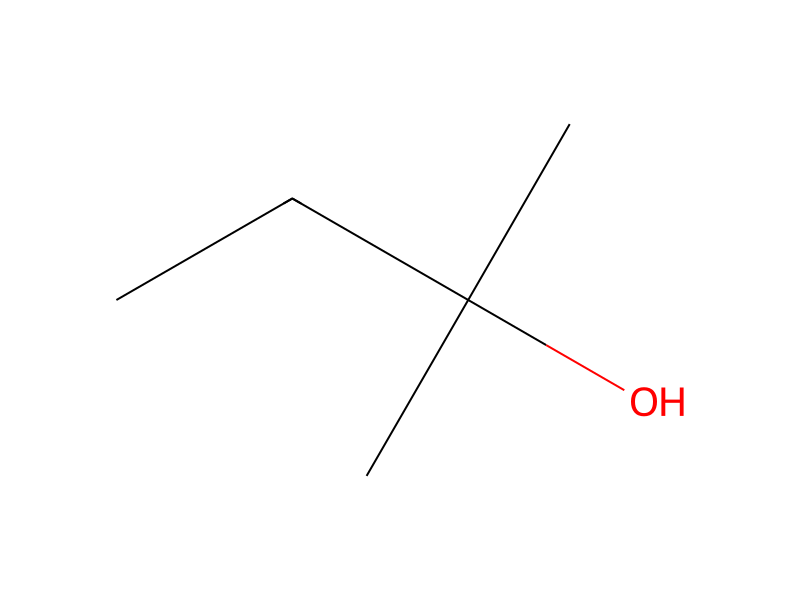
기본 정보
- 표준 SMILES
CCC(C)(C)O- InChIKey
MSXVEPNJUHWQHW-UHFFFAOYSA-N- 분자식
- C5H12O
- 평균 분자량
- 88.15 g/mol
- 단동위원소 질량
- 88.088815
개요
Tert-amyl alcohol appears as a clear, colorless liquid with an odor of camphor. Slightly soluble in water.
이름 및 식별자
- 우선 이름
- 2-Methyl-2-butanol
- IUPAC
- 2-methylbutan-2-ol
- 현지명
- 삼차-아밀알코올
- 영어명
- 2-Methyl-2-butanol
- 분자식
- C5H12O
- 분자량
- 88.15
이름 및 동의어
2-METHYL-2-BUTANOLtert-Amyl alcohol75-85-42-Methylbutan-2-olAmylene hydratetert-Pentyl alcoholtert-Pentanolt-Amyl alcohol2-Butanol, 2-methyl-Ethyldimethylcarbinolt-Pentyl alcohol1,1-Dimethyl-1-propanol
이름 더 보기
2-메틸-2-뷰탄올삼차-아밀알코올삼차-펜틸알코올삼차-펜틸알코올tAmOHt-amyl2-methyl-2-butano
Dimethylethylcarbinoltert-Isoamyl alcohol3-Methylbutan-3-olDimethyl ethyl carbinolEthyl dimethyl carbinol2-Methyl butanol-2Amylenum hydratumAmylalkohol, tertiaerer
데이터베이스 식별자
- CAS
75-85-4- PubChem CID
- 6405
- DTXSID
DTXSID0041436- ChEMBL
CHEMBL44658- ChEBI
CHEBI:132750- UNII
- 69C393R11Z
- EC Number
- 200-908-9
- Nikkaji
- J4.164E
물성
구조 계산 물성
- XLogP
- 0.9
- 극성 표면적
- 20.2 Ų
- 수소 결합 공여자 수
- 1
- 수소 결합 수용자 수
- 1
- 회전 가능 결합 수
- 1
- 무거운 원자 수
- 6
- 형식 전하
- 0
- 복잡도
- 39.2
실험 및 물리화학적 성질
Chemical Classes
Flammable agents - 3rd degree
Volatile Organic Compound (VOC)
SolventsSolvents -> Alcohols (<C12)
pHSolution neutral to litmus
SpringerMaterials PropertiesBoiling point
FragrancesFragrance Ingredient (2-Methyl-2-butanol) -> IFRA transparency List
LogP
log Kow = 0.89
0.89
Odor
Characteristic odor
Camphor odor
TasteBurning taste
Density0.8096 at 20 °C/4 °C
Flavoring AgentsEU Flavoring substances
Viscosity3.79 centipoise at 25 °C
Color/FormColorless liquid
물리화학적 성질
- 녹는점
- -12 °C · -12 °C
- 끓는 점
- 102 °C · 102 °C(lit.)
- 밀도
- 0.805 g/mL · 0.805 g/mL at 25 °C(lit.)
- 증기 밀도
- 3 · 3 (vs air)
- 증기압
- 15.5 hPa · 15.5 hPa (20 °C)
- 굴절률
- 20 · n20/D 1.405(lit.)
- 인화점
- 20 °C · 20 °C
- 저장 조건
- 5 °C · Store at +5°C to +30°C.
- 용해도
- 알코올, 에테르, 벤젠, 클로로포름, 글리세롤, 오일 및 아세톤과 섞입니다.
- 물리적 상태
- 액체
- 산도 계수 (pKa)
- 15.38 · 15.38±0.29(Predicted)
- 색상
- 무색의
- 수소이온지수(pH)
- 6 · 6.0 (118g/l, H2O, 20℃)neutral
- 냄새
- 매운맛
- Odor Threshold
- 0.088 ppm · 0.088ppm
- 폭발한계
- 1.3 · 1.3-9.6%(V)
- 수용성
- 120 g/L · 120g/L(20℃)
- 비열
- 2.8 J/ · Cp(liquid): 2.8 J/(g·K), at 25℃
- Merck
- 14 · 14,7140
- BRN
- 1361351 · 1361351
- Henry's Law Constant
- 6.5 · 6.5×10-1 mol/(m3Pa) at 25℃, Brockbank (2013)
- Dielectric constant
- 11.7 · 11.7(20℃)
- 안정성
- 빛에 민감합니다. 가연성이 높습니다. 강한 산화제와 호환되지 않습니다.
- InChI
- 1S/C5H12O/c1-4-5(2,3)6/h6H,4H2,1-3H3
- InChIKey
- MSXVEPNJUHWQHW-UHFFFAOYSA-N
- SMILES
- CCC(C)(C)O
- LogP
- 0.89 · 0.890
- 표면장력
- 24.04 mN/m · 24.04mN/m at 293.15K
- NIST
- 2 · 2-Butanol, 2-methyl-(75-85-4)
- EPA
- 2 · 2-Methyl-2-butanol (75-85-4)
화학적 성질
tert-Amyl alcohol is a volatile liquid.2-Methyl-2-butanol has a sour odor, a threshold value of 8.2 mg/m3 (2.3 ppm), an absolute perception limit of 0.04 ppm, and a 100% recognition level of 0.23 ppm .
안전 및 규제
GHS 분류
GHS Classification
Danger
H225: Highly Flammable liquid and vapor [Danger Flammable liquids]
P210, P233, P240, P241, P242, P243, P261, P264, P271, P280, P302+P352, P303+P361+P353, P304+P340, P317, P319, P321, P332+P317, P362+P364, P370+P378, P403+P233, P403+P235, P405, and P501 (click each P-code to see the statement)
This chemical does not meet GHS hazard criteria for 1.8% (11 of 610) of reports.
Danger
H225 (98.2%): Highly Flammable liquid and vapor [Danger Flammable liquids]
유해성 정보
Regulatory Information
Chemical: 2-Butanol, 2-methyl-
Commission Regulation (EC) No 1565/2000 (Repealed by Com. Implementing Reg. (EU) No 872/2012)
2-Butanol, 2-methyl- is listed on the EPA's Chemical Data Reporting (CDR) system. Manufacturers and importers of 2-Butanol, 2-methyl- are required to report information about their production and use of this chemical to the EPA under the Toxic Substances Control Act (TSCA). (40 eCFR Part 711)
Status: Active Update: 13-08-2020 https://echa.europa.eu/registration-dossier/-/registered-dossier/10040
2-Methylbutan-2-ol: Does not have an individual approval but may be used under an appropriate group standard
The New Jersey Worker and Community Right to Know Act requires public and private employers to provide information about hazardous substances at their workplaces. (N.J.S.A. 34:5A-1 et. seq.)
DOT LabelFlammable Liquid
Fire HazardsExcerpt from ERG Guide 129 [Flammable Liquids (Water-Miscible / Noxious)]:
Fire PotentialFLAMMABLE, DANGEROUS FIRE RISK.
Health HazardsExcerpt from ERG Guide 129 [Flammable Liquids (Water-Miscible / Noxious)]:
Hazards SummaryDangerous fire risk; [Hawley] A skin, eye, and respiratory tract irritant; Inhalation of high concentrations may cause CNS effects; [HSDB] An irritant; Inhalation of high concentrations can cause CNS depression; [MSDSonline]
Reactive GroupAlcohols and Polyols
Reactivity AlertsHighly Flammable
Reactivity Profile
TERT-AMYL ALCOHOL attacks plastics [Handling Chemicals Safely 1980. p. 236]. Reacts violently with acetyl bromide [Merck 11th ed. 1989]. Mixtures of alcohols with concentrated sulfuric acid and strong hydrogen peroxide can cause explosions. Example: an explosion will occur if dimethylbenzylcarbinol is added to 90% hydrogen peroxide then acidified with concentrated sulfuric acid. Mixtures of ethyl alcohol with concentrated hydrogen peroxide form powerful explosives. Mixtures of hydrogen peroxide and 1-phenyl-2-methyl propyl alcohol tend to explode if acidified with 70% sulfuric acid [Chem. Eng. News 45(43):73 1967; J, Org. Chem. 28:1893 1963]. Alkyl hypochlorites are violently explosive. They are readily obtained by reacting hypochlorous acid and alcohols either in aqueous solution or mixed aqueous-carbon tetrachloride solutions. Chlorine plus alcohols would similarly yield alkyl hypochlorites. They decompose in the cold and explode on exposure to sunlight or heat. Tertiary hypochlorites are less unstable than secondary or primary hypochlorites [NFPA 491 M, 1991]. Base-catalysed reactions of isocyanates with alcohols should be carried out in inert solvents. Such reactions in the absence of solvents often occur with explosive violence [Wischmeyer 1969].
Flammable LimitsLower flammable limit: 1.2% by volume; Upper flammable limit: 9.0% by volume
Air and Water ReactionsHighly flammable. Slightly soluble in water.
NFPA Hazard Classification
1 - Materials that, under emergency conditions, can cause significant irritation.
3 - Liquids and solids that can be ignited under almost all ambient temperature conditions. Materials produce hazardous atmospheres with air under almost all ambient temperatures or, though unaffected by ambient temperatures, are readily ignited under almost all conditions.
0 - Materials that in themselves are normally stable, even under fire conditions.
안전 및 보호
Fire FightingExcerpt from ERG Guide 129 [Flammable Liquids (Water-Miscible / Noxious)]:
First AidExcerpt from ERG Guide 129 [Flammable Liquids (Water-Miscible / Noxious)]:
Exposure Control and Personal Protection20.0 [ppm]
Fire Fighting Procedures
If material on fire or involved in fire: Do not extinguish fire unless flow can be stopped or safely confined. Use water in flooding quantities as fog. Solid streams of water may be ineffective. Cool all affected containers with flooding quantities of water. Apply water from as far a distance as possible. Use "alcohol" foam, dry chemical or carbon dioxide. /Amyl alcohols/
Storage Conditions
Prior to working with this chemical you should be trained on its proper handling and storage. Before entering a confined space where amyl alcohols may be present, check to make sure that an explosive concentration does not exist. Store in tightly closed containers in a cool, well ventilated area away from strong oxidizers, strong acids, and hydrogen trifluoride since violent reactions occur. Metal containers involving the transfer of this chemical should be grounded and bonded. Where possible, automatically pump liquid from drums or other storage containers to process containers. Drums must be equipped with self-closing valves, pressure vacuum bungs, and flame arresters. Use only non-sparking tools and equipment, especially when opening and closing containers of this chemical. Sources of ignition such as smoking and open flames are prohibited where this chemical is used, handled, or stored in a manner that could create a potential fire or explosion hazard. /Amyl alcohols/
KEEP TIGHTLY CLOSED & PROTECTED FROM LIGHT.
Cleanup Methods
Evacuate and restrict persons not wearing protective equipment from area of spill or leak until cleanup is complete. Remove all ignition sources. Establish forced ventilation to keep levels below explosive limit. Absorb liquids in vermiculite, dry sand, earth, peat, carbon, or similar material and deposit in sealed containers. It may be necessary to contain and dispose of this chemical as a hazardous waste. If material or contaminated runoff enters waterways, notify downstream users of potentially contaminated waters. Contact your Department of Environmental Protection or your regional office of the federal EPA for specific recommendations. If employees are required to clean up spills, they must be properly trained and equipped. OSHA 1910.120(q) may be applicable. /Amyl alcohols/
The objective of this study was to operate a novel, field-scale, aerobic bioreactor and assess its performance in the ex situ treatment of groundwater contaminated with gasoline from a leaking underground storage tank in Pascoag, RI. The groundwater contained elevated concentrations of MTBE (methyl tert-butyl ether), TBA (tert-butyl alcohol), TBF (tert-butyl formate), BTEX (benzene, toluene, ethyl benzene, and xylene isomers), and other gasoline additives (tert-amyl methyl ether, di-isopropyl ether, tert-amyl alcohol, methanol, and acetone). The bioreactor was a gravity-flow membrane-based system called a Biomass Concentrator Reactor (BCR) designed to retain all biomass within the reactor. It was operated for six months at an influent flow rate that ultimately reached 5 gpm. The goal was to achieve a removal of all contaminants to <5 ug/L, which is the California Drinking Water advisory for MTBE. The concentration of TBA, an MTBE biodegradation byproduct, was consistently lower than that of MTBE. The other daughter compound detected in the influent, TBF, was degraded to concentrations below the detection limit of 0.02 ug/L. BTEX were consistently degraded to significantly lower levels in the effluent throughout the duration of the study (<1 ug/L). A similar high removal efficiency of the other gasoline oxygenates present in the groundwater (TAME, DIPE, and TAA) was also achieved. ...
Environmental considerations-land spill: Dig a pit, pond, lagoon, holding area to contain liquid or solid material. /SRP: If time permits, pits, ponds, lagoons, soak holes, or holding areas should be sealed with an impermeable flexible membrane liner./ Dike surface flow using soil, sand bags, foamed polyurethane, or foamed concrete. Absorb bulk liquid with fly ash, cement powder, or commercial sorbents. /Amyl alcohols/
Environmental considerations-water spill: Use natural barriers or oil spill control booms to limit spill travel. Remove trapped material with suction hoses. /Amyl alcohols/
Environmental considerations-air spill Apply water spray or mist to knock down vapors. /Amyl alcohols, combustible liquid/
Nonfire Spill ResponseExcerpt from ERG Guide 129 [Flammable Liquids (Water-Miscible / Noxious)]:
Disposal Methods
SRP: The most favorable course of action is to use an alternative chemical product with less inherent propensity for occupational exposure or environmental contamination. Recycle any unused portion of the material for its approved use or return it to the manufacturer or supplier. Ultimate disposal of the chemical must consider: the material's impact on air quality; potential migration in soil or water; effects on animal, aquatic, and plant life; and conformance with environmental and public health regulations.
Incineration /SRP: with appropriate emissions controls/. /Amyl alcohols/
Preventive Measures
If material not on fire and not involved in fire: Keep sparks, flames, and other sources of ignition away. Keep material out of water sources and sewers. Build dikes to contain flow as necessary. Attempt to stop leak if without undue personnel hazard. Use water spray to knock-down vapors. /Amyl alcohols/
Personnel protection: Avoid breathing vapors. Keep upwind. ... Do not handle broken packages unless wearing appropriate personal protective equipment. Wash away any material which may have contacted the body with copious amounts of water or soap and waterg. /Amyl alcohols/
SRP: The scientific literature for the use of contact lenses in industry is conflicting. The benefit or detrimental effects of wearing contact lenses depend not only upon the substance, but also on factors including the form of the substance, characteristics and duration of the exposure, the uses of other eye protection equipment, and the hygiene of the lenses. However, there may be individual substances whose irritating or corrosive properties are such that the wearing of contact lenses would be harmful to the eye. In those specific cases, contact lenses should not be worn. In any event, the usual eye protection equipment should be worn even when contact lenses are in place.
SRP: Contaminated protective clothing should be segregated in such a manner so that there is no direct personal contact by personnel who handle, dispose, or clean the clothing. Quality assurance to ascertain the completeness of the cleaning procedures should be implemented before the decontaminated protective clothing is returned for reuse by the workers. Contaminated clothing should not be taken home at end of shift, but should remain at employee's place of work for cleaning.
Isolation and EvacuationExcerpt from ERG Guide 129 [Flammable Liquids (Water-Miscible / Noxious)]:
Personal Protective Equipment (PPE)
Excerpt from ERG Guide 129 [Flammable Liquids (Water-Miscible / Noxious)]:
Wear solvent resistant gloves and clothing to prevent any reasonable probability of skin contact. ACGIH and safety equipment suppliers/manufacturers recommend polyvinyl alcohol, polyvinyl chloride, neoprene, butyl rubber, neoprene + styrene-butadiene rubber (SBR), polyurethane, SBR, and SBR/neoprene as protective materials. All protective clothing (suits, gloves, footwear, headgear) should be clean, available for work each day, and put on before work. Contact lenses should not be worn when working with this chemical. Wear splash-proof chemical goggles and face shield unless full face-piece respiratory protection is worn. Employees should wash immediately with soap when skin is wet or contaminated. Remove nonimpervious clothing immediately if wet or contaminated. Provide emergency showers and eyewash. /Amyl alcohols/
독성 정보
Body Burden
The urine of Finnish gasoline road-tanker drivers involved in loading and unloading 95- and 98-octane unleaded gasoline contained 2-methyl-2-butanol, a metabolite of methyl tert-amyl ether, at concentrations of 40 nmol/L (first urine after the work shift) and 20 nmol/L (next morning sample)(1). 2-Methyl-2-butanol was not detected in either blood or urine samples of gasoline road-tanker drivers collected in either October 1994 (n=13, urine; n=14, blood) or August 1995 (n=20, blood and urine samples; limit of quantitation <100 nmol/L)(2).
Interactions
2-Methyl-2-butanol (4.1 mmol/kg) induced a behavioral intoxication in rats (male, Sprague-Dawley, 160 to 300 g) at 8 min after the intraperitoneal administration of the pentanol. The intoxication was scored on a scale of 0 to 4, where 3 = 'very little or no recovery of righting reflex, heavy sedation, no spontaneous locomotor activity, flaccid muscles, absence of pelvic and abdominal elevation' and 2 = 'heavy sedation, pronounced motor coordination and sluggish movement, limbs extended away from the body'. After 2-methyl-2-butanol alone the intoxication was scored as approximately 2.9. The prior administration of the imidazobenzodiazepine Ro15-4513 (5 min before the alcohol) partially reversed the intoxication by 2-methyl-2-butanol and the score decreased to approximately 1.8. The Ro15-4513 was more effective at reducing the intoxication after treatment with ethanol than after treatment with the pentanol.
Ecotoxicity Values
EC50; Species: Daphnia magna (Water flea); Conditions: freshwater, static, pH 8; Concentration: 3185 mg/L for 24 hr; Effect: behavior, equilibrium
LC50; Species: Daphnia magna (Water flea, age < or =24 hr); Conditions: freshwater, static, 20-22 °C, pH 7.6-7.7, hardness 16 degrees hardness (dH); Concentration: 4030 mg/L for 24 hr
Environmental Fate
TERRESTRIAL FATE: Based on a classification scheme(1), an estimated Koc value of 73(SRC), determined from a log Kow of 0.89(2) and a regression-derived equation(3), indicates that 2-methyl-2-butanol is expected to have high mobility in soil(SRC). Volatilization of 2-methyl-2-butanol from moist soil surfaces is expected to be an important fate process(SRC) given a Henry's Law constant of 1.38X10⁻⁵ atm-cu m/mole(4). 2-Methyl-2-butanol is expected to volatilize from dry soil surfaces(SRC) based upon a vapor pressure of 16.7 mm Hg(5). 2-Methyl-2-butanol is expected to be resistant to biodegradation in soil(SRC) based on results from several screening studies (6-9). 2-Methyl-2-butanol contains a tertiary structure which is expected to decrease its biodegradability(10).
AQUATIC FATE: Based on a classification scheme(1), an estimated Koc value of 73(SRC), determined from a log Kow of 0.89(2) and a regression-derived equation(3), indicates that 2-methyl-2-butanol is not expected to adsorb to suspended solids and sediment(SRC). Volatilization from water surfaces is expected(3) based upon a Henry's Law constant of 1.38X10⁻⁵ atm-cu m/mole(4). Using this Henry's Law constant and an estimation method(3), volatilization half-lives for a model river and model lake are 2 and 22 days, respectively(SRC). According to a classification scheme(5), an estimated BCF of 3(SRC), from its log Kow(2) and a regression-derived equation(6), suggests the potential for bioconcentration in aquatic organisms is low(SRC). 2-Methyl-2-butanol is expected to be resistant to biodegradation in water(SRC) based on results from several screening studies (7-10). 2-Methyl-2-butanol contains a tertiary structure which is expected to decrease its biodegradability(11).
ATMOSPHERIC FATE: According to a model of gas/particle partitioning of semivolatile organic compounds in the atmosphere(1), 2-methyl-2-butanol, which has a vapor pressure of 16.7 mm Hg at 25 °C(2), is expected to exist solely as a vapor in the ambient atmosphere. Vapor-phase 2-methyl-2-butanol is degraded in the atmosphere by reaction with photochemically-produced hydroxyl radicals(SRC); the half-life for this reaction in air is estimated to be 3.3 days(SRC), calculated from its rate constant of 4.9X10⁻¹² cu cm/molecule-sec at 25 °C(SRC) that was derived using a structure estimation method(3). 2-Methyl-2-butanol does not contain chromophores that absorb at wavelengths >290 nm(4) and therefore is not expected to be susceptible to direct photolysis by sunlight(SRC).
Food Survey Values2-Methyl-2-butanol has been identified as a volatile in cassava(1) and fried bacon(2).
Adverse EffectsNeurotoxin - Acute solvent syndrome
Ecotoxicity Excerpts
/AQUATIC SPECIES/ 2-Methyl-2-butanol induced /CNS depression/ in tadpoles at 58 mM (lowest active concentration) and also induced /CNS depression/ in isolated frog heart at 182 mM (lowest active concentration). In a similar study, the threshold /CNS depressant/ concentrations in tadpoles was 55 mM for 2-methyl-2-butanol.
Effluent Concentrations
2-Methyl-2-butanol was identified in final effluent from an oil refinery in Lockport, IL(1). It was present in trench leachate at the Maxey Flats, KY and West Valley, NY radioactive waste disposal sites(2). It was tentatively identified in the effluent of a sewage treatment works in Luton, England that fed into the River Lee(3).
Soil Adsorption/Mobility
The Koc of 2-methyl-2-butanol is estimated as 73(SRC), using a log Kow of 0.89(1) and a regression-derived equation(2). According to a classification scheme(3), this estimated Koc value suggests that 2-methyl-2-butanol is expected to have high mobility in soil.
TSCA Test Submissions
2-Methyl-2-butanol (CAS # 75-85-4) was evaluated for subchronic inhalation toxicity. Groups of 10 CD-1 mice per sex were exposed 6 hrs/day, 5 days/week to 0, 50, 225 and 1000 ppm of test substance for 59-61 exposures in 87 days. No treatment related effects were observed at any concentrations. The no observable effect level (NOEL) is 1000 ppm.
2-Methyl-2-butanol (CAS # 75-85-4) was evaluated for subchronic inhalation toxicity. Groups of 10 Fischer 344 rats per sex were exposed 6 hrs/day, 5 days/week to 0, 50, 225 and 1000 ppm of test substance for 59-61 exposures in 87 days. Toxic effects included lacrimation at 1000 ppm and in female rats at 225 ppm. The central nervous system (CNS) and liver were identified as target organs. Visible, but reversible motor impairment attributed to CNS depression was observed in female rats exposed to 1000 ppm. Liver toxicity consisted of increased absolute and relative liver weights in male rats exposed to 1000 ppm. The no observable effect level (NOEL) is 225 ppm.
2-Methyl-2-butanol (CAS # 75-85-4) was evaluated for subchronic inhalation toxicity. The test substance was administered to 4 male beagle dogs exposed 6 hrs/day, 5 days/week to 0, 50, 225 and 1000 ppm for 59-61 exposures in 87 days. Toxic effects at 1000 ppm included signs of intoxication following the initial exposure with increasing tolerance to the following exposures. The dogs were unable to stand and one had a pronounced stagger following the initial exposure. The central nervous system (CNS) and liver were identified as target organs. Visible, but reversible motor impairment attributed to CNS depression was observed. Liver toxicity consisted of increased absolute and relative liver weights in dogs exposed to 1000 and 225 ppm. Serum alkaline phosphatase activity was increased in dogs exposed to 1000 ppm. Microscopic examination of the tissues found cytoplasmic inclusions in the livers of one dog exposed to 1000, 225, and 50 ppm.
Natural Pollution Sources2-Methyl-2-butanol has been identified as a volatile in cassava(1) and fried bacon(2) suggesting that it may be a naturally-occurring chemical(SRC).
Human Toxicity Excerpts
/SIGNS AND SYMPTOMS/ All /amyl alcohols/ are appreciably irritating to the eyes and capable of causing transient corneal opacity. All are somewhat irritating to the uncovered skin when exposures are repeated and severely irritating when confined to the skin. All can be absorbed through the skin of animals in toxic amts when exposures are severe. High conc of vapor are irritating to the mucous membranes and typically cause central nervous system effects and death by respiratory failure. /Amyl alcohols/
/SIGNS AND SYMPTOMS/ No effects upon the nerves of the skin of men, and no local wheal formation, erythema, or hyperemia were observed ... following the application of tert-amyl alcohol to the skin.
/CASE REPORTS/ The ingestion of 27 g of 2-methyl-2-butanol (amylene hydrate) by an adult female resulted in unconsciousness within 0.5 hr, marked signs of intoxication through the following day, and complete recovery after 14 days. Ingestion of 18 g of 2-methyl-2-butanol by an adult resulted in unconsciousness, a deep sleep lasting more than one day, and a slow recovery. The administration of an enema of approximately 29 g of 2-methyl-2-butanol to an adult male resulted in death after 53 hr, but the case was complicated by concurrent pneumonia in the patient.
/CASE REPORTS/ A neurasthenic brewery manager who inhaled the vapors (primary active amyl and isoamyl isomers) from fermentation vats exhibited ... /CNS/ stimulation, insomnia, and chromatopsia. /Amyl alcohols/
For more Human Toxicity Excerpts (Complete) data for 2-METHYL-2-BUTANOL (6 total), please visit the HSDB record page.
안전 데이터
- OEB
- A
- OEL
- TWA: 100.0 ppm; 360.0 mg/m3, STEL: 125.0 ppm; 450.0 mg/m3
- wgk
- 1
- tsca
- TSCA listed
- rtecs
- SC0175000
- ridadr
- UN 1105 3/PG 2
- 독성
- LD50 orally in rats: 1.0 g/kg (Schaffarzick, Brown)
- HS 번호
- 29051500
- risk_code
- 11-20-37/38-41-21
- hazard_code
- F,Xn
- safety_code
- 46-39-36/37-26
- 포장분류
- II
- 위험 등급
- 3
- 기존화학 물질
- KE-23573
- 자연 발화 온도
- 819 °F
- Hazard Classifications
- Acute Tox. 4 DermalAcute Tox. 4 InhalationEye Dam. 1Flam. Liq. 2Skin Irrit. 2STOT SE 3
- 스토리지 클래스
- 3 - Flammable liquids
- 유해 물질 데이터
- 75-85-4(Hazardous Substances Data)
화학 및 산업
약리 정보
Biological Half-Life
Upon repeated exposure to 50 ppm, the material /2-methyl-2-butanol/ was cleared by rats (t1/2 = 47 min) and dogs (t1/2 = 69 min) in an apparent first-order manner.
Following repeated exposure to 1000 ppm the plasma clearance was more rapid in the mouse than in either the rat or the dog exposed to 50 ppm, the t1/2 times being 29, 47, and 69 min, respectively ... The data demonstrate that the kinetics of tert-amyl alcohol are highly species- and conc-dependent.
Metabolism/Metabolites
... the biotransformation of tert-Amyl methyl ether (TAME) /was studied/ in rats and one human volunteer after inhalation of (12)C- or (13)C-labeled TAME. In addition, the biotransformation of [(13)C]-tert-amyl alcohol was studied in rats after gavage. ... Rats (two males and two females) were individually exposed to 2000 ppm [(12)C]- or [(13)C]TAME for 6 hr, and urine was collected for 48 hr. Free and glucuronidated 2-methyl-2,3-butanediol and a glucuronide of tert-amyl alcohol were identified ... as major urinary metabolites on the basis of the relative intensities of the (13)C NMR signals. The presence of several minor metabolites was also indicated by (13)C NMR; they were identified as tert-amyl alcohol, 2-hydroxy-2-methylbutyric acid, and 3-hydroxy-3-methylbutyric acid. One human volunteer was exposed to an initial concentration of 27,000 ppm [(13)C]TAME by inhalation for 4 min from a 2 L gas sampling bag, and metabolites of TAME excreted in urine were analyzed by (13)C NMR. All TAME metabolites identified in rats were also present in the human urine samples. To study tert-amyl alcohol biotransformation, male rats (n = 3) were treated with 250 mg/kg [(13)C]-tert-amyl alcohol dissolved in corn oil by gavage, and urine was collected for 48 hr. (13)C NMR of the urine samples showed the presence of metabolites identical to those in the urine of [(13)C]TAME-treated rats. Our results suggest that TAME is extensively metabolized by rats and humans to tert-amyl alcohol which may be further oxidized to diols and carboxylic acids. These reactions are likely mediated by cytochrome P450-dependent oxidations.
... The objective of this study was to use a physiologically-based pharmacokinetic (PBPK) model to describe the disposition of tert-amyl methyl ether (TAME) and its major metabolite, tert-amyl alcohol (TAA), in male Fischer-344 rats. The model compartments for TAME and TAA were flow-limited. The TAME physiological model had 6 compartments: lung, liver, rapidly perfused tissues, slowly perfused tissues, fat, and kidney. The TAA model had 3 compartments: lung, liver, and total-body water. The 2 models were linked through metabolism of TAME to TAA in the liver. Model simulations were compared with data on blood concentrations of TAME and TAA taken from male Fischer-344 rats during and after a 6-hour inhalation exposure to 2500, 500, or 100 ppm TAME. The PBPK model predicted TAME pharmacokinetics when 2 saturable pathways for TAME oxidation were included. The TAA model, which included pathways for oxidation and glucuronide conjugation of TAA, underpredicted the experimental data collected at later times postexposure. To account for biological processes occurring during this time, three hypotheses were developed: nonspecific binding of TAA, diffusion-limited transport of TAA, and enterohepatic circulation of TAA glucuronide. These hypotheses were tested using three different model structures. Visual inspection and statistical evaluation involving maximum likelihood techniques indicated that the model incorporating nonspecific binding of TAA provided the best fit to the data. ...
The biotransformation of ... tert-amyl methyl ether (TAME) was studied in humans and in rats after inhalation of 4 and 40 ppm of ... TAME ... for 4 hours, and the biotransformation of ... TAME was studied after ingestion exposure in humans to 5 and 15 mg in water. .../Following ingestion/ tert-Amyl alcohol (TAA), free and glucuronidated 2-methyl-2,3-butanediol (a glucuronide of TAA), 2-hydroxy-2-methyl butyrate, and 3-hydroxy-3-methyl butyrate were found to be metabolites of TAME. After inhalation ... TAME /was/ rapidly taken up by both rats and humans; after termination of exposure, clearance from blood of the ethers by exhalation and biotransformation to urinary metabolites occurred with half-times of less than 7 hours in rats and humans. ... Biotransformation of TAME was qualitatively similar in rats and humans, but the metabolic pathways were different. In humans, 2-methyl-2,3-butanediol, 2-hydroxy-2-methyl butyrate, and 3-hydroxy-3methyl butyrate were recovered as major urinary products. In rats, however, 2-methyl-2,3-butanediol and its glucuronide were major TAME metabolites recovered in urine. After ingestion ... TAME /was/ ... rapidly absorbed from the gastrointestinal tract. Hepatic first-pass metabolism ... was not observed, and a significant part of the administered dose was transferred into blood and cleared by exhalation. Metabolic pathways for ... TAME and kinetics of excretion were identical after ingestion and inhalation exposures. ...
... Male mice of ICR strain were exposed to about 5% /isopentane/ for one hour while the oxygen in the environmental air was maintained at about 20%. Then their blood and liver tissue were collected and analyzed by means of GC and GC-MS. The metabolites thus obtained were ... 3-methyl-2-butanol, 2-methyl-2-butanol and 3-methyl-2-butanone were detected as the resultant metabolites. In the presence of the NADPH-generating system liver microsomes were made to react to the substrate of saturated ... isopentane aqueous solution at 37 degrees C for one hour. As a result, the same metabolites were produced as obtained in the exposure experiment. It was therefore suggested that ... isopentane /was/ metabolized chiefly by liver microsomes. Male mice of ICR strain were fed with 80 mg/kg b.w. of phenobarbital for consecutive four days and exposed to ... isopentane for one hour. This resulted in an increase in the amount of ... 2-methyl-2-butanol in the isopentane inhalation experiment. ...
For more Metabolism/Metabolites (Complete) data for 2-METHYL-2-BUTANOL (7 total), please visit the HSDB record page.
Tert-amyl alcohol is a known human metabolite of tert-amyl methyl ether.
Absorption, Distribution and Excretion
Dog weighing 11 kg, when injected sc with dose of 0.1 mL of 2-methyl-2-butanol...exhaled 65% of it within 5.75 hr. Another dog given slightly larger dose of same alc iv exhaled 52% within 6 hr. Cats also exhaled large quantity unchanged.
When rabbits were injected with 2 levels of dosage ... they exhaled, in first instance 21% of alc in unchanged form within 4 hr, & in second, 22% within 3 hr. ... rat given 1 g/kg of same isomer eliminated 26.4% unchanged in expired air and 8.9% in the urine within 50 hr.
The rate of elimination of amyl alcohols from the blood of rats decreases in the order of primary, secondary, and tertiary. tert-Amyl alcohol did not disappear from the blood of rats until 50 hr following an ip dose of 1 g/kg.
Small amts of the primary and secondary alcohols, and appreciable amts of the tertiary isomer, are excreted unchanged in the respired air and urine. /Amyl alcohols/
... /The authors/ Found a conc of 12.5 mg percent of tert-amyl alcohol in the blood of rats 1 hr following an ip dose of 1.0 kg. They also found a conc of 191 mg percent in the jugular blood of rats at the time of death from respiratory failure. Conc in the plasma of rats about 0.6 hr after they had inhaled 150, 500, or 1500 ppm of tert-amyl alcohol for 6 hr were 9.6, 59.9, and 337 ug/mL, respectively.
Cellular LocationsCytoplasm
용도 및 제조
Uses
Used as a solvent in flavors, pharmaceuticals, corrosion inhibitors, resins, gums, coating materials, and other chemicals; Also used in organic synthesis and as a frothing agent (ore flotation), surfactant (petroleum recovery), and stabilizing agent; [HSDB]
Painting (Solvents) [Category: Paint]
Used as a solvent in synthetic flavoring, pharmaceuticals, corrosion inhibitors, and making plastics and other chemicals. /Amyl alcohols/
Solvent, flotation agent; organic synthesis ...
SOLVENT FOR RESINS AND GUMS PHARMACEUTICAL SOLVENT FOR TRIBROMOETHANOL SOLN; FROTHING AGENT FOR ORE FLOTATION PROCESSES; MEDICATION: SEDATIVE-HYPNOTIC DRUG; CHEM INT FOR SYNTHESIS OF ITS DERIVATIVES
In formulations for stabilizing 1,1,1-trichloroethane used for degreasing metals, rosin flux removal and dry cleaning. Used as a solvent in the preparation of epoxy-containing novolak resins with low chloride content and in mixtures with surfactants in petroleum recovery by flooding.
ImpuritiesTypical impurities are other monomeric alcohols, dimeric alcohols, acetals and several miscellaneous substances ... typically free of suspended matter.
U.S. Production
2023: 50,000 - <250,000 lb
Production volumes for non-confidential chemicals reported under the Inventory Update Rule. [Table#4994]
This chemical is listed as an Extended High Production Volume (EHPV). Chemicals listed as EHPV were produced in or imported into the U.S. in >1 million pounds according to the 2002 Toxic Substances Control Act (TSCA) Inventory Update. The EHPV program is a voluntary initiative that allows companies to demonstrate that adequate screening data exist for organic HPV chemicals.
Industry UsesIntermediate
Methods of Manufacturing
Prepared from 2-methyl-2-butene alone and mixed with 2-methyl-1-butene.
... by fractionation of fusel oil ...
Oxo process: 1-butene, 2-butene and isobutylene react with a mixture of carbon monoxide and hydrogen in presence of a metal catalyst to form isomer mixture of C5 aldehyde which is then hydrogenated to corresponding amyl alcohol. /Amyl alcohols/
... Produced mainly by hydration of pentenes.
Formulations/PreparationsGrades: Technical; CP; NF.
Use ClassificationFragrance Ingredients
General Manufacturing Information
All Other Basic Organic Chemical Manufacturing
2-Butanol, 2-methyl-: ACTIVE
The oxo process is the principal one in practice today; only minor quantities, mainly in Europe are obtained from separation of fusel oil. tert-Amyl alcohol is produced on a commercial scale in lower volume by hydration of amylenes.
응용 분야
용도2-Methyl-2-butanol is used as a solvent in flavors, pharmaceuticals, corrosion inhibitors, resins, gums, coating materials and in organic synthesis. It acts as a frothing agent (ore flotation), surfactant (petroleum recovery) and stabilizing agent. Further, it is used in processing aids.
일반 설명A clear, colorless liquid with an odor of camphor. Flash point 70°F. Density 0.81 g / cm3. Slightly soluble in water.
제조 방법
생산 방법tert-Amyl alcohol is prepared by hydrating 2-methyl-2- butenes. It can also be prepared by reducing pivalic acid.
상·하류 제품 정보
상류 원료
하류 제품
공급사50 곳
国药集团化学试剂有限公司86-21-63210123 · [email protected]
梯希爱(上海)化成工业发展有限公司021-67121386 · [email protected]
山东旭晨化工科技有限公司0533-15715337262 15715337262 · [email protected]
上海阿拉丁生化科技股份有限公司400-6206333 13167063860 · [email protected]
Shandong chuangyingchemical Co., Ltd.18853181302 · [email protected]
南通润丰石油化工有限公司66017690 19952660367 · [email protected]
湖北宥澄新材料科技有限公司17764017698 13163370568 · [email protected]
武汉欣扬瑞和化学科技有限公司153-07155313 15307155313 · [email protected]
河北创海生物科技有限公司+86-86-13131129325 · [email protected]
武汉问津化学科技有限公司13517196568 · [email protected]
山东前元高分子材料有限公司18678041314 18765609661 · [email protected]
Dayang Chem (Hangzhou) Co.,Ltd.+86-0571-88938639 17705817739 · [email protected]
淄博丽硕化工贸易有限公司13853320569
北京安司莫森技术有限公司010-82954736 13391601435 · [email protected]
淄博联碳化学有限公司0533-0533-13695336297 13695336297 · [email protected]
Hangzhou Verychem Science And Technology Co.Ltd+86-86-57188162785 +8613606544505 · [email protected]
Syntechem Co.,Ltd[email protected]
上海迈瑞尔生化科技有限公司4006356688 18621169109 · [email protected]
阿法埃莎(中国)化学有限公司400-6106006 · [email protected]
安耐吉化学&3A(安徽泽升科技股份有限公司)400-0056266 · [email protected]
武汉卡诺斯科技有限公司027-83238443 15327105076 · [email protected]
上海瀚鸿科技股份有限公司021-54306202 13764082696 · [email protected]
山东西亚化学有限公司13355009207 13355009207 · [email protected]
玛雅试剂+86 (573) 82222445 (0)18006601000 452520369 · [email protected]
四川库利南科技有限公司400-1166-196 18981987031 · [email protected]
天津希恩思生化科技有限公司400 638 7771 · [email protected]
Hebei Qige Biological Technology Co. Ltd+86 +8618733132031
斯百全化学(上海)有限公司021-021-021-67601398-809-809-809 15221380277 · [email protected]
艾科试剂4008-755-333 18080918076 · [email protected]
上海思域化工科技有限公司86-21-34053660 · [email protected]
赛默飞世尔科技(中国)有限公司800-810-5118 · [email protected]
北京伊诺凯科技有限公司400-810-7969 010-59572699 · [email protected]
TCI AMERICA800-4238616 · [email protected]
TOKYO CHEMICAL INDUSTRY CO., LTD.03-36680489 · [email protected]
TCI Europe320-37350700 · [email protected]
上海乐晨国际贸易有限公司021-67256163 · [email protected]
Xunteng International Trading Co.,Limited—
上海将来实业股份有限公司021-61552785 · [email protected]
HBCChem, Inc.+1-510-219-6317 · [email protected]
日照力德士化工有限公司010-51268198 · [email protected]
成都零六生物科技有限公司400-1166-196 13458535857 · [email protected]
雷丁试剂0510-85629785 18013409632 · [email protected]
天津普西唐生物医药科技有限公司010-60605840 · [email protected]
上海御略医药科技有限公司021-60345187 13671753212 · [email protected]
上海麦克林生化科技股份有限公司15221275939 15221275939 · [email protected]
上海嵩爰化工科技有限公司010-1234567 18521000990 · [email protected]
成都润泽本土化工有限公司13096311329 028-88469284 616445927 · [email protected]
池州凯隆进出口贸易有限公司[email protected]
Sigma-Aldrich西格玛奥德里奇(上海)贸易有限公司021-61415566 800-8193336 · [email protected]
深圳振强药物研发有限公司+86-0755-66853366 +86-13670046396 · [email protected]
추가 설명
정의ChEBI: A tertiary alcohol that is propan-1-ol in which both of the hydrogens at position 1 have been replaced by methyl groups.
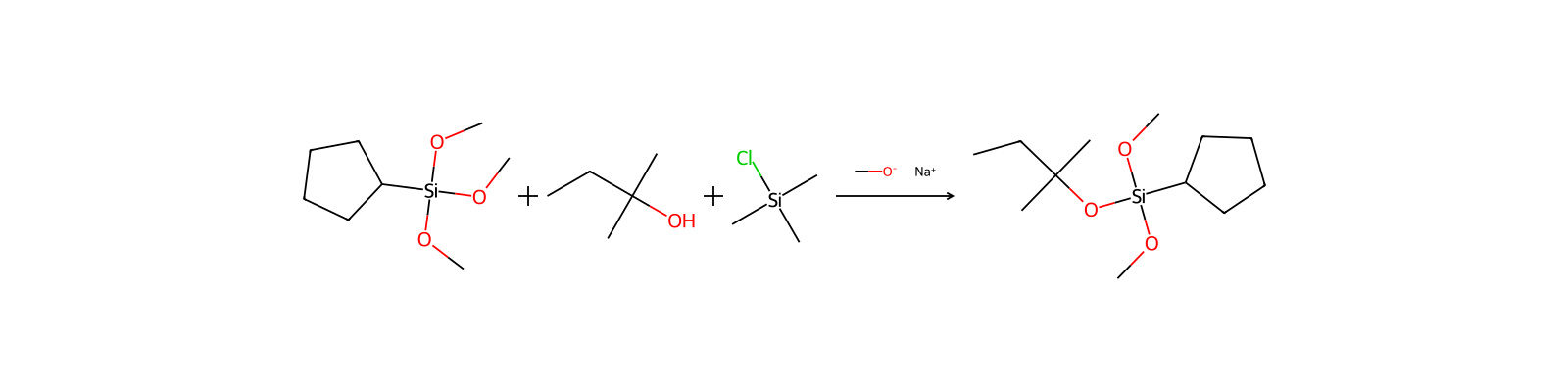
관련 반응
3,363건


연결된 노트
불러오는 중…