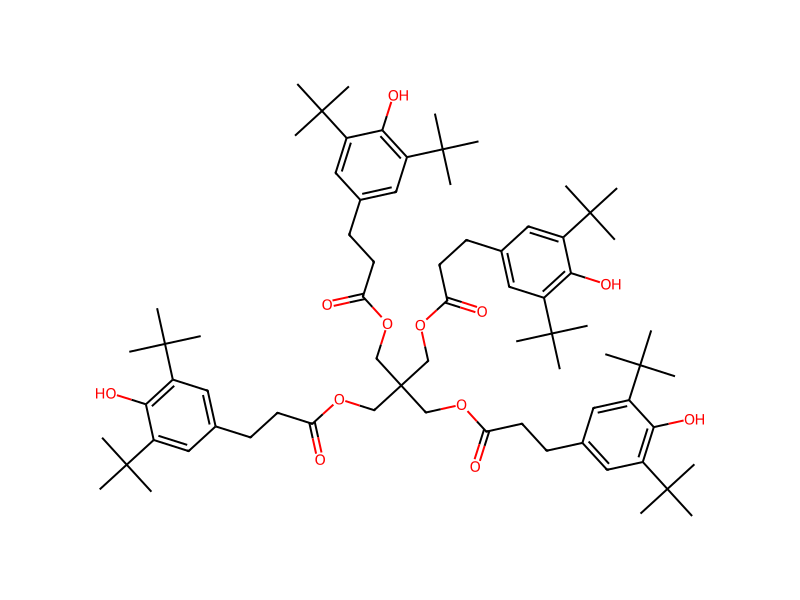
기본 정보
- 표준 SMILES
CC(C)(C)c1cc(CCC(=O)OCC(COC(=O)CCc2cc(C(C)(C)C)c(O)c(C(C)(C)C)c2)(COC(=O)CCc2cc(C(C)(C)C)c(O)c(C(C)(C)C)c2)COC(=O)CCc2cc(C(C)(C)C)c(O)c(C(C)(C)C)c2)cc(C(C)(C)C)c1O- InChIKey
BGYHLZZASRKEJE-UHFFFAOYSA-N- 분자식
- C73H108O12
- 평균 분자량
- 1,177.6 g/mol
- 단동위원소 질량
- 1,176.7840789
개요
has antioxidant activity
이름 및 식별자
- 우선 이름
- Antioxidant 1010
- IUPAC
- [3-[3-(3,5-ditert-butyl-4-hydroxyphenyl)propanoyloxy]-2,2-bis[3-(3,5-ditert-butyl-4-hydroxyphenyl)propanoyloxymethyl]propyl] 3-(3,5-ditert-butyl-4-hydroxyphenyl)propanoate
- 현지명
- 테트라키스-[메틸렌 3-(3`,5`-디-t-부틸-4`-하이드록시페닐)프로피오네이트]메탄
- 영어명
- Antioxidant 1010
- 분자식
- C73H108O12
- 분자량
- 1177.66
이름 및 동의어
6683-19-8Irganox 1010Pentaerythritol tetrakis(3-(3,5-di-tert-butyl-4-hydroxyphenyl)propionate)Antioxidant 1010Tetraalkofen BPEPhenosane 23Dovernox 10Fenozan 22Fenozan 23Naugard 10Sumilizer BP 101Irganox 1010FF
이름 더 보기
테트라키스(메틸렌(3,5-디-삼차뷰틸-4-하이드록시히드로시남산))메탄테트라키스-[메틸렌3-(3`,5`-디-t-부틸-4`-하이드록시페닐)프로피오네이트]메탄3,5-비스(1,1-다이메틸에틸)-4-하이드록시벤젠-프로판산2,2-비스[[3-[3,5-비스(1,1-다이메틸에틸)-4-하이드록시페닐]-1-옥소-프로폭시]메틸]-1,3-프로판디일에스터펜타에리스리틸테트라-다이-t-부틸하이드록시하이드로신나메이트테트라키스(메틸렌(3,5-디-삼차뷰틸-4-하이드록시히드로시남산))메탄3,5-비스(1,1-다이메틸에틸)-4-하이드록시벤젠-프로판 산 2,2-비스[[3-[3,5-비스(1,1- 다이메틸에틸)-4-하이드록시페닐]-1-옥소- 프로폭시]메틸]-1,3-프로판디일 에스터테트라키스(에틸렌(3,5-다이-삼차뷰틸-4-하이드록시하이드로시남산))메탄PENTAERYTHRITYL TETRA-DI-t-BUTYL HYDROXYHYDROCINNAMATEPentaerythritol TetrakisBHPMao60Antioxidant1010PENTAERYTHRITOL TETRAKIS(3,5-DI-TERT-BUTYL-4-HYDROXYHYDROCINNAMATE)Carbyltetramethylene tetrakis(3,5-di-tert-butyl-4-hydroxyhydrocinnamate)TTHP
Irganox 1040Anox 20AMRalox 630ANOX 20ADK Stab AO 60Irganox 1010FPMARK AO 60DTXSID1027633
데이터베이스 식별자
- CAS
6683-19-8- PubChem CID
- 64819
- DTXSID
DTXSID1027633- ChEMBL
CHEMBL3187856- UNII
- 255PIF62MS
- EC Number
- 229-722-6、687-966-2
- Nikkaji
- J46.615H
물성
구조 계산 물성
- XLogP
- 19.4
- 극성 표면적
- 186 Ų
- 수소 결합 공여자 수
- 4
- 수소 결합 수용자 수
- 12
- 회전 가능 결합 수
- 32
- 무거운 원자 수
- 85
- 형식 전하
- 0
- 복잡도
- 1,730
실험 및 물리화학적 성질
Chemical ClassesOther Classes -> Other Organic Compounds
Polymers
Plastics -> Polyolefin-I; PUR; Polyolefin-II; PVC (soft); PVC (rigid); PET; PA; PC; (E)PS
Plastics -> Antioxidants
CosmeticsCosmetic ingredients (Pentaerythrityl Tetra-di-t-butyl Hydroxyhydrocinnamate) -> CIR (Cosmetic Ingredient Review)
FragrancesFragrance Ingredient (Benzenepropanoic acid, 3,5-bis(1,1-dimethylethyl)-4-hydroxy-, 2,2-bis[[3-[3,5-bis(1,1-dimethylethyl)-4-hydroxyphenyl]-1-oxopropoxy]methyl]- -1,3-propanediyl ester) -> IFRA transparency List
LogP23
Density1.15 g/cm³
SolubilitySolubility in water: none
Flash Point
297 °C o.c.
566.6 °F (open cup)
Animal DrugsPharmaceuticals -> UK Veterinary Medicines Directorate List
Endocrine DisruptorsPotential endocrine disrupting compound
Melting Point
110-125 °C
230-257 °F
Vapor Density1.15
물리화학적 성질
- 녹는점
- 115 · 115-118 °C (dec.)(lit.)
- 끓는 점
- 779.1 °C · 779.1°C (rough estimate)
- 밀도
- 0.9594 · 0.9594 (rough estimate)
- 굴절률
- 1.639 · 1.6390 (estimate)
- 저장 조건
- 2 · 2-8°C
- 용해도
- 클로로포름(약간 용해됨), 에틸아세테이트(약간 용해됨)
- 산도 계수 (pKa)
- 11.71 · 11.71±0.40(Predicted)
- 물리적 상태
- Solid
- 색상
- 흰색에서 황백색까지
- 화장품 원료 기능
- 항산화제
- InChIKey
- BGYHLZZASRKEJE-UHFFFAOYSA-N
- LogP
- 18.832 · 18.832 (est)
- EPA
- 3 · Pentaerithritol tetrakis[3,5-di-tert-butyl-4-hydroxyhydrocinnamate] (6683-19-8)
안전 및 규제
GHS 분류
GHS Classification
This chemical does not meet GHS hazard criteria for 91.6% (2698 of 2945) of all reports.
Not Classified
Aggregated GHS information provided per 2945 reports by companies from 12 notifications to the ECHA C&L Inventory.
Warning
H302 (100%): Harmful if swallowed [Warning Acute toxicity, oral]
P264, P270, P273, P280, P301+P317, P302+P352, P321, P330, P332+P317, P362+P364, and P501 (click each P-code to see the statement)
유해성 정보
Regulatory Information
Chemical: Benzenepropanoic acid, 3,5-bis(1,1-dimethylethyl)-4-hydroxy-, 2,2-bis[[3-[3,5-bis(1,1-dimethylethyl)-4-hydroxyphenyl]-1-oxopropoxy]methyl]-1,3-propanediyl ester
Benzenepropanoic acid, 3,5-bis(1,1-dimethylethyl)-4-hydroxy-, 1,1'-[2,2-bis[[3-[3,5-bis(1,1-dimethylethyl)-4-hydroxyphenyl]-1-oxopropoxy]methyl]-1,3-propanediyl] ester is listed on the EPA's Chemical Data Reporting (CDR) system. Manufacturers and importers of Benzenepropanoic acid, 3,5-bis(1,1-dimethylethyl)-4-hydroxy-, 1,1'-[2,2-bis[[3-[3,5-bis(1,1-dimethylethyl)-4-hydroxyphenyl]-1-oxopropoxy]methyl]-1,3-propanediyl] ester are required to report information about their production and use of this chemical to the EPA under the Toxic Substances Control Act (TSCA). (40 eCFR Part 711)
Status: Active Update: 26-10-2022 https://echa.europa.eu/registration-dossier/-/registered-dossier/15308
Benzenepropanoic acid, 3,5-bis(1,1-dimethylethyl)-4-hydroxy-, 2,2-bis[[3-[3,5-bis(1,1-dimethylethyl)-4-hydroxyphenyl]-1-oxopropoxy]methyl]-1,3-propanediyl ester: Does not have an individual approval but may be used under an appropriate group standard
Other Safety InformationIMAP assessments - Benzenepropanoic acid, 3,5-bis(1,1-dimethylethyl)-4-hydroxy-, 2,2-bis[[3-[3,5-bis(1,1-dimethylethyl)-4-hydroxyphenyl]-1-oxopropoxy]methyl]-1,3-propanediyl ester: Human health tier I assessment
Fire HazardsCombustible. Finely dispersed particles form explosive mixtures in air.
Hazards Summary
May cause mechanical eye and respiratory tract irritation; [ICSC] Not a skin or eye irritant in rabbits; Not a skin sensitizer in guinea pigs; No adverse effects to fertility, reproduction, or development observed in 2-generation oral study of rats (doses up to 10,000ppm in feed); No teratogenic effects observed in mice (doses up to 1,000 mg/kg/day); [IUCLID] May cause mechanical irritation; [Addivant MSDS]
EPA Safer ChemicalChemical: Pentaerythritol, tetrakis(3,5-di-tert-butyl-4-hydroxyhydrocinnamate)
Chemical DangersReacts with strong oxidants, strong acids and strong bases.
Physical DangersDust explosion possible if in powder or granular form, mixed with air.
Hazard Classes and Categories
Not Classified
Acute Tox. 4 (100%)
안전 및 보호
Fire FightingUse water spray, foam, powder, carbon dioxide.
First Aid Measures
Fresh air, rest.
Rinse and then wash skin with water and soap.
Rinse with plenty of water (remove contact lenses if easily possible).
Rinse mouth.
Safe StorageSeparated from strong oxidants, strong bases and strong acids.
Spillage DisposalRemove all ignition sources. Personal protection: particulate filter respirator adapted to the airborne concentration of the substance. Sweep spilled substance into covered containers. If appropriate, moisten first to prevent dusting.
Eye PreventionWear safety spectacles.
Fire PreventionNO open flames. Prevent deposition of dust. Closed system, dust explosion-proof electrical equipment and lighting.
Inhalation RiskA nuisance-causing concentration of airborne particles can be reached quickly when dispersed.
Ingestion PreventionDo not eat, drink, or smoke during work.
Inhalation PreventionAvoid inhalation of dust.
Threshold Limit Values (TLV)2 mg/m³ [2002]
Effects of Short Term ExposureMay cause mechanical irritation to the eyes and respiratory tract.
독성 정보
Toxicity SummarySafe in the present practices of use and concentration. Ingredient, concentration, and use information are available in documents discoverable at https://cir-reports.cir-safety.org
Signs and Symptoms
Cough.
Redness.
Toxicity DataLC50 (rat) > 1,950 mg/m3/4hr
안전 데이터
- wgk
- -
- tsca
- TSCA listed
- rtecs
- DA8340900
- 독성
- LD50 unreported in mammal (species unspecified): 10gm/kg
- HS 번호
- 29182900
- safety_code
- 22-24/25
- 기존화학 물질
- KE-03066
- 스토리지 클래스
- 11 - Combustible Solids
화학 및 산업
용도 및 제조
Uses
CIR ingredient: Pentaerythrityl Tetra-di-t-butyl Hydroxyhydrocinnamate
Used in the polymers industry as a stabilizer and antioxidant; [IUCLID] Used as a stabilizer for various polymers, as a radical scavenger in polyolefins, to make construction foam, Raffia film (PP film) and fibers, adhesives and sealants, thermoplastics, plastic and rubber products, wire and cable, wood plastic composites, and textiles-leather-fur; [ExPub: ECHA REACH Registrations] Permitted for use as an inert ingredient in non-food pesticide products; [EPA] Used as an antioxidant; [Addivant MSDS]
Textiles (Fiber & Fabric Manufacturing) [Category: Industry]
Plastics -> Typical concentration range in plastic materials -> 0.002 - 0.5%
U.S. Production2023: 40,000,000 - <55,000,000 lb
Consumer UsesAnti-static agent
Industry UsesOxidizing agent
Household ProductsInformation on 33 consumer products that contain Pentaerythrityl Tetra-Di-T-Butyl Hydroxyhydrocinnamate in the following categories is provided:
Use Classification
EPA Safer Chemical Functional Use Classes -> Preservatives and Antioxidants
Safer Chemical Classes -> Green circle - The chemical has been verified to be of low concern
Fragrance Ingredients
Plastics -> Polymer Type -> Polyolefin-I; PUR; Polyolefin-II; PVC (soft); PVC (rigid); PET; PA; PC; (E)PS
Plastics -> Antioxidants
General Manufacturing Information
Transportation Equipment Manufacturing
Benzenepropanoic acid, 3,5-bis(1,1-dimethylethyl)-4-hydroxy-, 1,1'-[2,2-bis[[3-[3,5-bis(1,1-dimethylethyl)-4-hydroxyphenyl]-1-oxopropoxy]methyl]-1,3-propanediyl] ester: ACTIVE
응용 분야
용도Pentaerythritol Tetrakis(3-(3,5-di-tert-butyl-4-hydroxyphenyl)propionate) is an antioxidant used in food packaging to prevent the spoilage and increase the shelf life of food products. It can be found mainly in food packages made of LDPE, HDPE, PP, PVC and PET.
일반 설명Pentaerythritol tetrakis(3,5-di-tert-butyl-4-hydroxyhydrocinnamate) (PT) is a sterically hindered phenolic antioxidant and a heat stabilizer mainly used to enhance the oxidative resistance and protection against the toxicity of solvents. It has a glass transition temperature of 50℃ and can be annealed at room temperature.PT can be used as an additive to protect biaxially-oriented propylene (BOPP) capacitor film from thermal oxidation on UV exposure. It can also be used as a standard material to study the gas-cluster ion sputtering (GCIS) using X-ray photoelectron microscopy (XPS) and Atomic force microscopy (AFM).
상·하류 제품 정보
상류 원료
하류 제품
공급사50 곳
国药集团化学试剂有限公司86-21-63210123 · [email protected]
梯希爱(上海)化成工业发展有限公司021-67121386 · [email protected]
衢州润东化工有限公司0570-8789886 18892685668 · [email protected]
上海阿拉丁生化科技股份有限公司400-6206333 13167063860 · [email protected]
上海创欣化学有限公司021-54253545
T&W GROUP021-61551611 13296011611 · [email protected]
南京兰亚化工贸易有限公司+86-25-8331-5620 · [email protected]
杭州瑞科化工有限公司+86 0571 88254703 · [email protected]
Syntechem Co.,Ltd[email protected]
天津中信凯泰化工有限公司022-66880623 · [email protected]
安耐吉化学&3A(安徽泽升科技股份有限公司)400-0056266 · [email protected]
上海瀚鸿科技股份有限公司021-54306202 13764082696 · [email protected]
上海柯维化学技术有限公司021-64609169 18901607656 · [email protected]
上海诗丹德标准技术服务有限公司021-021-57127007-6622-6622 17621252073 · [email protected]
上海隆盛化工有限公司58099637 13585536065 · [email protected]
Beckmann-Kenko GmbH+49 4241 9308 88 · [email protected]
恒桥产业股份有限公司025-84712192 · [email protected]
山东西亚化学有限公司13355009207 13355009207 · [email protected]
玛雅试剂+86 (573) 82222445 (0)18006601000 452520369 · [email protected]
四川库利南科技有限公司400-1166-196 18981987031 · [email protected]
天津希恩思生化科技有限公司400 638 7771 · [email protected]
斯百全化学(上海)有限公司021-021-021-67601398-809-809-809 15221380277 · [email protected]
烟台恒诺新材料有限公司0535-6397790 18653519533 · [email protected]
纽卜特贸易(上海)有限公司021-61630391 · [email protected]
上海遐瑞医药科技有限公司+86 21 61551611
TCI AMERICA800-4238616 · [email protected]
TOKYO CHEMICAL INDUSTRY CO., LTD.03-36680489 · [email protected]
TCI Europe320-37350700 · [email protected]
深圳振强药物研发有限公司0755-66853366 13670046396 · [email protected]
上海将来实业股份有限公司400-0066400 13621662912 · [email protected]
青岛德达志成化工有限公司18766299236 · [email protected]
常州市尚科医药化工材料有限公司0519-85269522 15906111708 · [email protected]
成都零六生物科技有限公司400-1166-196 13458535857 · [email protected]
湖北瑞今化学有限公司027 83642615 13995607107 · [email protected]
上海麦克林生化科技股份有限公司15221275939 15221275939 · [email protected]
上海永叶生物科技有限公司86-021-61559134 15921386130 · [email protected]
无锡艾发化工科技有限公司0086-510-83488850
上海有朋化工有限公司021-69005955 13701776567 · [email protected]
北京海力扬化学科技有限公司13718199399 · [email protected]
四川海诺威科技有限公司13708085536 13708085536 · [email protected]
天津霖谊化工科技有限公司022-58788819 13602056505
上海凯赛化工有限公司021-33516722 13701817765 · [email protected]
上海彤源化工有限公司021-021-69182866 13701855675 · [email protected]
Shenzhen Vtolo Chemicals Co., Ltd.13534282526 · [email protected]
上海蓝润化学有限公司021-69515658 ; 69515628 13701998368 · [email protected]
上海容立化学科技有限公司021-69992220 13701886816 · [email protected]
上海康拓化工有限公司021-69185552 13701777608 · [email protected]
湖北巨胜科技有限公司027-59599241 18871490274 · [email protected]
池州凯隆进出口贸易有限公司[email protected]
Sigma-Aldrich西格玛奥德里奇(上海)贸易有限公司021-61415566 800-8193336 · [email protected]
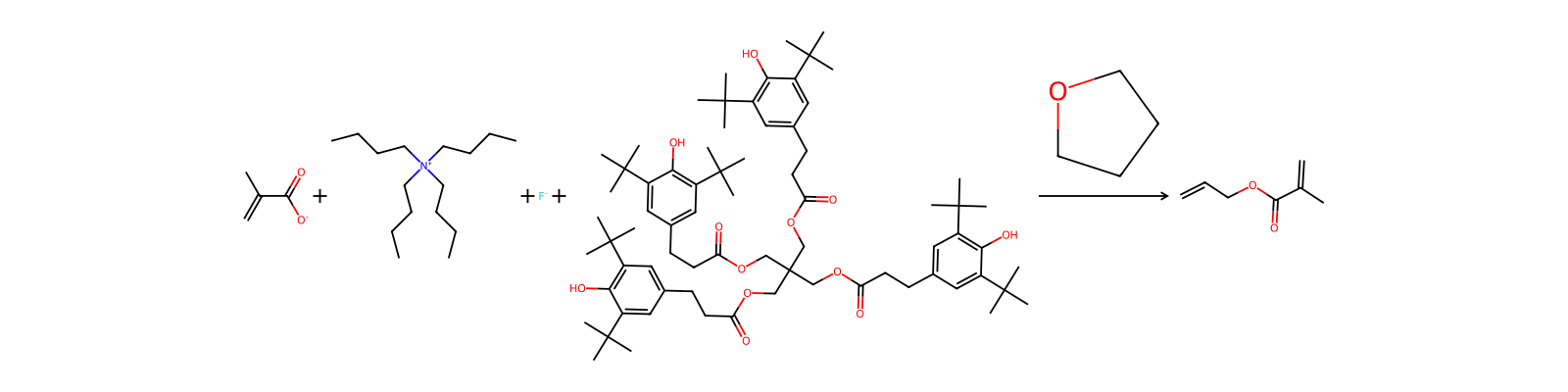
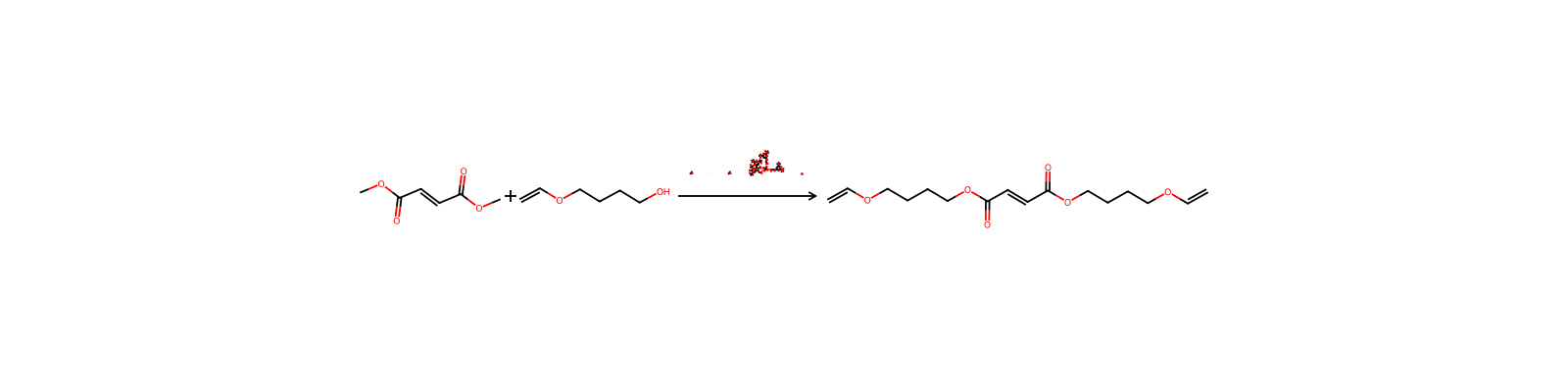
관련 반응
8건





연결된 노트
불러오는 중…