
기본 정보
- 표준 SMILES
CC1=CCC2CC1C2(C)C- InChIKey
GRWFGVWFFZKLTI-UHFFFAOYSA-N- 분자식
- C10H16
- 평균 분자량
- 136.23 g/mol
- 단동위원소 질량
- 136.12520051
개요
Alpha-pinene appears as a clear colorless liquid with a turpentine odor. Flash point 91 °F. Less dense than water and insoluble in water. Vapors are heavier than air. Used as a solvent.
이름 및 식별자
- 우선 이름
- (+-)-alpha-Pinene
- IUPAC
- 2,6,6-trimethylbicyclo[3.1.1]hept-2-ene
- 현지명
- 알파-핀네폴리머
- 영어명
- ALPHA-PINENEPOLYMER
- 분자식
- C10H16
- 분자량
- 136.24
이름 및 동의어
ALPHA-PINENE80-56-82,6,6-Trimethylbicyclo[3.1.1]hept-2-eneAcintene Apin-2(3)-enealfa-PineneSylvapine APINENE, ALPHADTXSID4026501Leavo-95(+-)-alpha-pinene(+-)-2-pinene
이름 더 보기
알파-핀네폴리머alpha-pinene resinALPHA-PINENEPOLYMERALPHA-Pinene homopolymerBicyclo[3.1.1]hept-2-ene, 2,6,6-trimethyl-, homopolymer
NSC-77272,6,6-Trimethylbicyclo(3.1.1)-2-hept-2-eneBicyclo[3.1.1]hept-2-ene, 2,6,6-trimethyl-PC-500(TERPENE)FEMA No. 2902FEMA Number 2902DTXCID0065012,6,6-Trimethylbicyclo(3.1.1)hept-2-ene
데이터베이스 식별자
- CAS
2437-95-8、25766-18-1、80-56-8- PubChem CID
- 6654
- DTXSID
DTXSID4026501- ChEMBL
CHEMBL442565- ChEBI
CHEBI:36740- EC Number
- 201-291-9、219-445-9
- Nikkaji
- J3.210G
물성
구조 계산 물성
- XLogP
- 2.8
- 극성 표면적
- 0 Ų
- 수소 결합 공여자 수
- 0
- 수소 결합 수용자 수
- 0
- 회전 가능 결합 수
- 0
- 무거운 원자 수
- 10
- 형식 전하
- 0
- 복잡도
- 186
실험 및 물리화학적 성질
Chemical Classes
Biological Agents -> Terpenes
Biological Agents -> Terpenes
Flammable agents - 3rd degree
FragrancesFragrance Ingredient (alpha-Pinene) -> IFRA transparency List
Pesticides
Agrochemicals -> Pesticide active substances
Active substance -> EU Pesticides database: Not approved
LogP
log Kow = 4.83
4.44
Odor
CHARACTERISTIC ODOR OF PINE
Odor of turpentine
Food AdditivesFLAVORING AGENT OR ADJUVANT -> FDA Substance added to food
Density
0.858 (USCG, 1999) - Less dense than water; will float
Density: 0.8592 at 20 °C/4 °C
DENSITY: 0.8625 AT 15 °C
0.855-0.860
0.858
Flavoring AgentsEU Flavoring substances
Viscosity1.303 cP at 25 °C
Color/Form
Colorless, transparent liquid
COLORLESS, MOBILE LIQUID
Solubility
ALMOST INSOLUBLE IN PROPYLENE GLYCOL & GLYCERINE
Sol in alcohol, chloroform, ether, glacial acetic acid, fixed oils
In water, 2.49 mg/L at 25 °C
Insoluble in water; soluble in oils
Soluble (in ethanol)
Flash Point
91 °F (NTP, 1992)
33 °C
91 °F (33 °C) (CLOSED CUP)
91 °F
물리화학적 성질
- EPA
- 3.1 · Bicyclo[3.1.1]hept-2-ene, 2,6,6-trimethyl-, homopolymer (25766-18-1)
안전 및 규제
GHS 분류
GHS Classification
This chemical does not meet GHS hazard criteria for 1.2% (25 of 2036) of reports.
Danger
H226 (97.6%): Flammable liquid and vapor [Warning Flammable liquids]
P210, P233, P240, P241, P242, P243, P261, P264, P264+P265, P270, P272, P273, P280, P301+P316, P301+P317, P302+P352, P303+P361+P353, P305+P354+P338, P317, P321, P330, P331, P332+P317, P333+P317, P362+P364, P370+P378, P391, P403+P235, P405, and P501 (click each P-code to see the statement)
Aggregated GHS information provided per 2036 reports by companies from 51 notifications to the ECHA C&L Inventory. Each notification may be associated with multiple companies.
Warning
유해성 정보
Regulatory Information
Chemical: Bicyclo[3.1.1]hept-2-ene, 2,6,6-trimethyl-
Regulation (EC) No 1831/2003 (amended)
Bicyclo[3.1.1]hept-2-ene, 2,6,6-trimethyl- is listed on the EPA's Chemical Data Reporting (CDR) system. Manufacturers and importers of Bicyclo[3.1.1]hept-2-ene, 2,6,6-trimethyl- are required to report information about their production and use of this chemical to the EPA under the Toxic Substances Control Act (TSCA). (40 eCFR Part 711)
2007/442
Status: Active Update: 08-05-2023 https://echa.europa.eu/registration-dossier/-/registered-dossier/14724
Bicyclo[3.1.1]hept-2-ene, 2,6,6-trimethyl-: HSNO Approval: HSR001211 Approved with controls
Other Safety InformationIMAP assessments - Alpha-pinene: Human health tier II assessment
DOT LabelFlammable Liquid
Fire Hazards
Special Hazards of Combustion Products: Vapor may travel considerable distance to source of ignition and flashback. Container explosion may occur during fire conditions. Forms explosive mixtures in air. (USCG, 1999)
· HIGHLY FLAMMABLE: Will be easily ignited by heat, sparks or flames.
Fire PotentialFlammable liquid. A dangerous fire hazard when exposed to heat, flame, or oxidizing materials.
Health Hazards
Harmful if swallowed, inhaled or absorbed through skin. High concentrations are extremely destructive to mucous membrane and upper respiratory tract, eyes and skin. Symptoms of exposure may include burning sensation, coughing, wheezing, laryngitis, shortness of breath, headache, nausea and vomiting. (USCG, 1999)
CAUTION: Petroleum crude oil (UN1267) may contain TOXIC hydrogen sulphide gas.
Hazards Summary
Turpentine and the monoterpenes (alpha-pinene, beta-pinene, 3-carene) are skin and mucous membrane irritants, and in high concentrations, are central nervous system (CNS) depressants. A dermal sensitizer; [ACGIH] A skin, eye, and mucous membrane irritant; Toxic by ingestion with effects similar to turpentine poisoning; Mean lethal oral dose for adult = 4-6 oz; Potential health effects include CNS depression and kidney damage; [HSDB] Harmful by inhalation, ingestion, and skin absorption; [CAMEO] An irritant; May cause skin sensitization; [MSDSonline] See Turpentine. See TERPENES.
May cause irritation; Inhalation may cause dizziness or suffocation; [Acros Organics MSDS] See alpha-Pinene.
DOT ID and Guide2368 128
FDA Requirements
Alpha-pinene is a food additive permitted for direct addition to food for human consumption as a synthetic flavoring substance and adjuvant in accordance with the following conditions: a) they are used in the minimum quantity required to produce their intended effect, and otherwise in accordance with all the principles of good manufacturing practice, and 2) they consist of one or more of the following, used alone or in combination with flavoring substances and adjuvants generally recognized as safe in food, prior-sanctioned for such use, or regulated by an appropriate section in this part.
Reactive GroupHydrocarbons, Aliphatic Unsaturated
Special Reports
European Chemicals Bureau; IUCLID Dataset, Pin-2(3)-ene (80-56-8) 62 pp. (2000 CD-ROM edition). Available from the Database Query page at: http://ecb.jrc.it/esis/esis.php as of October 8, 2008.
The Flavor and Fragrance High Production Volume Consortia; Revised Robust Summaries for Bicyclic Terpene Hydrocarbons Submitted to the EPA under the HPV Challenge Program. 202 pp. (November 9, 2006). Available from a search of http://www.epa.gov/chemrtk/pubs/summaries/bictrphy/c13610tc.htm as of October 8, 2008
FIFRA Requirements
Residues of alpha-pinene are exempted from the requirement of a tolerance when used as a stabilizer in accordance with good agricultural practice as inert (or occasionally active) ingredients in pesticide formulations applied to growing crops only. Limit: not more than 2% of formulation by weight.
Residues of alpha-pinene are exempted from the requirement of a tolerance when used as a stabilizer in accordance with good agricultural practice as inert (or occasionally active) ingredients in pesticide formulations applied to animals. Limit: not more than 2% of formulation by weight.
안전 및 보호
Fire FightingExcerpt from ERG Guide 128 [Flammable Liquids (Water-Immiscible)]:
Accidental Release Measures
· CALL 911. Then call emergency response telephone number on shipping paper. If shipping paper not available or no answer, refer to appropriate telephone number listed on the inside back cover.
· ELIMINATE all ignition sources (no smoking, flares, sparks or flames) from immediate area.
First Aid
EYES: First check the victim for contact lenses and remove if present. Flush victim's eyes with water or normal saline solution for 20 to 30 minutes while simultaneously calling a hospital or poison control center. Do not put any ointments, oils, or medication in the victim's eyes without specific instructions from a physician. IMMEDIATELY transport the victim after flushing eyes to a hospital even if no symptoms (such as redness or irritation) develop.
General First Aid:
Exposure Control and Personal Protection
· Wear positive pressure self-contained breathing apparatus (SCBA).
5.0 [ppm]
Fire Fighting Procedures
Foam, carbon dioxide, dry chemical
If material on fire or involved in fire: Do not extinguish fire unless flow can be stopped. Use water in flooding quantities as fog. Solid streams of water may spread fire. Cool all affected containers with flooding quantities of water. Apply water from as far a distance as possible. Use foam, dry chemical or carbon dioxide.
FIREFIGHTING. Protective Equipment: Wear self-contained breathing apparatus and protective clothing to prevent contact with skin and eyes. Specific Hazard(s): Flammable liquid. Emits toxic fumes under fire conditions. Vapor may travel considerable distance to source of ignition and flash back.
EXTINGUISHING MEDIA. Suitable: For small (incipient) fires, use media such as "alcohol" foam, dry chemical, or carbon dioxide. For large fires, apply water from as far as possible. Use very large quantities (flooding) of water applied as a mist or spray; solid streams of water may be ineffective. Cool all affected containers with flooding quantities of water.
Do not extinguish fire unless flow can be stopped. Use water in flooding quantities as fog. Solid streams of water may spread fire. Cool all affected containers with flooding quantities of water. Apply water from as far a distance as possible. Use foam, dry chemical, or carbon dioxide.
Storage ConditionsKeep container closed. Keep away from heat, sparks, and open flame.
Cleanup MethodsCover with an activated carbon adsorbent, take up and place in closed containers.
Nonfire Spill ResponseExcerpt from ERG Guide 128 [Flammable Liquids (Water-Immiscible)]:
Disposal Methods
SRP: The most favorable course of action is to use an alternative chemical product with less inherent propensity for occupational exposure or environmental contamination. Recycle any unused portion of the material for its approved use or return it to the manufacturer or supplier. Ultimate disposal of the chemical must consider: the material's impact on air quality; potential migration in soil or water; effects on animal, aquatic, and plant life; and conformance with environmental and public health regulations.
Contact a licensed professional waste disposal service to dispose of this material. Burn in a chemical incinerator equipped with an afterburner and scrubber but exert extra care in igniting as this material is highly flammable. Observe all federal, state, and local environmental regulations.
Preventive Measures
In case of leak or spill, evacuate area. Shut off all sources of ignition. Use nonsparking tools. Wear self-contained breathing apparatus, rubber boots, and heavy rubber gloves.
Avoid contact with eyes, skin, and clothing. Do not breathe vapor. Avoid prolonged or repeated exposure.
Wash thoroughly after handling.
If material not on fire and not involved in fire: Keep sparks, flames, and other sources of ignition away. Keep material out of water sources and sewers. Build dikes to contain flow as necessary. Attempt to stop leak if without undue personnel hazard. Use water spray to knock-down vapors.
For more Preventive Measures (Complete) data for ALPHA-PINENE (10 total), please visit the HSDB record page.
Isolation and Evacuation
Excerpt from ERG Guide 128 [Flammable Liquids (Water-Immiscible)]:
Immediate precautionary measure
Allowable Tolerances
Residues of alpha-pinene are exempted from the requirement of a tolerance when used as a stabilizer in accordance with good agricultural practice as inert (or occasionally active) ingredients in pesticide formulations applied to growing crops only. Limit: not more than 2% of formulation by weight.
Residues of alpha-pinene are exempted from the requirement of a tolerance when used as a stabilizer in accordance with good agricultural practice as inert (or occasionally active) ingredients in pesticide formulations applied to animals. Limit: not more than 2% of formulation by weight.
독성 정보
Body Burden
One of eight samples of mother's milk collected from 4 urban/industrial areas in the United States was positive for the presence of alpha-pinene(1,2). During the TEAM study in Los Angeles, CA, 1987, 79.2% of the expired air samples were found to contain alpha-pinene although the compound was detected in all personal air samplers(3). alpha-Pinene was detected during 2 exhaled breath sampling exercises taken in Los Angeles, CA, and during one sampling exercise in Pittsburg/Antioch County, CA, 1984, at estimated concentrations of 1.5 (Feb 1984) and 1.7 (May 1984) ug/cu m, and 1.3 (Jun 1984) ug/cu m, respectively(4); total median concentration was 0.33-0.93 ug/cu m(4,5).
Ecotoxicity Values
LC50; Species: Daphnia magna (Water flea, age <24 hr); Conditions: freshwater, static, 22 °C, pH 8.0 (7.4-9.4), hardness 173 mg/L CaCO3, dissolved oxygen >60%; Concentration: 68000 ug/L for 24 hr (95% confidence interval: 24000-190000 ug/L) /commercial grade >80% /
LC50; Species: Daphnia magna (Water flea, age <24 hr); Conditions: freshwater, static, 22 °C, pH 8.0 (7.4-9.4), hardness 173 mg/L CaCO3, dissolved oxygen >60%; Concentration: 41000 ug/L for 48 hr (95% confidence interval: 27000-62000 ug/L) /commercial grade >80% /
LC50; Species: Daphnia magna (Water flea); Conditions: freshwater, static, 20.1 °C, pH 7.90 + or -0.05, oxygen concentration 8.2 mg/mL; Concentration: 1.44 mg/L for 48 hr /98% pure 1R(+)-isover. Measured purity 91%/[USEPA; High Production Volume Information System (HPVIS). Detailed Chemical Results Chemical Name: Bicyclo
LC50; Species: Chaetogammarus marinus (aquatic arthropod); Conditions: sea water, semi-static, 15 °C, pH 8.0; Concentration: 2.6 mg/L for 24 hr
For more Ecotoxicity Values (Complete) data for ALPHA-PINENE (7 total), please visit the HSDB record page.
Environmental Fate
TERRESTRIAL FATE: Based on a classification scheme(1), an estimated Koc value of 2,600(SRC), determined from a water solubility of 2.49 mg/L(2) and a regression-derived equation(3), indicates that alpha-pinene is expected to have slight mobility in soil(SRC). Volatilization of alpha-pinene from moist soil surfaces is expected to be an important fate process(SRC) given an estimated Henry's Law constant of 0.294 atm-cu m/mole(SRC), derived from its vapor pressure, 4.75 mm Hg(4), and water solubility(2). However, adsorption to soil is expected to attenuate volatilization(SRC). alpha-Pinene is expected to volatilize from dry soil surfaces(SRC) based upon its vapor pressure(5). Complete removal within 250 hours after a short lag period when incubated in watershed soil slurry samples(5) suggests that biodegradation may be an important environmental fate process in soil(SRC).
AQUATIC FATE: Based on a classification scheme(1), an estimated Koc value of 2,600(SRC), determined from a log water solubility of 2.49 mg/L(2) and a regression-derived equation(3), indicates that alpha-pinene is expected to adsorb to suspended solids and sediment(SRC). Volatilization from water surfaces is expected(3) based upon an estimated Henry's Law constant of 0.29 atm-cu m/mole(SRC), derived from its vapor pressure, 4.75 mm Hg(4), and water solubility(2). Using this Henry's Law constant and an estimation method(3), volatilization half-lives for a model river and model lake are 3 hours and 5 days, respectively(SRC). However, volatilization from water surfaces is expected to be attenuated by adsorption to suspended solids and sediment in the water column. The estimated volatilization half-life from a model pond is 207 days if adsorption is considered(5). According to a classification scheme(6), an estimated BCF of 1,040(SRC), from its log Kow of 4.83(2) and a regression-derived equation(7), suggests the potential for bioconcentration in aquatic organisms is very high, provided the compound is not metabolized by the organism(SRC). alpha-Pinene reached 95% of its theoretical BOD using activated sludge in the Japanese MITI test(8), suggesting that biodegradation is an important environmental fate process in water(SRC).
ATMOSPHERIC FATE: According to a model of gas/particle partitioning of semivolatile organic compounds in the atmosphere(1), alpha-pinene, which has a vapor pressure of 4.75 mm Hg at 25 °C(2), is expected to exist solely as a vapor in the ambient atmosphere. Vapor-phase alpha-pinene is degraded in the atmosphere by reaction with photochemically-produced hydroxyl radicals(SRC); the half-life for this reaction in air is estimated to be 7 hrs(SRC), calculated from its rate constant of 5.37X10⁻¹¹ cu cm/molecule-sec at 25 °C(SRC). alpha-Pinene does not contain chromophores that absorb at wavelengths >290 nm(4) and therefore is not expected to be susceptible to direct photolysis by sunlight(SRC).
Food Survey Values
alpha-Pinene was detected as a volatile flavor component of roasted filberts(1), fried chicken(2) mangos(3) and orange essence(4). It has been detected in headspace analysis of intact, tree ripened nectarines, but not in an analysis of the blended fruits(5). The compound was identified as a volatile odor compound from 30%, 12% and 5% fat frankfurters at mean concentrations of 1,480, 1,690 and 2,300 relative peak areas (1 ng of bromobenzene = 100), respectively(6). alpha-Pinene was identified as one of the flavor compounds in tea derived from fresh pine sprouts or pine needles harvested from Korean red pine trees (Pinus densiflora Sieb. Et Zucc.) in May-June 1995(7).
alpha-Pinene was identified as a volatile flavor component of fresh grapefruit juice at 0.054 ppm(1). It was detected in mature and over-ripe guava (Psidium guajava Linn) at 1471 and 641 ug/kg, respectively(2). alpha-Pinene was identified as an emission from carrots, cotton, pistachio, safflower, sorghum, tomato, and walnut(3). It was identified as a volatile component of ginger (Zingiver officinale), celery (Apium graveolens CV dulce), and lovage (Levisticum officinale)(4). The concentration of alpha-pinene in unpasteurized orange juice ranged from 0.10-1.09 ppm(5). alpha-Pinene was identified as a volatile emission from chicken(6). It was identified as a volatile component of chamchwi (Aster scaber Thunb) herb(7).
Adverse Effects
Neurotoxin - Acute solvent syndrome
Neurotoxin - Acute solvent syndrome
Milk ConcentrationsENVIRONMENTAL: One of eight samples of mother's milk collected from 4 urban/industrial areas in the United States was positive for the presence of alpha-pinene(1,2).
Average Daily IntakeConsumption: Annual 23,000.00 lbs; Individual: 0.01949 mg/kg/day
Ecotoxicity Excerpts
/BIRDS and MAMMALS/ ... Elimination rate and total exposure of alpha-pinene /was compared/ in closely related dietary specialist and generalist woodrats, Neotoma stephensi and N. albigula, respectively. Animals were orally gavaged with alpha-pinene, a plant secondary compound present in the natural diets of both woodrat species. ... Venous blood /was collected/ at 3, 6, 10, 15, and 20 min post-ingestion of alpha-pinene. ... Specialist and generalist woodrats did not differ in elimination rates of alpha-pinene. However, specialists had lower exposure levels of alpha-pinene than generalists due to lower initial delivery of alpha-pinene to the general circulation. The levels of alpha-pinene detected in the bloodstream of specialists were 4.7-5.3 times lower over all time intervals than generalists. Thus, specialists encounter a functionally lower dose of toxin than generalists. /It was suggested/ that the lower exposure level of specialist woodrats may be due to mechanisms in the gut that decrease toxin absorption. Regardless of mechanism, lower exposure to plant toxins may allow specialists to forage on diets with high toxin concentrations thereby facilitating dietary specialization.
Plant Concentrations
PLANT SPECIES RELEASE APPRECIABLE QUANTITIES OF VOLATILE ORGANIC SUBSTANCES TO THE ATMOSPHERE. THE MAJOR COMPD EMITTED ARE MONOTERPENES LIKE ALPHA-PINENE, BETA-PINENE, & LIMONENE & THE HEMITERPENE ISOPRENE.
alpha-Pinene was identified in chamise shrubs (Adenostoma fasciculatum)(1). It was identified in 16 of 82 wild mushroom species(2). The normalized emission rate of alpha-pinene from mature spruce was 0.25 (Pinus glauce), 0.85 (P. Abies), and 0.34 (P. pungens) ug C/g-hr(3). The emission rates of alpha-pinene from loblolly pine, shortleaf pine, sweet gum, willow, elm, cypress, water hickory, hackberry, maple, and red oak were 2300, 7000, 45000, 80, 1300, 5700, 12000, 50, 5300, and 40 ug/kg-foliage/hr, respectively(4). The mean emission rate of alpha-pinene from sunflower (Helianthus annus L. cv. gigantues) was 6.2X10⁻¹⁶ mol/cu cm-s(5). It was identified as an emission from California agricultural plants(6). alpha-Pinene exhibited seasonal emission variations in Australian Eucalyptus globulus trees sampled under natural growing conditions from June 1996 to May 1997. Monthly average percentages beginning with May and sampled for the following 11 months were: 64; 47; 82; 60; 56; 62; 50; 62; 62; 59; 44; and 65%(7). Sampling was conducted in the Scandanavian boreal zone in Asa Research Park, Sweden and Mekrijarvi Research Station, Finland in the spring and summer of 1997; percent emission composition from Scots pine at Asa and Mekrijarvi were 35 and 63% for alpha-pinene, respectively(8). alpha-Pinene was detected, not quantified in ambient air around Pinus halepensis trees located in Bab-Ezzouar, a suburb of Algiers, and in Eucalyptus globulus and Cedrus atlantica trees from El-Hamma Botanical Garden, Algiers(9).
Ongoing Test Status
The following link will take the user to the National Toxicology Program (NTP) Test Agent Search Results page, which tabulates all of the "Standard Toxicology & Carcinogenesis Studies", "Developmental Studies", and "Genetic Toxicity Studies" performed with this chemical. Clicking on the "Testing Status" link will take the user to the status (i.e., in review, in progress, in preparation, on test, completed, etc.) and results of all the studies that the NTP has done on this chemical.[Available from: http://ntp-apps.niehs.nih.gov/ntp_tox/index.cfm?fuseaction=ntpsearch.searchresults&searchterm=80-56-8]
On December 26, 2000, EPA launched the VCCEP Pilot by asking companies that manufactured or imported one or more of the 23 chemicals selected for the program to volunteer to sponsor their chemicals and provide information on health effects, exposure, risk, and data needs. Thirty-five companies and 10 consortia responded, volunteering to sponsor 20 chemicals, including alpha-pinene. The Terpene Consortium, as a member of the Flavor and Fragrance High Production Volume Consortia (FFHPVC) has agreed to sponsor Tier 1 evaluation of alpha-pinene but has not yet submitted a report to the EPA.[U.S. EPA; Voluntary Children's Chemical Evaluation Program (VCCEP) Available from, as of October 20, 2008: http://www.epa.gov/oppt/vccep/index.htm]
Effluent Concentrations
The concentration of alpha-pinene in kraft pulp mill wastewater ranged from 30-1430 ppb in 2 Canadian mills monitored in 1973(1). alpha-pinene was qualitatively detected in 1 of 46 US industrial effluent samples(2). alpha-Pinene concentrations at a pulp production plant in Quebec, Canada, ranged from not detected-193 mg/cu m, date not provided(3).
The emission rate of alpha-pinene from particle board was 0.0068 mg/sq m-hr(1). It was qualitatively detected as an emission from cologne and soap(2) and particle board furniture(3). alpha-Pinene was detected as an emission from 12 of 31 cologne products(6). The emission rate of alpha-pinene from particle board and rubber molding was 25 and 2.1 ug/cu m-hr, respectively(4). Mean residential wood combustion emissions using softwood and hardwood from Denver, CO were dtermined; emissions from a fireplace were 54.65 and 3.38 mg/kg, respectively; emission from a wood stove using hard wood was 4.10 mg/kg of fuel(5). Emissions from two oiled parquets floor coverings were 14 and 10 ug/sq m-hr after 3 and 28 days following installation, respectively; 341 and 286 ug/sq m-hr, respectively, from waxed parquets; 15 and 8 ug/sq m-hr, respectively, from varnished parquets(7). Emissions from new and old linoleum floorings were zero and 1 ug/sq m-hr, respectively(7). alpha-Pinene has been identified as a volatile organic ingredient of wood-based furniture with its possible source being an ecological coating system based on natural resins, nitrocellulose, and/or softwood construction(8).
Soil Adsorption/Mobility
The Koc of alpha-pinene is estimated as 2,600(SRC), using a water solubility of 2.49 mg/L(1) and a regression-derived equation(2). According to a classification scheme(3), this estimated Koc value suggests that alpha-pinene is expected to have slight mobility in soil.
규제 정보
FDA Requirements
Alpha-pinene is a food additive permitted for direct addition to food for human consumption as a synthetic flavoring substance and adjuvant in accordance with the following conditions: a) they are used in the minimum quantity required to produce their intended effect, and otherwise in accordance with all the principles of good manufacturing practice, and 2) they consist of one or more of the following, used alone or in combination with flavoring substances and adjuvants generally recognized as safe in food, prior-sanctioned for such use, or regulated by an appropriate section in this part.
FIFRA Requirements
Residues of alpha-pinene are exempted from the requirement of a tolerance when used as a stabilizer in accordance with good agricultural practice as inert (or occasionally active) ingredients in pesticide formulations applied to growing crops only. Limit: not more than 2% of formulation by weight.
Residues of alpha-pinene are exempted from the requirement of a tolerance when used as a stabilizer in accordance with good agricultural practice as inert (or occasionally active) ingredients in pesticide formulations applied to animals. Limit: not more than 2% of formulation by weight.
안전 데이터
- tsca
- TSCA listed
화학 및 산업
약리 정보
Biological Half-Life
... Half times for elimination of inhaled (+)-alpha-pinene from the blood during the three phases were 4.8, 39, and 695 minutes. Elimination half times of (-)-alpha-pinene were 5.6, 40, and 555 minutes ...
... Eight male volunteers were exposed to 450 mg/cu m turpentine by inhalation (2 hr, 50 W) in an exposure chamber. ... The mean blood clearance 21 hours after exposure (CL21hr) of alpha-pinene, beta-pinene and 3-carene, were 0.8, 0.5, and 0.4 l.per kg per hr, respectively. The mean half lives (t1/2) of the last phase of alpha-pinene, beta-pinene, and 3-carene averaged 32, 25, and 42 hours, respectively. The t1/2s agreed with previously calculated half lives from single exposures...
Metabolism/Metabolites
... The main metabolic pathways are hydratation, hydroxylation, rearrangement, and acetylation. Five metabolites were identified.
The urinary excretion of verbenols after inhalation of alpha-pinene enantiomers was studied. Healthy male subjects were exposed to 10, 225, or 450 mg/cu m (+)alpha-pinene or 450 mg/cu m (-)alpha-pinene for 2 hr while performing light exercise. Exhaled air samples were collected after exposure, and urine samples were obtained before and after pinene exposure. Respiratory elimination of both pinenes was similar; at a concn of 450 mg/cu m, 7.7% of the total uptake of (+)alpha-pinene and 7.5% of the total uptake of (-)alpha-pinene was eliminated. Urinary excretion of verbenol 4 hr after exposure to (+)alpha-pinene ranged from 1.7% at 450 mg/cu m to 3.8% at a dose of 10 mg/cu m. Urinary excretion of (-)alpha-pinene was similar. A semilogarithmic plot of the excretion data suggested the existence of more than one rate constant for the elimination of (+)alpha-pinene and (-)alpha-pinene. Most of the verbenols were eliminated within 20 hr after a 2 hr exposure. The renal excretion of unchanged alpha-pinene was less than 0.001%. The determination of urinary verbenols may be useful as a biological exposure index for exposure to terpenes.
The biotransformation of (+)-, (-)-, and (+-)-alpha-pinenes, (-)-beta-pinene (nopinene), (-)-cis-pinane, (+)-3-carene, (-)-cis-carane, myrcene, and p-cymene in rabbits was investigated. The major metabolites were as follows: (-)-trans-verbenol from (+)-, (-)-, and (+/-)-alpha-pinenes; (-)-10-pinanol and (-)-1-p-menthene-7,8-diol from (-)-beta-pinene; (-)-alpha-terpineol and (-)-trans-sobrerol from (-)-cis-pinane; (-)-m-mentha-4,6-dien-8-ol, 3-caren-9-ol, (-)-3-carene-9-carboxylic acid, and 3-carene-9,10-dicarboxylic acid from (+)-3-carene; carane-9,10-dicarboxylic acid from (-)-cis-carane; and myrcene-3(10)-glycol, myrcene-1,2-glycol, uroterpenol, and p-cymene-9-carboxylic acid from p-cymene. These metabolisms include allylic oxidation, epoxidation, stereoselective gem-dimethyl hydroxylation and its oxidation, cleavage of a conjugated double bond by epoxidation, and regioselective oxidation, some of which are not found usually in chemical reactions, and due to which various new compounds were determined. This biotransformation of the monoterpene hydrocarbons gave some insect pheromones in high yield.
Absorption, Distribution and Excretion
Absorbed through skin, lungs, intestine.
The toxicokinetics of alpha-pinene (a-pinene) were studied in humans. The study group consisted of eight healthy males, average age 31 years. They were exposed to 0, 10, 225, or 450 mg/cu m (+)-alpha-pinene or 450 mg/cu m (-)-alpha-pinene for 2 hr in an inhalation chamber. During exposure they exercised on a cycle ergometer at the rate 50 watts. Average pulmonary uptake of (+)-alpha-pinene and (-)-alpha-pinene amounted to 59% of the exposure concn. Absolute uptake increased linearly with concn. Blood alpha-pinene concn increased rapidly at first then tapered off. Mean blood concn at the end of exposure were linearly related to inhaled concn. Elimination of alpha-pinene from the blood was triphasic. Half times for elimination of inhaled (+)-alpha-pinene from the blood during the three phases were 4.8, 39, and 695 minutes. Elimination half times fo (-)-alpha-pinene were 5.6, 40, and 555 minutes. Cumulative urinary excretion of unchanged alpha-pinene amounted to less than 0.001% of each dose. Respiratory elimination of (+)-alpha-pinene and (-)-alpha-pinene was 7.7 and 7.5% of total uptake, respectively. Five subjects complained of eye, nose, and throat irritation. No exposure related changes in lung function were seen. At the concn tested the capacity of the liver to metabolize alpha-pinene is not exceeded. (+)-alpha-Pinene and (-)-alpha-pinene show similar pharmacokinetic behavior. alpha-Pinene is readily metabolized and elimination of unchanged alpha-pinene is very low.
... Eight male volunteers were exposed to 450 mg/cu m turpentine by inhalation (2 hr, 50 W) in an exposure chamber. ...The mean relative uptakes of alpha-pinene, beta-pinene, and 3-carene were 62%, 66%, and 68% respectively, of the amount supplied. Between 2% and 5% of the net uptake was excreted unchanged in the expired air after the end of exposure. The mean blood clearance 21 hours after exposure (CL21hr) of alpha-pinene, beta-pinene and 3-carene, were 0.8, 0.5, and 0.4 l.per kg per hr, respectively. The mean half lives (t1/2) of the last phase of alpha-pinene, beta-pinene, and 3-carene averaged 32, 25, and 42 hours, respectively. The t1/2s agreed with previously calculated half lives from single exposures. The total blood clearance CL21hr of 3-carene found in this turpentine study was lower, and CL4hr of 3-carene was significantly lower than the values obtained from similar exposure to pure 3-carene. The subjects attending both exposure to turpentine and to pure alpha-pinene at 450 mg/cu m had lower CL4hr during the exposure to turpentine ... Toxicokinetics ... show small, if any, interactions between alpha-pinene, beta-pinene, and 3-carene...
Following immersion of young pigs & one human subject for 30 minutes in baths containing 150 mL of a pine-oil mixture (Fichtennadel-Latschenkieferol Kneipp) in 450 L of water, alpha- & beta-pinene & limonene (components of Latschenkieferol) were detected in exhaled air within 20 minutes reaching maximum levels 50-75 minutes after start of the bath & remaining detectable after 1 day.
용도 및 제조
Uses
Used to make camphor, insecticides, solvents, plasticizers, perfume bases, synthetic pine oil, flavorings, geraniol, terpineol, terpene esters and ethers, lube oil additives, camphene, terpin hydrate, and toxaphene; Also used as an odorant for synthetic resins and as a solvent for protective coatings, polishes, and waxes; [HSDB]
Painting (Solvents) [Category: Paint]
Used to make camphor, insecticides, solvents, plasticizers, perfume bases, and synthetic pine oil; [Merck Index]
For alpha-pinene (USEPA/OPP Pesticide Code: 067004) there are 0 labels match. /SRP: Not registered for current use in the U.S., but approved pesticide uses may change periodically and so federal, state and local authorities must be consulted for currently approved uses./
Cosmetics,food/foodstuff additive,odor agents
Mfr of insecticides /former/, solvents, plasticizers, perfume bases
U.S. Production
2023: 55,000,000 - <70,000,000 lb
(1972) 9.0X10+9 GRAMS (SALES)
(1976) 2.41X10+9 GRAMS (SALES)
alpha-Pinene is listed as a High Production Volume (HPV) chemical (65FR81686). Chemicals listed as HPV were produced in or imported into the U.S. in >1 million pounds in 1990 and/or 1994. The HPV list is based on the 1990 Inventory Update Rule. (IUR) (40 CFR part 710 subpart B; 51FR21438).
Production volumes for non-confidential chemicals reported under the Inventory Update Rule. [Table#2031]
Consumer UsesSolvent
Industry UsesIntermediate
Methods of Manufacturing
Obtained from oil of turpentine which contains 58-65% alpha-pinene along with 30% beta-pinene.
Isolation of d-alpha-pinene from Port Oxford cedar wood oil (Chamaecyparis lawsoniama Parl., Pinaceae) ... Isolation of l-alpha-pinene from mandarin peel oil (Citrus reticulata Blando, Rutaceae).
Pure alpha-pinene is obtained by distillation of turpentine oils.
Household ProductsInformation on 40 consumer products that contain Alpha-Pinenes in the following categories is provided:
Use Classification
Fragrance Ingredients
Flavoring Agents -> JECFA Flavorings Index
Flavouring Agent -> FLAVOURING_AGENT -> JECFA Functional Classes
General Manufacturing Information
All Other Basic Organic Chemical Manufacturing
Bicyclo[3.1.1]hept-2-ene, 2,6,6-trimethyl-: ACTIVE
Epoxidation of alpha-pinene gives pinene oxide which is isomerized to give campholenic aldehyde, an important feedstock for a variety of sandalwood materials.
Pyrolysis yields a mixture of ocimene and allocimene
관련 반응
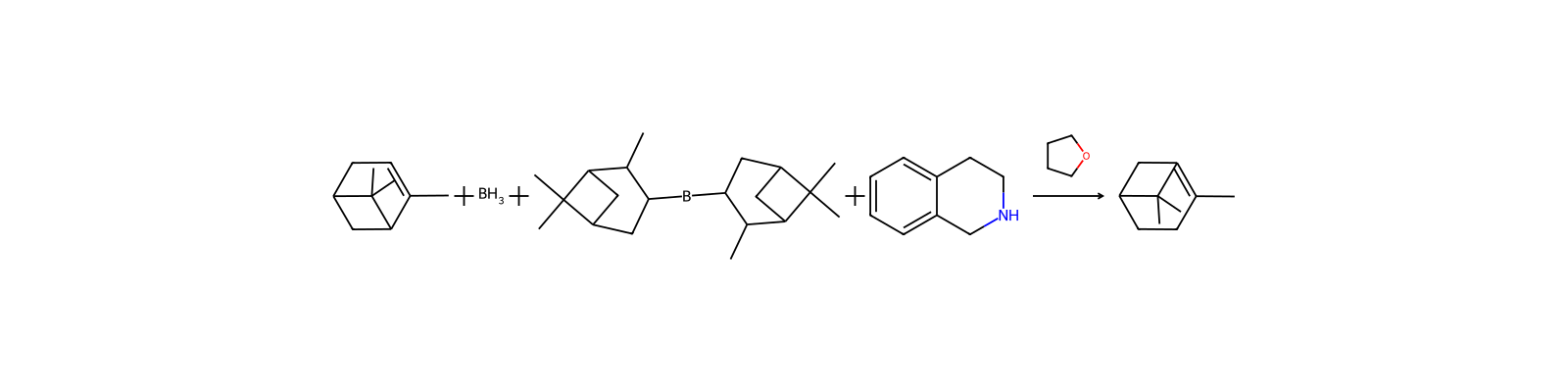
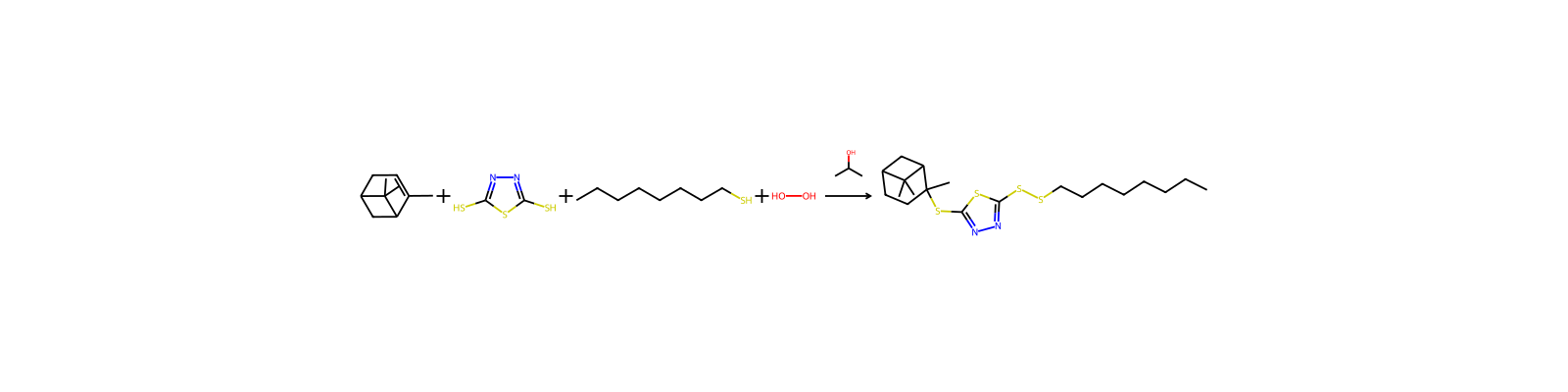
48건


연결된 노트
불러오는 중…