홈MCP워크벤치Skills
홈워크벤치알림마이페이지
llms.txt · MCP 가이드개인정보처리방침 · 이용약관 · 지원v1.8.0
  1. 홈
  2. /반응

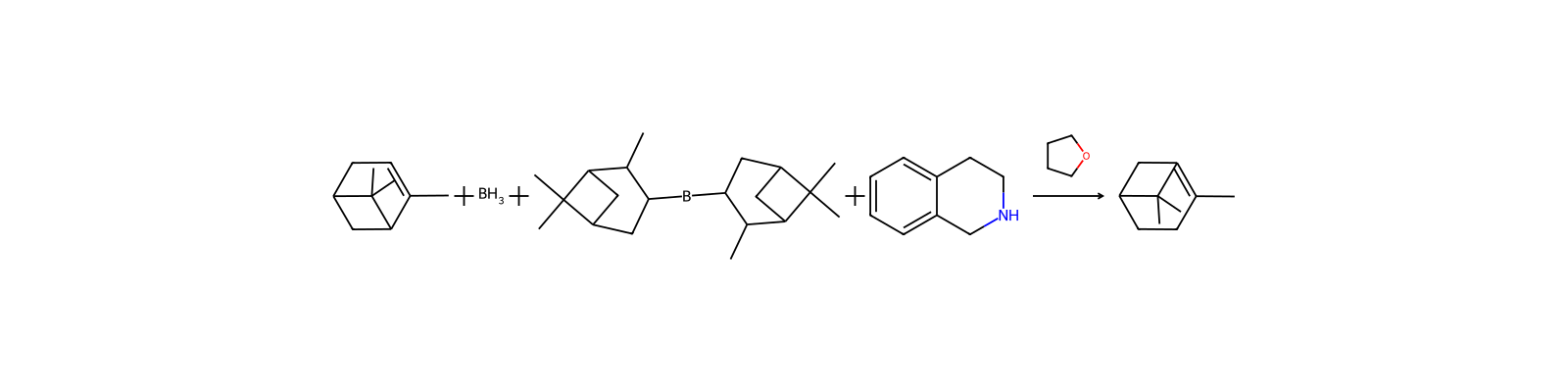
Borane → (-)-Pinene

HRID 4697
노트
인쇄 미리보기

반응식

HRID 4697 반응식
[CH3:1][C:2]1[CH:7]2[C:8]([CH3:10])([CH3:9])[CH:5]([CH2:6]2)[CH2:4][CH:3]=1.B.[B](C1C(C)C2C(C)(C)C(C2)C1)C1C(C)C2C(C)(C)C(C2)C1.C1C2C(=CC=CC=2)CCN1>O1CCCC1>[C:7]12[CH2:6][CH:5]([C:8]1([CH3:10])[CH3:9])[CH2:4][CH2:3][C:2]=2[CH3:1]
참가 물질실험 절차후처리출처 및 근거반응 노트

참가 물질

6

반응물 4

HCID 6331BoraneHCID 6654(+-)-alpha-PineneHCID 70461,2,3,4-TetrahydroisoquinolineHCID 12482041(-)-Diisopinocampheyl borane

생성물 1

HCID 15837102(-)-Pinene

시약·촉매·용매 1

HCID 8028Tetrahydrofuran용매3회

실험 절차

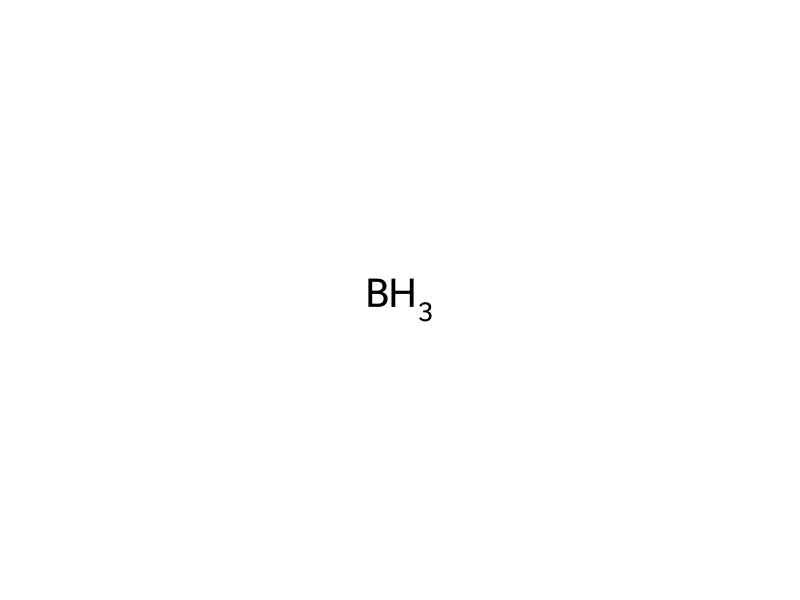
Another way to accomplish this assymetric reduction of compound 4' to optically active tetrahydroisoquinolines is to reduce the compound in tetrahydrofuran with the reagent which is obtained by reacting 2 moles of optically active alpha pinene with borane in tetrahydrofuran. The solution of the diisopinocampheylborane functions as the reducing agent in the reduction of the intermediate 4' to chiral tetrahydroisoquinoline. Basically, the compound 4' is treated with a slight excess of this reagent produced from optically active pinene and BH3 in tetrahydrofuran followed by evaporation and treatment with HCl which decomposes a complex and gives the hydrochloride of the tetrahydroisoquinoline in the aqueous phase. The base can then be recovered from the aqueous phase by treatment with ammonia and methanol as above.
후처리

  1. customis obtained

출처 및 근거

ORD 기록
ord-bc81acde98bc4b1fabc531c70cdf4325
출처 데이터셋
uspto-grants-1988_02
DOI
10.6084/m9.figshare.5104873.v1
특허 번호
US04727146

반응 노트

불러오는 중…

이 페이지에서참가 물질실험 절차후처리출처 및 근거반응 노트
