

기본 정보
- 표준 SMILES
Cc1ccc2c(c1N)C(=O)c1ccccc1C2=O- InChIKey
ZLCUIOWQYBYEBG-UHFFFAOYSA-N- 분자식
- C15H11NO2
- 평균 분자량
- 237.25 g/mol
- 단동위원소 질량
- 237.07897859
개요
1-Amino-2-methylanthraquinone can cause cancer according to California Labor Code.
이름 및 식별자
- 우선 이름
- 1-Amino-2-methylanthraquinone
- IUPAC
- 1-amino-2-methylanthracene-9,10-dione
- 현지명
- 1-아미노-2-메틸안트라퀴논
- 영어명
- 1-AMINO-2-METHYLANTHRAQUINONE
- 분자식
- C15H11NO2
- 분자량
- 237.25
이름 및 동의어
1-AMINO-2-METHYLANTHRAQUINONE82-28-0Disperse Orange 11Disperse OrangeCelliton Orange RSupracet Orange RSerisol Orange YLArtisil Orange 3RPCilla Orange RDuranol Orange GMicrosetile Orange RAAcetate Fast Orange R
이름 더 보기
1-아미노-2-메틸안트라퀴논CI 60700NSC 39943NCI-C01901NSC 667744cillaorangerdisperseorangeduranolorangeg
C.I. Disperse Orange 11Perliton Orange 3RNyloquinone Orange JRAnthraquinone, 1-amino-2-methyl-2-Methyl-1-anthraquinonylamine1-Amino-2-methyl-9,10-anthraquinone9,10-Anthracenedione, 1-amino-2-methyl-Acetoquinone Light Orange JL
데이터베이스 식별자
- CAS
82-28-0- PubChem CID
- 6702
- DTXSID
DTXSID7020057- ChEMBL
CHEMBL1413787- ChEBI
CHEBI:82382- UNII
- RHN157F30Q
- EC Number
- 201-408-3
- Nikkaji
- J4.610H
물성
구조 계산 물성
- XLogP
- 3.1
- 극성 표면적
- 60.2 Ų
- 수소 결합 공여자 수
- 1
- 수소 결합 수용자 수
- 3
- 회전 가능 결합 수
- 0
- 무거운 원자 수
- 18
- 형식 전하
- 0
- 복잡도
- 379
실험 및 물리화학적 성질
Chemical Classes
Dyes -> Anthraquinone Dyes
Carcinogens
SpringerMaterials PropertiesBoiling point
Color/FormOrange to dark red powder
Solubility
less than 1 mg/mL at 68 °F (NTP, 1992)
Soluble in ethanol, benzene, chloroform,; slightly soluble in diethyl ether
In water, 0.332 mg/L at 25 °C
DecompositionWhen heated to decomposition it emits toxic fumes of /Nitrogen oxides/.
Melting Point
401 °F (NTP, 1992)
205.5 °C
UV: 1371 (Absorption Spectra in the UV and Visible Regions, Academic Press, New York); MP: 181 °C /1-Amino-4-methylanthraquinone/
Odor Threshold0.018 ppm (air)
Vapor Pressure0.00000004 [mmHg]
Physical Description
1-amino-2-methylanthraquinone is a red powder. (NTP, 1992)
Orange to dark red solid; [HSDB] Red solid; [CAMEO]
Collision Cross Section153.2 Ų [M+H]+ [CCS Type: DT; Buffer gas: N2; Ionization: ESI+; Dataset: TOXCAST; Source Identifier: DTXSID7020057]
물리화학적 성질
- 녹는점
- 204 · 204-206 °C(lit.)
- 끓는 점
- 379.79 °C · 379.79°C (rough estimate)
- 밀도
- 1.1469 · 1.1469 (rough estimate)
- 굴절률
- 1.55 · 1.5500 (estimate)
- 저장 조건
- Sealed in dry,Room Temperature
- 산도 계수 (pKa)
- -0.53 · -0.53±0.20(Predicted)
- 색상
- Orange to Amber to Dark red
- 수용성
- 332.2 ug/L · 332.2ug/L(25℃)
- Henry's Law Constant
- 8.2 · 8.2×106 mol/(m3Pa) at 25℃, HSDB (2015)
- 안정성
- 안정적인. 강한 산화제, 무기산과 호환되지 않습니다.
- 주요 응용
- 청소용품화장품환경음식 및 음료개인 위생 관리
- InChI
- 1S/C15H11NO2/c1-8-6-7-11-12(13(8)16)15(18)10-5-3-2-4-9(10)14(11)17/h2-7H,16H2,1H3
- InChIKey
- ZLCUIOWQYBYEBG-UHFFFAOYSA-N
- SMILES
- Cc1ccc2C(=O)c3ccccc3C(=O)c2c1N
- EPA
- 1 · 1-Amino-2-methylanthraquinone (82-28-0)
화학적 성질
1-Amino-2-methylanthraquinone is a red crystalline substance or powder.
안전 및 규제
GHS 분류
GHS Classification
Warning
H302 (50%): Harmful if swallowed [Warning Acute toxicity, oral]
P203, P261, P264, P264+P265, P270, P271, P280, P301+P317, P302+P352, P304+P340, P305+P351+P338, P318, P319, P321, P330, P332+P317, P337+P317, P362+P364, P403+P233, P405, and P501 (click each P-code to see the statement)
Aggregated GHS information provided per 2 reports by companies from 2 notifications to the ECHA C&L Inventory. Each notification may be associated with multiple companies.
Warning
H351: Suspected of causing cancer [Warning Carcinogenicity]
유해성 정보
Regulatory Information
Chemical: 9,10-Anthracenedione, 1-amino-2-methyl-
Hazard Traits - Carcinogenicity
The New Jersey Worker and Community Right to Know Act requires public and private employers to provide information about hazardous substances at their workplaces. (N.J.S.A. 34:5A-1 et. seq.)
Other Safety InformationIMAP assessments - Anthraquinone-based dyes with limited data availability: Human health tier II assessment
Fire HazardsFlash point data for this chemical are not available; however, it is probably combustible. (NTP, 1992)
Health HazardsSYMPTOMS: Symptoms of exposure to this compound include drowsiness, skin and eye irritation, nausea, vomiting, weakness, somnolence, methemoglobinemia, liver damage and unconsciousness.
Hazards Summary
Evidence for carcinogenicity in laboratory animals include carcinomas in the liver and kidney; Shown to be mutagenic; Emergency treatment: Anthraquinones; Anthraquinones have cathartic action after ingestion, and in severe cases, may cause kidney damage, liver enzyme elevation, GI hemorrhage, seizures, and coma; [HSDB] May cause skin and eye irritation, methemoglobinemia, and liver injury; [CAMEO] An irritant; Harmful if ingested, inhaled, or absorbed through the skin; Target organs or liver and kidneys; [Aldrich MSDS]
Reactive GroupHydrocarbons, Aromatic
Special Reports
DHHS/NTP; Bioassay of 1-Amino-2-methylanthraquinone for Possible CarcinogenicityTechnical Report Series No. 111 (1978) NIH Publication No. 78-1366
National Toxicology Program. Eleventh Report on Carcinogens (2005). The Report on Carcinogens is an informational scientific and public health document that identifies and discusses substances (including agents, mixtures, or exposure circumstances) that may pose a carcinogenic hazard to human health. 1-Amino-2-methylanthraquinone (82-28-0) is listed as reasonably anticipated to be a human carcinogen.[Available from, as of July 31, 2009: http://ntp.niehs.nih.gov/ntp/roc/eleventh/profiles/s012iq.pdf]
Reactivity Profile1-AMINO-2-METHYLANTHRAQUINONE is incompatible with strong oxidizing agents. Forms salts with mineral acids (NTP, 1992).
Air and Water ReactionsInsoluble in water.
Hazard Classes and Categories
Acute Tox. 4 (50%)
Carcinogenicity - category 2
Carcinogens
Shipment Methods and Regulations
PRECAUTIONS FOR "CARCINOGENS": Procurement ... of unduly large amt ... should be avoided. To avoid spilling, carcinogens should be transported in securely sealed glass bottles or ampoules, which should themselves be placed inside strong screw-cap or snap-top container that will not open when dropped & will resist attack from the carcinogen. Both bottle & the outside container should be appropriately labelled. ... National post offices, railway companies, road haulage companies & airlines have regulations governing transport of hazardous materials. These authorities should be consulted before ... material is shipped. /Chemical Carcinogens/
PRECAUTIONS FOR "CARCINOGENS": When no regulations exist, the following procedure must be adopted. The carcinogen should be enclosed in a securely sealed, watertight container (primary container), which should be enclosed in a second, unbreakable, leakproof container that will withstand chem attack from the carcinogen (secondary container). The space between primary & secondary container should be filled with absorbent material, which would withstand chem attack from the carcinogen & is sufficient to absorb the entire contents of the primary container in the event of breakage or leakage. Each secondary container should then be enclosed in a strong outer box. The space between the secondary container & the outer box should be filled with an appropriate quantity of shock-absorbent material. Sender should use fastest & most secure form of transport & notify recipient of its departure. If parcel is not received when expected, carrier should be informed so that immediate effort can be made to find it. Traffic schedules should be consulted to avoid ... arrival on weekend or holiday ... /Chemical Carcinogens/
안전 및 보호
Fire FightingFires involving this material can be controlled with a dry chemical, carbon dioxide or Halon extinguisher. (NTP, 1992)
First Aid
EYES: First check the victim for contact lenses and remove if present. Flush victim's eyes with water or normal saline solution for 20 to 30 minutes while simultaneously calling a hospital or poison control center. Do not put any ointments, oils, or medication in the victim's eyes without specific instructions from a physician. IMMEDIATELY transport the victim after flushing eyes to a hospital even if no symptoms (such as redness or irritation) develop.
Storage Conditions
PRECAUTIONS FOR "CARCINOGENS": Storage site should be as close as practical to lab in which carcinogens are to be used, so that only small quantities required for ... expt need to be carried. Carcinogens should be kept in only one section of cupboard, an explosion-proof refrigerator or freezer (depending on chemicophysical properties ...) that bears appropriate label. An inventory ... should be kept, showing quantity of carcinogen & date it was acquired ... Facilities for dispensing ... should be contiguous to storage area. /Chemical Carcinogens/
Cleanup Methods
SRP: Wastewater from contaminant suppression, cleaning of protective clothing/equipment, or contaminated sites should be contained and evaluated for subject chemical or decomposition product concentrations. Concentrations shall be lower than applicable environmental discharge or disposal criteria. Alternatively, pretreatment and/or discharge to a permitted wastewater treatment facility is acceptable only after review by the governing authority and assurance that "pass through" violations will not occur. Due consideration shall be given to remediation worker exposure (inhalation, dermal and ingestion) as well as fate during treatment, transfer and disposal. If it is not practicable to manage the chemical in this fashion, it must be evaluated in accordance with EPA 40 CFR Part 261, specifically Subpart B, in order to determine the appropriate local, state and federal requirements for disposal.
PRECAUTIONS FOR "CARCINOGENS": A high-efficiency particulate arrestor (HEPA) or charcoal filters can be used to minimize amt of carcinogen in exhausted air ventilated safety cabinets, lab hoods, glove boxes or animal rooms ... Filter housing that is designed so that used filters can be transferred into plastic bag without contaminating maintenance staff is avail commercially. Filters should be placed in plastic bags immediately after removal ... The plastic bag should be sealed immediately ... The sealed bag should be labelled properly ... Waste liquids ... should be placed or collected in proper containers for disposal. The lid should be secured & the bottles properly labelled. Once filled, bottles should be placed in plastic bag, so that outer surface ... is not contaminated ... The plastic bag should also be sealed & labelled. ... Broken glassware ... should be decontaminated by solvent extraction, by chemical destruction, or in specially designed incinerators. /Chemical Carcinogens/
PRECAUTIONS FOR "CARCINOGENS": A high-efficiency particulate arrestor (HEPA) or charcoal filters can be used to minimize amt of carcinogen in exhausted air ventilated safety cabinets, lab hoods, glove boxes or animal rooms ... Filter housing that is designed so that used filters can be transferred into plastic bag without contaminating maintenance staff is avail commercially. Filters should be placed in plastic bags immediately after removal ... The plastic bag should be sealed immediately ... The sealed bag should be labelled properly ... Waste liquids ... should be placed or collected in proper containers for disposal. The lid should be secured & the bottles properly labelled. Once filled, bottles should be placed in plastic bag, so that outer surface ... is not contaminated ... The plastic bag should also be sealed & labelled. ... Broken glassware ... should be decontaminated by solvent extraction, by chemical destruction, or in specially designed incinerators. /Chemical Carcinogens/
Nonfire Spill Response
SMALL SPILLS AND LEAKAGE: If a spill of this chemical occurs, FIRST REMOVE ALL SOURCES OF IGNITION, then you should dampen the solid spill material with acetone and transfer the dampened material to a suitable container. Use absorbent paper dampened with acetone to pick up any remaining material. Seal your contaminated clothing and the absorbent paper in a vapor-tight plastic bag for eventual disposal. Solvent wash all contaminated surfaces with acetone followed by washing with a soap and water solution. Do not reenter the contaminated area until the Safety Officer (or other responsible person) has verified that the area has been properly cleaned.
Disposal Methods
SRP: The most favorable course of action is to use an alternative chemical product with less inherent propensity for occupational harm/injury/toxicity or environmental contamination. Recycle any unused portion of the material for its approved use or return it to the manufacturer or supplier. Ultimate disposal of the chemical must consider: the material's impact on air quality; potential migration in soil or water; effects on animal and plant life; and conformance with environmental and public health regulations.
PRECAUTIONS FOR "CARCINOGENS": There is no universal method of disposal that has been proved satisfactory for all carcinogenic compounds & specific methods of chem destruction ... published have not been tested on all kinds of carcinogen-containing waste. ... summary of avail methods & recommendations ... /given/ must be treated as guide only. /Chemical Carcinogens/
PRECAUTIONS FOR "CARCINOGENS": ... Incineration may be only feasible method for disposal of contaminated laboratory waste from biological expt. However, not all incinerators are suitable for this purpose. The most efficient type ... is probably the gas-fired type, in which a first-stage combustion with a less than stoichiometric air:fuel ratio is followed by a second stage with excess air. Some ... are designed to accept ... aqueous & organic-solvent solutions, otherwise it is necessary ... to absorb soln onto suitable combustible material, such as sawdust. Alternatively, chem destruction may be used, esp when small quantities ... are to be destroyed in laboratory. /Chemical Carcinogens/
PRECAUTIONS FOR "CARCINOGENS": HEPA (high-efficiency particulate arrestor) filters ... can be disposed of by incineration. For spent charcoal filters, the adsorbed material can be stripped off at high temp & carcinogenic wastes generated by this treatment conducted to & burned in an incinerator. ... LIQUID WASTE: ... Disposal should be carried out by incineration at temp that ... ensure complete combustion. SOLID WASTE: Carcasses of lab animals, cage litter & misc solid wastes ... should be disposed of by incineration at temp high enough to ensure destruction of chem carcinogens or their metabolites. /Chemical Carcinogens/
For more Disposal Methods (Complete) data for 1-AMINO-2-METHYLANTHRAQUINONE (6 total), please visit the HSDB record page.
Preventive Measures
PRECAUTIONS FOR "CARCINOGENS": Smoking, drinking, eating, storage of food or of food & beverage containers or utensils, & the application of cosmetics should be prohibited in any laboratory. All personnel should remove gloves, if worn, after completion of procedures in which carcinogens have been used. They should ... wash ... hands, preferably using dispensers of liq detergent, & rinse ... thoroughly. Consideration should be given to appropriate methods for cleaning the skin, depending on nature of the contaminant. No standard procedure can be recommended, but the use of organic solvents should be avoided. Safety pipettes should be used for all pipetting. /Chemical Carcinogens/
PRECAUTIONS FOR "CARCINOGENS": In animal laboratory, personnel should remove their outdoor clothes & wear protective suits (preferably disposable, one-piece & close-fitting at ankles & wrists), gloves, hair covering & overshoes. ... Clothing should be changed daily but ... discarded immediately if obvious contamination occurs ... /also,/ workers should shower immediately. In chemical laboratory, gloves & gowns should always be worn ... however, gloves should not be assumed to provide full protection. Carefully fitted masks or respirators may be necessary when working with particulates or gases, & disposable plastic aprons might provide addnl protection. If gowns are of distinctive color, this is a reminder that they should not be worn outside of lab. /Chemical Carcinogens/
PRECAUTIONS FOR "CARCINOGENS": ... Operations connected with synth & purification ... should be carried out under well-ventilated hood. Analytical procedures ... should be carried out with care & vapors evolved during ... procedures should be removed. ... Expert advice should be obtained before existing fume cupboards are used ... & when new fume cupboards are installed. It is desirable that there be means for decreasing the rate of air extraction, so that carcinogenic powders can be handled without ... powder being blown around the hood. Glove boxes should be kept under negative air pressure. Air changes should be adequate, so that concn of vapors of volatile carcinogens will not occur. /Chemical Carcinogens/
PRECAUTIONS FOR "CARCINOGENS": Vertical laminar-flow biological safety cabinets may be used for containment of in vitro procedures ... provided that the exhaust air flow is sufficient to provide an inward air flow at the face opening of the cabinet, & contaminated air plenums that are under positive pressure are leak-tight. Horizontal laminar-flow hoods or safety cabinets, where filtered air is blown across the working area towards the operator, should never be used ... Each cabinet or fume cupboard to be used ... should be tested before work is begun (eg, with fume bomb) & label fixed to it, giving date of test & avg air-flow measured. This test should be repeated periodically & after any structural changes. /Chemical Carcinogens/
For more Preventive Measures (Complete) data for 1-AMINO-2-METHYLANTHRAQUINONE (9 total), please visit the HSDB record page.
Personal Protective Equipment (PPE)
RECOMMENDED RESPIRATOR: Where the neat test chemical is weighed and diluted, wear a NIOSH-approved half face respirator equipped with a combination filter cartridge, i.e. organic vapor/acid gas/HEPA (specific for organic vapors, HCl, acid gas, SO2 and a high efficiency particulate filter). (NTP, 1992)
PRECAUTIONS FOR "CARCINOGENS": ... Dispensers of liq detergent /should be available./ ... Safety pipettes should be used for all pipetting. ... In animal laboratory, personnel should ... wear protective suits (preferably disposable, one-piece & close-fitting at ankles & wrists), gloves, hair covering & overshoes. ... In chemical laboratory, gloves & gowns should always be worn ... however, gloves should not be assumed to provide full protection. Carefully fitted masks or respirators may be necessary when working with particulates or gases, & disposable plastic aprons might provide addnl protection. ... Gowns ... /should be/ of distinctive color, this is a reminder that they are not to be worn outside the laboratory. /Chemical Carcinogens/
독성 정보
Environmental Fate
TERRESTRIAL FATE: Based on a classification scheme(1), an estimated Koc value of 4,000(SRC), determined from a structure estimation method(2), indicates that 1-amino-2-methylanthraquinone is expected to have slight mobility in soil(SRC). Volatilization of 1-amino-2-methylanthraquinone from moist soil surfaces is not expected to be an important fate process(SRC) given an estimated Henry's Law constant of 1.2X10⁻¹² atm-cu m/mole(SRC), using a fragment constant estimation method(3). 1-Amino-2-methylanthraquinone is not expected to volatilize from dry soil surfaces(SRC) based upon an estimated vapor pressure of 4.1X10⁻⁵ mm Hg(SRC), determined from a fragment constant method(4). Biodegradation data were not available(SRC, 2009).
AQUATIC FATE: Based on a classification scheme(1), an estimated Koc value of 4000(SRC), determined from a structure estimation method(2), indicates that 1-amino-2-methylanthraquinone is expected to adsorb to suspended solids and sediment(SRC). Volatilization from water surfaces is not expected(3) based upon an estimated Henry's Law constant of 1.2X10⁻¹² atm-cu m/mole(SRC), developed using a fragment constant estimation method(4). According to a classification scheme(5), an estimated BCF of 60(SRC), from an estimated log Kow of 4.07(6) and a regression-derived equation(7), suggests the potential for bioconcentration in aquatic organisms is moderate(SRC). 1-Amino-2-methylanthraquinone is not expected to undergo hydrolysis in the environment due to the lack of functional groups that hydrolyze under environmental conditions(3). Biodegradation data were not available(SRC, 2009).
ATMOSPHERIC FATE: According to a model of gas/particle partitioning of semivolatile organic compounds in the atmosphere(1), 1-amino-2-methylanthraquinone, which has an estimated vapor pressure of 4.1X10⁻⁵ mm Hg at 25 °C(SRC), determined from a fragment constant method(2), will exist in both the vapor and particulate phases in the ambient atmosphere. Vapor-phase 1-amino-2-methylanthraquinone is degraded in the atmosphere by reaction with photochemically-produced hydroxyl radicals(SRC); the half-life for this reaction in air is estimated to be 7.5 hours(SRC), calculated from its rate constant of 5.2X10⁻¹¹ cu cm/molecule-sec at 25 °C(SRC) that was derived using a structure estimation method(3). Particulate-phase 1-amino-2-methylanthraquinone may be removed from the air by wet or dry deposition(SRC). 1-Amino-2-methylanthraquinone contains chromophores that absorb at wavelengths >290 nm(4) and therefore is may be susceptible to direct photolysis by sunlight(SRC).
Adverse EffectsOccupational hepatotoxin - Secondary hepatotoxins: the potential for toxic effect in the occupational setting is based on cases of poisoning by human ingestion or animal experimentation.
Ongoing Test Status
The following link will take the user to the National Toxicology Program (NTP) Test Agent Search Results page, which tabulates all of the "Standard Toxicology & Carcinogenesis Studies", "Developmental Studies", and "Genetic Toxicity Studies" performed with this chemical. Clicking on the "Testing Status" link will take the user to the status (i.e., in review, in progress, in preparation, on test, completed, etc.) and results of all the studies that the NTP has done on this chemical.[Available from: http://ntp-apps.niehs.nih.gov/ntp_tox/index.cfm?fuseaction=ntpsearch.searchresults&searchterm=82-28-0]
Medical Surveillance
PRECAUTIONS FOR "CARCINOGENS": Whenever medical surveillance is indicated, in particular when exposure to a carcinogen has occurred, ad hoc decisions should be taken concerning ... /cytogenetic and/or other/ tests that might become useful or mandatory. /Chemical Carcinogens/
Soil Adsorption/Mobility
Using a structure estimation method based on molecular connectivity indices(1), the Koc of 1-amino-2-methylanthraquinone can be estimated to be 4,000(SRC). According to a classification scheme(2), this estimated Koc value suggests that 1-amino-2-methylanthraquinone is expected to have slight mobility in soil.
Artificial Pollution Sources1-Amino-2-methylanthraquinone's production and use as a dye for cellulose acetate, nylon, polyester and other synthetic fibers, and for thermoplastics(1) may result in its release to the environment through various waste streams(SRC).
Carcinogen Classification
1-Amino-2-methylanthraquinone
Group 3: Not classifiable as to its carcinogenicity to humans
Volume 27: (1982) Some Aromatic Amines, Anthraquinones and Nitroso Compounds, and Inorganic Fluorides Used in Drinking-water and Dental Preparations
1987
1987
1-Amino-2-methyl-anthraquinone
Environmental Bioconcentration
An estimated BCF of 60 was calculated in fish for 1-amino-2-methylanthraquinone(SRC), using an estimated log Kow of 4.07(1) and a regression-derived equation(2). According to a classification scheme(3), this BCF suggests the potential for bioconcentration in aquatic organisms is moderate(SRC).
Volatilization from Water/Soil
The Henry's Law constant for 1-amino-2-methylanthraquinone is estimated as 1.2X10⁻¹² atm-cu m/mole(SRC) using a fragment constant estimation method(1). This Henry's Law constant indicates that 1-amino-2-methylanthraquinone is expected to be essentially nonvolatile from water surfaces(2). 1-Amino-2-methylanthraquinone is not expected to volatilize from dry soil surfaces(SRC) based upon an estimated vapor pressure of 4.1X10⁻⁵ mm Hg(SRC), determined from a fragment constant method(3).
Non-Human Toxicity Excerpts
/LABORATORY ANIMALS: Chronic Exposure or Carcinogenicity/ ... Anthraquinone, 2-aminoanthraquinone, 1-amino-2-methylanthraquinone, 2-methyl-1-nitroanthraquinone,1-amino-2,4-dibromoanthraquinone, 1,4,5,8-tetraaminoanthraquinone, and 1,3,8-trihydroxy-6-methylanthraquinone (of varying purities) were administered via feed to Fischer 344/N rats and B6C3F, mice. In rats, anthraquinone induced tumors in the liver, kidney, and urinary bladder. A 2-amino substitution narrowed the carcinogenicity to the liver, while multiple amino substitutions led to a carcinogenic response in the urinary bladder alone. A methyl substitution ortho to a 1-aminogroup preserved the hepatic and renal neoplasms seen with the parent anthraquinone, but did not induce urinary bladder tumors; amino or bromo substitutions para to a 1-amino group were related to urinary bladder neoplasms. The intestine may have been a target organ for bromine-substituted anthraquinones. The presence of a nitro group altered the targets of carcinogenicity, and skin tumors may have been associated with this particular functional group in both rats and mice. Over-all for mice, the findings were somewhat different and limited by the small number of common target organs. The parent anthraquinone was clearly carcinogenic only to the liver. There were no other effects of single amino substitutions, in the presence or absence of an additional methyl group, on the carcinogenicity or the site of carcinogenesis of anthraquinone in mice. Multiple amino substitutions diminished, while bromine substitutions enhanced the carcinogenicity induced by anthraquinone and extended the target organs to include forestomach and lung.
/LABORATORY ANIMALS: Chronic Exposure or Carcinogenicity/ Technical grade 1-amino-2-methylanthraquinone, administered in the feed, induced hepatocellular carcinomas in rats of both sexes, and kidney carcinomas in males. The compound induced an increased combined incidence of hepatocellular carcinomas and neoplastic nodules in female mice.
/GENOTOXICITY/ 16 anthraquinones and one azo dye (Solvent Red 1) were selected for testing using the thymidine kinase (tk) locus and micronucleus (MN) analysis in L5178Y/TK(+/-)-3.7.2C mouse lymphoma cells ... Disperse Blue 7, 2-aminoanthraquinone, 1-amino-2-methylanthraquinone, Disperse Blue 3 and Disperse Red 11 were genotoxic (inducing 1814 mutants/10+6 survivors, 369 MN/1000 cells at 13% survival; 397 mutants/10+6 survivors, 196 MN/1000 cells at 21% survival; 178 mutants/10+6 survivors, 119 MN/1000 cells at 51% survival; 264 mutants/10+6 survivors, 109 MN/1000 cells at 15% survival, respectively). Reactive Blue 19 was weakly mutagenic (inducing 144 mutants/10+6 survivors, but only 8 MN/1000 cells at 13% survival). Vat Yellow 4 and Solvent Red 1, with exogenous activation, were also mutagenic (inducing 300 mutants/10+6 survivors, 18 MN/1000 cells at 57% survival, and 100 mutants/10+6 survivors and 16 MN/1000 cells at 22% survival, respectively). With activation 1-nitro-2-methylanthraquinone was judged to give an equivocal mutagenicity response. The maximum test concentration was limited for some compounds by their solubility. Those chemicals that did not induce mutation or cytotoxicity at the limits of solubility were classified separately. Compounds which were not evaluated without exogenous activation because of insolubility but were evaluated with activation include 1-nitro-2-methylanthraquinone, Solvent Red 1 and Vat Yellow 4. Compounds which were not evaluated either with or without S9 activation because of their insolubility in the culture medium include 1-amino-2,4-dibromoanthraquinone, D&C Green, Disperse Blue 1, Disperse Red 60, Vat Blue 4, Vat Blue 20, Vat Brown 1 and Vat Brown 3.
Evidence for Carcinogenicity
No data are available in humans. Limited evidence of carcinogenicity in experimental animals of the material tested, which was technical-grade material of low purity. In view of the uncertain purity of the compound tested and in the absence of data on humans, no evaluation of the carcinogenicity of 1-amino-2-methylanthraquinone could be made.
1-Amino-2-methylanthraquinone: reasonably anticipated to be a human carcinogen.
Environmental Abiotic Degradation
The rate constant for the vapor-phase reaction of 1-amino-2-methylanthraquinone with photochemically-produced hydroxyl radicals has been estimated as 5.2X10⁻¹¹ cu cm/molecule-sec at 25 °C(SRC) using a structure estimation method(1). This corresponds to an atmospheric half-life of about 7.5 hours at an atmospheric concentration of 5X10+5 hydroxyl radicals per cu cm(1). 1-Amino-2-methylanthraquinone is not expected to undergo hydrolysis in the environment due to the lack of functional groups that hydrolyze under environmental conditions(2). 1-Amino-2-methylanthraquinone contains chromophores that absorb at wavelengths >290 nm(2) and therefore may be susceptible to direct photolysis by sunlight(SRC).
안전 데이터
- wgk
- 3
- tsca
- TSCA listed
- rtecs
- CB5740000
- HS 번호
- 2922.39.4500
- 위험 등급
- IRRITANT
- F 고인화성물질
- 10-21
- Hazard Classifications
- Carc. 2
- 스토리지 클래스
- 11 - Combustible Solids
- 유해 물질 데이터
- 82-28-0(Hazardous Substances Data)
화학 및 산업
용도 및 제조
Uses
Used as a chemical intermediate for dyes and to dye synthetic fibers, furs, and thermoplastic resins; Not produced in the US; [HSDB] As of 1998, was being commercially manufactured in Western Europe; [IARC] US production ceased in 1970, with the last reported import in 1972; [NTP]
Plastic Composites Manufacturing [Category: Industry]
Chem int for dyes-eg, C.I. Solvent blue 13, dye for synthetic fibers, furs, and thermoplastic resins
1-Amino-2-methylanthraquinone is used almost exclusively as a dye and dye intermediate for the production of a variety of anthraquinone dyes.
Dye for cellulose acetate, nylon, polyester, and other synthetic fibers, and for thermoplastics. /Disperse dye/
U.S. Production
(1977) Not produced commercially in USA
(1979) Not produced commercially in USA
Methods of Manufacturing
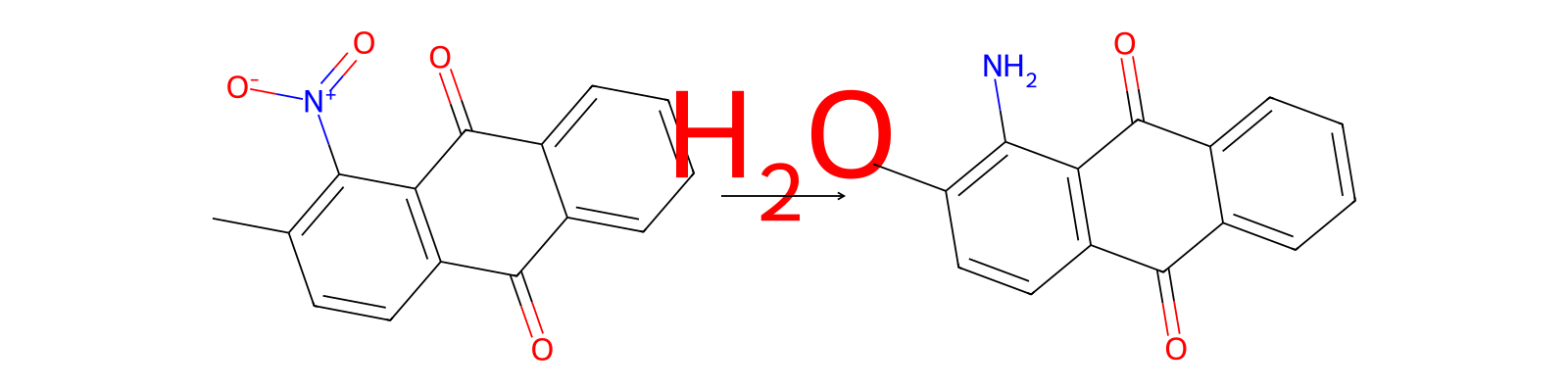
1-Amino-2-methylanthraquinone is prepared by nitration of 2-methylanthraquinone followed by reduction or by methylation of 1-aminoanthraquinone with formaldehyde.
It can be prepared by the reduction of 2-methyl-1-nitroanthraquinone with aqueous sodium sulfitde. It is not known whether this is the method used for its commercial production.
Reduction of 2-methyl-1-nitroanthraquinone with aqueous sodium sulfide.
Formulations/Preparations
Acetate fast orange R
Acetoquinone light orange JL
Artisil orange 3RP
Celliton orange R
For more Formulations/Preparations (Complete) data for 1-AMINO-2-METHYLANTHRAQUINONE (11 total), please visit the HSDB record page.
General Manufacturing Information
9,10-Anthracenedione, 1-amino-2-methyl-: ACTIVE
It can be used as a dye and seven dyes can be prepared from it. No evidence was found that it has ever been produced for commercial use as a dye in the US, and none of the dyes that can be prepared from it are presently produced there in commercial quantities. Only two of them were produced earlier in the US: Solvent Blue 13, which was last produced by one company in 1974 and Acid Blue 47, which was last produced by one company in 1973.
응용 분야
용도1-Amino-2-methylanthraquinone was used almost exclusively as a dyeand as an intermediate in the production of dyes. It was used as a dyefor synthetic fibers, furs, and thermoplastic resins. The only dyes derived from 1-amino-2-methylanthraquinone that were produced in the United States were C.I. acid blue 47, last produced in 1973, and C.I. solvent blue 13, last produced in 1974 (IARC 1982, HSDB 2009).
일반 설명Red powder.
제조 방법
2-Methylanthracene-9,10-dione nitrification, then use the method reduction
상·하류 제품 정보
상류 원료
하류 제품
공급사50 곳
梯希爱(上海)化成工业发展有限公司021-67121386 · [email protected]
上海阿拉丁生化科技股份有限公司400-6206333 13167063860 · [email protected]
上海麦克林生化科技股份有限公司021-50706066 15221275939 · [email protected]
成都彼样生物科技有限公司18108052721 · [email protected]
杭州景优化工有限公司87211835 13957193240 · [email protected]
杭州品高化工有限公司0571-87658025 · [email protected]
爱斯特(成都)生物制药股份有限公司+86-28-85122536 85324413 · [email protected]
Dayang Chem (Hangzhou) Co.,Ltd.+86-0571-88938639 17705817739 · [email protected]
上海赛可锐生物科技有限公司021-58000709 13120558703 · [email protected]
上海迈瑞尔生化科技有限公司4006356688 18621169109 · [email protected]
大连美仑生物技术有限公司0411-62910999 13889544652 · [email protected]
安耐吉化学&3A(安徽泽升科技股份有限公司)400-0056266 · [email protected]
梯希爱(上海)化工贸易有限公司021-61109150 · [email protected]
常州市华阳科技有限公司+8615250961469 · [email protected]
武汉市皇臻生物化工有限公司13795480948 · [email protected]
Aceschem Inc.+1-817863-6948 +1-(817)863-6948 · [email protected]
云南西力生物技术股份有限公司0871-65217109 · [email protected]
山东西亚化学有限公司13355009207 13355009207 · [email protected]
玛雅试剂+86 (573) 82222445 (0)18006601000 452520369 · [email protected]
艾科试剂4008-755-333 18080918076 · [email protected]
上海思域化工科技有限公司86-21-34053660 · [email protected]
江苏艾康生物医药研发有限公司025-66113011 13913916777 · [email protected]
TCI AMERICA800-4238616 · [email protected]
TOKYO CHEMICAL INDUSTRY CO., LTD.03-36680489 · [email protected]
TCI Europe320-37350700 · [email protected]
苏州亚科科技股份有限公司0512-87182055 13451648594 · [email protected]
PT CHEM GROUP LIMITED+86-85511178; +86-85511178 · [email protected]
成都零六生物科技有限公司400-1166-196 13458535857 · [email protected]
天津普西唐生物医药科技有限公司010-60605840 · [email protected]
上海鑫圭生物科技有限公司15121041756 · [email protected]
上海永叶生物科技有限公司86-021-61559134 15921386130 · [email protected]
湖北巨胜科技有限公司027-59599241 18871490274 · [email protected]
Sigma-Aldrich西格玛奥德里奇(上海)贸易有限公司021-61415566 800-8193336 · [email protected]
湖北源梦生物科技有限公司027-68897569 18120462897 · [email protected]
天津阿尔塔科技有限公司022-6537-8550 15522853686 · [email protected]
Alfa Chemistry1-516-6625404 · [email protected]
九鼎化学(上海)科技有限公司4009209199 · [email protected]
广东翁江化学试剂有限公司0751-2886766 13927870850 · [email protected]
Alfa Chemistry+1-5166625404 · [email protected]
艾吉析科技(上海)有限公司17721401538;17717235263 17721401538 · [email protected]
湖北源梦生物科技有限公司027-68897569 18120462897 · [email protected]
武汉福鑫化工有限公司+86-2759207851; +86-18007136271 · [email protected]
上海西陇生化科技有限公司021-52907766-8042
上海源叶生物科技有限公司13636370518 · [email protected]
上海西格生物科技有限公司021-57810052 18930344717 · [email protected]
武汉克米克生物医药技术有限公司027-13163388153 13163388153 · [email protected]
上海澄绍生物科技有限公司021-61847300 13341622919 · [email protected]
广州卡芬生物科技有限公司18029243487 2355327168 · [email protected]
金锦乐(湖南)化学有限公司18001959627(微信同号) 18001959627 · [email protected]
上海贤鼎生物科技有限公司021-021-52271985 17721149837 · [email protected]
관련 반응
12건




연결된 노트
불러오는 중…