
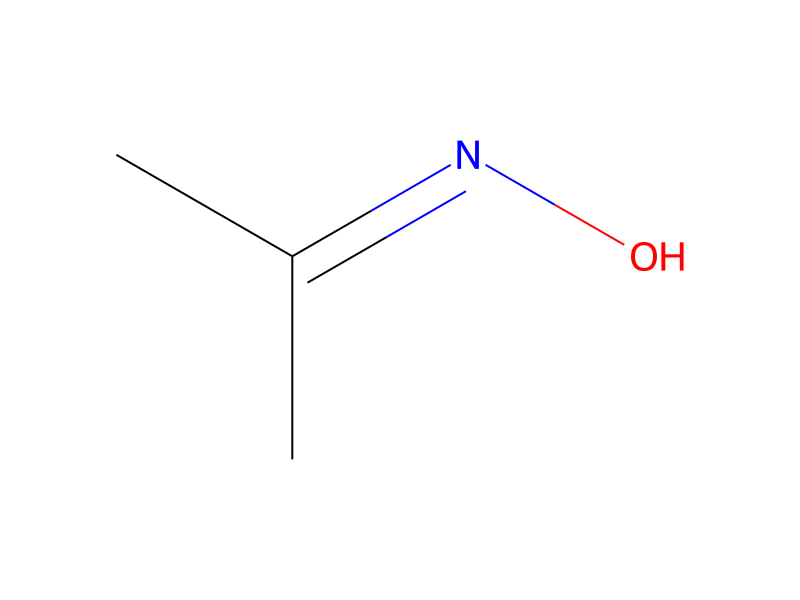
기본 정보
- 표준 SMILES
CC(C)=NO- InChIKey
PXAJQJMDEXJWFB-UHFFFAOYSA-N- 분자식
- C3H7NO
- 평균 분자량
- 73.09 g/mol
- 단동위원소 질량
- 73.05276384
개요
Acetone oxime is a ketoxime.
이름 및 식별자
- 우선 이름
- Acetone, oxime
- IUPAC
- N-propan-2-ylidenehydroxylamine
- 현지명
- 아세토시메
- 영어명
- Acetone oxime
- 분자식
- C3H7NO
- 분자량
- 73.09
이름 및 동의어
Acetone oxime127-06-0Acetoxime2-Propanone, oximeAcetonoxime2-Propanone oximeAcetone, oximebeta-IsonitrosopropaneQX74TFD64TDTXSID6020010NSC-7601CHEBI:15349
이름 더 보기
아세토시메아세톤옥심DMKOAcetoximTone Oxime(CH3)2C=NOHAcetoxime >Propanone oxime
actone oximeRefChem:914970DTXCID1010204-820-1propan-2-one oximeN-propan-2-ylidenehydroxylaminepropanone oxime.beta.-Isonitrosopropane
데이터베이스 식별자
- CAS
127-06-0- PubChem CID
- 67180
- DTXSID
DTXSID6020010- ChEBI
CHEBI:15349- UNII
- QX74TFD64T
- EC Number
- 204-820-1
- Nikkaji
- J2.515A
물성
구조 계산 물성
- XLogP
- 0.1
- 극성 표면적
- 32.6 Ų
- 수소 결합 공여자 수
- 1
- 수소 결합 수용자 수
- 2
- 회전 가능 결합 수
- 0
- 무거운 원자 수
- 5
- 형식 전하
- 0
- 복잡도
- 44.9
실험 및 물리화학적 성질
Chemical ClassesNitrogen Compounds -> Oximes
SpringerMaterials Properties15N nuclear magnetic resonance spectrum
LogP
log Kow = 0.12
0.12
Density
Density: 0.9113 g/cm cu at 62 °C
Density: 0.9113 g/cm cu at 62 °C
Color/Form
Columnar prisms
Colorless crystals
Solubility
In water, 30.0 to 32.7% w/w at 20.0 °C
Soluble in water
Soluble in ethanol, diethyl ether, chloroform, ligroin
Boiling Point
133 °C
Boiling point = 134.8 °C at 728 mm Hg
Decomposition
Hazardous decomposition products formed under fire conditions. - Carbon oxides, Nitrogen oxides (NOx)
When heated to decomposition it emits toxic fumes of /nitrogen oxides/.
Melting Point61 °C
Vapor Pressure
3.12 [mmHg]
1.82 mm Hg at 25 °C (242 hPa)
Refractive IndexRefractive index = 1.4156 at 20 °C
Physical DescriptionCrystals with a chloral odor; [Hawley] White powder; [Alfa Aesar MSDS]
물리화학적 성질
- 녹는점
- 60 · 60-63 °C(lit.)
- 끓는 점
- 135 °C · 135 °C(lit.)
- 밀도
- 0.901 g/mL · 0.901 g/mL at 25 °C(lit.)
- 증기압
- 1.64 · 1.64-2.42hPa at 25℃
- 굴절률
- 1.4156 · 1.4156
- 인화점
- 60 °C · 60 °C
- 저장 조건
- Sealed in dry,Room Temperature
- 용해도
- 클로로포름(소량으로 용해), 메탄올(약간 용해됨)
- 산도 계수 (pKa)
- 12.2 · 12.2(at 25℃)
- 물리적 상태
- 결정 또는 결정질 고체
- 색상
- 흰색에서 노란색으로
- Specific Gravity
- 0.901 · 0.901
- 수용성
- 330 g/L · 330g/L(20℃)
- Merck
- 14 · 14,75
- BRN
- 1560146 · 1560146
- Dielectric constant
- 3 · 3.0(-4℃)
- InChI
- 1S/C3H7NO/c1-3(2)4-5/h5H,1-2H3
- InChIKey
- PXAJQJMDEXJWFB-UHFFFAOYSA-N
- SMILES
- C\C(C)=N/O
- LogP
- 0.077 · 0.077-0.2 at 22.7℃
- NIST
- 2 · 2-Propanone, oxime(127-06-0)
- EPA
- Acetone oxime (127-06-0)
화학적 성질
White crystals
안전 및 규제
GHS 분류
GHS Classification
Danger
H312: Harmful in contact with skin [Warning Acute toxicity, dermal]
P203, P260, P261, P264+P265, P271, P272, P280, P302+P352, P304+P340, P305+P354+P338, P317, P318, P319, P321, P333+P317, P362+P364, P403+P233, P405, and P501 (click each P-code to see the statement)
Danger
H228 (99.3%): Flammable solid [Danger Flammable solids]
P203, P210, P240, P241, P261, P264+P265, P272, P280, P302+P352, P305+P354+P338, P317, P318, P321, P333+P317, P362+P364, P370+P378, P405, and P501 (click each P-code to see the statement)
유해성 정보
Regulatory Information
Hazard Traits - Carcinogenicity
Status: Active Update: 17-10-2019 https://echa.europa.eu/registration-dossier/-/registered-dossier/5744
2-Propanone, oxime: Does not have an individual approval but may be used under an appropriate group standard
Fire PotentialCombustible.
Hazards SummaryCauses coma in intraperitoneal lethal-dose studies of mice; [RTECS] An irritant; Harmful by ingestion; [Alfa Aesar MSDS]
Other Hazardous ReactionsConditions to avoid: Heat, flames and sparks. Incompatible materials: Strong oxidizing agents.
Hazard Classes and Categories
Flam. Sol. 2 (99.3%)
Carc. 1B
Hazardous Reactivities and IncompatibilitiesFairly easily hydrolized by dilute acids ... .
안전 및 보호
Fire Fighting Procedures
Suitable extinguishing media: Use water spray, alcohol-resistant foam, dry chemical or carbon dioxide. Advice for firefighters: Wear self-contained breathing apparatus for firefighting if necessary. Further information: Use water spray to cool unopened containers.
Storage ConditionsKeep container tightly closed in a dry and well-ventilated place.
Cleanup Methods
ACCIDENTAL RELEASE MEASURES: Personal precautions, protective equipment and emergency procedures: Use personal protective equipment. Avoid dust formation. Avoid breathing vapors, mist or gas. Ensure adequate ventilation. Remove all sources of ignition. Evacuate personnel to safe areas. Avoid breathing dust. Environmental precautions: Prevent further leakage or spillage if safe to do so. Do not let product enter drains.
Disposal Methods
SRP: Recycle any unused portion of the material for its approved use or return it to the manufacturer or supplier. Ultimate disposal of the chemical must consider: the material's impact on air quality; potential migration in air, soil or water; effects on animal, aquatic and plant life; and conformance with environmental and public health regulations. If it is possible or reasonable use an alternative chemical product with less inherent propensity for occupational harm/injury/toxicity or environmental contamination.
Product: Burn in a chemical incinerator equipped with an afterburner and scrubber but exert extra care in igniting as this material is highly flammable. Offer surplus and non-recyclable solutions to a licensed disposal company. Contact a licensed professional waste disposal service to dispose of this material. Dissolve or mix the material with a combustible solvent and burn in a chemical incinerator equipped with an afterburner and scrubber. Contaminated packaging: Dispose of as unused product
Preventive Measures
Gloves must be inspected prior to use. Use proper glove removal technique (without touching glove's outer surface) to avoid skin contact with this product. Dispose of contaminated gloves after use in accordance with applicable laws and good laboratory practices. Wash and dry hands.
Avoid contact with skin and eyes. Avoid formation of dust and aerosols. Further processing of solid materials may result in the formation of combustible dusts. The potential for combustible dust formation should be taken into consideration before additional processing occurs. Provide appropriate exhaust ventilation at places where dust is formed. Keep away from sources of ignition - No smoking.Take measures to prevent the build up of electrostatic charge.
ACCIDENTAL RELEASE MEASURES; Personal precautions, protective equipment and emergency procedures: Use personal protective equipment. Avoid dust formation. Avoid breathing vapors, mist or gas. Ensure adequate ventilation. Remove all sources of ignition. Evacuate personnel to safe areas. Avoid breathing dust. Environmental precautions: Prevent further leakage or spillage if safe to do so. Do not let product enter drains. Methods and materials for containment and cleaning up: Sweep up and shovel. Contain spillage, and then collect with an electrically protected vacuum cleaner or by wetbrushing and place in container for disposal according to local regulations. Keep in suitable, closed containers for disposal. Contain spillage, pick up with an electrically protected vacuum cleaner or by wet-brushing and transfer to a container for disposal according to local regulations
Handle in accordance with good industrial hygiene and safety practice. Wash hands before breaks and at the end of workday.
SRP: Local exhaust ventilation should be applied wherever there is an incidence of point source emissions or dispersion of regulated contaminants in the work area. Ventilation control of the contaminant as close to its point of generation is both the most economical and safest method to minimize personnel exposure to airborne contaminants. Ensure that the local ventilation moves the contaminant away from the worker.
Personal Protective Equipment (PPE)
Eye/face protection: Face shield and safety glasses Use equipment for eye protection tested and approved under appropriate government standards such as NIOSH (US) or EN 166(EU).
Skin protection: Handle with gloves.
Body Protection: Complete suit protecting against chemicals. Flame retardant antistatic protective clothing.The type of protective equipment must be selected according to the concentration and amount of the dangerous substance at the specific workplace.
Respiratory protection: Where risk assessment shows air-purifying respirators are appropriate use a full-face particle respirator type N100 (US) or type P3 (EN 143) respirator cartridges as a backup to engineering controls. If the respirator is the sole means of protection, use a full-face supplied air respirator. Use respirators and components tested and approved under appropriate government standards such as NIOSH (US) or CEN (EU).
독성 정보
Ecotoxicity ValuesLC50; Species: Pimephales promelas (Fathead minnow) age 30 days; Conditions: freshwater, flow through; Concentration: 558 mg/L for 96 hr (95% confidence interval: 504-618 mg/L) /98% purity/
Environmental Fate
TERRESTRIAL FATE: Based on a classification scheme(1), an estimated Koc value of 1.3(SRC), determined from a log Kow of 0.12(2) and a regression-derived equation(3), indicates that acetoxime is expected to have very high mobility in soil(SRC). The pKa of acetoxime is 12.42(4), indicating that this compound will exist as its neutral species in the environment (pH 5-9). Volatilization of acetoxime from moist soil surfaces is expected to be an important fate process(SRC) given an estimated Henry's Law constant of 7.8X10⁻⁶ atm-cu m/mole(SRC), developed using a fragment constant estimation method(3). Acetoxime is expected to volatilize from dry soil surfaces(SRC) based upon a vapor pressure of 1.82 mm Hg at 25 °C(5). A 0% of theoretical BOD using domestic sewage in the Closed Bottle test(6) suggests that biodegradation is not an important environmental fate process in soil(SRC).
AQUATIC FATE: Based on a classification scheme(1), an estimated Koc value of 1.3(SRC), determined from a log Kow of 0.12(2) and a regression-derived equation(3), indicates that acetoxime is not expected to adsorb to suspended solids and sediment(SRC). Volatilization from water surfaces is expected(4) based upon an estimated Henry's Law constant of 7.8X10⁻⁶ atm-cu m/mole(SRC), developed using a fragment constant estimation method(3). Using this Henry's Law constant and an estimation method(5), volatilization half-lives for a model river and model lake are 4 days and 33 days, respectively(SRC). According to a classification scheme(6), an estimated BCF of 3.2(SRC), from its log Kow(2) and a regression-derived equation(3), suggests the potential for bioconcentration in aquatic organisms is low. A 0% of theoretical BOD using domestic sewage in the Closed Bottle test(7) suggests that biodegradation is not an important environmental fate process in water(SRC).
ATMOSPHERIC FATE: According to a model of gas/particle partitioning of semivolatile organic compounds in the atmosphere(1), acetoxime, which has a vapor pressure of 1.82 mm Hg at 25 °C(2), is expected to exist solely as a vapor in the ambient atmosphere. Vapor-phase acetoxime is degraded in the atmosphere by reaction with photochemically-produced hydroxyl radicals(SRC); the half-life for this reaction in air is estimated to be 48 days(SRC), calculated from its rate constant of 3.3X10⁻¹³ cu cm/molecule-sec at 25 °C(SRC) that was derived using a structure estimation method(3). Acetoxime does not contain chromophores that absorb at wavelengths >290 nm(4) and, therefore, is not expected to be susceptible to direct photolysis by sunlight(SRC).
Adverse EffectsNeurotoxin - Other CNS neurotoxin
Toxicity Summary
IDENTIFICATION AND USE: Acetoxime is a solid. It is used in organic synthesis (intermediate), as a solvent for cellulose ethers, and as a primer for diesel fuels. HUMAN STUDIES: Acetoxime has been tested in vitro as an experimental medication for herpes infection. ANIMAL STUDIES: Acetoxime was tested for carcinogenicity by chronic administration in the drinking water to male and female rats. The dose of 1.0 g/liter was administered 5 days/week for 18 months (total dose, 6.2 -7.0 g/rat). Acetoxime induced benign hepatocellular adenomas in 80% of the males but did not produce tumors in the females. The 90 day-NOAEL of the test substance in rats by the oral route was 15 mg/kg bw/day in both sexes. No effects were observed in the reproductive organs or tissues up to the highest dose tested (50 mg/kg bw/day). Acetoxime was negative in the Ames test with TA97, TA98, TA100 and TA1535 with and without metabolic activation. Acetoxime was genotoxic in Drosophila melanogaster. When tested in vivo acetoxime was found to induce a specific pattern of base damage in rat liver DNA and RNA, including the induction of increased levels of 8-hydroxyguanine. Because acetoxime was a weaker carcinogen in female rats than male rats, its ability to induce damage in liver and kidney nucleic acids was examined in male and female rats 6 and 18 hr after administration. Significantly lower levels of 8-hydroxydeoxyguanosine, 8-hydroxyguanosine and other presumed modified nucleosides discernible by high-performance liquid chromatography with electrochemical detection were found in liver nucleic acids of female rats.
Ongoing Test Status
The following link will take the user to the National Toxicology Program (NTP) Test Status of Agents Search page, which tabulates the results and current status of tests such as "Short-Term Toxicity Studies", "Long-term Carcinogenicity Studies", "Developmental Studies", "Genetic Toxicology Studies", etc., performed with this chemical. Testing status for acetoxime is available.[Available from, as of February 1, 2019: https://ntpsearch.niehs.nih.gov/?e=True&ContentType=Testing+Status]
Soil Adsorption/Mobility
The Koc of acetoxime is estimated as 1.3(SRC), using a log Kow of 0.12(1) and a regression-derived equation(2). According to a classification scheme(3), this estimated Koc value suggests that acetoxime is expected to have very high mobility in soil.
Artificial Pollution SourcesAcetoxime's production and use in organic synthesis as an intermediate, as a solvent for cellulose ethers and a primer for diesel fuels may result in its release to the environment through various waste streams(SRC).
Environmental Biodegradation
AEROBIC: Acetoxime, present at 2.5 mg/L, reached 0% of its theoretical BOD in 28 days using a domestic sewage inoculum in the OECD 301D Closed Bottle test; therefore, biodegradation is not expected tp be an important environmental fate process(1).
Environmental Bioconcentration
An estimated BCF of 3 was calculated in fish for acetoxime(SRC), using a log Kow of 0.12(1) and a regression-derived equation(2). According to a classification scheme(3), this BCF suggests the potential for bioconcentration in aquatic organisms is low(SRC).
Volatilization from Water/Soil
The Henry's Law constant for acetoxime is estimated as 7.8X10⁻⁶ atm-cu m/mole(SRC) developed using a fragment constant estimation method(1). This Henry's Law constant indicates that acetoxime is expected to volatilize from water surfaces(2). Based on this Henry's Law constant, the volatilization half-life from a model river (1 m deep, flowing 1 m/sec, wind velocity of 3 m/sec)(2) is estimated as 4 days(SRC). The volatilization half-life from a model lake (1 m deep, flowing 0.05 m/sec, wind velocity of 0.5 m/sec)(2) is estimated as 33 days(SRC). Acetoxime is expected to volatilize from dry soil surfaces(SRC) based upon a vapor pressure of 1.82 mm Hg(3)(SRC).
Non-Human Toxicity Excerpts
/LABORATORY ANIMALS: Chronic Exposure or Carcinogenicity/ Acetoxime was tested for carcinogenicity by chronic administration in the drinking water to male and female outbred MRC-Wistar rats. The dose of 1.0 g/L was administered 5 days/week for 18 months (total dose, 6.2 -7.0 g/rat). The test compound induced benign hepatocellular adenomas in 80% of the males but did not produce tumors in the females.
/LABORATORY ANIMALS: Chronic Exposure or Carcinogenicity: Initiation-Promotion/ We tested the ability of phenobarbital and two liver carcinogens, acetoxime and 1-nitroso-5,6-dihydrouracil (NDHU), to induce hyperplastic liver nodules (HLN) in MRC-Wistar and Wistar rats, using a system that included a single diethylnitrosamine (DEN) treatment, partial hepatectomy, and administration of the test compound in drinking water for 8 weeks. All three compounds induced significant HLN frequencies (number of HLN/sq cm) in both rat strains. When the results for each strain were "normalized" for each compound and then combined, HLN frequency in MRC-Wistar rats was significantly lower (P less than 0.01) than that in Wistar rats. The weak liver carcinogen 3-nitroso-2-oxazolidinone (NOZ) did not induce a significant HLN frequency in MRC-Wistar rats. Acetoxime was highly volatile and was not mutagenic in the Ames test under a variety of conditions. The results for acetoxime are of interest because simple oximes are common constituents of oil paints. HLN induction by nitrosodihydrouracil is of interest because, unlike most liver carcinogens, this compound probably does not require metabolic activation and shows only a mild acute hepatoxicity.
/LABORATORY ANIMALS: Developmental or Reproductive Toxicity/ /Rat Crj:CD(SD) male/female/ The 90 day-NOAEL of the test substance in rats by oral route was 15 mg/kg bw/day in both sexes. No effects were observed in the reproductive organs or tissues up to the highest dose tested (50 mg/kg bw/day).
/GENOTOXICITY/ Acetoxime (ACO) and 2-nitropropane (2-NP), both industrially important chemicals and known hepatocarcinogens in rats, induced increased levels of 8-hydroxy-guanine in liver DNA and RNA of male Sprague-Dawley and F344 rats after either oral or i.p. administration. Both compounds also produced qualitatively the same patterns of other apparent modifications of liver DNA and RNA nucleosides, discernible by HPLC with electrochemical detection. Six hours after administration, the effects of 2-NP on liver nucleic acids were more pronounced in F344 rats than in Sprague-Dawley rats, suggesting that 2-NP may prove to be a stronger carcinogen in the F344 strain. The effects of ACO, a weaker carcinogen than 2-NP, were less than those of the nitroalkane in both rat strains. These results suggest that the hepatocarcinogenicity of ACO, like that of 2-NP, may depend on increased generation of reactive oxygen species capable of producing DNA and RNA base damage in rat liver. In addition, the data support the hypothesis that the hepatocarcinogenicity of ACO depends on its partial in vivo N-oxidation to 2-NP.
For more Non-Human Toxicity Excerpts (Complete) data for Acetoxime (7 total), please visit the HSDB record page.
Environmental Abiotic Degradation
The rate constant for the vapor-phase reaction of acetoxime with photochemically-produced hydroxyl radicals has been estimated as 3.3X10⁻¹³ cu cm/molecule-sec at 25 °C(SRC) using a structure estimation method(1). This corresponds to an atmospheric half-life of about 48 days at an atmospheric concentration of 5X10+5 hydroxyl radicals per cu cm(1). Acetoxime is not expected to undergo hydrolysis in the environment due to the lack of functional groups that hydrolyze under environmental conditions(2). Acetoxime does not contain chromophores that absorb at wavelengths >290 nm(2) and, therefore, is not expected to be susceptible to direct photolysis by sunlight(SRC).
안전 데이터
- wgk
- 3
- tsca
- TSCA listed
- rtecs
- AL6825000
- ridadr
- UN1325
- 독성
- LD orl-rat: >500 mg/kg NCNSA6 5,26,53
- HS 번호
- 29280000
- safety_code
- 22-24/25
- 포장분류
- III
- 위험 등급
- 4.1
- 기존화학 물질
- KE-29369
- F 고인화성물질
- 21
- Hazard Classifications
- Acute Tox. 4 DermalCarc. 2Eye Dam. 1Flam. Sol. 2Skin Sens. 1B
- 스토리지 클래스
- 4.1B - Flammable solid hazardous materials
- 유해 물질 데이터
- 127-06-0(Hazardous Substances Data)
화학 및 산업
약리 정보
Metabolism/Metabolites
Previously, the secondary nitroalkane 2-nitropropane, a strong hepatocarcinogen in rats, had been shown to induce the formation of 8-aminoguanine in both DNA and RNA of rat liver through a sulfotransferase-mediated pathway. This pathway was postulated to convert the carcinogen into an aminating species. To submit this postulate to further test, we examined liver proteins of rats treated with 2-nitropropane, other carcinogenic secondary nitroalkanes, or the related rat liver tumorigen acetoxime for the presence of 3-aminotyrosine, the expected product of tyrosine amination. Using ion-pair and/or cation-exchange high-performance liquid chromatography with electrochemical detection, we found that the liver cytosolic proteins of these animals contained 0.1-1.5 mol of 3-aminotyrosine/10(3) mol of tyrosine. Treatment with the noncarcinogenic primary nitroalkane 1-nitropropane or with other primary nitroalkanes did not produce an analogous increase in the aminated amino acid (level of detection estimated at approximately 0.01 mol/10(3) mol of tyrosine). ... In vitro studies with acetoxime-O-sulfonate and hydroxylamine-O-sulfonate showed that these proposed intermediates in the activation pathway of 2-nitropropane react with guanosine to give 8-aminoguanosine, N1-aminoguanosine, and 8-oxoguanosine and also react with tyrosine to give 3-aminotyrosine and 3-hydroxytyrosine. The in vitro amination and oxidation of guanosine at C8 were also produced by acetophenoxime-O-sulfonate and 2-heptanoxime-O-sulfonate. These results provide additional evidence for the production of a reactive species capable of aminating nucleic acids and proteins from 2-nitropropane and other carcinogenic secondary nitroalkanes by a pathway involving oxime- and hydroxylamine-O-sulfonates as intermediates.
Acetoxime and methylethyl ketoxime (MEKO) are tumorigenic in rodents, inducing liver tumors in male animals. The mechanisms of tumorigenicity for these compounds are not well defined. Oxidation of the oximes to nitronates of secondary-nitroalkanes, which are mutagenic and tumorigenic in rodents, has been postulated to play a role in the bioactivation of ketoximes. In these experiments, we have compared the oxidation of acetoxime and methylethyl ketoxime to corresponding nitronates in liver microsomes from different species. The oximes were incubated with liver microsomes from mice, rats, and several human liver samples. After tautomeric equilibration and extraction with n-hexane, 2-nitropropane and 2-nitrobutane were quantitated by GC/MS-NCI (limit of detection of 250 fmol/injection volume). In liver microsomes, nitronate formation from MEKO and acetoxime was dependent on time, enzymatically active proteins, and the presence of NADPH. Nitronate formation was increased in liver microsomes of rats pretreated with inducers of cytochrome P450 and reduced in the presence of inhibitors (n-octylamine and diethyldithiocarbamate). Rates of oxidation of MEKO (Vmax) were 1.1 nmol/min/mg (mice), 0.5 nmol/min/mg (humans), and 0.1 nmol/min/mg (rats). In addition to nitronates, several minor metabolites were also enzymatically formed (two diastereoisomers of 3-nitro-2-butanol, 2-hydroxy-3-butanone oxime and 2-nitro-1-butanol). Acetoxime was also metabolized to the corresponding nitronate at rates approximately 50% of those observed with MEKO oxidation in the three species examined. 2-Nitro-1-propanol was identified as a minor product formed from acetoxime. No sex differences in the capacity to oxidize acetoxime and MEKO were observed in the species examined. The observed results show that formation of sec-nitronates from ketoximes occurs slowly, but is not the only pathway involved in the oxidative biotransformation of these compounds. Due to the lack of sex-specific oxidative metabolism, other metabolic pathways or mechanisms of tumorigenicity not involving bioactivation may be involved in the sex-specific tumorigenicity of ketoximes in rodents.
The hepatocarcinogenicity of acetoxime has been tentatively linked with its metabolic oxidation to the potent genotoxicant and carcinogen propane 2-nitronate (P2-N). In order to test the hypothesis that acetoxime is metabolized to P2-N, the oxime (20 mM) was incubated with liver microsomes from mice, rats and two humans. Ion-pair HPLC analysis of the incubates afforded a peak that co-eluted with P2-N. P2-N exists in tautomeric equilibrium with 2-nitropropane (2-NP). Samples of the microsomal incubates, which had been adjusted to pH 5.5 and kept for 24 hr in order to allow maximal tautomeric equilibration of P2-N to 2-NP to occur, were extracted with hexane. GLC analysis of the extracts yielded a peak that co-eluted with 2-NP, and gave a mass spectrum identical to that of authentic 2-NP. The metabolite peak obtained on HPLC was isolated and its hexane extract contained also 2-NP when investigated by GLC. P2-N was found by HPLC in the urine of rats that had received acetoxime (3.36 mmol/kg i.p.). Hexane extracts of urine samples, which had been adjusted to pH 5.5 and left for 24 hr, contained 2-NP as demonstrated by GLC analysis. The results are consistent with the suggestion that the toxicity of acetoxime is associated with its biotransformation to P2-N.
용도 및 제조
Uses
Used as a solvent (cellulose ethers), primer (diesel fuels), and intermediate (organic synthesis); [Hawley]
MEDICATION
Organic synthesis (intermediate); solvent for cellulose ethers; primer for diesel fuels.
Methods of Manufacturing
Derivation: Reaction of hydroxylamine in water solution with acetone, followed by ether extraction.
Prepared by shaking an aqueous solution of hydroxylamine with acetone and extracting with ether.
Formulations/PreparationsGrade: Technical.
General Manufacturing Information2-Propanone, oxime: ACTIVE
응용 분야
용도It is an intermediate used in organic synthesis and in agriculture. It is also an important raw material.
상·하류 제품 정보
상류 원료
하류 제품
공급사50 곳
国药集团化学试剂有限公司86-21-63210123 · [email protected]
梯希爱(上海)化成工业发展有限公司021-67121386 · [email protected]
衢州润东化工有限公司0570-8789886 18892685668 · [email protected]
上海阿拉丁生化科技股份有限公司400-6206333 13167063860 · [email protected]
Dingzhou Risun New Materials Co.,Ltd.0312-5538378 15933157875 · [email protected]
爱斯特(成都)生物制药股份有限公司+86-28-85122536 85324413 · [email protected]
上海如吉生物科技发展有限公司+86-21-65211385-8001 36031160 · [email protected]
韶远科技(上海)有限公司021-50795510 4000665055 · [email protected]
科瑞迪化学400-821-5857 021-64326257 · [email protected]
上海迈瑞尔生化科技有限公司4006356688 18621169109 · [email protected]
大连美仑生物技术有限公司0411-62910999 13889544652 · [email protected]
阿法埃莎(中国)化学有限公司400-6106006 · [email protected]
安耐吉化学&3A(安徽泽升科技股份有限公司)400-0056266 · [email protected]
上海瀚鸿科技股份有限公司021-54306202 13764082696 · [email protected]
上海景颜化工科技有限公司13817811078 · [email protected]
嘉兴市艾森化工有限公司0573-85285100 18627885956 · [email protected]
宁波四明化工有限公司(宁波欧迅化学新材料技术有限公司)0574-86508062 18058587104 · [email protected]
山东西亚化学有限公司13355009207 13355009207 · [email protected]
广东大小化工有限公司1866-171603 18666171603 · [email protected]
玛雅试剂+86 (573) 82222445 (0)18006601000 452520369 · [email protected]
四川库利南科技有限公司400-1166-196 18981987031 · [email protected]
天津希恩思生化科技有限公司400 638 7771 · [email protected]
河南多贝化工有限公司0370-2785118 17550508557 · [email protected]
艾科试剂4008-755-333 18080918076 · [email protected]
上海思域化工科技有限公司86-21-34053660 · [email protected]
赛默飞世尔科技(中国)有限公司800-810-5118 · [email protected]
北京伊诺凯科技有限公司400-810-7969 010-59572699 · [email protected]
上海健超生物科技有限公司150-2103-5486 18017383231 · [email protected]
TCI AMERICA800-4238616 · [email protected]
TOKYO CHEMICAL INDUSTRY CO., LTD.03-36680489 · [email protected]
TCI Europe320-37350700 · [email protected]
上海贤鼎生物科技有限公司4009209199 · [email protected]
越林试剂021-62960152 · [email protected]
苏州安尼康药物研发有限公司0512-69369885 · [email protected]
上海洪创医药科技有限公司18151128828 · [email protected]
北京环宇世纪化学科技有限公司hysj_bj.com
上海将来实业股份有限公司400-0066400 13621662912 · [email protected]
上海将来实业股份有限公司021-61552785 · [email protected]
上海笛柏生物科技有限公司400-008-9730,021-54359730 400-008-9730 · [email protected]
日照力德士化工有限公司010-51268198 · [email protected]
美岚实业(上海)有限公司021-58958189 · [email protected]
上海石洋化工有限公司021-56795766 · [email protected]
上海爱蝶实业有限公司021-58957966 18930537195 · [email protected]
成都零六生物科技有限公司400-1166-196 13458535857 · [email protected]
广拓化学(上海)有限公司021-60899189-8001 18918189673 · [email protected]
上海创赛科技有限公司400-6087598 15021221957 · [email protected]
上海御略医药科技有限公司021-60345187 13671753212 · [email protected]
上海麦克林生化科技股份有限公司15221275939 15221275939 · [email protected]
杭州杰恒化工有限公司0571-87396432 · [email protected]
上海嵩爰化工科技有限公司010-1234567 18521000990 · [email protected]
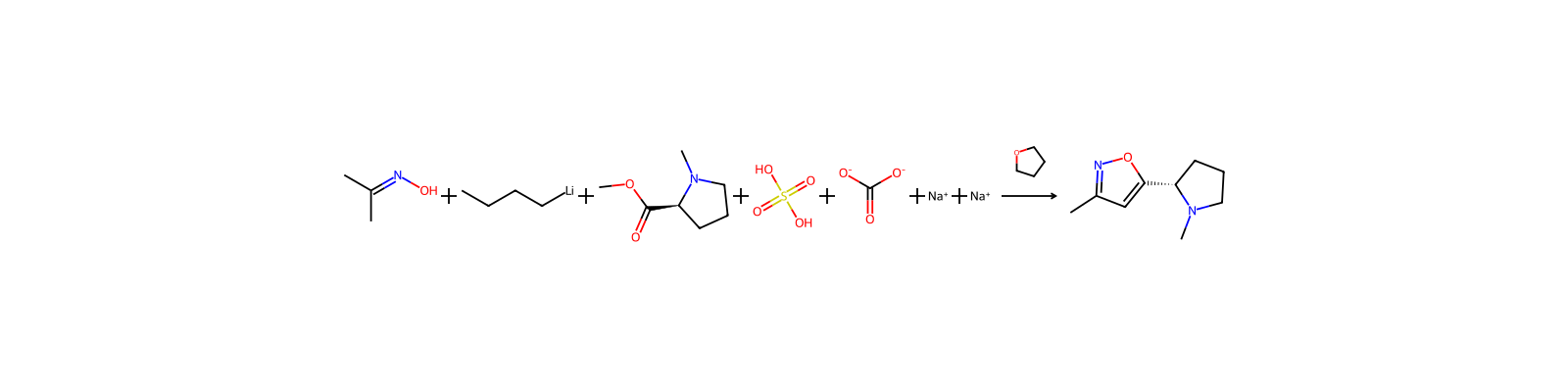
관련 반응
182건




연결된 노트
불러오는 중…