기본 정보
- 표준 SMILES
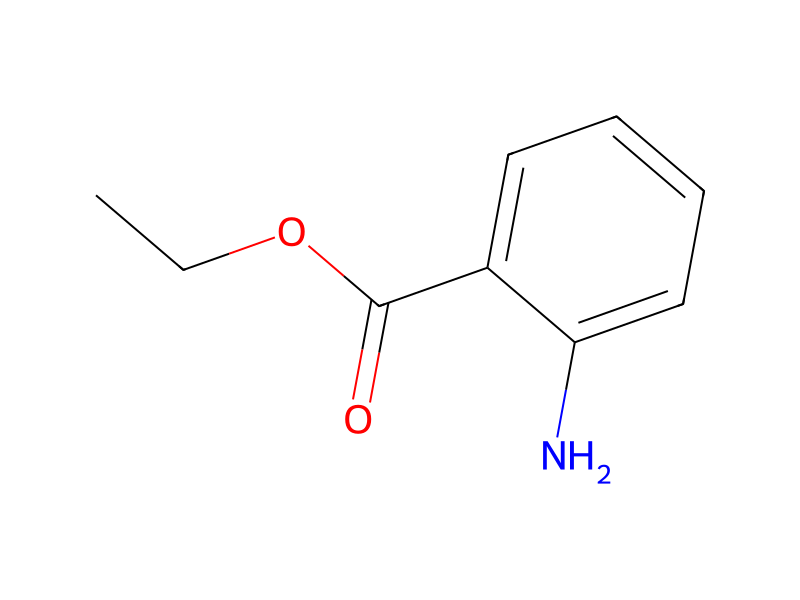
CCOC(=O)c1ccccc1N- InChIKey
TWLLPUMZVVGILS-UHFFFAOYSA-N- 분자식
- C9H11NO2
- 평균 분자량
- 165.19 g/mol
- 단동위원소 질량
- 165.07897859
개요
Ethyl anthranilate is a colorless liquid with a fruity odor. Insoluble in water. (NTP, 1992)
이름 및 식별자
- 우선 이름
- Ethyl 2-aminobenzoate
- IUPAC
- ethyl 2-aminobenzoate
- 현지명
- 안스라니릭산에틸에스테르
- 영어명
- ETHYL ANTHRANILATE
- 분자식
- C9H11NO2
- 분자량
- 165.19
이름 및 동의어
ETHYL ANTHRANILATEEthyl 2-aminobenzoate87-25-2Ethyl o-aminobenzoate2-Aminobenzoic acid ethyl esterAnthranilic acid, ethyl ester2-Carboethoxyanilineo-(Ethoxycarbonyl)anilineBenzoic acid, o-amino-, ethyl esterBenzoic acid, 2-amino-, ethyl ester2-(Ethoxycarbonyl)anilineFEMA No. 2421
이름 더 보기
아미노벤조산에틸안스라니릭산에틸에스테르에틸 안트라닐레이트FEMA 2421ethyl-o-aminoANTHRANILIC ACID ETHYL ESTEREthylanthranilatEthylanthranilate,98+%
DTXSID602527238Y050IUE4NSC-4146DTXCID805272RefChem:138879201-735-1Benzocaine EP Impurity D1333-08-0
데이터베이스 식별자
- CAS
87-25-2- PubChem CID
- 6877
- DTXSID
DTXSID6025272- ChEMBL
CHEMBL1332922- ChEBI
CHEBI:173741- UNII
- 38Y050IUE4
- EC Number
- 201-735-1
- Nikkaji
- J4.276E
물성
구조 계산 물성
- XLogP
- 2.6
- 극성 표면적
- 52.3 Ų
- 수소 결합 공여자 수
- 1
- 수소 결합 수용자 수
- 3
- 회전 가능 결합 수
- 3
- 무거운 원자 수
- 12
- 형식 전하
- 0
- 복잡도
- 159
실험 및 물리화학적 성질
Chemical ClassesNitrogen Compounds -> Aminobenzoic Acids
SpringerMaterials PropertiesBoiling point
FragrancesFragrance Ingredient (Ethyl anthranilate) -> IFRA transparency List
LogP
log Kow = 2.57
2.57
Odor
Fruity odor
FAINT ORANGE-FLOWERS ODOR
TasteFAINT ORANGE-FLOWERS TASTE
Food AdditivesFLAVORING AGENT OR ADJUVANT -> FDA Substance added to food
Density
1.117 at 68 °F (NTP, 1992) - Denser than water; will sink
1.1174 at 20 °C/4 °C
1.115-1.120
Flavoring AgentsEU Flavoring substances
Color/FormColorless liquid
Solubility
Insoluble (NTP, 1992)
Very soluble in ether, alcohol
Soluble in propylene glycol
SOLUBILITY IN 60% ALCOHOL: 1:7; 70% ALC: 1:2
Slightly soluble in water; Soluble in propylene glycol and fixed oils
Soluble (in ethanol)
Boiling Point
514 °F at 760 mmHg (NTP, 1992)
268 °C at 760 mm Hg
129.00 to 130.00 °C. @ 9.00 mm Hg
267 °C
물리화학적 성질
- 녹는점
- 13 · 13-15 °C (lit.)
- 끓는 점
- 129 · 129-130 °C/9 mmHg (lit.)
- 밀도
- 1.117 g/mL · 1.117 g/mL at 25 °C (lit.)
- 증기 밀도
- 5.7 · 5.7 (vs air)
- 굴절률
- 20 · n20/D 1.564(lit.)
- FEMA
- 2421 · 2421 | ETHYL ANTHRANILATE
- 인화점
- 230 °F · >230 °F
- 저장 조건
- Keep in dark place,Inert atmosphere,Room temperature
- 용해도
- 물에는 녹지 않으나 유기용매에는 녹는다
- 산도 계수 (pKa)
- 2.2 · 2.20±0.10(Predicted)
- 물리적 상태
- 투명한 액체
- 색상
- 연노랑
- Specific Gravity
- 1.117 · 1.1170
- 냄새
- 100 %에서 · 100.00%에서. 달콤한 꽃 포도 orangeblossom 윈터그린
- 냄새 유형
- 꽃향기
- 생물학적 소스
- synthetic
- JECFA Number
- 1535 · 1535
- BRN
- 878874 · 878874
- Henry's Law Constant
- 6.2 · 6.2×102 mol/(m3Pa) at 25℃, HSDB (2015)
- 안정성
- 안정적인. 타기 쉬운. 산, 염기, 산화제와 호환되지 않습니다.
- 화장품 원료 기능
- 향수
- InChI
- 1S/C9H11NO2/c1-2-12-9(11)7-5-3-4-6-8(7)10/h3-6H,2,10H2,1H3
- InChIKey
- TWLLPUMZVVGILS-UHFFFAOYSA-N
- SMILES
- CCOC(=O)c1ccccc1N
- LogP
- 2.57 · 2.57
- 표면장력
- 39.3 mN/m · 39.3 mN/m at 22°
- EPA
- Ethyl anthranilate (87-25-2)
화학적 성질
Ethyl anthranilate has a faint, orange-flower odor and similar taste.
안전 및 규제
GHS 분류
GHS Classification
This chemical does not meet GHS hazard criteria for 84.7% (261 of 308) of all reports.
Warning
H315 (15.3%): Causes skin irritation [Warning Skin corrosion/irritation]
P264, P264+P265, P280, P302+P352, P305+P351+P338, P321, P332+P317, P337+P317, and P362+P364 (click each P-code to see the statement)
Aggregated GHS information provided per 308 reports by companies from 5 notifications to the ECHA C&L Inventory. Each notification may be associated with multiple companies.
유해성 정보
Regulatory Information
Chemical: Benzoic acid, 2-amino-, ethyl ester
Commission Regulation (EC) No 1565/2000 (Repealed by Com. Implementing Reg. (EU) No 872/2012)
Status: No longer Valid Update: 29-03-2018 https://echa.europa.eu/registration-dossier/-/registered-dossier/23487
Benzoic acid, 2-amino-, ethyl ester: Does not have an individual approval but may be used under an appropriate group standard
Other Safety InformationIMAP assessments - Benzoic acid, 2-amino-, ethyl ester: Human health tier I assessment
Fire HazardsFlash point data for this chemical are not available. It is probably combustible. (NTP, 1992)
Health HazardsSYMPTOMS: Symptoms of exposure to this compound may include local irritation of skin, eye and mucous membranes and dermatitis.
Hazards SummaryEmergency treatment: Irritants; [HSDB] May irritate skin, eyes, and mucous membranes; [CAMEO] Safe when used as a flavoring agent in food; [JECFA] Moderate skin irritant; [RTECS]
FDA Requirements
Ethyl anthranilate is a food additive permitted for direct addition to food for human consumption as a synthetic flavoring substance and adjuvant in accordance with the following conditions: a) they are used in the minimum quantity required to produce their intended effect, and otherwise in accordance with all the principles of good manufacturing practice, and 2) they consist of one or more of the following, used alone or in combination with flavoring substances and adjuvants generally recognized as safe in food, prior-sanctioned for such use, or regulated by an appropriate section in this part.
Reactive GroupEsters, Sulfate Esters, Phosphate Esters, Thiophosphate Esters, and Borate Esters
Special ReportsREVIEW: FRAGRANCE RAW MATERIALS.[OPDYKE DL J; MONOGRAPHS ON FRAGRANCE RAW MATERIALS; ETHYL ANTHRANILATE. FOOD COSMET TOXICOL 14 SUPPL, 759 (1976)]
Reactivity ProfileETHYL ANTHRANILATE may hydrolyze under acidic and basic conditions. (NTP, 1992)
Air and Water ReactionsThis compound should be protected from air and light. Insoluble in water.
Hazard Classes and CategoriesSkin Irrit. 2 (15.3%)
안전 및 보호
Fire Fighting
This compound is not very flammable but any fire involving this compound may produce dangerous vapors. You should evacuate the area. All firefighters should wear full-body protective clothing and use self-contained breathing apparatuses. You should extinguish any fires involving this chemical with a dry chemical, carbon dioxide, foam, or halon extinguisher. (NTP, 1992)
First Aid
EYES: First check the victim for contact lenses and remove if present. Flush victim's eyes with water or normal saline solution for 20 to 30 minutes while simultaneously calling a hospital or poison control center. Do not put any ointments, oils, or medication in the victim's eyes without specific instructions from a physician. IMMEDIATELY transport the victim after flushing eyes to a hospital even if no symptoms (such as redness or irritation) develop.
Fire Fighting Procedures
Use water spray, carbon dioxide, dry chemical, or "alcohol" foam. Use water to keep fire-exposed containers cool. If leak or spill has not ignited, use water spray to disperse vapors and to protect men attempting to stop leak.
Water spray may be used to flush spills away from exposures and to dilute spills to nonflammable mixtures.
Personnel protection: Wear self-contained breathing apparatus.
Storage ConditionsProtect against physical damage. Store in cool, well-ventilated location, away from any area where the fire hazard is acute. Outside or detached storage is preferred. Separate from oxidizing materials.
Nonfire Spill Response
SMALL SPILLS AND LEAKAGE: If you spill this chemical, use absorbent paper to pick up all liquid spill material. Your contaminated clothing and absorbent paper should be sealed in a vapor-tight plastic bag for eventual disposal. Solvent wash all contaminated surfaces with alcohol followed by washing with a strong soap and water solution. Do not reenter the contaminated area until the Safety Officer (or other responsible person) has verified that the area has been properly cleaned.
Disposal Methods
SRP: The most favorable course of action is to use an alternative chemical product with less inherent propensity for occupational exposure or environmental contamination. Recycle any unused portion of the material for its approved use or return it to the manufacturer or supplier. Ultimate disposal of the chemical must consider: the material's impact on air quality; potential migration in soil or water; effects on animal, aquatic, and plant life; and conformance with environmental and public health regulations.
Personal Protective Equipment (PPE)
RECOMMENDED RESPIRATOR: Where the neat test chemical is weighed and diluted, wear a NIOSH-approved half face respirator equipped with an organic vapor/acid gas cartridge (specific for organic vapors, HCl, acid gas and SO2) with a dust/mist filter. (NTP, 1992)
독성 정보
Environmental Fate
TERRESTRIAL FATE: Based on a classification scheme(1), an estimated Koc value of 600(SRC), determined from a log Kow of 2.57(2) and a regression-derived equation(3), indicates that ethyl anthranilate is expected to have low mobility in soil(SRC). Volatilization of ethyl anthranilate from moist soil surfaces is not expected to be an important fate process(SRC) given an estimated Henry's Law constant of 1.6X10⁻⁸ atm-cu m/mole(SRC), using a fragment constant estimation method(4). Ethyl anthranilate is not expected to volatilize from dry soil surfaces(SRC) based upon an estimated vapor pressure of 2.3X10⁻³ mm Hg(SRC), determined from a fragment constant method(5). Biodegradation data were not available(SRC, 2007).
AQUATIC FATE: Based on a classification scheme(1), an estimated Koc value of 600(SRC), determined from a log Kow of 2.57(2) and a regression-derived equation(3), indicates that ethyl anthranilate is expected to adsorb to suspended solids and sediment(SRC). Volatilization from water surfaces is not expected(3) based upon an estimated Henry's Law constant of 1.6X10⁻⁸ atm-cu m/mole(SRC), developed using a fragment constant estimation method(4). Hydrolysis is expected to be a slow environmental fate process; estimated second order hydrolysis half-lives are 5.8 years and 210 days at pH values of 7 and 8, respectively(5). According to a classification scheme(6), an estimated BCF of 19(SRC), from its log Kow(2) and a regression-derived equation(7), suggests the potential for bioconcentration in aquatic organisms is low(SRC). Biodegradation data were not available(SRC, 2007).
ATMOSPHERIC FATE: According to a model of gas/particle partitioning of semivolatile organic compounds in the atmosphere(1), ethyl anthranilate, which has an estimated vapor pressure of 2.3X10⁻³mm Hg at 25 °C(SRC), determined from a fragment constant method(2), is expected to exist solely as a vapor in the ambient atmosphere. Vapor-phase ethyl anthranilate is degraded in the atmosphere by reaction with photochemically-produced hydroxyl radicals(SRC); the half-life for this reaction in air is estimated to be 11 hours(SRC), calculated from its rate constant of 3.6X10⁻¹¹ cu cm/molecule-sec at 25 °C(SRC) that was derived using a structure estimation method(3). Ethyl anthranilate does absorb light at UV max of 330 nm(4) and therefore may be susceptible to direct photolysis by sunlight.
Soil Adsorption/Mobility
The Koc of ethyl anthranilate is estimated as 600(SRC), using a log Kow of 2.57(1) and a regression-derived equation(2). According to a classification scheme(3), this estimated Koc value suggests that ethyl anthranilate is expected to have low mobility in soil.
Natural Pollution SourcesIN GRAPES
Artificial Pollution SourcesEthyl anthranilate's production and use as a perfume and flavor additive(1) may result in its release to the environment through various waste streams.
Environmental Bioconcentration
An estimated BCF of 19 was calculated in fish for ethyl anthranilate(SRC), using a log Kow of 2.57(1) and a regression-derived equation(2). According to a classification scheme(3), this BCF suggests the potential for bioconcentration in aquatic organisms is low(SRC).
Volatilization from Water/Soil
The Henry's Law constant for ethyl anthranilate is estimated as 1.6X10⁻⁸ atm-cu m/mole(SRC) using a fragment constant estimation method(1). This Henry's Law constant indicates that ethyl anthranilate is expected to be essentially nonvolatile from water surfaces(2). Ethyl anthranilate's Henry's Law constant indicates that volatilization from moist soil surfaces may not occur(SRC). Ethyl anthranilate is not expected to volatilize from dry soil surfaces(SRC) based upon an estimated vapor pressure of 2.3X10⁻³ mm Hg(SRC), determined from a fragment constant method(3).
Non-Human Toxicity Excerpts
/GENOTOXICITY/ Ethyl anthranilate was tested for mutagenicity in the Salmonella/ microsome preincubation assay using the standard protocol approved by the National Toxicology Program. Ethyl anthranilate was tested at doses of 0.01, 0.033, 0.10, 0.33, 0.50, and 0.80 mg/plate in as many as 5 Salmonella typhimurium strains (TA 1535, TA 1537, TA 97, TA 98, and TA 100) in the presence and absence of rat or hamster liver S-9. Ethyl anthranilate was negative in these tests and the highest ineffective dose tested without significant toxicity in any S. typhimurium strain was 0.33 mg/plate. Total clearing of the background bacterial lawn occurred in nearly all cultures tested at doses above this level.
/OTHER TOXICITY INFORMATION/ Listed in FDA's Food Additive Database as a chemical for which fully up-to-date toxicology information has been sought.
Environmental Abiotic Degradation
The rate constant for the vapor-phase reaction of ethyl anthranilate with photochemically-produced hydroxyl radicals has been estimated as 3.6X10⁻¹¹ cu cm/molecule-sec at 25 °C(SRC) using a structure estimation method(1). This corresponds to an atmospheric half-life of about 11 hours at an atmospheric concentration of 5X10+5 hydroxyl radicals per cu cm(1). A base-catalyzed second-order hydrolysis rate constant of 3.8X10⁻² L/mole-sec(SRC) was estimated using a structure estimation method(2); this corresponds to half-lives of 5.8 years and 210 days at pH values of 7 and 8, respectively(2). Ethyl anthranilate does absorb light at UV max of 330 nm(3) and therefore may be susceptible to direct photolysis by sunlight.
Probable Routes of Human Exposure
Occupational exposure to ethyl anthranilate may occur through dermal contact with this compound at workplaces where ethyl anthranilate is produced or used. Use data suggest the general population may be exposed to ethyl anthranilate via ingestion of food, and dermal contact with this compound and other products containing ethyl anthranilate. (SRC)
Environmental Fate/Exposure Summary
Ethyl anthranilate's production and use as a perfume and flavor additive may result in its release to the environment through various waste streams. If released to air, an estimated vapor pressure of 2.3X10⁻³ mm Hg at 25 °C indicates ethyl anthranilate will exist solely as a vapor in the atmosphere. Vapor-phase ethyl anthranilate will be degraded in the atmosphere by reaction with photochemically-produced hydroxyl radicals; the half-life for this reaction in air is estimated to be 11 hours. Ethyl anthranilate does absorb light at UV max of 330 nm and therefore may be susceptible to direct photolysis by sunlight. If released to soil, ethyl anthranilate is expected to have low mobility based upon an estimated Koc of 600. Volatilization from moist soil surfaces is not expected to be an important fate process based upon an estimated Henry's Law constant of 1.6X10⁻⁸ atm-cu m/mole. Biodegradation data were not available. If released into water, ethyl anthranilate is expected to adsorb to suspended solids and sediment based upon the estimated Koc. Volatilization from water surfaces is not expected to be an important fate process based upon this compound's estimated Henry's Law constant. An estimated BCF of 19 suggests the potential for bioconcentration in aquatic organisms is low. Hydrolysis is expected to be a slow environmental fate process; estimated second order hydrolysis half-lives are 5.8 years and 210 days at pH values of 7 and 8, respectively. Occupational exposure to ethyl anthranilate may occur through dermal contact with this compound at workplaces where ethyl anthranilate is produced or used. Use data suggest the general population may be exposed to ethyl anthranilate via ingestion of food, and dermal contact with this compound and other products containing ethyl anthranilate. (SRC)
Antidote and Emergency Treatment
Basic treatment: Establish a patent airway (oropharyngeal or nasopharyngeal airway, if needed). Suction if necessary. Watch for signs of respiratory insufficiency and assist respirations if necessary. Administer oxygen by nonrebreather mask at 10 to 15 L/min. Monitor for pulmonary edema and treat if necessary ... . Monitor for shock and treat if necessary ... . For eye contamination, flush eyes immediately with water. Irrigate each eye continuously with 0.9% saline (NS) during transport ... . Do not use emetics. For ingestion, rinse mouth and administer 5 mL/kg up to 200 mL of water for dilution if the patient can swallow, has a strong gag reflex, and does not drool. Activated charcoal is not effective ... . Do not attempt to neutralize because of exothermic reaction. Cover skin burns with dry, sterile dressings after decontamination ... . /Organic acids and related compounds/
Advanced treatment: Consider orotracheal or nasotracheal intubation for airway control in the patient who is unconscious, has severe pulmonary edema, or is in severe respiratory distress. Early intubation, at the first sign of upper airway obstruction, may be necessary. Positive-pressure ventilation techniques with a bag valve mask device may be beneficial. Consider drug therapy for pulmonary edema ... . Consider administering a beta agonist such as albuterol for severe bronchospasm ... . Monitor cardiac rhythm and treat arrhythmias as necessary ... . Start IV administration of D5W /SRP: "To keep open", minimal flow rate/. Use 0.9% saline (NS) or lactated Ringer's (LR) if signs of hypovolemia are present. For hypotension with signs of hypovolemia, administer fluid cautiously. Consider vasopressors if patient is hypotensive with a normal fluid volume. Watch for signs of fluid overload ... . Use proparacaine hydrochloride to assist eye irrigation ... . /Organic acids and related compounds/
Non-Human Toxicity ValuesLD50 Rat oral 3750 mg/kg
규제 정보
FDA Requirements
Ethyl anthranilate is a food additive permitted for direct addition to food for human consumption as a synthetic flavoring substance and adjuvant in accordance with the following conditions: a) they are used in the minimum quantity required to produce their intended effect, and otherwise in accordance with all the principles of good manufacturing practice, and 2) they consist of one or more of the following, used alone or in combination with flavoring substances and adjuvants generally recognized as safe in food, prior-sanctioned for such use, or regulated by an appropriate section in this part.
안전 데이터
- wgk
- 2
- tsca
- TSCA listed
- rtecs
- DG2448000
- 독성
- The acute oral LD50 value in rats was reported as 3.75 g/kg (3.32-4.18 g/kg) and the acute dermal LD50 value in rabbits exceeded 5 g/kg (Moreno, 1975).
- HS 번호
- 29224999
- risk_code
- 36/38
- hazard_code
- Xi
- safety_code
- 26-36
- 위험 참고 사항
- Irritant
- 스토리지 클래스
- 10 - Combustible liquids
- 유해 물질 데이터
- 87-25-2(Hazardous Substances Data)
화학 및 산업
약리 정보
Cellular LocationsMembrane
용도 및 제조
Uses
Found in grapes; Used in perfumery, flavoring, and as an inert ingredient in pesticides; [HSDB]
Farming (Pesticides) [Category: Industry]
FLAVOR ADDITIVE IN BAKERY PRODUCTS, GELATIN & PUDDINGS, FROZEN MILK DESSERTS, FLAVORED BEVERAGES, CANDY TOPPINGS, CHEWING GUM
Perfumery and flavors, similar to methyl anthranilate.
Reported uses (ppm): (FEMA, 1994)
Anthranilic acid, ethyl ester is a List 3: Inerts of unknown toxicity (other) Pesticide Ingredient.
U.S. Exports
(1972) No Data
(1975) No Data
U.S. Imports
(1972) No Data
(1975) No Data
U.S. Production
(1972) PROBABLY GREATER THAN 4.54X10+5 GRAMS
(1975) PROBABLY GREATER THAN 4.54X10+5 GRAMS
Methods of Manufacturing
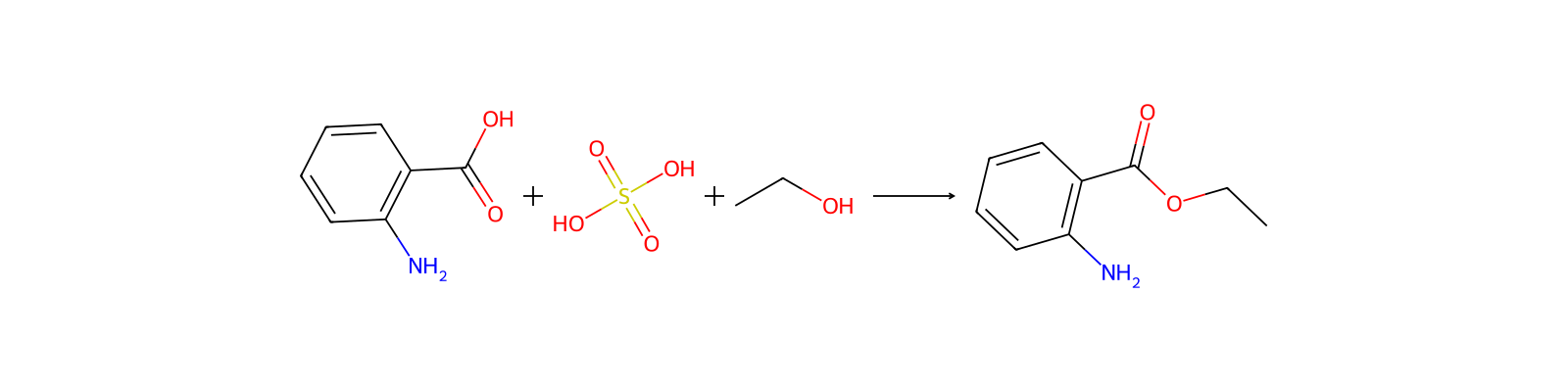
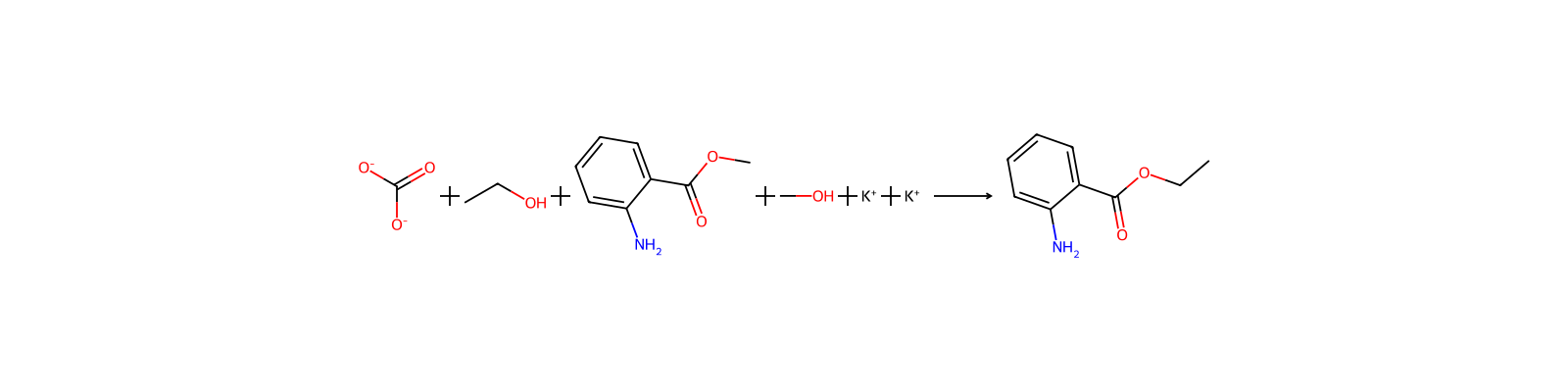
REACTION OF ANTHRANILIC ACID & ETHANOL IN THE PRESENCE OF ACID CATALYSTS
BY ESTERIFICATION OF ANTHRANILIC ACID WITH ETHANOL IN PRESENCE OF ACID CATALYSTS; BY REACTING SODIUM HYPOCHLORITE WITH AN ALKALINE ALCOHOLIC SOLN OF PHTHALIMIDE.
Formulations/PreparationsGRADES: TECHNICAL: FCC
Use Classification
Fragrance Ingredients
Flavouring Agent -> FLAVOURING_AGENT -> JECFA Functional Classes
Flavoring Agents -> JECFA Flavorings Index
Flavouring Agent -> FLAVOURING_AGENT -> JECFA Functional Classes
General Manufacturing Information
Benzoic acid, 2-amino-, ethyl ester: ACTIVE
REPORTED USES: 5.9 PPM IN NON-ALCOHOLIC BEVERAGES; 7.6 PPM IN ICE CREAM, ICES; 19 PPM IN CANDY; 23 PPM IN BAKED GOODS; 14 PPM IN GELATINS & PUDDINGS; 79 PPM IN CHEWING GUM.
USEFUL IN CONCORD GRAPE WINE FLAVORS, MANDARIN.
FEMA NUMBER 2421
응용 분야
출처Reported found in grapes, orange juice, orange peel oil, starfruit and Vitis labrusca L.
용도Perfumery and flavors, similar to methyl anthranilate.
일반 설명Colorless liquid with a fruity odor. Insoluble in water.
제조 방법
By esterification of anthranilic acid with ethanol in the presence of acid catalysts; by reacting sodium hypochlorite with an alkaline solution of phthalimide
상·하류 제품 정보
상류 원료
하류 제품
공급사50 곳
梯希爱(上海)化成工业发展有限公司021-67121386 · [email protected]
毕佳索(上海毕得医药科技股份有限公司)400-6005915 · [email protected]
Hong Kong Tiansheng New Material Trading Co., Ltd+8617320695765 · [email protected]
上海泰矶林实业有限公司02150630626 17717886015 · [email protected]
清宁生物(江苏博泉生物科技有限公司)19352250998 · [email protected]
上海凌凯科技股份有限公司58950110 13124863828 · [email protected]
爱斯特(成都)生物制药股份有限公司+86-28-85122536 85324413 · [email protected]
Baoji Guokang Healthchem co.,ltd+8615604608665 15604608665 · [email protected]
Dayang Chem (Hangzhou) Co.,Ltd.+86-0571-88938639 17705817739 · [email protected]
Hebei Yanxi Chemical Co., Ltd.+86-17531190177 · [email protected]
Syntechem Co.,Ltd[email protected]
上海迈瑞尔生化科技有限公司4006356688 18621169109 · [email protected]
武汉易泰科技有限公司上海分公司18930552037 · [email protected]
阿法埃莎(中国)化学有限公司400-6106006 · [email protected]
安耐吉化学&3A(安徽泽升科技股份有限公司)400-0056266 · [email protected]
上海瀚鸿科技股份有限公司021-54306202 13764082696 · [email protected]
山西鑫盛生物科技有限公司15835826763 · [email protected]
吉良化学21-62165282 · [email protected]
常州琦诺生物科技有限公司0519-0519-83812535 · [email protected]
玛雅试剂+86 (573) 82222445 (0)18006601000 452520369 · [email protected]
四川库利南科技有限公司400-1166-196 18981987031 · [email protected]
上海耐士化工科技有限公司400-188-0725 +86 21 34310725 13611771617
天津希恩思生化科技有限公司400 638 7771 · [email protected]
北京泰亚杰科技有限公司021-33690831-8001 13552411790;18616022633 · [email protected]
赛默飞世尔科技(中国)有限公司800-810-5118 · [email protected]
北京伊诺凯科技有限公司400-810-7969 010-59572699 · [email protected]
江苏艾康生物医药研发有限公司025-66113011 13913916777 · [email protected]
TCI AMERICA800-4238616 · [email protected]
TOKYO CHEMICAL INDUSTRY CO., LTD.03-36680489 · [email protected]
TCI Europe320-37350700 · [email protected]
深圳振强药物研发有限公司0755-66853366 13670046396 · [email protected]
上海睿升化工科技有限公司+86-021-50935922
河南赢创生物科技有限公司15672878902 · [email protected]
湖南华腾制药有限公司400-8592883 · [email protected]
上海麦克林生化科技股份有限公司15221275939 15221275939 · [email protected]
上海有朋化工有限公司021-69005955 13701776567 · [email protected]
北京海力扬化学科技有限公司13718199399 · [email protected]
四川海诺威科技有限公司13708085536 13708085536 · [email protected]
上海凯赛化工有限公司021-33516722 13701817765 · [email protected]
上海彤源化工有限公司021-021-69182866 13701855675 · [email protected]
上海蓝润化学有限公司021-69515658 ; 69515628 13701998368 · [email protected]
上海容立化学科技有限公司021-69992220 13701886816 · [email protected]
上海康拓化工有限公司021-69185552 13701777608 · [email protected]
湖北巨胜科技有限公司027-59599241 18871490274 · [email protected]
Sigma-Aldrich西格玛奥德里奇(上海)贸易有限公司021-61415566 800-8193336 · [email protected]
深圳振强药物研发有限公司+86-0755-66853366 +86-13670046396 · [email protected]
潍坊市前进精细化工有限公司18753684562 · [email protected]
九鼎化学(上海)科技有限公司4009209199 · [email protected]
西安美川生物科技有限公司029-89275612 +8618991951683 · [email protected]
厦门志信化学有限公司+86-5922680277 +86-13806087780 · [email protected]
관련 반응
85건



연결된 노트
불러오는 중…