HRID 2311000생성물로
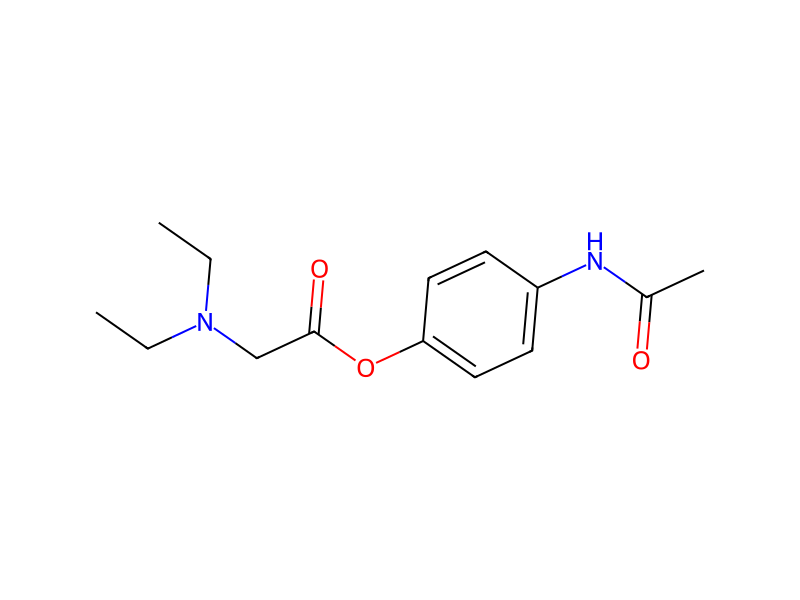
66532-85-2CCN(CC)CC(=O)Oc1ccc(NC(C)=O)cc1QTGAJCQTLIRCFL-UHFFFAOYSA-NPropacetamol is an alpha-amino acid ester.
66532-85-2DTXSID3057800CHEMBL1851805CHEBI:135089안전 정보는 참고용이며, 공급업체의 물질안전보건자료(SDS), 관련 법규 및 전문가 평가를 대체하지 않습니다.
Drug-Induced Liver Injury Severity and Toxicity (DILIst)
Propacetamol
DILI Positive
DOI:10.1016/j.drudis.2019.09.022
N - Nervous system
QN - Nervous system
Propacetamol is hydrolyzed to paracetamol and then it presents a weak inhibition of COX-1 and COX-2 which is translated into a low anti-inflammatory activity. Therefore, in high inflammatory conditions, such as rheumatoid arthritis, these agents show limited in vivo suppression of inflammation and platelet activity. The formation of N-arachidonoylphenolamine, donates paracetamol with analgesic and antipyretic properties.
As propacetamol is a prodrug, its mechanism of action is directly linked to the activity of paracetamol. The mechanism of action of paracetamol is described by the inhibition of prostaglandin synthesis. This inhibition is attained by inhibition of COX-1 and COX-2 in an environment where arachidonic acid and peroxides are kept low. It is considered that paracetamol presents a very complex mechanism of action involving effects in the peripheral system, described by direct COX inhibition; the central system, characterized by inhibition of COX, serotonergic descending neuronal pathway, L-arginine/NO pathway and cannabinoid system; and a redox mechanism. In the brain and spinal cord, paracetamol can combine with arachidonic acid to form N-arachidonoylphenolamine. This metabolite is an activator of capsaicin receptor (TRPV1) and cannabinoid CB1.
After administration, propacetamol is completely converted by plasma esterases into N, N-diethylglycine and paracetamol. The latest is the active metabolite. It is reported that the active metabolite of propacetamol can be transformed to N-acetil-p-benzoquinone imine by CYP2E1 which is a hepatotoxic metabolite.
Compounds capable of relieving pain without the loss of CONSCIOUSNESS.
Anti-inflammatory agents that are non-steroidal in nature. In addition to anti-inflammatory actions, they have analgesic, antipyretic, and platelet-inhibitory actions. They act by blocking the synthesis of prostaglandins by inhibiting cyclooxygenase, which converts arachidonic acid to cyclic endoperoxides, precursors of prostaglandins. Inhibition of prostaglandin synthesis accounts for their analgesic, antipyretic, and platelet-inhibitory actions; other mechanisms may contribute to their anti-inflammatory effects.
The bioavailability of 2g of propacetamol is similar to the bioavailability found in 1 g of intravenous paracetamol. Peak plasma concentration is obtained as and from the end of infusion. Pharmacokinetic analysis with intravenous propacetamol showed a significantly higher and earlier maximum plasma concentration than orally administered paracetamol. The Cmax, Tmax and AUC are 12.72 mcg/ml, 0.25 h and 25.5 mcg.h/ml. After infusion with propacetamol, significant concentrations of paracetamol are observed in cerebrospinal fluid.
The metabolites of propacetamol are mainly excreted in the urine. From the elimination rate, 90% of the administered dose is excreted in 24 hours mainly as glucuronide and sulfate conjugates. Less than 5% is eliminated as unchanged paracetamol.
The volume of distribution of propacetamol is 1.29 l/kg.
The clearance rate of propacetamol is 0.28 l.h/kg.
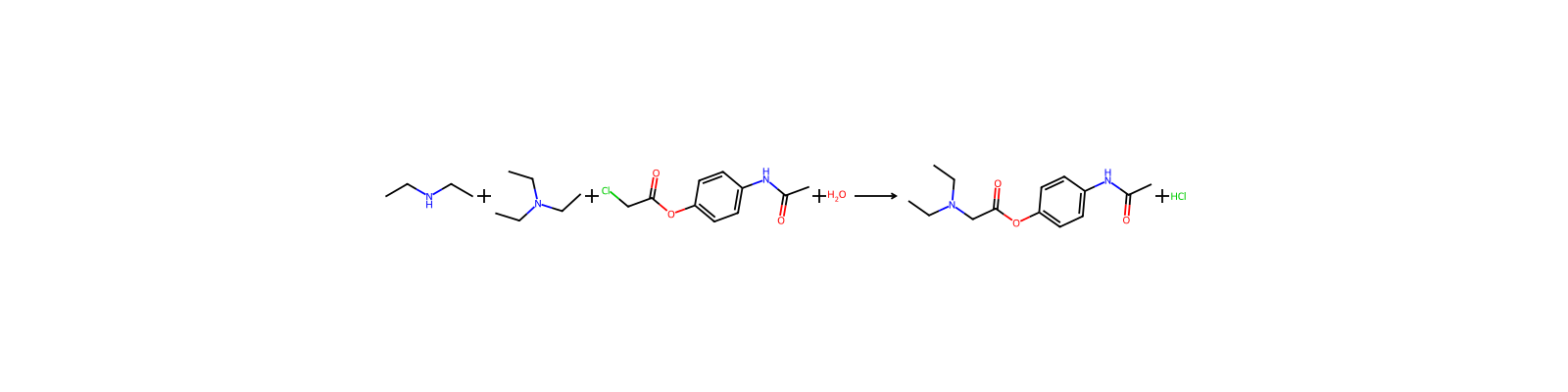
개요Propacetamol is the prodrug of paracetamol (acetaminophen), used for intravenous administration. It results from eombination of paracetamol and diethylglycine. Causes contact dermatitis and airborne dermatitis in nurses. Allergenic properties are due to the N,N' -diethylglycine moiety, and not to the paracetamol moiety.
용도Propacetamol hydrochloride is a water-soluble prodrug for intravenous administration resulting in the liberation of paracetamol.