
비페닐
Biphenyl
데이터를 보충하는 중입니다. 잠시 후 페이지를 새로 고치면 최신 내용을 볼 수 있습니다

기본 정보
- CAS
92-52-4- 표준 SMILES
c1ccc(-c2ccccc2)cc1- InChIKey
ZUOUZKKEUPVFJK-UHFFFAOYSA-N- 분자식
- C12H10
- 평균 분자량
- 154.21 g/mol
- 단동위원소 질량
- 154.07825032
개요
Biphenyl appears as a clear colorless liquid with a pleasant odor. Flash point 180 °F. Insoluble in water. Vapors are heavier than air. Used to manufacture other chemicals and as a fungicide.
이름 및 식별자
- 우선 이름
- Biphenyl
- IUPAC
- 1,1'-biphenyl
- 현지명
- 비페닐
- 영어명
- Biphenyl
- 분자식
- C12H10
- 분자량
- 154.21
이름 및 동의어
Biphenyl1,1'-Biphenyl92-52-4PhenylbenzeneDIPHENYLBibenzeneLemoneneXenene1,1'-DiphenylPhenador-XTetrosin LYCarolid AL
이름 더 보기
비페닐디페닐바이페닐1,1-다이페닐1,1-바이페닐다이페닐레모넨바이벤젠페닐벤젠FEMA 3129BiphenylylDiphenyl MixtureBIPHENYL PESTANALcp390
PHPHFEMA No. 3129DTXSID40201612L9GJK6MGNMCS 1572CP 390E230NSC-14916
데이터베이스 식별자
- CAS
92-52-4- PubChem CID
- 7095
- DTXSID
DTXSID4020161- ChEMBL
CHEMBL1231413、CHEMBL14092- ChEBI
CHEBI:17097- UNII
- 2L9GJK6MGN
- EC Number
- 202-163-5
- Nikkaji
- J3.929B
물성
구조 계산 물성보충 중
- XLogP
- 4
- 극성 표면적
- 0 Ų
- 수소 결합 공여자 수
- 0
- 수소 결합 수용자 수
- 0
- 회전 가능 결합 수
- 1
- 무거운 원자 수
- 12
- 형식 전하
- 0
- 복잡도
- 100
실험 및 물리화학적 성질
Chemical Classes
Hazardous Air Pollutants (HAPs)
Other Classes -> Aromatic Hydrocarbons
Carcinogens
DrugsPharmaceuticals
PolymersPolycyclic aromatic hydrocarbon
SpringerMaterials Properties13C nuclear magnetic resonance spectrum
FragrancesFragrance Ingredient (Biphenyl) -> IFRA transparency List
Pesticides
Pesticide -> EPA IRIS
Agrochemicals -> Pesticide active substances
Active substance -> EU Pesticides database: Not approved
Pesticide (Biphenyl) -> USDA PDB
LogP
log Kow = 4.01
4.01
3.16/4.09
4.05
Odor
Pleasant, peculiar odor
... Pleasant, characteristic odor.
Pleasant, butter-like
Food AdditivesFLAVOR ENHANCER, FLAVORING AGENT OR ADJUVANT -> FDA Substance added to food
Density
0.992 at 68 °F (USCG, 1999) - Less dense than water; will float
1.041 at 20 °C/4 °C
Sp gr: 1.04 (water= 1)
Relative density (water = 1): 1.04
1.04
1.04 @ 20°C
Viscosity0.98 cSt at 100 °C
Color/Form
White scales
Colorless leaflets
Pure biphenyl is a white crystalline solid that separates from solvents as plates or monoclinic prismatic crystals. Commercial samples are often slightly yellow or tan in color.
물리화학적 성질
- 녹는점
- 68 · 68-70 °C (lit.)
- 끓는 점
- 255 °C · 255 °C (lit.)
- 밀도
- 0.992 · 0.992
- 증기 밀도
- 5.31 · 5.31 (vs air)
- 증기압
- 9.46 mm · 9.46 mm Hg ( 115 °C)
- 굴절률
- 1.475 · 1.475
- FEMA
- 3129 · 3129 | BIPHENYL
- 인화점
- 113 °C · 113 °C
- 저장 조건
- 30 °C · Store below +30°C.
- 용해도
- 알코올과 에테르에 용해됨
- 물리적 상태
- 결정질 분말, 결정 또는 플레이크
- 색상
- 흰색에서 희미한 노란색까지
- Specific Gravity
- 0.992 · 0.992
- 냄새
- 기분 좋은 냄새
- 냄새 유형
- 녹색
- 생물학적 소스
- synthetic
- 폭발한계
- 0.6 %, · 0.6%, 111°F
- 수용성
- 불용성
- 비열
- 1.29 J/ · Cp(crystal): 1.29 J/(g·K), at 25℃
- JECFA Number
- 1332 · 1332
- Merck
- 14 · 14,3314
- BRN
- 1634058 · 1634058
- Henry's Law Constant
- 2.92 at · 2.92 at 25 °C (air stripping-GC, Destaillats and Charles, 2002)
- Dielectric constant
- 20 · 20.0(Ambient)
- 안정성
- 안정적인. 타기 쉬운. 강한 산화제와 호환되지 않습니다.
- 주요 응용
- 농업청소용품화장품환경음식 및 음료개인 위생 관리
- InChI
- 1S/C12H10/c1-3-7-11(8-4-1)12-9-5-2-6-10-12/h1-10H
- InChIKey
- ZUOUZKKEUPVFJK-UHFFFAOYSA-N
- SMILES
화학적 성질
1,1'-Biphenyl is a clear colorless liquid with a pleasant odor and stable organic compound. It is combustible at high temperatures, producing carbon dioxide and water when combustion is complete. Partial combustion produces carbon monoxide, smoke, soot, and low molecular weight hydrocarbons. It is used extensively in the production of heat-transfer fl uids, for example, as an intermediate for polychlorinated biphenyls, and dye carriers for textile dyeing. It is also used as a mold retardant in citrus fruit wrappers, in the formation of plastics, optical brighteners, and hydraulic fluids.
안전 및 규제
안전 정보는 참고용이며, 공급업체의 물질안전보건자료(SDS), 관련 법규 및 전문가 평가를 대체하지 않습니다.
GHS 분류
GHS Classification
Warning
H315: Causes skin irritation [Warning Skin corrosion/irritation]
P261, P264, P264+P265, P271, P273, P280, P302+P352, P304+P340, P305+P351+P338, P319, P321, P332+P317, P337+P317, P362+P364, P391, P403+P233, P405, and P501 (click each P-code to see the statement)
This chemical does not meet GHS hazard criteria for 0.9% (11 of 1263) of reports.
Danger
H315 (99%): Causes skin irritation [Warning Skin corrosion/irritation]
유해성 정보
Regulatory Information
Chemical: 1,1'-Biphenyl
Hazard Traits - Hazard Trait Undefined
Commission Regulation (EC) No 1565/2000 (Repealed by Com. Implementing Reg. (EU) No 872/2012)
1,1'-Biphenyl is listed on the EPA's Chemical Data Reporting (CDR) system. Manufacturers and importers of 1,1'-Biphenyl are required to report information about their production and use of this chemical to the EPA under the Toxic Substances Control Act (TSCA). (40 eCFR Part 711)
2004/129/EC
Status: Active Update: 15-11-2022 https://echa.europa.eu/registration-dossier/-/registered-dossier/14948
DOT LabelClass 9
Fire Hazards
Combustible. Emits toxic fumes under fire conditions. (USCG, 1999)
Combustible. Finely dispersed particles form explosive mixtures in air.
Fire PotentialSlight when exposed to heat or flame; can react with oxidizing materials.
Health Hazards
CALL FOR MEDICAL AID. VAPOR, MIST OR DUST: Irritating to eyes, nose, throat and skin. Flush affected area with plenty of water. IF IN EYES, hold eyelids open and flush with plenty of water. SOLID OR LIQUID: Irritating to skin and eyes, nose and throat. Remove contaminated clothing and shoes. Flush affected areas with plenty water. IF IN EYES, hold eyelids open and flush with plenty of water. If swallowed, do not induce vomiting. Harmful if inhaled or swallowed. Causes irritation to eyes, skin and mucous membrane and upper respiratory tract. Causes central nervous system depression, paralysis and convulsion in animals. May cause headache, diffuse gastrointestinal pain, nausea, indigestion, numbness and aching of limbs, and general fatigue. Liver function test may show abnormalities. Chronic exposure is mostly characterized by central nervous system symptoms, fatigue, headache, tremor, insomnia, sensory impairment, and mood changes. Such symptoms are rare however. (USCG, 1999)
Hazards Summary
Biphenyl is used in organic syntheses, heat transfer fluids, dye carriers, food preservatives, as an intermediate for polychlorinated biphenyls, and as a fungistat in the packaging of citrus fruits. In workers, acute (short-term) exposure to high levels of biphenyl has been observed to cause eye and skin irritation and toxic effects on the liver, kidneys, and central and peripheral nervous systems. Kidney effects have been observed in chronically (long-term) exposed animals. EPA has classified biphenyl as a Group D, not classifiable as to human carcinogenicity.
After one worker died, studies in a Finnish paper mill showed air levels of 4.4 to 128 mg/m3 in 1959 and 0.6 to 123 mg/m3 in 1970. Nine case of poisoning were investigated and summarized as central and peripheral nerve damage and liver injury. [ACGIH] Causes convulsions and paralysis in high-dose animal studies; [CAMEO]
Reactive GroupHydrocarbons, Aromatic
EC ClassificationSymbol: Xi, N; R: 36/37/38-50/53; S: (2)-23-60-61
UN ClassificationUN Hazard Class: 9; UN Pack Group: III
Special Reports
International Programme on Chemical Safety's Concise International Chemical Assessment Documents. Available from http://www.inchem.org/pages/cicads.html Number 6: Biphenyl as of November 1, 2004.
The U.S. high production volume (HPV) chemicals are those which are manufactured in or imported into the United States in amounts equal to or greater than one million pounds per year. Robust Summaries include health effects, ecotoxicity data, and environmental fate information for selected chemicals. EPA/Office of Pollution Prevention and Toxics; High Production Volume (HPV) Challenge Program's Robust Summaries and Test Plans. Available from: http://www.epa.gov/chemrtk/viewsrch.htm on Biphenyl as of October 28, 2004.
TSCA Requirements
Pursuant to section 8(d) of TSCA, EPA promulgated a model Health and Safety Data Reporting Rule. The section 8(d) model rule requires manufacturers, importers, and processors of listed chemical substances and mixtures to submit to EPA copies and lists of unpublished health and safety studies. Biphenyl is included on this list.
Section 8(a) of TSCA requires manufacturers of this chemical substance to report preliminary assessment information concerned with production, exposure, and use to EPA as cited in the preamble in 51 FR 41329.
Substances and mixtures that have been the subjects of TSCA section 4 testing actions and for which the testing reimbursement period has terminated (sunset) include 1,1-biphenyl; sunset date: 3/15/1994.
FIFRA Requirements
As the federal pesticide law FIFRA directs, EPA is conducting a comprehensive review of older pesticides to consider their health and environmental effects and make decisions about their future use. Under this pesticide reregistration program, EPA examines health and safety data for pesticide active ingredients initially registered before November 1, 1984, and determines whether they are eligible for reregistration. In addition, all pesticides must meet the new safety standard of the Food Quality Protection Act of 1996. Pesticides for which EPA had not issued Registration Standards prior to the effective date of FIFRA, as amended in 1988, were divided into three lists based upon their potential for human exposure and other factors, with List B containing pesticides of greater concern and List D pesticides of less concern. Biphenyl is found on List B. Case No: 2050; Pesticide type: Fungicide, antimicrobial; Case Status: No products containing the pesticide are actively registered ... The case /is characterized/ as "cancelled." Under FIFRA, pesticide producers may voluntarily cancel their registered products. EPA also may cancel pesticide registrations if registrants fail to pay required fees or make/meet certain reregistration commitments, or if EPA reaches findings of unreasonable adverse effects.; Active ingredient (AI): Biphenyl; AI Status: The active ingredient is no longer contained in any registered pesticide products ... "cancelled."
Tolerances are established for residues of the fungicide biphenyl (also known as diphenyl) from postharvest use on the following raw agricultural commodities: fruits, citrus (and hybrids thereof).
안전 및 보호
Fire Fighting
Excerpt from ERG Guide 171 [Substances (Low to Moderate Hazard)]:
Use water spray, foam, powder, carbon dioxide.
First Aid Measures
Fresh air, rest. Refer for medical attention.
Remove contaminated clothes. Rinse and then wash skin with water and soap.
Rinse with plenty of water for several minutes (remove contact lenses if easily possible).
Rinse mouth. Refer for medical attention .
First Aid
EYES: First check the victim for contact lenses and remove if present. Flush victim's eyes with water or normal saline solution for 20 to 30 minutes while simultaneously calling a hospital or poison control center. Do not put any ointments, oils, or medication in the victim's eyes without specific instructions from a physician. IMMEDIATELY transport the victim after flushing eyes to a hospital even if no symptoms (such as redness or irritation) develop.
(General first aid procedures)
Safe StorageSeparated from food and feedstuffs and oxidants. Provision to contain effluent from fire extinguishing. Store in an area without drain or sewer access.
Fire Fighting Procedures
Carbon dioxide, dry chemical, water spray, mist, fog.
If material on fire or involved in fire: Do not extinguish fire unless flow can be stopped or safely confined. Use water in flooding quantities as fog. Solid streams of water may spread fire. Cool all affected containers with flooding quantities of water. Apply water from as far a distance as possible. Use foam, dry chemical, or carbon dioxide.
Storage Conditions
Materials... toxic as stored or which can decompose into toxic components... should be stored in a cool... ventilated place, out of... sun, away from fire hazard... /and/ be periodically inspected. ...Incompatible materials should be isolated...
Cleanup Methods
Environmental considerations: Air spill: Apply water spray or mist to knock down vapors.
Environmental considerations: Land spill: Dig a pit, pond, lagoon, holding area to contain liquid or solid material. /SRP: If time permits, pits, ponds, lagoons, soak holes, or holding areas should be sealed with an impermeable flexible membrane liner./ Dike surface flow using soil, sand bags, foamed polyurethane, or foamed concrete. Absorb bulk liquid with fly ash, cement powder, or commercial sorbents.
독성 정보
Body BurdenIn a study of 387 expired air samples from 54 normal, healthy, non-smoking urban U.S. subjects, biphenyl was detected in 28.7% of the samples at a mean concn of 0.032 ng/l(1).
Treatment
Consider gastric lavage, after ingestion of a potentially life-threatening amount of poison if it can be performed soon after ingestion. In case of inhalation exposure, move patient to fresh air and monitor for respiratory distress. If cough or difficulty breathing develops, evaluate for respiratory tract irritation, bronchitis, or pneumonitis. Administer oxygen and assist ventilation as required. Treat bronchospasm with inhaled beta2 agonist and oral or parenteral corticosteroids. In case of eye exposure, irrigate exposed eyes with copious amounts of room temperature water for at least 15 minutes. I f the exposure occurred through dermal contact, remove contaminated clothing and wash exposed area thoroughly with soap and water. (T36)
Cancer SitesHepatic
Interactions
Coadministration of biphenyl and KHCO3 in the diet of male rats for 13 weeks produced urine crystals... composed of the potassium salt of 4-hydroxy-biphenyl-O-sulfate (4-HBPOSK). Biphenyl alone or biphenyl with KCl or NaHCO3 in the diet did not produce urine crystals.
Target Organs
Urinary
Eyes, respiratory system, liver, central nervous system
Health Effects
Exposure to diphenyl can cause necrosis in the liver and kidney, with regions of cirrhosis in liver; also, degenerative changes in heart muscle, damage to the central and peripheral nervous systems, as well as death can result from diphenyl poisoning (T48).
Ecotoxicity Values
LC50 Cyprinodon variegatus (Sheepshead minnow) 4.6 mg/L/96 hr (95% confidence interval: 4-5 mg/L); static
LC50 Lepomis macrochirus (Bluegill) 4.7 mg/L/96 hr (95% confidence interval: 4.3-5.1 mg/L); static
LC50 Oncorhynchus mykiss (Rainbow trout, donaldson troutl) 1.5 mg/L/96 hr (95% confidence interval: 1.4-1.6 mg/L); static
LC50 Artemia salina (Brine shrimp) 26 mmol/cu m/24 hr; static
For more Ecotoxicity Values (Complete) data for BIPHENYL (9 total), please visit the HSDB record page.
규제 정보
TSCA Requirements
Pursuant to section 8(d) of TSCA, EPA promulgated a model Health and Safety Data Reporting Rule. The section 8(d) model rule requires manufacturers, importers, and processors of listed chemical substances and mixtures to submit to EPA copies and lists of unpublished health and safety studies. Biphenyl is included on this list.
Section 8(a) of TSCA requires manufacturers of this chemical substance to report preliminary assessment information concerned with production, exposure, and use to EPA as cited in the preamble in 51 FR 41329.
Substances and mixtures that have been the subjects of TSCA section 4 testing actions and for which the testing reimbursement period has terminated (sunset) include 1,1-biphenyl; sunset date: 3/15/1994.
FIFRA Requirements
As the federal pesticide law FIFRA directs, EPA is conducting a comprehensive review of older pesticides to consider their health and environmental effects and make decisions about their future use. Under this pesticide reregistration program, EPA examines health and safety data for pesticide active ingredients initially registered before November 1, 1984, and determines whether they are eligible for reregistration. In addition, all pesticides must meet the new safety standard of the Food Quality Protection Act of 1996. Pesticides for which EPA had not issued Registration Standards prior to the effective date of FIFRA, as amended in 1988, were divided into three lists based upon their potential for human exposure and other factors, with List B containing pesticides of greater concern and List D pesticides of less concern. Biphenyl is found on List B. Case No: 2050; Pesticide type: Fungicide, antimicrobial; Case Status: No products containing the pesticide are actively registered ... The case /is characterized/ as "cancelled." Under FIFRA, pesticide producers may voluntarily cancel their registered products. EPA also may cancel pesticide registrations if registrants fail to pay required fees or make/meet certain reregistration commitments, or if EPA reaches findings of unreasonable adverse effects.; Active ingredient (AI): Biphenyl; AI Status: The active ingredient is no longer contained in any registered pesticide products ... "cancelled."
Tolerances are established for residues of the fungicide biphenyl (also known as diphenyl) from postharvest use on the following raw agricultural commodities: fruits, citrus (and hybrids thereof).
Atmospheric Standards
This action promulgates standards of performance for equipment leaks of Volatile Organic Compounds (VOC) in the Synthetic Organic Chemical Manufacturing Industry (SOCMI). The intended effect of these standards is to require all newly constructed, modified, and reconstructed SOCMI process units to use the best demonstrated system of continuous emission reduction for equipment leaks of VOC, considering costs, non air quality health and environmental impact and energy requirements. Biphenyl is produced, as an intermediate or a final product, by process units covered under this subpart.
안전 데이터
- OEB
- C
- OEL
- TWA: 1 mg/m3 (0.2 ppm)
- wgk
- 2
- IDLA
- 100 mg/m3
- tsca
- TSCA listed
- rtecs
- DU8050000
- ridadr
- UN 3077 9/PG 3
- 독성
- LD50 orally in rats: 3280 mg/kg (Deichmann)
- HS 번호
- 29029030
- risk_code
- 36/37/38-50/53-67-65-62-48/20-11-39/23/24/25-23/24/25-52/53
- hazard_code
- Xi,N,Xn,F,T
- safety_code
- 23-60-61-62-36/37-33-29-16-9-45
- 포장분류
- III
- 위험 등급
- 9
- 기존화학 물질
- KE-02861
- 자연 발화 온도
- 570 °C
- Hazard Classifications
- Aquatic Acute 1Aquatic Chronic 1Eye Irrit. 2Skin Irrit. 2STOT SE 3
- 스토리지 클래스
- 13 - Non Combustible Solids
- 유해 물질 데이터
- 92-52-4(Hazardous Substances Data)
- 함량 및 규제정보
- 물질구분: 유독물질; 혼합물(제품)함량정보: 1,1-비페닐[1,1-Biphenyl; Diphenyl; Phenylbenzene; 92-52-4] 및 이를 25% 이상 함유한 혼합물
- 유해화학물질 필터링
- 2021-1-1021
화학 및 산업
약리 정보
Mechanism of Action
...The inhibition of state 3 respiration with succinate by biphenyl was less than that observed with alpha-ketoglutarate/malate. ...Biphenyl also instantaneously stimulated state 4 respiration. The extent of stimulation with succinate by biphenyl was larger than with alpha-ketoglutarate-malate. ...Biphenyl and KC-400 dissipated the membrane potential across the mitochondrial membranes. The dissipation of membrane potential by biphenyl was instantaneous... . Biphenyl and KC-400 altered the permeability properties of mitochondrial membranes as evidenced by the release of endogenous K+. The release of K+ due to biphenyl was instantaneous... .
Metabolism/Metabolites
After rabbits ingested biphenyl... 64%... was accounted for in the urine primarily as the corresponding glucosiduronic acid and smaller amt of phenols and ether sulfates. From the urine, 4-hydroxybiphenyl, and 4-biphenyl glucosiduronic acid were isolated. ...Liver microsomal preparations from New Zealand White rabbits converted biphenyl into 2- and 4-hydroxybiphenyl. ...Other studies... /noted/ that the 4-isomer and practically no 2-isomer were found. ...The extent of 4-hydroxylation varies with species being poor in cat and trout high in mouse and coypus /(nutria)/. Ability to form 2-hydroxybiphenyl is almost absent in livers of adult rabbits and rats, guinea pigs, hens, trout and fox. Livers of mice, hamsters, cats, coypus, frogs, and young rabbits and rats form measurable amount of the 2-isomer ... .
Biphenyl ... was monohydroxylated by hamster-liver microsomes at positions 2 (minor) & 4; small quantities of 2,2'- & 4,4'-dihydroxybiphenyl were also tentatively identified.
It is metabolized in rat to 4-hydroxybiphenyl (30% of dose) & its glucuronide (20%), 4,4'- & 3,4-dihydroxybiphenyls (5% & 3% respectively) & 4-phenylphenylmercapturic acid (1.3%). Principal metabolite in rabbit, dog & mouse is also 4-hydroxybiphenyl, but mouse also excretes 2-hydroxybiphenyl in urine.
Phenobarbital type inducers increase 4-hydroxy biphenyl formation & 3-methylcholanthrene type inducers increase 2-hydroxy biphenyl formation.
For more Metabolism/Metabolites (Complete) data for BIPHENYL (15 total), please visit the HSDB record page.
Diphenyl is well absorbed through the gastrointestinal tract. It is rapidly metabolized to 4-hydroxybiphenyl, 4-phenyl-catechol and 4,4'-dihydroxyphenyl, which are excreted in urine and bile as glucuronide and mercapturic conjugates. The metabolites of diphenyl, mainly 4-hydroxybiphenyl, are excreted rapidly and almost exclusively in the urine. Acute oral toxicity is moderate. (T48, A588).
MeSH Pharmacological ClassificationChemicals that kill or inhibit the growth of fungi in agricultural applications, on wood, plastics, or other materials, in swimming pools, etc.
Absorption, Distribution and Excretion
Diphenyl is absorbed through the skin, the mucous membranes, and pulmonary system. It is metabolized in the liver to water-soluble hydroxy derivatives. Diphenyl is excreted unchanged by the biliary system of the rat when stimulated with phenobarbital intraperitoneally at 70 mg/kg for 4 days.
(14)C-Biphenyl was orally administered to rats and urine was collected. After 96 hours 92% of the radioactivity had been excreted. Urinary excretion accounted for more than 84% of the administered label (75.8% within 24 hours) and fecal excretion for 7.3% (5.8% within 24 hours) of the radioactivity.
The biliary excretion of metabolites of biphenyl ... was shown ... to be increased by pre-treatment with hepatic-microsomal-enzyme inducers and to be decreased by enzyme inhibitors after dosing with parent compounds, but no effect was observed after dosing with metabolites.
In rats, rabbits, and pigs, most biphenyl metabolites are excreted in the urine. Following an oral dose of 100 mg (14C)biphenyl/kg body weight, rats excreted 82% of the administered radioactivity (76% in urine) within 24 h. The recovery rate after 4 days was 92%, with 7% of the administered radioactivity detected in the feces and traces in the exhaled air. Eight days after administration, radioactivity in the tissues was 0.6% of the applied dose. In none of the species examined was unmetabolized biphenyl found in the urine.
Cellular LocationsMembrane
용도 및 제조
Uses
Biphenyl is used in organic syntheses, heat transfer fluids, dye carriers, food preservatives, as an intermediate for polychlorinated biphenyls, and as a fungistat in the packaging of citrus fruits.
Used as a heat transfer fluid, intermediate for organic chemicals, and fungicide; [ACGIH] Also used as a dye carrier and a mold retardant in food; Low levels present in creosote and coal tar; [CHEMINFO]
Pulp and Paper Processing [Category: Industry]
The active ingredient is no longer contained in any registered pesticide products ... "cancelled."
For diphenyl (USEPA/OPP Pesticide Code: 017002) there are 0 labels match. /SRP: Not registered for current use in the U.S., but approved pesticide uses may change periodically and so federal, state and local authorities must be consulted for currently approved uses./
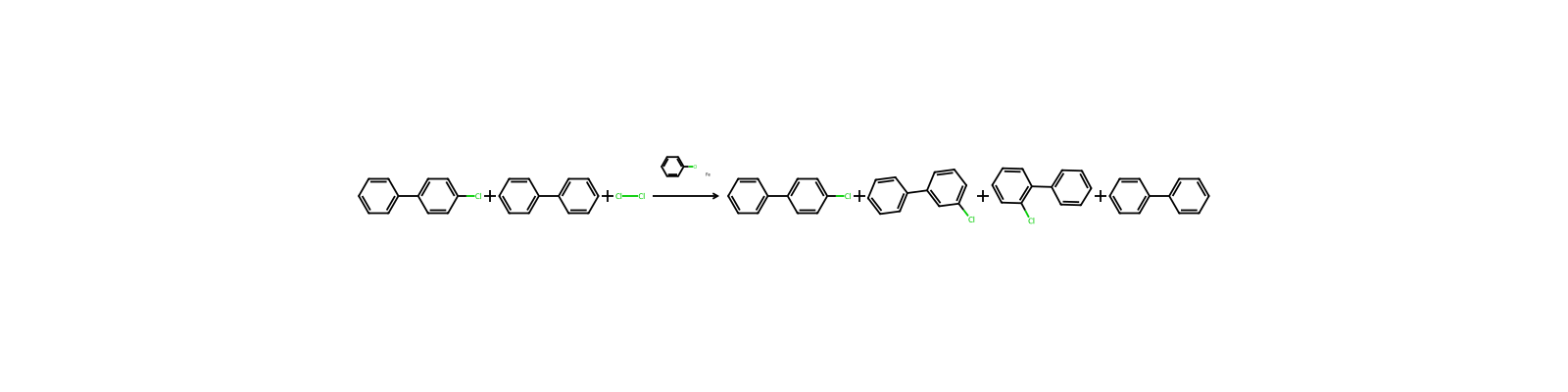
INT FOR POLYCHLORINATED BIPHENYLS
ImpuritiesTerphenyls are byproducts in the production of biphenyl by dehydrocondensation of benzene; they are found in the high-boiling fraction of the pyrolysis products.
U.S. Production
2023: 25,000,000 - <40,000,000 lb
1,1'-Biphenyl is listed as a High Production Volume (HPV) chemical (65FR81686). Chemicals listed as HPV were produced in or imported into the U.S. in >1 million pounds in 1990 and/or 1994. The HPV list is based on the 1990 Inventory Update Rule. (IUR) (40 CFR part 710 subpart B; 51FR21438).
(1988) No data provided
The 1990 figure is probably on the order of 16 million kg/yr.
Consumer UsesNot Known or Reasonably Ascertainable
Industry UsesIntermediate
Methods of Manufacturing
... By heating bromobenzene and sodium, with subsequent distillation. /As well as/ by slowly passing benzene through a red-hot iron tube
/Produced/ by passing benzene vapors over ferroso-ferric or lead oxide at high temp, in small quantities.
... Suppliers recover biphenyl from high boiler fractions that accompany the hydrodealkylation of toluene to benzene. Numerous hydrodealkylation processes have been developed. Most have the common feature that toluene or other alkylbenzene plus hydrogen is passed under pressure through a tubular reactor at high temperature. Methane and benzene are the principal products formed. Dealkylation conditions are sufficiently severe to cause some dehydrocondensation of benzene and toluene molecules. Approximately 1 kg of biphenyl per 100 kg of benzene is produced.
응용 분야
개요Biphenyl, also called diphenyl, consists of two benzene rings joined by a single bond. It exists as colorless to yellowish crystals, has a distinctive odor, and occurs naturally in oil, natural gas, and coal tar.
출처Reported found in coal tar, bilberry, carrots, peas, potato, bell pepper, rum, cocoa, tomato, coffee, roasted peanuts, olive (Olea europae), buckwheat and tamarind (Tamarindus indica L).
용도Biphenyl is used as an antifungal agent to preserve citrus fruit, in citrus wrappers to retard mold growth, in heat transfer fluids, in dye carriers for textiles and copying paper, as a solvent in pharmaceutical production, in optical brighteners, and as an intermediate for the production of a wide range of organic compounds.
일반 설명A clear colorless liquid with a pleasant odor. Flash point 180°F. Insoluble in water. Vapors are heavier than air. Used to manufacture other chemicals and as a fungicide.
제조 방법
By thermal dehydrogenation of benzene.
가열된 브로모벤젠과 소듐에 의해서 제조됨 그 후 증류시킴. 붉고 뜨거운 철 관을 통해서 벤젠을 천천히 통과시킴 적은 양 제조시 벤젠 증기를 높은 온도에서 제1철-제2철(Fe3O4 . xH2O) 이나 산화납에 통과시킴 공급회사는 바이페닐을 톨루엔의 탈알킬화반응으로부터 벤젠을 제조하는 높은 보일러 부분에서 회수함. 많은 탈알킬화반응 공정은 발전되어졌음. 대부분은 톨루엔이나 다른 알킬벤젠에 수소가 첨가된 물질은 높은 온도에 압축된 관형반응기를 통해서 지나가는 일반적인 특징을 가짐. 메탄과 벤젠은 주요한 형성 물질임. 벤젠과 톨루엔 분자가 탈수소축합반응이 일어남으로 알킬리 이탈반응 조건은 매우 심각함. 대략 100 kg의 벤젠에서 1 kg의 바이페닐이 생산됨 현재 고순도의 바이페닐은 직접적인 벤젠의 탈수소축합반응에 의해서 생산됨 크실렌올과 페실페놀을 혼합함 (분류/알카리 추출; o-페닐페놀과 공동생산됨) 접촉시간 0.4-1.5 초동안 대기압에서 600-800 ℃의 관으로 된 철 코일 반응기에서 벤젠의 무촉매 열분해에서 다이페닐이 증기상에서 만들어짐 바이페닐은 비활성용매에서 1,4-다이메틸-2,3-다이브로모부탄과 함께 페닐마그네슘의 반응에 의해서 생산됨
상·하류 제품 정보
상류 원료
하류 제품
추가 설명
정의ChEBI: A benzenoid aromatic compound that consists of two benzene rings connected by a single covalent bond. Biphenyl occurs naturally in coal tar, crude oil, and natural gas. Formerly used as a fungicide for citrus crops.
관련 반응
4,165건




화합물 노트
불러오는 중…