
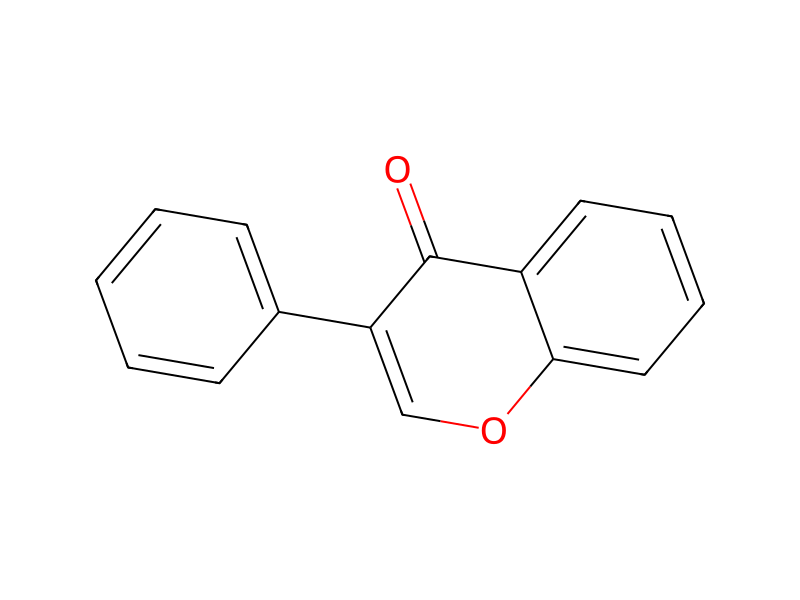
기본 정보
- 표준 SMILES
O=c1c(-c2ccccc2)coc2ccccc12- InChIKey
GOMNOOKGLZYEJT-UHFFFAOYSA-N- 분자식
- C15H10O2
- 평균 분자량
- 222.24 g/mol
- 단동위원소 질량
- 222.06807956
개요
Isoflavone is a simplest member of the class of isoflavones that is 4H-chromen-4-one in which the hydrogen at position 3 is replaced by a phenyl group.
이름 및 식별자
- 우선 이름
- Isoflavone
- IUPAC
- 3-phenylchromen-4-one
- 현지명
- 이소플라본
- 영어명
- Isoflavone
- 분자식
- C15H10O2
- 분자량
- 222.24
이름 및 동의어
Isoflavone574-12-93-Phenylchromone3-phenyl-4H-1-benzopyran-4-oneisoflavonOVO2KUW8H8NSC-135405NSC135405DTXSID90205986CHEBI:18220HomoisoflavoneIsoflavones
이름 더 보기
이소플라본BioaActive Soy Isoflavones4H-1-Benzopyran-4-one,3-phenyl-(1S,2R,3S,4R)-1,2,3,4,8-pentahydroxy-6-methoxy-3-methyl-2,4-dihydro-1H-anthracene-9,10-dioneIsoflavone,40%Isoflavone 60%Soy IsoflavioneIsoflavones In SoySoy Isoflavones P.E
Isoflavone DerivativeDerivative, Isoflavone3 Benzylchroman 4 One3 Benzylchroman 4 Ones3-Benzylchroman-4-Ones3 Benzylidene 4 Chromanone3 Benzylidene 4 Chromanones3-Benzylidene-4-Chromanones
데이터베이스 식별자
- CAS
574-12-9- PubChem CID
- 72304
- DTXSID
DTXSID90205986- ChEMBL
CHEMBL366460- ChEBI
CHEBI:18220- UNII
- OVO2KUW8H8
- EC Number
- 611-522-9
- Nikkaji
- J46.301I
물성
구조 계산 물성
- XLogP
- 3.2
- 극성 표면적
- 26.3 Ų
- 수소 결합 공여자 수
- 0
- 수소 결합 수용자 수
- 2
- 회전 가능 결합 수
- 1
- 무거운 원자 수
- 17
- 형식 전하
- 0
- 복잡도
- 326
실험 및 물리화학적 성질
DrugsPharmaceuticals -> Listed in ZINC15
LipidsPolyketides [PK] -> Flavonoids [PK12] -> Isoflavonoids [PK1205]
SpringerMaterials PropertiesDiamagnetic susceptibility
물리화학적 성질
- 녹는점
- 148 ° · 148°
- 끓는 점
- 323.41 °C · 323.41°C (rough estimate)
- 밀도
- 1.1404 · 1.1404 (rough estimate)
- 굴절률
- 1.66 · 1.6600 (estimate)
- 저장 조건
- 2 · 2-8°C
- 용해도
- 클로로포름(약간 용해됨), 메탄올(약간 용해됨)
- 물리적 상태
- 고체
- 색상
- 연한 노란색에서 밝은 노란색까지
- InChI
- InChI=1S/C15H10O2/c16-15-12-8-4-5-9-14(12)17-10-13(15)11-6-2-1-3-7-11/h1-10H
- InChIKey
- GOMNOOKGLZYEJT-UHFFFAOYSA-N
- SMILES
- C1OC2=CC=CC=C2C(=O)C=1C1=CC=CC=C1
- LogP
- 3.013 · 3.013 (est)
안전 및 규제
GHS 분류
GHS Classification
This chemical does not meet GHS hazard criteria for 100% (52 of 52) of all reports.
Not Classified
Aggregated GHS information provided per 52 reports by companies from 1 notifications to the ECHA C&L Inventory.
유해성 정보
Hazard Classes and CategoriesNot Classified
안전 데이터
- 신호 어
- Warning
- 유해·위험 문구
- 암호 유해·위험 문구 위험 등급 범주 신호 어 그림 문자 P- 코드 H315
화학 및 산업
약리 정보
Protein BindingNo pharmacokinetic data available.
Pharmacodynamics
Isolated soy protein with isoflavones was shown to decrease LDL cholesterol levels in randomized trials assessed by the American Heart Association. In a study of postmenopausal women, daily dietary intake of 101 mg of aglycone isoflavones (indicating [DB01645] and [DB13182]) was associated with lowered LDL cholesterol and apolipoprotein B levels by 8% and reduced systolic and diastolic blood pressure by 6.8% in hypertensive women. In a meta-analysis of randomized controlled trials of menopausal women, soy isoflavones attenuated bone loss of the spine and decreased the levels of deoxypyridinoline, a bone resorption marker, while increasing serum bone-specific alkaline phosphatase, a bone formation marker. The findings from studies investigating the effects of soy consumption on menopausal symptoms, breast cancer, and prostate cancer remain somewhat controversial and inconclusive. Consumption of soy isoflavones may decrease the markers of cancer development and progression in prostate cells, including prostate-specific antigen (PSA), testosterone, and androgen receptor in patients with prostate cancer but not in normal subjects. Although epidemiologic data in Asian women demonstrate that high soy food intake is associated with protection against breast cancer, soy foods have little effect on intermediary markers of breast cancer risk and postmenopausal soy intake may not reduce the risk of developing breast cancer. However, preliminary studies show that soy food intake reduces tumor recurrence in breast cancer patients. Soy isoflavones reported to interfere with thyroid peroxidase, which are involved in the production of thyroid hormones.
Mechanism of Action
Isoflavones are selective estrogen receptor modulators that exert estrogenic-like effects under certain experimental conditions, as they are structurally similar to mammalian 17β-estradiol. They may bind to both α and β isoforms of estrogen receptor (ER), but with binding affinities to ERβ approximately 20 times higher than that to ERα. The role of isoflavones on estrogen-dependent cancer has been studied, since they may mediate antiestrogenic actions by blocking the binding of endogenous estrogens and their receptor signalling. In cell culture, [DB01645] inhibited the proliferation of MDA-MB-231 human breast cancer cells, probably by arresting the cell cycle progression at the G2–M transition. In addition, genistein was shown to induce apoptosis, modify eicosanoid metabolism, and inhibit angiogenesis. There is an evidence that soy isoflavones may act on androgen receptors to inhibit tyrosine kinase activity, thereby blocking the growth and proliferation of cancer cells. Isoflavones may not significantly contribute to the hypolipidemic effects of soy protein, but may exert coronary benefits by improving endothelial function; in clinical trials of postmenopausal women, isoflavones improved flow-mediated dilation in women with impaired endothelial function. Some observational data suggests that isoflavones improve endothelial function by increasing the number of circulating endothelial progenitor cells, which replace damaged endothelial cells. Isoflavone may modulate the key transcription factors involved in the regulation of lipid metabolism by acting on the peroxisome proliferator-activated receptors (PPAR) alpha and gamma, which are receptors that regulate the transcription of genes involved in lipid and glucose homeostasis and lipid metabolism. Multiple biological actions of isoflavones, such as favorable effect on the blood lipid profile and inhibition of LDL cholesterol oxidation, may lead to cardio protective effects. [DB01645] has been shown to have antioxidant properties on hydrogen peroxide production _in vitro_ and blocks the formation of oxygen free radicals. Studies also suggest that at micromolar concentrations, genistein increases glucose-stimulated insulin secretion in cell lines and mouse pancreatic islets via a cAMP-dependent protein kinase mechanism. Based on the findings of experimental studies, genistein may exert a positive effect on bone formation by decreasing osteoclastic resorption factor, such as collagen C-telopeptide, and increasing osteoblastic formation markers, such as bone-alkaline phosphatase. _In vitro_, it antagonized the catabolic effects of parathyroid hormone (PTH) in osteoblasts by reversing the PTH-induced increase in soluble receptor activator of nuclear factor-xB ligand and decrease in osteoprotegerin expression.
Biological Half-Life
The half-life of isoflavones is between 4 and 8 h. Daidzein has a longer intestinal half-life than genistein due to more rapid degradation of genistein. Individual half-life of daidzein and genistein in a human pharmacokinetic study were 7.75 h and 7.77 h, respectively.
Metabolism/Metabolites
The conversion of glycosylated isoflavones to de glycosylated isoflavones begins in the oral cavity, wherein oral microflora and oral epithelium exhibit β-glucosidase activity. Further conversion is mediated by intestinal lactase phlorizin hydrolase on the luminal side of the intestinal brush border to form aglycones that diffuses into the enterocytes. The glycosylated isoflavones may also be converted to aglycone in the large intestines by the resident intestinal microflora. Isoflavone aglycones that enter the intestinal cell via passive diffusion are rapidly conjugated into sulfate or glucuronide conjugates. Under the anaerobic, reductive conditions of the colon, genistein undergoes reduction to form dihydrogenistein and further to 5-hydroxyequol, while daidzein is reduced to dihydrodaidzein and equol. Microbial cleavage of the Ring-C of isoflavones produces deoxybenzoin metabolites (DOBs), which retains similar biological activity as unchanged isoflavones and are passively absorbed. There is a large interindividual variation in isoflavone metabolism, leading to circulating concentrations of isoflavone metabolites and parent isoflavones varying up to hundreds-fold. About 25% of the non-Asian and 50% of the Asian population host the intestinal bacteria that convert the daidzein into the isoflavonoid equol, which is a beneficial isoflavonoid.
Absorption, Distribution and Excretion
Following oral ingestion, serum isoflavone concentrations increase in a dose-dependent manner. Isoflavones are metabolized by gut microflora, where they need to undergo deglycosylation in order to be absorbed in the intestine. After oral ingestion, glycosylated isoflavones are rapidly deglycosylated, absorbed and metabolized in intestinal enterocytes and liver, entering the systemic circulation predominantly as conjugates with limited bioavailability. In humans, the mean time to reach peak plasma concentrations (Tmax) for conjugated and unconjugated genistein and daidzein are approximately 5-6 and 6-8 hours, respectively.
Renal excretion is the predominant route of elimination for dietary isoflavones, where approximately 10-60% of total administered dose is excreted in urine. Glucuronide conjugates account for the majority (70-90%) of the isoflavone content in urine, followed by sulphate conjugates (10-25%) and aglycone forms (1-10%). Fecal excretion is minimal, which accounts for 1-4% of the dietary isoflavone ingested.
Isoflavones are readily distributed to all tissues, and they are known to cross the placental barrier and blood brain barrier. They are also distributed to the extra-vascular compartments. In a human study, the volume of distribution of daidzein and genistein were 336.25 L and 258.76 L, respectively.
In a human study, the clearance rate for daidzein and genistein were 30.09 L/h and 21.85 L/h, respectively.
응용 분야
용도Isoflavones possess antioxidant properties and antipromotional effects.
상·하류 제품 정보
상류 원료
공급사50 곳
合肥翰刚医药科技有限公司+8618062405514 · [email protected]
Hong Kong Tiansheng New Material Trading Co., Ltd+8617320695765 · [email protected]
山东中环众杰生物科技有限公司19353585069 19353585069
河北展药生物科技有限公司15369953316 +8615369953316 · [email protected]
T&W GROUP021-61551611 13296011611 · [email protected]
Baoji Guokang Healthchem co.,ltd+8615604608665 15604608665 · [email protected]
上海如吉生物科技发展有限公司+86-21-65211385-8001 36031160 · [email protected]
Hebei Yanxi Chemical Co., Ltd.+86-17531190177 · [email protected]
南京凯天化工有限公司+86 (25) 5860-8846 · [email protected]
Syntechem Co.,Ltd[email protected]
大连美仑生物技术有限公司0411-62910999 13889544652 · [email protected]
上海瀚鸿科技股份有限公司021-54306202 13764082696 · [email protected]
上海钰康生物科技有限公司+86-18930848214 +86-021-56762820 · [email protected]
上海泰坦科技股份有限公司400-6009262 15618770481 · [email protected]
Zhejiang J&C Biological Technology Co.,Limited+1-2135480471 · [email protected]
长沙上禾生物科技有限公司0731-84213302 18975842720 · [email protected]
孝感深远化工有限公司15527621225; 15527621225 · [email protected]
山东西亚化学有限公司13355009207 13355009207 · [email protected]
斯洋(辽宁)生化制品有限公司+86-15221114306; +86-15221114306 · [email protected]
湖南汇百侍生物科技有限公司0731-85526065 13308475853 · [email protected]
上海源叶生物科技有限公司13636370518 · [email protected]
广州爱纯医药科技有限公司020-39119399 18927568969 · [email protected]
南京生利德生物科技有限公司025-57798810 18652991625 · [email protected]
陕西帕尼尔生物科技有限公司13720616393;029-84385017-8003 13720616393 · [email protected]
上海陶素生化科技有限公司021-33632979 · [email protected]
成都瑞芬思德丹生物科技有限公司2355253622; 18981954830 · [email protected]
上海将来实业股份有限公司400-0066400 13621662912 · [email protected]
上海将来实业股份有限公司021-61552785 · [email protected]
安徽科迪达化工有限公司0554-2106669 · [email protected]
HBCChem, Inc.+1-510-219-6317 · [email protected]
美岚实业(上海)有限公司021-58958189 · [email protected]
Labnetwork lnc.+86-27-50766799 +86-18062016861 · [email protected]
上海石洋化工有限公司021-56795766 · [email protected]
广拓化学(上海)有限公司021-60899189-8001 18918189673 · [email protected]
上海麦克林生化科技股份有限公司15221275939 15221275939 · [email protected]
杭州杰恒化工有限公司0571-87396432 · [email protected]
上海永叶生物科技有限公司86-021-61559134 15921386130 · [email protected]
上海兴鲁化工科技有限公司02120970332 · [email protected]
湖北巨胜科技有限公司027-59599241 18871490274 · [email protected]
池州凯隆进出口贸易有限公司[email protected]
南京百得生物科技有限公司025-85553958 13951088118
TargetMol中国(陶术生物)021-021-33632979 15002134094 · [email protected]
上海陶术生物科技股份有限公司+1-781-999-5354; +1-00000000000 · [email protected]
上海谱振生物科技有限公司4001650900 13817534909 · [email protected]
Wuhan ChemNorm Biotech Co.,Ltd.+86-27-8439 4403 18971486879 · [email protected]
厦门志信化学有限公司+86-5922680277 +86-13806087780 · [email protected]
南京景竹生物科技有限公司025-52794219 13140719234
sgtlifesciences pvt ltd+91-8790379245 · [email protected]
Qiuxian Baitai New Material Co., LTD+86-19932103556 · [email protected]
上海前衍生物科技有限公司02781293128 · [email protected]
추가 설명
정의ChEBI: A simplest member of the class of isoflavones that is 4H-chromen-4-one in which the hydrogen at position 3 is replaced by a phenyl group.
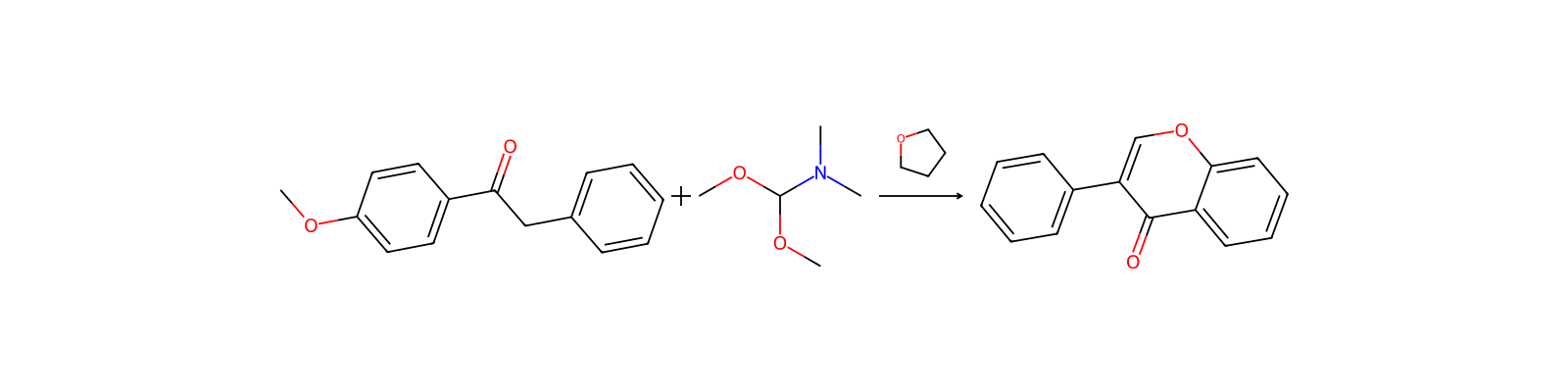
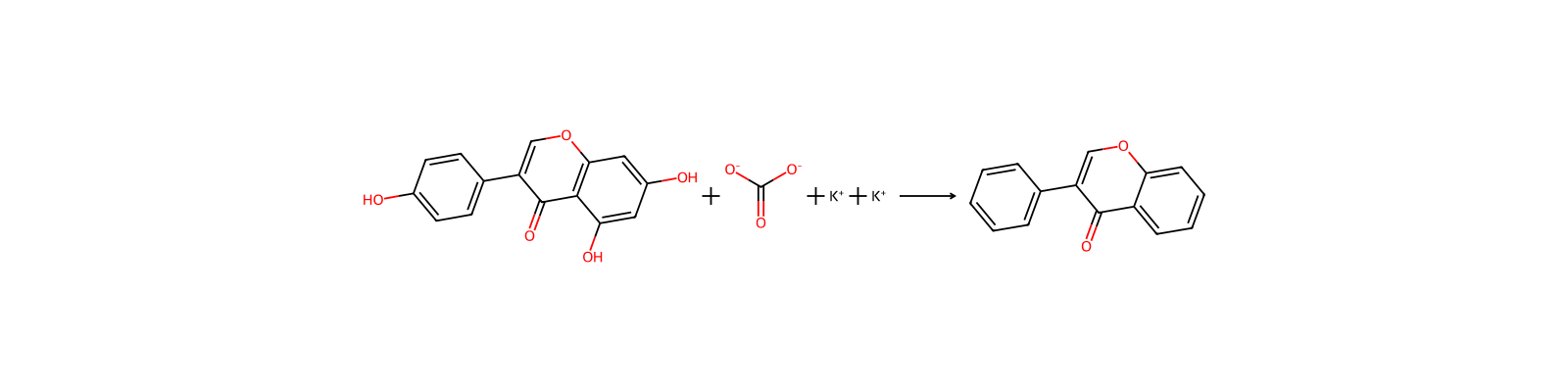
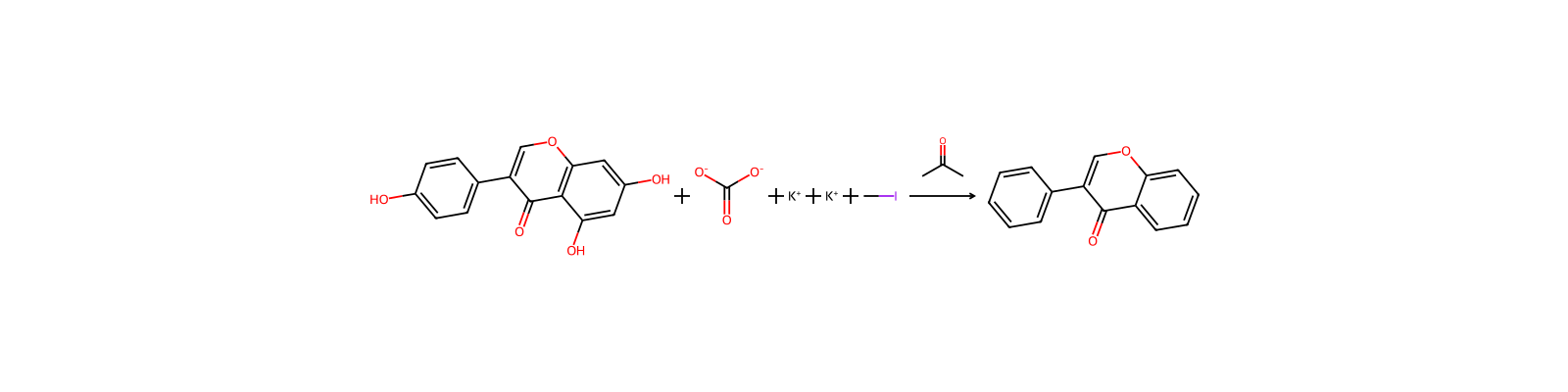
관련 반응
13건


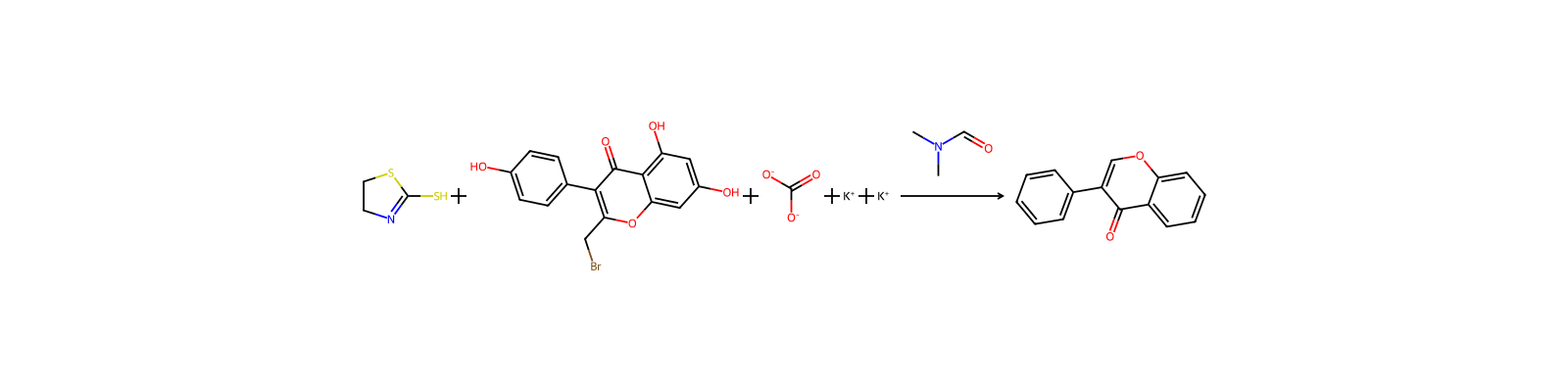

연결된 노트
불러오는 중…