홈MCP워크벤치Skills
홈워크벤치알림마이페이지
llms.txt · MCP 가이드개인정보처리방침 · 이용약관 · 지원v1.8.0
  1. 홈
  2. /화합물

에틸렌 카보네이트

Ethylene carbonate

HCID 7303
새 노트새 반응견적 요청하기
인쇄 미리보기

데이터를 보충하는 중입니다. 잠시 후 페이지를 새로 고치면 최신 내용을 볼 수 있습니다

기본 정보개요이름 및 식별자물성안전 및 규제화학 및 산업관련 반응화합물 노트
부분 구조 검색유사 구조 찾기

기본 정보

CAS
96-49-1
표준 SMILES
O=C1OCCO1
InChIKey
KMTRUDSVKNLOMY-UHFFFAOYSA-N
분자식
C3H4O3
평균 분자량
88.06 g/mol
단동위원소 질량
88.01604399

개요

Ethylene carbonate is a carbonate ester.

이름 및 식별자

우선 이름
Ethylene carbonate
IUPAC
1,3-dioxolan-2-one
현지명
에틸렌 카보네이트
영어명
Ethylene carbonate
분자식
C3H4O3
분자량
88.06

이름 및 동의어

Ethylene carbonate1,3-DIOXOLAN-2-ONE96-49-1Glycol carbonateEthylene glycol carbonateDioxolone-2Cyclic ethylene carbonateEthylene carbonic acidCarbonic acid, cyclic ethylene esterEthylene glycol, cyclic carbonateEthylenester kyseliny uhliciteDTXSID2026600
이름 더 보기
1,3-다이옥솔레인-2-온에틸렌카보네이트탄산에틸렌글리콜카보네이트디옥솔온-2시클릭에틸렌카보네이트에틸렌탄산에틸1,3-다이옥소란-2-온탄산에틸렌글리콜 카보네이트다이옥소론-2에틸렌 글리콜 카보네이트에틸렌 카보네이트ETHYLENE CARBONATE (EC)Ethylencarbonat1,3-dioxalan-2-oneEthyene CarbonateNSC 11801NSC 16568Texacar EC
RGJ96TB7R7JEFFSOL ECNSC-11801DTXCID806600RefChem:139127202-510-01,3-Dioxacyclopentan-2-one2-Oxo-1,3-dioxolane

데이터베이스 식별자

CAS
96-49-1
PubChem CID
7303
DTXSID
DTXSID2026600
ChEMBL
CHEMBL3181803
ChEBI
CHEBI:178725
UNII
RGJ96TB7R7
EC Number
202-510-0
Nikkaji
J360C

물성

구조 계산 물성보충 중

XLogP
0.3
극성 표면적
35.5 Ų
수소 결합 공여자 수
0
수소 결합 수용자 수
3
회전 가능 결합 수
0
무거운 원자 수
6
형식 전하
0
복잡도
60.4

실험 및 물리화학적 성질

SolventsSolvents -> Other Solvents
CosmeticsSolvent
SpringerMaterials PropertiesCoriolis coupling
OdorOdorless
Density · 2건

1.3214 at 39 °C

1.322 @ 40°C

Color/Form · 4건

Monoclinic plates

Colorless solid or liquid

Solid at room temperature.

Colorless liquid or crystalline solid.

Solubility · 3건

Soluble in water, alcohol, ether, and benzene

Miscible (40%) with water, alcohol, ethyl acetate, benzene, and chloroform; soluble in ether, n-butanol, and carbon tetrachloride.

Insoluble in gasoline and turpentine oil.

Flash Point · 2건

143 °C

290 °F (143 °C) (Open Cup)

Boiling Point · 2건

248 °C

248 °C @760 [mm Hg]

Decomposition

안전 및 규제

안전 정보는 참고용이며, 공급업체의 물질안전보건자료(SDS), 관련 법규 및 전문가 평가를 대체하지 않습니다.

GHS 분류

GHS Classification · 5건

This chemical does not meet GHS hazard criteria for 5.7% (31 of 543) of reports.

Warning

H302 (56.4%): Harmful if swallowed [Warning Acute toxicity, oral]

P260, P264, P264+P265, P270, P280, P301+P317, P302+P352, P305+P351+P338, P319, P321, P330, P332+P317, P337+P317, P362+P364, and P501 (click each P-code to see the statement)

Aggregated GHS information provided per 543 reports by companies from 21 notifications to the ECHA C&L Inventory. Each notification may be associated with multiple companies.

유해성 정보

Regulatory Information · 5건

Chemical: 1,3-Dioxolan-2-one

Council Directive (EEC) No 109/1989 (Repealed by Reg. EC No 1935/2004 (amended))

1,3-Dioxolan-2-one is listed on the EPA's Chemical Data Reporting (CDR) system. Manufacturers and importers of 1,3-Dioxolan-2-one are required to report information about their production and use of this chemical to the EPA under the Toxic Substances Control Act (TSCA). (40 eCFR Part 711)

Status: Active Update: 02-05-2023 https://echa.europa.eu/registration-dossier/-/registered-dossier/14909

Ethylene carbonate: Does not have an individual approval but may be used under an appropriate group standard

Fire PotentialCombustible when exposed to heat or flame; can react with oxidizing materials.
Hazards SummaryIrritating to eyes and skin; Systemic toxicity following ingestion is probably due to ethylene carbonate being converted into ethylene glycol; [HSDB] A severe eye irritant; [CHEMINFO] An irritant; [MSDSonline] See Ethylene glycol.
Atmospheric Standards · 1건

This action promulgates standards of performance for equipment leaks of Volatile Organic Compounds (VOC) in the Synthetic Organic Chemical Manufacturing Industry (SOCMI). The intended effect of these standards is to require all newly constructed, modified, and reconstructed SOCMI process units to use the best demonstrated system of continuous emission reduction for equipment leaks of VOC, considering costs, non air quality health and environmental impact and energy requirements. Ethylene carbonate is produced, as an intermediate or a final product, by process units covered under this subpart.

화학 및 산업

약리 정보

Biological Half-Life · 1건

Male Fischer-344-rats were given 200 mg/kg (14)C labeled ethylene-carbonate or 141 mg/kg radiolabeled ethylene-glycol by gavage. Ethylene-glycol was the only ethylene-carbonate metabolite detected. Peak blood ethylene-carbonate and ethylene-glycol concentrations in rats dosed with ethylene-carbonate were 0.028 and 2.3 umol/g, respectively. The respective half lives were 0.25 and 2 hours. The peak blood ethylene-glycol concentration in ethylene-glycol dosed rats was 1.1 umol/g. The half life was 3 hours.

용도 및 제조

Uses · 6건

Used as a solvent for many polymers and resins, a plasticizer, and an intermediate for pharmaceuticals; Also used in the rubber and textile industries; [Hawley] Used as a solvent (surface coatings, plastics, polymers, resins, and lithium-ion battery electrolytes), reactive diluent (urethanes and epoxy resins), dye assistant, plasticizer, water scavenger, foundry sand binder, and chemical intermediate; [CHEMINFO]

Molding and Core Making [Category: Foundry]

Solvent for many polymers and resins, plasticizer, intermediate for pharmaceuticals, rubber chemicals, textile finishing agents, hydroxyethylations reactions.

...ethylene carbonate is a solvent of a number of polymeric materials and plasticizers.

...extensively used as solvents for aromatics, polymers, and saltlike compounds.

Solvent used industrially for /the/ wet spinning /process, which is one of 4 steps in the production of polyacrylonitrile fibers/.

ImpuritiesFractionally distilled ethylene carbonate three times in a column of single-turn glass helices under 3 torr. Analysis by NMR, VPC, and IR showed no detectable impurities.
U.S. Production2023: 25,000,000 - <40,000,000 lb
Consumer UsesSolvent
Industry UsesIon exchange agent
Methods of Manufacturing

관련 반응

355건
반응 기록 만들기
HRID 789 반응식
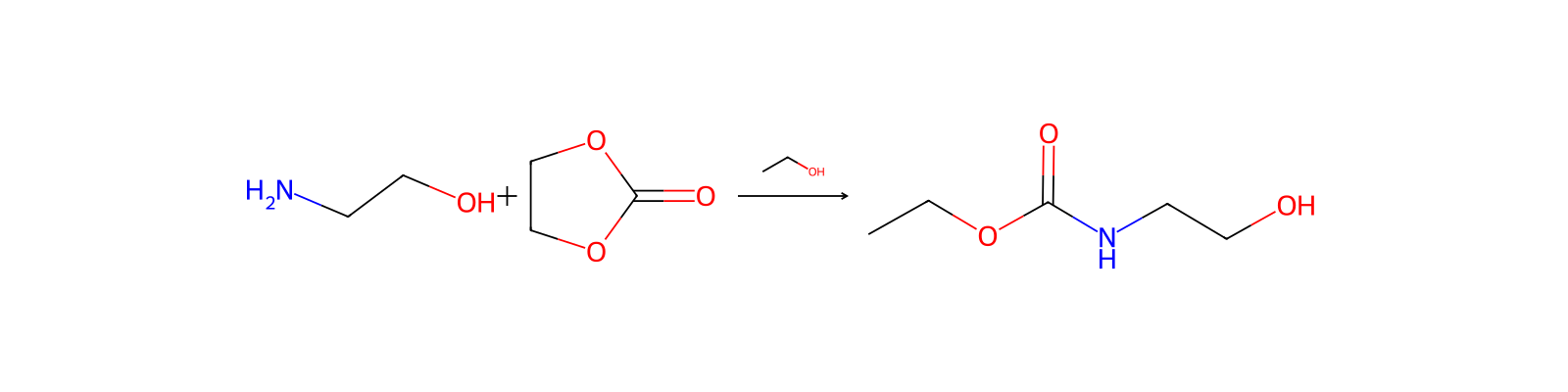
HRID 789반응물로uspto-grants-1998_03
HRID 8345 반응식
HRID 8345반응물로uspto-grants-2006_08
HRID 36959 반응식
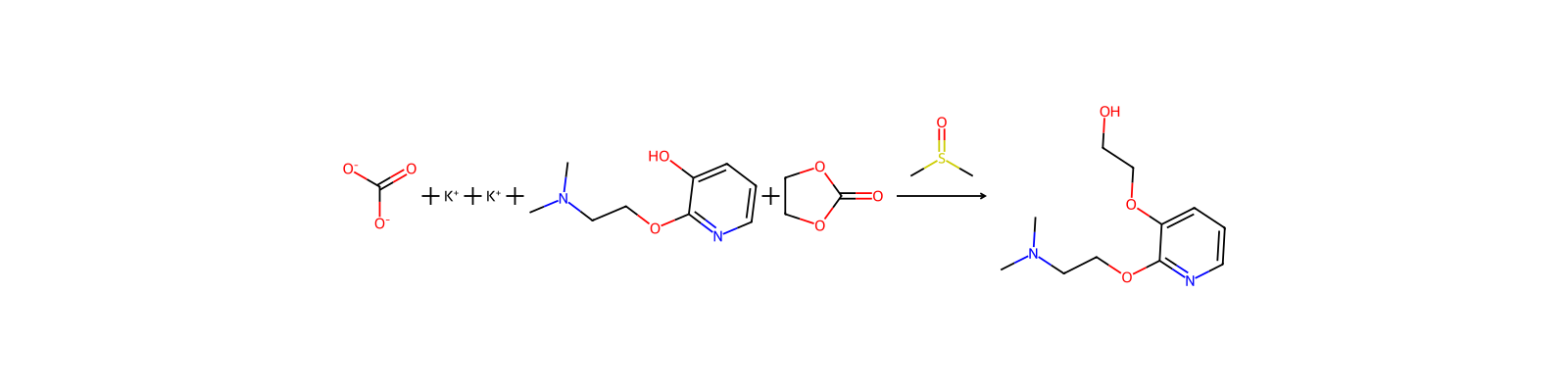
HRID 36959반응물로uspto-grants-1995_05
HRID 60633 반응식
HRID 60633반응물로uspto-grants-2016_09
HRID 75473 반응식
HRID 75473촉매로반응물로uspto-grants-2014_09
HRID 75475 반응식
HRID 75475반응물로uspto-grants-2014_09
HRID 133114 반응식
HRID 133114반응물로uspto-grants-2008_06
HRID 136053 반응식
HRID 136053반응물로Training data from https://doi.org/10.1039/C8SC04228D (9/10)
1 / 45 페이지

화합물 노트

불러오는 중…

이 페이지에서기본 정보개요이름 및 식별자물성안전 및 규제화학 및 산업관련 반응화합물 노트
더보기
새 노트새 반응견적 요청하기
When heated to decomposition it emits acrid smoke and irritating fumes.
Melting Point · 2건

36.4 °C

36.4 °C

Vapor Density3.04 (Air=1)

물리화학적 성질

녹는점
35 · 35-38 °C(lit.)
끓는 점
243 · 243-244 °C740 mm Hg(lit.)
밀도
1.321 g/mL · 1.321 g/mL at 25 °C(lit.)
증기 밀도
3.04 · 3.04 (vs air)
증기압
0.02 mm · 0.02 mm Hg ( 36.4 °C)
굴절률
1.4199 · 1.4199
인화점
320 °F · 320 °F
저장 조건
30 °C · Store below +30°C.
용해도
2 O: · H2O: 1 M at 20 °C, 투명, 무색
물리적 상태
결정질 저융점 고체
산도 계수 (pKa)
3.86 · 3.86[at 20 ℃]
색상
흰색에서 노란색으로
Specific Gravity
1.321 · 1.321
수소이온지수(pH)
7 · 7 (200g/l, H2O, 20℃)
냄새
냄새 없는
폭발한계
3.6 · 3.6-16.1%(V)
수용성
214 g/L · 214g/L(20℃)
비열
1.52 J/ · Cp(liquid): 1.52 J/(g·K), at 25℃
BRN
106249 · 106249
Henry's Law Constant
3.6 · 3.6×10-2 mol/(m3Pa) at 25℃, HSDB (2015)
Dielectric constant
69.4 · 69.4(91℃)
안정성
안정적인. 강한 산화제, 산, 염기, 환원제와 호환되지 않습니다.
화장품 원료 기능
용제
InChI
1S/C3H4O3/c4-3-5-1-2-6-3/h1-2H2
InChIKey
KMTRUDSVKNLOMY-UHFFFAOYSA-N
SMILES
O=C1OCCO1
LogP
0.11 at · 0.11 at 20℃
NIST
Ethylene carbonate(96-49-1)
EPA
Ethylene carbonate (96-49-1)

화학적 성질

colourless crystals

Hazard Classes and CategoriesAcute Tox. 4 (56.4%)
Skin, Eye, and Respiratory IrritationsA skin and eye irritant.
Critical Temperature and PressureCritical temperature: /533 °C/ 806.00 K; Critical pressure: 6.77X10+6 Pa
Hazardous Reactivities and IncompatibilitiesCombustible when exposed to heat or flame; can react with oxidizing materials.

안전 및 보호

Disposal Methods · 1건

SRP: At the time of review, criteria for land treatment or burial (sanitary landfill) disposal practices are subject to significant revision. Prior to implementing land disposal of waste residue (including waste sludge), consult with environmental regulatory agencies for guidance on acceptable disposal practices.

Preventive Measures · 1건

SRP: The scientific literature for the use of contact lenses in industry is conflicting. The benefit or detrimental effects of wearing contact lenses depend not only upon the substance, but also on factors including the form of the substance, characteristics and duration of the exposure, the uses of other eye protection equipment, and the hygiene of the lenses. However, there may be individual substances whose irritating or corrosive properties are such that the wearing of contact lenses would be harmful to the eye. In those specific cases, contact lenses should not be worn. In any event, the usual eye protection equipment should be worn even when contact lenses are in place.

Protective Action Criteria (PAC) · 3건

30 [mg/m3]

330 [mg/m3]

2000 [mg/m3]

독성 정보

Environmental Fate · 3건

TERRESTRIALFATE: Based on a classification scheme(1), an estimated Koc value of 9.2(SRC), determined from a structure estimation method(2), indicates that ethylene carbonate is expected to have very high mobility in soil(SRC). Volatilization of ethylene carbonate from moist soil surfaces is expected to be an important fate process(SRC) given an estimated Henry's Law constant of 2.74X10⁻⁴ atm-cu m/mole(3,SRC), using a fragment constant estimation method(3), ethylene carbonate is not expected to volatilize from dry soil surfaces(SRC) based upon a vapor pressure of 9.80X10⁻³ mm Hg(4). Ethylene carbonate achieved 64.1 percent of its theoretical BOD using an activated sludge inoculum during a 2 week incubation period(5), suggesting biodegradation in soil will be an important environmental fate process(SRC).

AQUATIC FATE: Based on a classification scheme(1), an estimated Koc value of 9.2(SRC), determined from a structure estimation method(2), indicates that ethylene carbonate is not expected to adsorb to suspended solids and sediment in water(SRC). Volatilization from water surfaces is expected(3) based upon an estimated Henry's Law constant of 2.74X10⁻⁴ atm-cum/mole(4,SRC), developed using a fragment constant estimation method(4). Using this Henry's Law constant and an estimation method(3), volatilization half-lives for a model river and model lake are 3 and 110 hours, respectively(SRC). Ethylene carbonate achieved 64.1 percent of its theoretical BOD using an activated sludge inoculum during a 2 week incubation period(8), suggesting biodegradation in water will be an important process(SRC). Ethylene carbonate is expected to undergo hydrolysis due to the presence of hydrolyzable functional groups(3). According to a classification scheme(5), an estimated BCF of 3.2(SRC), from an estimated log Kow of -0.34(6) and a regression-derived equation(7), suggests the potential for bioconcentration in aquatic organisms is low.

ATMOSPHERIC FATE: According to a model of gas/particle partitioning of semivolatile organic compounds in the atmosphere(1), ethylene carbonate, which has a vapor pressure of 9.80X10⁻³ mm Hg at 25 °C(3), is expected to exist solely as a vapor in the ambient atmosphere. Vapor-phase ethylene carbonate is degraded in the atmosphere by reaction with photochemically-produced hydroxyl radicals(SRC); the half-life for this reaction in air is estimated to be 160 hours(SRC), calculated from its rate constant of 2.4X10⁻¹² cu cm/molecule-sec at 25 °C(2) determined using a structure estimation method(2). Ehtylene carbonate may also undergo direct photolysis in the environment since this compound contains a functional group that can absorb light >290 nm(4).

Adverse EffectsNeurotoxin - Acute solvent syndrome
Soil Adsorption/Mobility · 1건

Using a structure estimation method based on molecular connectivity indices(1), the Koc for ethylene carbonate can be estimated to be 9.2(SRC). According to a classification scheme(2), this estimated Koc value suggests that ethylene carbonate is expected to have very high mobility in soil.

TSCA Test Submissions · 1건

1,3-Dioxolan-2-one (Ethylene carbonate, CAS # 96-49-1) was evaluated for teratogenicity in 108 female Sprague-Dawley rats (27/group) orally administered doses of 0 (deionized water control), 750, 1500, and 3000 mg/kg/day on gestation days (GD) 6 through 15. Technical error accounted for solitary maternal lethalities in 1500 and 3000 mg/kg/day groups. Clinical signs of toxicity associated with treatment included post dose salivation (750, 1500, 3000 mg/kg/day), chromodacryorrhea (1500 mg/kg/day), dyspnea (1500, 3000 mg/kg/day), alopecia, decreased body tone, decreased activity and dyspnea (3000 mg/kg/day). Suppressed group mean body weight gain was biologically significant in dams of 3000 mg/kg doses, while food consumption appeared unaffected by treatment. Caesarian section and fetal analyses (at least 24-26 litters, 337-382 fetuses/group) on GD 20 revealed no statistically significant (p</= 0.05) departure from controls in fetal mortality, number of gravid animals per group, total number of implantation sites, viable fetuses, non-viable fetuses, early or late resorptions, corpora lutea, fetal sex distribution, or number and percentage of pre-implantation or post-implantation losses. Group mean fetal body weights were significantly depressed from dams of 1500 and 3000 mg/kg/day dose groups. Fetuses of high-dose (3000 mg/kg/day) dams also exhibited statistically significant increased incidence (10%) of external, soft tissue, and skeletal malformations relative to both current and historical controls. Specifically, increased ossification of the sternebrae 1-4 and non-ossification of the 6th sternebra (1500, 3000 mg/kg/day) and increased incidence of bipartite thoracic vertebra (3000 mg/kg/day) reached statistical significance; fetuses of 3000 mg/kg/day also exhibited an increased, but not statistically significant, incidence of bipartite lumbar vertebra.

Artificial Pollution Sources · 1건

Ethylene carbonate's production and use as a solvent for many polymers and resins, plasticizer, intermediate for pharmaceuticals, rubber chemicals, textile finishing agents, and also in hydroxyethylation reactions(1) may result in its release to the environment through various waste streams(SRC).

Environmental BiodegradationAEROBIC: Ethylene carbonate, present at 100 mg/l, reached 64.1% of its theoretical BOD in 2 weeks using an activated sludge inoculum at 30 mg/l and the Japanese MITI test(1).
Environmental Bioconcentration · 1건

An estimated BCF of 3.2 was calculated for ethylene carbonate(SRC), using an estimated log Kow of -0.34(1,SRC) and a regression-derived equation(2). According to a classification scheme(3), this BCF suggests the potential for bioconcentration in aquatic organisms is low.

Volatilization from Water/Soil · 1건

The Henry's Law constant for ethylene carbonate is estimated as 2.74X10⁻⁴ atm-cu m/mole(SRC) using a fragment constant estimation method(1). This Henry's Law constant indicates that ethylene carbonate is expected to volatilize from water surfaces(2). Based on this Henry's Law constant, the volatilization half-life from a model river (1 m deep, flowing 1 m/sec, wind velocity of 3 m/sec)(2) is estimated as 3 hours(SRC). The volatilization half-life from a model lake (1 m deep, flowing 0.05 m/sec, wind velocity of 0.5 m/sec)(2) is estimated as 110 hours(SRC). ethylene carbonate's Henry's Law constant(1) indicates that volatilization from moist soil surfaces is expected to occur(SRC). Ethylene carbonate is not expected to volatilize from dry soil surfaces(SRC) based upon a vapor pressure of 9.80X10⁻³ mm Hg(3).

Non-Human Toxicity Excerpts · 2건

The mechanism and disposition of ethylene-carbonate (96491) were studied in rats to determine if the toxicity of ethylene-carbonate could be the result of it being metabolized to ethylene-glycol. In-vitro, no ethylene-carbonate hydrolysis occurred. Male Fischer-344-rats were given 200 mg/kg (14)C labeled ethylene-carbonate or 141 mg/kg radiolabeled ethylene-glycol by gavage. In-vivo, ethylene-carbonate was rapidly metabolized, 60 percent of the dose being recovered as carbon-dioxide in the expired air and 27 percent in the urine after 3 hours. Approximately 90 percent of the ethylene-glycol dose was excreted in the expired air or urine after 24 hours. Ethylene-glycol was the only ethylene-carbonate metabolite detected. Peak blood ethylene-carbonate and ethylene-glycol concentrations in rats dosed with ethylene-carbonate were 0.028 and 2.3 umol/g, respectively. The respective halflives were 0.25 and 2 hours. The peak blood ethylene-glycol concentration in ethylene-glycol dosed rats was 1.1 umol/g. The half life was 3 hours. It was concluded that ethylene-carbonate is rapidly metabolized to ethylene-glycol in-vivo. The systemic toxicity following oral administration of ethylene-carbonate is probably due to its being converted into ethylene-glycol.

Moderately toxic by intraperitoneal route. Mildly toxic by ingestion.

Environmental Abiotic Degradation · 1건

The rate constant for the vapor-phase reaction of ethylene carbonate with photochemically-produced hydroxyl radicals has been estimated as 2.4X10⁻¹² cu cm/molecule-sec at 25 °C(SRC) using a structure estimation method(1). This corresponds to an atmospheric half-life of about 160 hours at an atmospheric concentration of 5X10+5 hydroxyl radicals per cu cm(1). Ethylene carbonate is expected to undergo hydrolysis due to the presence of hydrolyzable functional groups(2). It may also undergo direct photolysis in the environment since this compound contains a functional group that can absorb light >290 nm(2).

Probable Routes of Human Exposure · 1건

NIOSH (NOES Survey 1981-1983) has statistically estimated that 4,051 workers (573 of these are female) are potentially exposed to ethylene carbonate in the US(1). Occupational exposure to ethylene carbonate may occur through inhalation and dermal contact with this compound at workplaces where ethylene carbonate is produced or used(SRC).

Environmental Fate/Exposure Summary · 1건

Ethylene carbonate's production and use as a solvent for many polymers and resins, plasticizer, intermediate for pharmaceuticals, rubber chemicals, textile finishing agents, and also in hydroxyethylation reactions, may result in its release to the environment through various waste streams. If released to air, a vapor pressure of 9.80X10⁻³ mm Hg at 25 °C indicates ethylene carbonate will exist solely as a vapor. Vapor-phase ethylene carbonate will be degraded in the atmosphere by reaction with photochemically-produced hydroxyl radicals; the half-life for this reaction in air is estimated to be 160 hours. It may also undergo direct photolysis in the environment since this compound contains a functional group that can absorb light >290 nm. If released to soil, ethylene carbonate is expected to have very high mobility based upon an estimated Koc of 9.2. Volatilization from moist soil surfaces is expected to be an important fate process based upon an estimated Henry's Law constant of 2.74X10⁻⁴ atm-cum/mole. Ethylene carbonate achieved 64.1 percent of its theoretical BOD using an activated sludge inoculum during a 2 week incubation period, in a single screening study. If released into water, ethylene carbonate is not expected to adsorb to suspended solids and sediment in water based upon the estimated Koc. Volatilization from water surfaces is expected to be an important fate process based upon this compound's estimated Henry's Law constant. Ethylene carbonate is expected to undergo hydrolysis due to the presence of hydrolyzable functional groups. An estimated BCF of 3.2 suggests the potential for bioconcentration in aquatic organisms is low. Occupational exposure to ethylene carbonate may occur through inhalation and dermal contact with this compound at workplaces where ethylene carbonate is produced or used. (SRC)

규제 정보

Atmospheric Standards · 1건

This action promulgates standards of performance for equipment leaks of Volatile Organic Compounds (VOC) in the Synthetic Organic Chemical Manufacturing Industry (SOCMI). The intended effect of these standards is to require all newly constructed, modified, and reconstructed SOCMI process units to use the best demonstrated system of continuous emission reduction for equipment leaks of VOC, considering costs, non air quality health and environmental impact and energy requirements. Ethylene carbonate is produced, as an intermediate or a final product, by process units covered under this subpart.

안전 데이터

wgk
1
tsca
TSCA listed
rtecs
FF9550000
ridadr
UN 2265 3 / PGIII
독성
LD50 orally in Rabbit: > 5000 mg/kg LD50 dermal Rabbit > 2000 mg/kg
HS 번호
29209010
risk_code
36/37/38-41
hazard_code
Xi
safety_code
26-36-39
기존화학 물질
KE-12028
자연 발화 온도
465 °C
Hazard Classifications
Acute Tox. 4 OralEye Irrit. 2STOT RE 2 Oral
스토리지 클래스
11 - Combustible Solids
유해 물질 데이터
96-49-1(Hazardous Substances Data)
· 5건

Prepared from ethylene oxide by addition of carbon dioxide with ammonium or alkali metal salts as catalysts.

Interaction of ethylene glycol and phosgene.

Ethylene carbonate is commercially produced by the reaction of ethylene oxide and carbon dioxide at 190-200 °C and 80 atm using Et4NBr as a catalyst.

...by reacting equimolecular amounts of 1,2-ethanediol and phosgene in a closed tube at room temperature.

For more Methods of Manufacturing (Complete) data for 1,3-DIOXOLAN-2-ONE (7 total), please visit the HSDB record page.

Formulations/Preparations · 5건

...purified ethylene carbonate for dielectric constant and dipole moment studies by fractional distillation at reduced pressure and fractional crystallizations from dry ethyl ether.

...studied a process for the continuous purification of cyclic ethylene carbonate by continuous crystallization in a column with thermal gradient; the product was 99.93%.

...purified a commercially available /ethylene carbonate/ by the zone refining method...

...purified ethylene carbonate...by a sequence of fractional freezings under a nitrogen atmosphere until a constant maximum freezing point was obtained.

...purified commercial ethylene carbonate...by distilling several times at 5 Torr.

Household ProductsInformation on 1 consumer products that contain Ethylene carbonate in the following categories is provided:
Use ClassificationCosmetics -> Solvent
General Manufacturing Information · 3건

Transportation Equipment Manufacturing

1,3-Dioxolan-2-one: ACTIVE

When 12 yr old Muscat Bailey A grapevines in a greenhouse were sprayed with either 0.0016 M ethylene carbonate, 10 ppm diuron, 0.001 M Ca EDTA, 0.000015 M rutin, 0.001 M CaCO3, or 0.001 M K2CO3 on July 31, the proportion of berries with complete coloration on August 27 increased from 10% of the control to approx 40 with ethylene carbonate or diuron, approx 35 with Ca EDTA, 30 with rutin, and approx 20 with K2CO3 or CaCO3. Data on Kyoho grapes are also reported. Sugar content was not affected.

응용 분야 · 3건

개요에틸렌 카보네이트 (EC)의 다른 이름 1,3- 디옥 솔란 -2- 온; 에틸렌 글리콜 카보네이트; 무색의 무취 액체이다. 이 제품은 다용도로 사용되는 에틸렌 기반의 솔벤트로서 광범위한 응용 분야와 반응합니다.

용도에틸렌 카르 보 네이트 (EC)는 윤활유 용제, 초 흡수체 제조에서의 가교제, 가스 세정 공정과 유전의 분리, 폴리 카보네이트 디올의 합성 중간체 및 리튬 이온의 중간체로서 사용할 수 있습니다 배터리 및 광 변색 애플리케이션.

용도Ethylene carbonate is an ester of ethylene glycol and carbonic acid. Ethylene carbonate is used as a polar solvent with a molecular dipole moment of 4.9 D, only 0.1 D lower than that of propylene carb onate. It can be used as a high permittivity component of electrolytes in lithium batteries.

상·하류 제품 정보

상류 원료

3-(2-하이드록시에틸)-2-옥사졸리디논2-하이드록시에틸카바메이트2-옥사졸리돈

하류 제품

디메틸 카보네이트에틸렌 황화물PerfluorooctaneCarbonic acid, 2-hydroxyethyl methyl ester2-페녹시에탄올Chloroethylene carbonate모노에틸렌글리콜Isobutyl carbonate1,4-벤조디옥산S-2-Hydroxyethyl-L-cysteine1,1,2,2-테트라메톡시에탄라우레스-1디부틸우레아RVX-208