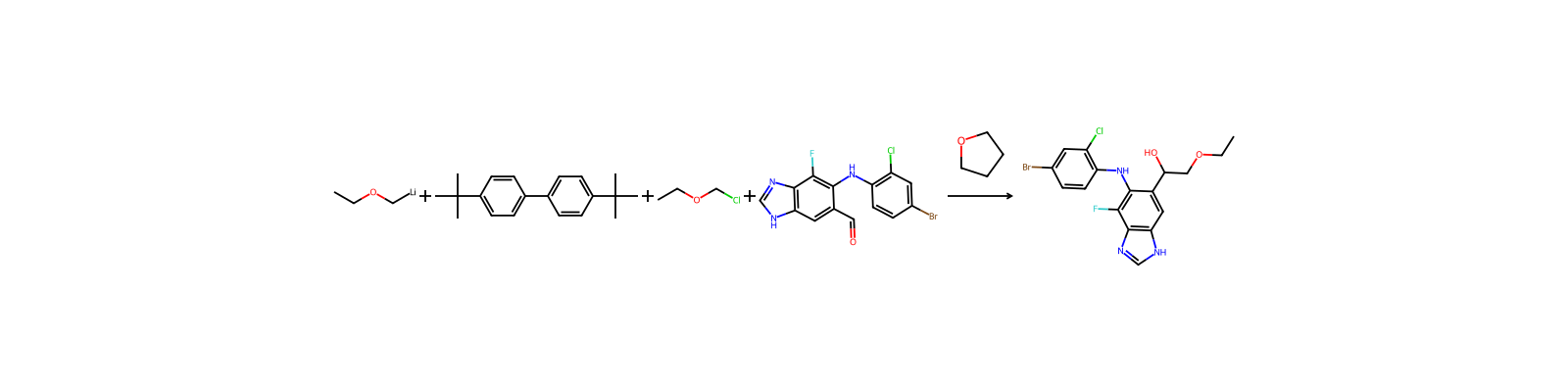
4,4'-Bis(1,1-dimethylethyl)-1,1'-biphenyl
데이터를 보충하는 중입니다. 잠시 후 페이지를 새로 고치면 최신 내용을 볼 수 있습니다

기본 정보
- CAS
1625-91-8- 표준 SMILES
CC(C)(C)c1ccc(-c2ccc(C(C)(C)C)cc2)cc1- InChIKey
CDKCEZNPAYWORX-UHFFFAOYSA-N- 분자식
- C20H26
- 평균 분자량
- 266.4 g/mol
- 단동위원소 질량
- 266.20345083
개요
used in ammonia-free reductions
이름 및 식별자
- 우선 이름
- 4,4'-Bis(1,1-dimethylethyl)-1,1'-biphenyl
- IUPAC
- 1-tert-butyl-4-(4-tert-butylphenyl)benzene
- 영어명
- 4,4'-Di-tert-butylbiphenyl
- 분자식
- C20H26
- 분자량
- 266.42
이름 및 동의어
1625-91-84,4'-di-tert-Butylbiphenyl4,4'-Di-tert-butyl-1,1'-biphenylDTXSID404819343DA8ZRT2NDTXCID50281684,4'-Bis(1,1-dimethylethyl)-1,1'-biphenylDBB biphenyl cpdDTBB cpdRefChem:506592216-615-41-tert-butyl-4-(4-tert-butylphenyl)benzene
이름 더 보기
4,4′-Bis(1,1-dimethylethyl)-1,1′-biphenyl4,4'-Di-tert-butyLTIMTEC-BB SBB0078124,4'-Di-t-butylbiphenyl, 99+%4,4'-Di-tert-butylbiphenyl>4,4'-Bis(tert-butyl)-biphenyl
4,4'-di-t-Butylbiphenyl1,1'-Biphenyl, 4,4'-bis(1,1-dimethylethyl)-C20H26MFCD000088341-(tert-butyl)-4-[4-(tert-butyl)phenyl]benzeneEINECS 216-615-44,4'-di-tert-butyl biphenyl4,4/'-Di-tert-Butylbiphenyl
데이터베이스 식별자
- CAS
1625-91-8- PubChem CID
- 74195
- DTXSID
DTXSID4048193- ChEMBL
CHEMBL3187007- UNII
- 43DA8ZRT2N
- EC Number
- 216-615-4
- Nikkaji
- J80.265D
물성
구조 계산 물성보충 중
- XLogP
- 7.7
- 극성 표면적
- 0 Ų
- 수소 결합 공여자 수
- 0
- 수소 결합 수용자 수
- 0
- 회전 가능 결합 수
- 3
- 무거운 원자 수
- 20
- 형식 전하
- 0
- 복잡도
- 253
물리화학적 성질
- 녹는점
- 126 · 126-130 °C(lit.)
- 끓는 점
- 190 · 190-192 °C13 mm Hg(lit.)
- 밀도
- 0.9463 · 0.9463 (estimate)
- 굴절률
- 1.5928 · 1.5928 (estimate)
- 인화점
- 190 · 190-192°C/13mm
- 저장 조건
- Sealed in dry,Room Temperature
- 용해도
- 0.1 g/mL, · 디옥산: 0.1 g/mL, 투명
- 물리적 상태
- 결정성 분말
- 색상
- 연한 노란색에서 노란색-주황색까지
- BRN
- 2095855 · 2095855
- InChI
- InChI=1S/C20H26/c1-19(2,3)17-11-7-15(8-12-17)16-9-13-18(14-10-16)20(4,5)6/h7-14H,1-6H3
- InChIKey
- CDKCEZNPAYWORX-UHFFFAOYSA-N
- SMILES
- C1(C2=CC=C(C(C)(C)C)C=C2)=CC=C(C(C)(C)C)C=C1
- NIST
- 4 · 4,4'-Di-tert-butylbiphenyl(1625-91-8)
화학적 성질
Powder
안전 및 규제
안전 정보는 참고용이며, 공급업체의 물질안전보건자료(SDS), 관련 법규 및 전문가 평가를 대체하지 않습니다.
GHS 분류
GHS Classification
Warning
H315 (100%): Causes skin irritation [Warning Skin corrosion/irritation]
P261, P264, P264+P265, P271, P280, P302+P352, P304+P340, P305+P351+P338, P319, P321, P332+P317, P337+P317, P362+P364, P403+P233, P405, and P501 (click each P-code to see the statement)
The GHS information provided by 1 company from 1 notification to the ECHA C&L Inventory.
유해성 정보
Hazard Classes and CategoriesSkin Irrit. 2 (100%)
안전 데이터
- wgk
- 3
- HS 번호
- 29029090
- safety_code
- 22-24/25
- 스토리지 클래스
- 11 - Combustible Solids
화학 및 산업
응용 분야
용도It is used in the generation of 1,2-di(lithiomethyl)benzene. It is found to accept electrons from Li metal to give a radical anion which is highly effective in the conversion of alkyl halides to alkyllithiums. 4,4-Di-tert-butylbiphenyl is used in production of homoallylic amine derivatives. It is also used in the preparation of lithium di-tert-butylbiphenylide, a radical anion, superior to sodium or lithium naphthalenides for metalation reactions. Along with lithium, 4,4-Di-tert-butylbiphenyl catalyzes; reaction of chloromethyl ethyl ether and different carbonyl compounds to yield corresponding hydroxyethers and reductive opening of N-phenylazetidine.
일반 설명4,4′-Di-tert-butylbiphenyl along with lithium catalyzes:reaction of chloromethyl ethyl ether and different carbonyl compounds to yield corresponding hydroxyethersreductive opening of N-phenylazetidine
상·하류 제품 정보
상류 원료
하류 제품
관련 반응
9,529건


화합물 노트
불러오는 중…