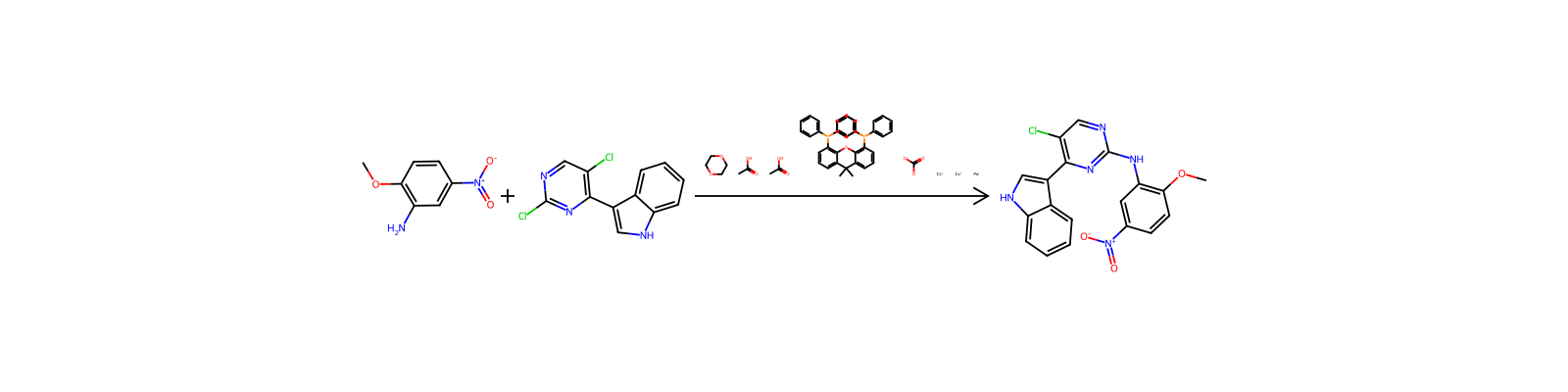

기본 정보
- 표준 SMILES
COc1ccc([N+](=O)[O-])cc1N- InChIKey
NIPDVSLAMPAWTP-UHFFFAOYSA-N- 분자식
- C7H8N2O3
- 평균 분자량
- 168.15 g/mol
- 단동위원소 질량
- 168.05349212
개요
5-nitro-o-anisidine appears as orange-red needles or orange powder. (NTP, 1992)
이름 및 식별자
- 우선 이름
- 2-Methoxy-5-nitroaniline
- IUPAC
- 2-methoxy-5-nitroaniline
- 현지명
- 5-나이트로-o-아니스딘
- 영어명
- 2-Amino-4-nitro anisidine
- 분자식
- C7H8N2O3
- 분자량
- 168.15
이름 및 동의어
2-Methoxy-5-nitroaniline99-59-25-NITRO-O-ANISIDINE2-Amino-4-nitroanisoleAzoamine Scarlet K2-Methoxy-5-nitrobenzenamineFast Scarlet R2-Amino-1-methoxy-4-nitrobenzene5-Nitro-2-methoxyanilineo-Anisidine nitrateAzoamine Scarleto-Anisidine, 5-nitro-
이름 더 보기
5-나이트로-o-아니스딘2-아미노-4-니트로아니시딘nsc5510ccris440CI 37130ai3-08934fastscarletrLAKE ORANGE GSCARLET R BASE
3-Nitro-6-methoxyaniline3-Amino-4-methoxynitrobenzeneAzogene ecarlate RBenzenamine, 2-methoxy-5-nitro-Aniline, 2-methoxy-5-nitro-4-Nitro-2-aminoanisoleNCI-C01934CI Azoic diazo component 13
데이터베이스 식별자
- CAS
99-59-2- PubChem CID
- 7447
- DTXSID
DTXSID0020943- ChEMBL
CHEMBL319398- ChEBI
CHEBI:48977- UNII
- THY70UTM0O
- EC Number
- 202-770-5
- Nikkaji
- J3.995K
물성
구조 계산 물성
- XLogP
- 1.5
- 극성 표면적
- 81.1 Ų
- 수소 결합 공여자 수
- 1
- 수소 결합 수용자 수
- 4
- 회전 가능 결합 수
- 1
- 무거운 원자 수
- 12
- 형식 전하
- 0
- 복잡도
- 169
실험 및 물리화학적 성질
Chemical ClassesNitrogen Compounds -> Nitroanilines
LogP
log Kow= 1.47
1.47
Density
1.2068 at 313 °F (NTP, 1992) - Denser than water; will sink
1.2068 @ 156 °C
Color/Form
ORANGE-RED NEEDLES FROM ALC, ETHER, WATER
Red needles from alcohol
Solubility
less than 0.1 mg/mL at 67.1 °F (NTP, 1992)
Very sol in alcohol, acetone, benzene, acetic acid, ethyl acetate; soluble in ligroine
SLIGHTLY SOL IN PETROLEUM ETHER
In water, 115 mg/l @ 23 °C
DecompositionWhen heated to decomposition it emits toxic fumes of /nitrogen oxides/.
Melting Point
244 °F (NTP, 1992)
118 °C
Vapor Pressure0.000319 [mmHg]
Physical Description
5-nitro-o-anisidine appears as orange-red needles or orange powder. (NTP, 1992)
Orange-red to red solid; [HSDB] Orange crystalline powder; [MSDSonline]
Dissociation ConstantspKa = 2.49 (conjugate acid)
물리화학적 성질
- 녹는점
- 117 · 117-119 °C(lit.)
- 끓는 점
- 337.07 °C · 337.07°C (rough estimate)
- 밀도
- 1.2068 · 1.2068
- 증기압
- 0.04 Pa · 0.04Pa
- 굴절률
- 1.601 · 1.6010 (estimate)
- 인화점
- 119 ℃ · 119℃
- 저장 조건
- 2 · 2-8°C, protect from light
- 용해도
- 382 mg/L · 382mg/L in organic solvents at 20 ℃
- 산도 계수 (pKa)
- 2.42 · 2.42±0.10(Predicted)
- 수용성
- 19.5 · 약간 용해됨. 19.5&C에서 <0.01g/100mL
- BRN
- 879620 · 879620
- Henry's Law Constant
- 7.6 · 7.6×102 mol/(m3Pa) at 25℃, HSDB (2015)
- 안정성
- 안정적이지만 습기에 민감할 수 있습니다. 물, 산, 강산화제, 산 염화물, 산 무수물, 클로로포르메이트, 액체 아니시딘과 혼합되지 않습니다.
- InChI
- 1S/C7H8N2O3/c1-12-7-3-2-5(9(10)11)4-6(7)8/h2-4H,8H2,1H3
- InChIKey
- NIPDVSLAMPAWTP-UHFFFAOYSA-N
- SMILES
- COc1ccc(cc1N)[N+]([O-])=O
- LogP
- 1.16 at · 1.16 at 23℃
- NIST
- 2 · Benzenamine, 2-methoxy-5-nitro-(99-59-2)
- EPA
- 2 · 2-Methoxy-5-nitroaniline (99-59-2)
화학적 성질
orange to brown powder
안전 및 규제
GHS 분류
GHS Classification
Warning
H302 (12.2%): Harmful if swallowed [Warning Acute toxicity, oral]
P203, P261, P264, P264+P265, P270, P271, P280, P301+P317, P302+P352, P304+P340, P305+P351+P338, P317, P318, P319, P321, P330, P332+P317, P337+P317, P362+P364, P403+P233, P405, and P501 (click each P-code to see the statement)
Aggregated GHS information provided per 49 reports by companies from 7 notifications to the ECHA C&L Inventory. Each notification may be associated with multiple companies.
유해성 정보
Regulatory Information
Chemical: Benzenamine, 2-methoxy-5-nitro-
Status: Cease Manufacture Update: 11-12-2012 https://echa.europa.eu/registration-dossier/-/registered-dossier/10119
Benzenamine, 2-methoxy-5-nitro-: Does not have an individual approval but may be used as a component in a product covered by a group standard. It is not approved for use as a chemical in its own right.
Other Safety InformationIMAP assessments - 5-Nitro-ortho-anisidine and its hydrochloride: Human health tier II assessment
DOT LabelPoison
Fire HazardsFlash point data for this chemical are not available. It is probably combustible. (NTP, 1992)
Health Hazards
SYMPTOMS: Symptoms of exposure to this compound may include headaches, dizziness, cyanosis, and red blood cell Heinz bodies. Symptoms of exposure to related compounds includes methemoglobinemia, skin sensitization, irritation, corneal damage, and kidney and liver damage.
Hazards Summary
Harmful by inhalation, ingestion, and skin absorption; Potential health effects include methemoglobinemia, skin sensitization, and injury to the kidneys and liver; [CAMEO] An irritant; Effects in high-dose animal studies include abnormal liver function tests; [MSDSonline]
Reactive GroupNitro, Nitroso, Nitrate, and Nitrite Compounds, Organic
Special Reports
Bioassay of 5-Nitro-o-anisidine for Possible Carcinogenicity (1978) Technical Rpt Series No. 78-1382 DHEW Pub No. (NIH) 78-1382, U.S. Department of Health Education and Welfare, National Cancer Institute, Bethesda, MD 20014
National Toxicology Program. Eleventh Report on Carcinogens (2005). The Report on Carcinogens is an informational scientific and public health document that identifies and discusses substances (including agents, mixtures, or exposure circumstances) that may pose a carcinogenic hazard to human health. 5-Nitro-o-anisidine (99-59-2) is delisted as reasonably anticipated to be a human carcinogen.[Available from, as of July 31, 2009: http://ntp.niehs.nih.gov/ntp/roc/eleventh/append/appb.pdf]
Reactivity Profile5-NITRO-O-ANISIDINE is incompatible with strong oxidizing agents, acids, acid chlorides, acid anhydrides and chloroformates (NTP, 1992).
DOT Emergency Guidelines
/GUIDE 153: SUBSTANCES - TOXIC AND/OR CORROSIVE (COMBUSTIBLE)/ Health: TOXIC; inhalation, ingestion, or skin contact with material may cause severe injury or death. Contact with molten substance may cause severe burns to skin and eyes. Avoid any skin contact. Effects of contact or inhalation may be delayed. Fire may produce irritating, corrosive and/or toxic gases. Runoff from fire control or dilution water may be corrosive and/or toxic and cause pollution. /Nitroanilines/
/GUIDE 153: SUBSTANCES - TOXIC AND/OR CORROSIVE (COMBUSTIBLE)/ Fire or Explosion: Combustible material: may burn but does not ignite readily. When heated, vapors may form explosive mixtures with air: indoors, outdoors, and sewers explosion hazards. Those substances designated with a "P" may polymerize explosively when heated or involved in a fire. Contact with metals may evolve flammable hydrogen gas. Containers may explode when heated. Runoff may pollute waterways. Substance may be transported in a molten form. /Nitroanilines/
/GUIDE 153: SUBSTANCES - TOXIC AND/OR CORROSIVE (COMBUSTIBLE)/ Public Safety: CALL Emergency Response Telephone Number ... . As an immediate precautionary measure, isolate spill or leak area in all directions for at least 50 meters (150 feet) for liquids and at least 25 meters (75 feet) for solids. Keep unauthorized personnel away. Stay upwind. Keep out of low areas. Ventilate enclosed areas. /Nitroanilines/
/GUIDE 153: SUBSTANCES - TOXIC AND/OR CORROSIVE (COMBUSTIBLE)/ Protective Clothing: Wear positive pressure self-contained breathing apparatus (SCBA). Wear chemical protective clothing that is specifically recommended by the manufacturer. It may provide little or no thermal protection. Structural firefighters' protective clothing provides limited protection in fire situations ONLY; it is not effective in spill situations where direct contact with the substance is possible. /Nitroanilines/
For more DOT Emergency Guidelines (Complete) data for 5-NITRO-O-ANISIDINE (8 total), please visit the HSDB record page.
Air and Water ReactionsInsoluble in water.
Toxic Combustion ProductsWhen heated to decomposition it emits toxic fumes of /nitrogen oxides/.
안전 및 보호
Fire FightingFires involving this material can be controlled with a dry chemical, carbon dioxide or Halon extinguisher. (NTP, 1992)
First Aid
EYES: First check the victim for contact lenses and remove if present. Flush victim's eyes with water or normal saline solution for 20 to 30 minutes while simultaneously calling a hospital or poison control center. Do not put any ointments, oils, or medication in the victim's eyes without specific instructions from a physician. IMMEDIATELY transport the victim after flushing eyes to a hospital even if no symptoms (such as redness or irritation) develop.
Fire Fighting Procedures
Extinguishant: Foam, carbon dioxide, dry chemical. /o-Anisidine/
If material is involved in fire: Extinguish fire using agent suitable for type of surrounding fire. (Material itself does not burn or burns with difficulty.) Keep run-off water out of sewers and water sources. /Anisidines/
Cleanup Methods
1. Ventilate area of spill or leak. 2. Collect spilled material in most convenient and safe manner for reclamation or for disposal. Liquids containing anisidine should be absorbed in vermiculite, dry sand, earth, or a similar material. Large quantities may be reclaimed; however, if this is not practical, dissolve in flammable solvent (such as alcohol) and atomize in a suitable combustion chamber equipped with an appropriate effluent gas cleaning device. /o-Anisidine/
Cover with the 9:1 mixture of sand and soda ash. After mixing, transfer into a paper carton, stuffed with ruffled paper. Burn in an open furnace with the utmost care or in the furnace with afterburner and scrubber. /o-Anisidine/
Nonfire Spill Response
SMALL SPILLS AND LEAKAGE: If a spill of this chemical occurs, FIRST REMOVE ALL SOURCES OF IGNITION, then you should dampen the solid spill material with acetone and transfer the dampened material to a suitable container. Use absorbent paper dampened with acetone to pick up any remaining material. Seal your contaminated clothing and the absorbent paper in a vapor-tight plastic bag for eventual disposal. Solvent wash all contaminated surfaces with acetone followed by washing with a soap and water solution. Do not reenter the contaminated area until the Safety Officer (or other responsible person) has verified that the area has been properly cleaned.
Disposal Methods
SRP: At the time of review, criteria for land treatment or burial (sanitary landfill) disposal practices are subject to significant revision. Prior to implementing land disposal of waste residue (including waste sludge), consult with environmental regulatory agencies for guidance on acceptable disposal practices.
Preventive Measures
Where exposure of ... body to solid or liquid anisidine or liquids containing anisidine may occur, facilities for quick drenching of the body should be provided within the immediate work area ... . /o-Anisidine/
If material not on fire and not involved in fire: Keep material out of water sources and sewers. Build dikes to contain flow as necessary. Attempt to stop leak if without undue personal hazard. /Anisidines/
Personnel protection: Keep upwind. Avoid breathing vapors or dusts. ... Do not handle broken packages unless wearing appropriate personal protective equipment. Avoid bodily contact with the material. /Anisidines/
Isolation and EvacuationExcerpt from ERG Guide 154 [Substances - Toxic and/or Corrosive (Non-Combustible)]:
Personal Protective Equipment (PPE)
MINIMUM PROTECTIVE CLOTHING: If Tyvek-type disposable protective clothing is not worn during handling of this chemical, wear disposable Tyvek-type sleeves taped to your gloves.
Wear butyl rubber gloves, plastic coveralls, and self-contained breathing apparatus. /o-Anisidine/
Respirator selection: 2.5 mg/cu m or less: Any dust and mist respirator, except single use. 5 mg/cu m or less: Any dust and mist respirator, except single use or quarter mask respirator. Any supplied air respirator or any self contained breathing apparatus. 25 mg/cu m or less: Any high efficiency particulate filter respirator with full facepiece. Any supplied air respirator with a full facepiece, helmet, or hood or any self contained breathing apparatus with full facepiece. 50 mg/cu m or less: A powered air purifying respirator with high efficiency particulate filter or a Type C supplied air respirator operated in pressure demand or other positive pressure or continuous flow mode. Greater than 50 mg/cu m or entry and escape from unknown concentrations: Self contained breathing apparatus with full facepiece operated in pressure demand or other positive pressure mode or a combination respirator which includes a Type C supplied air respirator with a full facepiece operated in pressure demand or other positive pressure or continuous flow mode and an auxiliary self contained breathing apparatus operated in pressure demand or other positive pressure mode. /o-Anisidine/
Employees should be provided with and required to use dust- and splash-proof safety goggles where solid or liquid anisidine or liquids containing anisidine may contact the eyes. /o-Anisidine/
If employee's clothing ... contaminated ... change /them/ ... . Clothing contaminated with anisidine should be placed into closed containers for storage until it can be discarded or until provision is made for removal of anisidine from the clothing. If the clothing is to be laundered or otherwise cleaned to remove the anisidine, the person performing the operation should be informed of anisidine's hazardous properties. /o-Anisidine/
독성 정보
Environmental Fate
TERRESTRIAL FATE: The amino group of 5-nitro-o-anisidine may bind covalently with active sites in soil which will result in low mobility(1). Volatilization of 5-nitro-o-anisidine from moist soil surfaces is not expected to be an important fate process(SRC) given an estimated Henry's Law constant of 1.3X10⁻⁸ atm-cu m/mole(SRC), using a fragment constant estimation method(2). 5-Nitro-o-anisidine is not expected to volatilize from dry soil surfaces(SRC) based upon an estimated vapor pressure of 3.2X10⁻⁴ mm Hg(3), determined from a fragment constant method(3). No biodegradation data were found for 5-nitro-o-anisidine(SRC).
AQUATIC FATE: The amino group of 5-nitro-o-anisidine may bind covalently with active sites in soil which will result in low mobility in suspended solids and sediments(1). Volatilization from water surfaces is not expected(2) based upon an estimated Henry's Law constant of 1.3X10⁻⁸ atm-cu m/mole(SRC), developed using a fragment constant estimation method(3). According to a classification scheme(4), an estimated BCF of 2.7(SRC), from its log Kow of 1.5(5) and a regression-derived equation(6), suggests the potential for bioconcentration in aquatic organisms is low (SRC). No biodegradation data were found for 5-nitro-o-anisidine(SRC).
ATMOSPHERIC FATE: According to a model of gas/particle partitioning of semivolatile organic compounds in the atmosphere(1), 5-nitro-o-anisidine, which has an estimated vapor pressure of 3.2X10⁻⁴ mm Hg at 25 °C(SRC), determined from a fragment constant method(2), is expected to exist solely as a vapor. Vapor-phase 5-nitro-o-anisidine is degraded in the atmosphere by reaction with photochemically-produced hydroxyl radicals(SRC); the half-life for this reaction in air is estimated to be 12 hours(SRC), calculated from its rate constant of 3.3X10⁻¹¹ cu cm/molecule-sec at 25 °C(SRC), determined using a structure estimation method(3).
Adverse EffectsOccupational hepatotoxin - Secondary hepatotoxins: the potential for toxic effect in the occupational setting is based on cases of poisoning by human ingestion or animal experimentation.
Ongoing Test Status
The following link will take the user to the National Toxicology Program (NTP) Test Agent Search Results page, which tabulates all of the "Standard Toxicology & Carcinogenesis Studies", "Developmental Studies", and "Genetic Toxicity Studies" performed with this chemical. Clicking on the "Testing Status" link will take the user to the status (i.e., in review, in progress, in preparation, on test, completed, etc.) and results of all the studies that the NTP has done on this chemical. [http://ntp-apps.niehs.nih.gov/ntp_tox/index.cfm?fuseaction=ntpsearch.searchresults&searchterm=99-59-2]
Soil Adsorption/Mobility
The Koc of 5-nitro-o-anisidine is estimated as 150(SRC), using a log Kow of 1.47(2) and a regression-derived equation(3). According to a classification scheme(4), this estimated Koc value suggests that 5-nitro-o-anisidine is expected to have high mobility in soil. Aromatic amines, however, become strongly and irreversibly bound to humic materials when added to soil(5,6). This binding results from formation of covalent bonds between soil humus and the amine group of the aniline(5). As a result, 5-nitro-o-anisidine is expected to be relatively immobile in some soils and to be strongly bound to humic material found in suspended solids and sediments in water(SRC).
Artificial Pollution Sources5-Nitro-o-anisidine's production and use in the production of dyes(1) may result in its release to the environment through various waste streams(SRC). 5-Nitro-o-anisidine may be released to the environment in wastewater(2).
Carcinogen Classification
5-Nitro-ortho-anisidine
Group 3: Not classifiable as to its carcinogenicity to humans
Volume 27: (1982) Some Aromatic Amines, Anthraquinones and Nitroso Compounds, and Inorganic Fluorides Used in Drinking-water and Dental Preparations
1987
1987
5-Nitro-o-anisidine
Environmental Bioconcentration
An estimated BCF of 2.7 was calculated for 5-nitro-o-anisidine(SRC), using a log Kow of 1.5(1) and a regression-derived equation(2). According to a classification scheme(3), this BCF suggests the potential for bioconcentration in aquatic organisms is low(SRC).
Volatilization from Water/Soil
The Henry's Law constant for 5-nitro-o-anisidine is estimated as 1.3X10⁻⁸ atm-cu m/mole(SRC) using a fragment constant estimation method(1). This Henry's Law constant indicates that 5-nitro-o-anisidine is expected to be essentially nonvolatile from water surfaces(2). 5-Nitro-o-anisidine is not expected to volatilize from dry soil surfaces(SRC) based upon an estimated vapor pressure of 3.2X10⁻⁴ mm Hg(3), determined from a fragment constant method(3).
Non-Human Toxicity Excerpts
Levels of Evidence of Carcinogenicity: Male Rats: Positive; Female Rats: Positive; Male Mice: Equivocal; Female Mice: Positive.
5-Nitro-ortho-anisidine induced reverse mutations in Salmonella typhimurium strain TA98 in the absence of metabolic activation.
Evidence for Carcinogenicity
No data are available in humans. Limited evidence of carcinogenicity in animals. OVERALL EVALUATION: Group 3: The agent is not classifiable as to its carcinogenicity to humans.
5-Nitro-o-anisidine: delisted as reasonably anticipated to be a human carcinogen.
Environmental Abiotic Degradation
The rate constant for the vapor-phase reaction of 5-nitro-o-anisidine with photochemically-produced hydroxyl radicals has been estimated as 3.3X10⁻¹¹ cu cm/molecule-sec at 25 °C(SRC) using a structure estimation method(1). This corresponds to an atmospheric half-life of about 12 hours at an atmospheric concentration of 5X10+5 hydroxyl radicals per cu cm(2). 5-Nitro-o-anisidine is not expected to undergo hydrolysis in the environment due to the lack of hydrolyzable functional groups(3). Aromatic amines such as aniline have weak absorption bands that extend beyond 290 nm(4), therefore p-anisidine may be susceptible to direct photolysis, but the kinetics of this reaction are unknown. Aniline has been shown to undergo indirect photolysis in natural waters containing humic acids(5), therefore it is expected that p-anisidine may also undergo indirect photolysis in natural water.
Probable Routes of Human ExposureOccupational exposure to 5-nitro-o-anisidine may occur through inhalation and dermal contact with this compound at workplaces where 5-nitro-o-anisidine is produced or used(1).
규제 정보
State Drinking Water Guidelines(FL) FLORIDA 50 ug/l
안전 데이터
- wgk
- 2
- tsca
- TSCA listed
- rtecs
- BZ7175000
- HS 번호
- 2922290090
- risk_code
- 36/37/38-20/21/22
- hazard_code
- Xi,Xn
- safety_code
- 26-36-45-36/37
- 기존화학 물질
- KE-23333
- 위험 참고 사항
- Irritant
- Hazard Classifications
- Acute Tox. 4 Oral
- 스토리지 클래스
- 11 - Combustible Solids
- 유해 물질 데이터
- 99-59-2(Hazardous Substances Data)
화학 및 산업
용도 및 제조
Uses
Used to make dyes and pigments; Also used in azoic dye compositions for cotton, nylon, acetate, and silk; [HSDB]
Textiles (Printing, Dyeing, or Finishing) [Category: Industry]
CHEM INT FOR DYES AND PIGMENTS (EG, CI PIGMENT RED 23); COMPONENT IN AZOIC DYE COMPOSITIONS FOR COTTON AND NYLON, ACETATE AND SILK.
Dye and pigment manufacture
U.S. Imports
(1977) 2.46X10+7 GRAMS (PRINCPL CUSTMS DISTS)
(1979) 4.96X10+7 GRAMS (PRINCPL CUSTMS DISTS)
U.S. Production
(1977) PROBABLY GREATER THAN 2.27X10+6 GRAMS
(1979) PROBABLY GREATER THAN 4.54X10+6 GRAMS
Methods of Manufacturing
PARTIAL REDUCTION OF 2,4-DINITROANISOLE; NITRATION OF O-ANISIDINE; BY-PRODUCT IN MANUFACTURE OF 5-NITRO-2-AMINOANISOLE
Prepared either by partial reduction of 2,4-dinitroanisole with ammonium or sodium sulfide or by nitration of 2-methoxyaniline.
General Manufacturing InformationBenzenamine, 2-methoxy-5-nitro-: ACTIVE
응용 분야
용도2-Methoxy-5-nitroaniline was used in the synthesis of 5-(9-acridinylamino)-p-anisidines via reaction with 9-anilinoacridines. It was also used in the synthesis of disazo disperse dyes containing nitro and methoxy groups, used for the dyeing of polyester fibre.
일반 설명Orange-red needles or orange powder.
상·하류 제품 정보
상류 원료
하류 제품
공급사50 곳
梯希爱(上海)化成工业发展有限公司021-67121386 · [email protected]
湖北永阔科技有限公司027-59223108 15972152991 · [email protected]
宁波君龙新材料有限公司0574 88552216 19032109277 · [email protected]
湖南韵邦生物科技股份有限公司85561037 15386497078 · [email protected]
上海凌富药物研究有限公司+86(21)5895 0110 19945755304 · [email protected]
湖北万得化工有限公司15377098680 15377098680 · [email protected]
郑州汇聚化工有限公司0371-53399770 18037166334 · [email protected]
毕佳索(上海毕得医药科技股份有限公司)400-6005915 · [email protected]
上海麦克林生化科技股份有限公司021-50706066 15221275939 · [email protected]
广州隽沐生物科技股份有限公司020-36607679; 13502246435 · [email protected]
苏州启航生物科技有限公司18151111370 · [email protected]
普善实业(陕西)有限公司029-81310890 18165209495 · [email protected]
上海赫文斯化工有限公司15721252604 17321035817 · [email protected]
Dayang Chem (Hangzhou) Co.,Ltd.+86-0571-88938639 17705817739 · [email protected]
广州隽唐科技有限公司020-36607679 13502246435 · [email protected]
淮安嘉目生物科技有限公司0517-83187139 18205232085 · [email protected]
Syntechem Co.,Ltd[email protected]
北京索莱宝科技有限公司010-50973130 17801761073 · [email protected]
上海辅欣医药科技有限公司+86-021-021-50872116 · [email protected]
上海颖心实验室设备有限公司021-59178156 17002132182 · [email protected]
阿法埃莎(中国)化学有限公司400-6106006 · [email protected]
安耐吉化学&3A(安徽泽升科技股份有限公司)400-0056266 · [email protected]
石家庄斯迪亚诺精细化工有限公司0311-89250318 13582355795 · [email protected]
上海速博化学科技有限公司21-54820552 17702105771
常州安轩化工有限公司13912302692 · [email protected]
上海瀚鸿科技股份有限公司021-54306202 13764082696 · [email protected]
山东洛克化工有限公司17653113209 13065062079 · [email protected]
山东沃德森生物科技有限公司0531-88723173 18596073690 · [email protected]
上海景颜化工科技有限公司13817811078 · [email protected]
湖北广奥生物科技有限公司027-02702759223056 18162699093 · [email protected]
湖北成海化工有限公司027-59220433 18327245847 · [email protected]
上海毕楷科技有限公司18516304666
山东西亚化学有限公司13355009207 13355009207 · [email protected]
玛雅试剂+86 (573) 82222445 (0)18006601000 452520369 · [email protected]
天津希恩思生化科技有限公司400 638 7771 · [email protected]
南京维奥化工有限公司Please Send Email 18652950785 · [email protected]
上海特伯化学科技有限公司+86-21-60341587 · [email protected]
上海睿升化工科技有限公司+86-021-50935922
上海倍卓生物科技有限公司021-61119791,13386096464 · [email protected]
深圳菲斯生物科技有限公司0755-83725350 13380397412 · [email protected]
安徽科迪达化工有限公司0554-2106669 · [email protected]
上海毕得医药科技股份有限公司400-164-7117 18317119277 · [email protected]
成都零六生物科技有限公司400-1166-196 13458535857 · [email protected]
天津安浩生物科技有限公司[email protected]
杭州杰恒化工有限公司0571-87396432 · [email protected]
吉林中科研伸科技有限公司0431-80534353 19917294565 · [email protected]
Sigma-Aldrich西格玛奥德里奇(上海)贸易有限公司021-61415566 800-8193336 · [email protected]
九鼎化学(上海)科技有限公司4009209199 · [email protected]
西安美川生物科技有限公司029-89275612 +8618991951683 · [email protected]
厦门志信化学有限公司+86-5922680277 +86-13806087780 · [email protected]
관련 반응
53건


연결된 노트
불러오는 중…