홈MCP워크벤치Skills
홈워크벤치알림마이페이지
llms.txt · MCP 가이드개인정보처리방침 · 이용약관 · 지원v1.8.0
  1. 홈
  2. /화합물

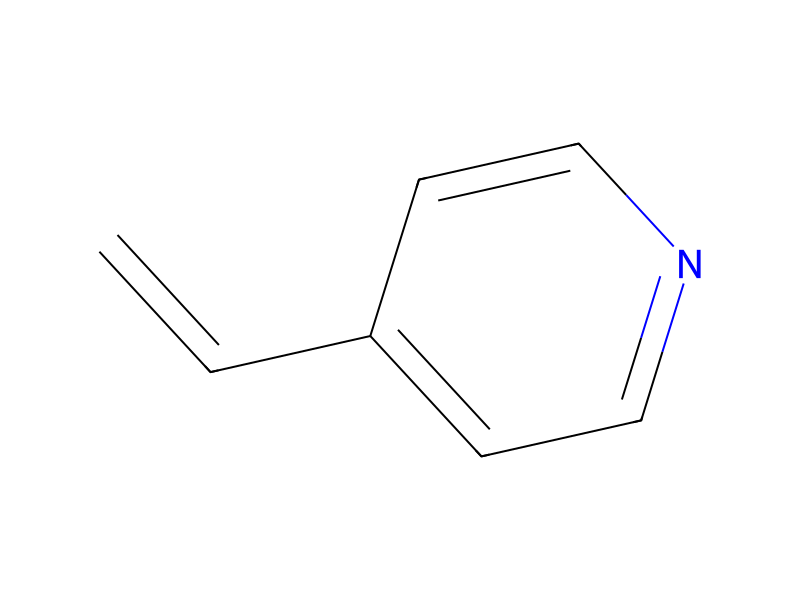
4-비닐피리딘

4-Vinylpyridine
HCID 7502
새 노트새 반응견적 요청하기
인쇄 미리보기
기본 정보개요이름 및 식별자물성안전 및 규제화학 및 산업관련 반응화합물 노트
부분 구조 검색유사 구조 찾기

기본 정보

CAS
100-43-6
표준 SMILES
C=Cc1ccncc1
InChIKey
KFDVPJUYSDEJTH-UHFFFAOYSA-N
분자식
C7H7N
평균 분자량
105.14 g/mol
단동위원소 질량
105.05784923

개요

4-vinylpyridine has been reported in Camellia sinensis and Nicotiana tabacum with data available.

이름 및 식별자

우선 이름
4-Vinylpyridine
IUPAC
4-ethenylpyridine
현지명
4-비닐피리딘
영어명
4-Vinylpyridine
분자식
C7H7N
분자량
105.14

이름 및 동의어

4-VINYLPYRIDINE100-43-64-EthenylpyridinePyridine, 4-ethenyl-Pyridine, 4-vinyl-gamma-VinylpyridineDTXSID0051499I56G67XM8DNSC-18256DTXCID4030047RefChem:6770202-852-0
이름 더 보기
4-비닐피리딘4VP4-바이닐피리딘4-에테닐피리딘4-에텐일피리딘감마-바이닐피리딘감마-비닐피리딘피리딘, 4-바이닐-피리딘, 4-에테닐-4VPPyridine,4-ethenyl-4-vinylpyridine monomer4-vinyl-pyridinVinylpyridine,4-4-ethenyl-pyridin
684-212-44-pyridylethylene.gamma.-Vinylpyridine2-(4-pyridyl)ethylene4-(1-ethenyl)pyridineCHEMBL4550330NSC182564-Vinylpyridine pound 4VP pound(c)

데이터베이스 식별자

CAS
100-43-6、25232-41-1
PubChem CID
7502
DTXSID
DTXSID0051499
ChEMBL
CHEMBL4550330
UNII
I56G67XM8D
EC Number
202-852-0、684-212-4
Nikkaji
J38.337F

물성

구조 계산 물성

XLogP
1.6
극성 표면적
12.9 Ų
수소 결합 공여자 수
0
수소 결합 수용자 수
1
회전 가능 결합 수
1
무거운 원자 수
8
형식 전하
0
복잡도
72.5

실험 및 물리화학적 성질

Chemical ClassesNitrogen Compounds -> Pyridines
SpringerMaterials PropertiesDielectric constant
OdorPungent unpleasant odor
Density0.9800 @ 20 °C/4 °C
Color/FormRED TO DARK BROWN LIQUID
Solubility · 2건

Soluble in alcohol and chloroform; slightly soluble in ether

In water, 29,100 mg/l @ 20 °C

Boiling Point65 °C @ 15 mm Hg
Decomposition · 2건

DECOMPOSITION BY HEAT IS ACCOMPANIED BY RELEASE OF DANGEROUS CYANIDE FUMES.

When heated to decomp ... emits toxic fumes of /nitrogen oxides/.

Odor Threshold · 3건

AT ... CONCN ... /ABOVE 0.5 PPM 4-VINYLPYRIDINE HAS/ A VERY UNPLEASANT NAUSEATING ODOR. THE UNPLEASANT ODOR CAN BE TOLERATED @ CONCN THAT WILL PRODUCE ACUTE SYMPTOMS & IRRITATIONS.

... ACCLIMATIZED INDIVIDUALS CAN READILY LEARN TO TOLERATE CONCN THAT WILL CAUSE ACUTE SYMPTOMS & IRRITATION. ... OLFACTORY FATIGUE OCCURS QUICKLY.

1.16 mg/cu m (odor low); 1.94 mg/cu m (odor high).

안전 및 규제

안전 정보는 참고용이며, 공급업체의 물질안전보건자료(SDS), 관련 법규 및 전문가 평가를 대체하지 않습니다.

GHS 분류

GHS Classification · 6건

This chemical does not meet GHS hazard criteria for 16.6% (37 of 223) of reports.

Danger

H226 (83.4%): Flammable liquid and vapor [Warning Flammable liquids]

P210, P233, P240, P241, P242, P243, P260, P261, P262, P264, P264+P265, P270, P271, P272, P273, P280, P284, P301+P316, P301+P330+P331, P302+P352, P302+P361+P354, P303+P361+P353, P304+P340, P305+P354+P338, P316, P317, P320, P321, P330, P333+P317, P361+P364, P362+P364, P363, P370+P378, P391, P403+P233, P403+P235, P405, and P501 (click each P-code to see the statement)

Aggregated GHS information provided per 223 reports by companies from 15 notifications to the ECHA C&L Inventory. Each notification may be associated with multiple companies.

Warning

유해성 정보

Regulatory Information · 4건

Chemical: Pyridine, 4-ethenyl-

Pyridine, 4-ethenyl- is listed on the EPA's Chemical Data Reporting (CDR) system. Manufacturers and importers of Pyridine, 4-ethenyl- are required to report information about their production and use of this chemical to the EPA under the Toxic Substances Control Act (TSCA). (40 eCFR Part 711)

REACH registered substance: 4-vinylpyridine (EC: 202-852-0)

4-Vinylpyridine: Does not have an individual approval but may be used under an appropriate group standard

Fire PotentialFire hazard is moderate ... .
Hazards Summary · 1건

Irritating to eyes, nose, and throat; Causes skin burns and skin sensitization; [HSDB] May cause pneumonitis and pulmonary edema after inhalation of high concentrations; [MSDSonline] Can cause contact urticaria (nonimmunological) and allergic contact dermatitis; [Kanerva, p. 1845] See Pyridine.

DOT Emergency Guidelines · 5건

/GUIDE 131P: FLAMMABLE LIQUIDS-TOXIC/ Health: TOXIC; may be fatal if inhaled, ingested or absorbed through skin. Inhalation or contact with some of these materials will irritate or burn skin and eyes. Fire will produce irritating, corrosive and/or toxic gases. Vapors may cause dizziness or suffocation. Runoff from fire control or dilution water may cause pollution. /Vinylpyridines, inhibited; Vinylpyridines, stabilized/

화학 및 산업

약리 정보

MeSH Pharmacological Classification · 1건

Substances used for the detection, identification, analysis, etc. of chemical, biological, or pathologic processes or conditions. Indicators are substances that change in physical appearance, e.g., color, at or approaching the endpoint of a chemical titration, e.g., on the passage between acidity and alkalinity. Reagents are substances used for the detection or determination of another substance by chemical or microscopical means, especially analysis. Types of reagents are precipitants, solvents, oxidizers, reducers, fluxes, and colorimetric reagents. (From Grant & Hackh's Chemical Dictionary, 5th ed, p301, p499)

Absorption, Distribution and Excretion · 3건

... /IT IS/ ABSORBED FROM GI TRACT, SKIN & RESP TRACT IN ... /RATS & MICE/.

MAJORITY OF /PYRIDINE/ DERIVATIVES TESTED ... PENETRATE INTACT GUINEA PIG SKIN READILY. AMINOPYRIDINES, VINYLPYRIDINES & 4-PICOLINE PENETRATE SKIN MOST RAPIDLY & AMYL DERIV & 5-ETHYL-2-METHYLPYRIDINE ARE LEAST READILY ABSORBED. /VINYLPYRIDINES/

PYRIDINE & ITS ALKYL DERIVATIVES ARE ABSORBED FROM GI TRACT, INTRAPERITONEAL CAVITY & LUNGS. PERITONEAL ABSORPTION IS APPARENTLY ONLY SLIGHTLY MORE RAPID & COMPLETE THAN GI ABSORPTION ... IN GENERAL THE BASES ARE RAPIDLY ABSORBED THROUGH INTACT SKIN. /ALKYL DERIVATIVES OF PYRIDINE/

용도 및 제조

Uses · 4건

Used to make poly(4-vinylpyridine), elastomers, and pharmaceuticals; [HSDB] Used as a monomer; [Kanerva, p. 1845]

Used as a chemical intermediate for the synthesis of poly(4-vinylpyridine)

Elastomers and pharmaceuticals. Latex used as tire cord binder (41% solids). The latex is copolymerized with butadiene-styrene /vinylpyridine/

The cross-linked resin made from 4-vinyl pyridine and divinylbenzene has been used to remove poisonous hexavalent chromium ions from wastewater...the poly(4-vinylpyridines) are used as ion-exchange membranes and electrodes for reversible cells...4,4'-(1,3-propanediyl)bispiperidine, made from 4-vinylpyridine is used as a raw material for polyamide resins and 2-(4-pyridyl)ethylsulfonic acid from 4-vinylpyridine is a coagulation accelerator for the gelatin layer of photographic plates.

관련 반응

202건
반응 기록 만들기
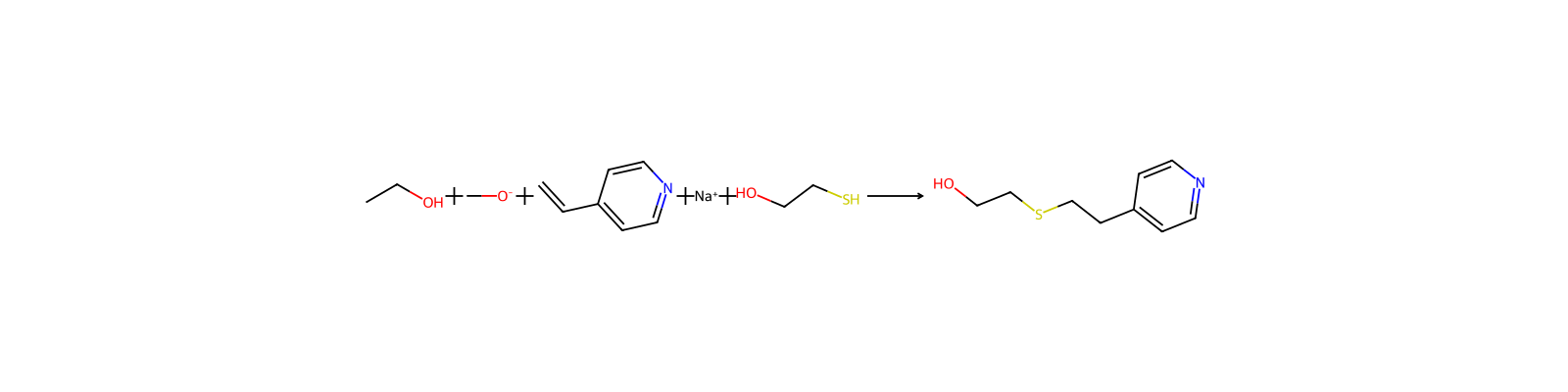
HRID 9449 반응식
HRID 9449반응물로uspto-grants-2006_08
HRID 23960 반응식
HRID 23960반응물로uspto-grants-2005_02
HRID 25932 반응식
HRID 25932반응물로uspto-grants-1979_04
HRID 37793 반응식
HRID 37793반응물로uspto-grants-2013_09
HRID 49613 반응식
HRID 49613반응물로uspto-grants-2004_03
HRID 89367 반응식
HRID 89367반응물로Training data from https://doi.org/10.1039/C8SC04228D (2/10)
HRID 98615 반응식
HRID 98615반응물로Training data from https://doi.org/10.1039/C8SC04228D (2/10)
HRID 144946 반응식
HRID 144946반응물로Training data from https://doi.org/10.1039/C8SC04228D (9/10)
1 / 26 페이지

화합물 노트

불러오는 중…

이 페이지에서기본 정보개요이름 및 식별자물성안전 및 규제화학 및 산업관련 반응화합물 노트
더보기
새 노트새 반응견적 요청하기
Vapor Pressure · 3건

1.71 [mmHg]

VP: 2 mm Hg @ 25 °C

1.71 mm Hg @ 25 °C

Refractive IndexINDEX OF REFRACTION: 1.5449 @ 20 °C/D; MAX ABSORPTION (ALC): 242.5 NM (LOG E= 4.12); SADTLER REF NUMBER: 1249 (IR, PRISM)
Physical Description · 2건

Liquid

Red to dark-brown liquid; [HSDB]

물리화학적 성질

녹는점
25 °C · <25 °C
끓는 점
62 · 62–65 °C (144–149 °F; 335–338 K) 15 mmHg
밀도
0.988 g/cm3 · 0.988 g/cm3
증기압
2.28 hPa · 2.28hPa at 25℃
굴절률
1.55 · 1.55
인화점
56 °C · 56 °C
저장 조건
-20 °C · -20°C
용해도
에 용해됨클로로포름, 메탄올 (약간 용해됨)
산도 계수 (pKa)
1 · pK1:5.62(+1) (25°C)
물리적 상태
liquid
색상
colorless
냄새
Pungent odor
수용성
29 G/L · 29G/L(20℃)
BRN
104506 · 104506
Henry's Law Constant
1.2 · 1.2×100 mol/(m3Pa) at 25℃, Duchowicz et al. (2020)
안정성
안정적인. 강산, 강산화제와 호환되지 않습니다.
InChI
1S/C7H7N/c1-2-7-3-5-8-6-4-7/h2-6H,1H2
InChIKey
KFDVPJUYSDEJTH-UHFFFAOYSA-N
SMILES
C=Cc1ccncc1
LogP
1.36 at · 1.36 at 20℃
NIST
4 · Pyridine, 4-ethenyl-(100-43-6)
EPA
4 · 4-Vinylpyridine (100-43-6)
화학적 성질 · 1건

dark brown to yellow liquid. 2.9g can be dissolved in 100g of water at 20℃, soluble in methanol, ether, benzene, acetone, and slightly soluble in ether. When exposed to light and heat, polymerization occurs, and 0.1%-0.2% hydroquinone is often added as a polymerization inhibitor during storage.

/GUIDE 131P: FLAMMABLE LIQUIDS-TOXIC/ Fire or Explosion: HIGHLY FLAMMABLE: Will be easily ignited by heat, sparks or flames. Vapors may form explosive mixtures with air. Vapors may travel to source of ignition and flash back. Most vapors are heavier than air. They will spread along ground and collect in low or confined areas (sewers, basements, tanks). Vapor explosion and poison hazard indoors, outdoors or in sewers. Those substances designated with a "P" may polymerize explosively when heated or involved in a fire. Runoff to sewer may create fire or explosion hazard. Containers may explode when heated. Many liquids are lighter than water. /Vinylpyridines, inhibited; Vinylpyridines, stabilized/

/GUIDE 131P: FLAMMABLE LIQUIDS-TOXIC/ Public Safety: CALL Emergency Response Telephone Number ... . As an immediate precautionary measure, isolate spill or leak area for at least 50 meters (150 feet) in all directions. Keep unauthorized personnel away. Stay upwind. Keep out of low areas. Ventilate closed spaces before entering. /Vinylpyridines, inhibited; Vinylpyridines, stabilized/

/GUIDE 131P: FLAMMABLE LIQUIDS-TOXIC/ Protective Clothing: Wear positive pressure self-contained breathing apparatus (SCBA). Wear chemical protective clothing that is specifically recommended by the manufacturer. It may provide little or no thermal protection. Structural firefighters' protective clothing provides limited protection in fire situations ONLY; it is not effective in spill situations where direct contact with the substance is possible. /Vinylpyridines, inhibited; Vinylpyridines, stabilized/

For more DOT Emergency Guidelines (Complete) data for 4-VINYLPYRIDINE (8 total), please visit the HSDB record page.

Hazard Classes and Categories · 3건

Flam. Liq. 3 (83.4%)

Skin Irrit. 2 (100%)

Flammable liquids - Category 3

Shipment Methods and Regulations · 3건

No person may /transport,/ offer or accept a hazardous material for transportation in commerce unless that person is registered in conformance ... and the hazardous material is properly classed, described, packaged, marked, labeled, and in condition for shipment as required or authorized by ... /the hazardous materials regulations (49 CFR 171-177)./

The International Air Transport Association (IATA) Dangerous Goods Regulations are published by the IATA Dangerous Goods Board pursuant to IATA Resolutions 618 and 619 and constitute a manual of industry carrier regulations to be followed by all IATA Member airlines when transporting hazardous materials.

The International Maritime Dangerous Goods Code lays down basic principles for transporting hazardous chemicals. Detailed recommendations for individual substances and a number of recommendations for good practice are included in the classes dealing with such substances. A general index of technical names has also been compiled. This index should always be consulted when attempting to locate the appropriate procedures to be used when shipping any substance or article.

Shipping Name/ Number DOT/UN/NA/IMO · 2건

UN 3073; Vinylpyridines, inhibited

IMO 6.1; Vinylpyridines, inhibited

Skin, Eye, and Respiratory IrritationsBRIEF EXPOSURES TO UNDETERMINED CONCN OF ... 4-VINYLPYRIDINE DURING LAB USE ... CAUSED EYE, NOSE & THROAT IRRITATION ... .

안전 및 보호

Disposal Methods · 1건

SRP: At the time of review, criteria for land treatment or burial (sanitary landfill) disposal practices are subject to significant revision. Prior to implementing land disposal of waste residue (including waste sludge), consult with environmental regulatory agencies for guidance on acceptable disposal practices.

Preventive Measures · 4건

ALL OPERATIONS INVOLVING HANDLING...SHOULD BE CONDUCTED IN WELL-VENTILATED CONDITIONS; PROCESS PLANT SHOULD...BE ENCLOSED & FITTED WITH LOCAL EXHAUST VENTILATION.

SRP: The scientific literature for the use of contact lenses in industry is conflicting. The benefit or detrimental effects of wearing contact lenses depend not only upon the substance, but also on factors including the form of the substance, characteristics and duration of the exposure, the uses of other eye protection equipment, and the hygiene of the lenses. However, there may be individual substances whose irritating or corrosive properties are such that the wearing of contact lenses would be harmful to the eye. In those specific cases, contact lenses should not be worn. In any event, the usual eye protection equipment should be worn even when contact lenses are in place.

ACUTE TOXICITY INFORMATION ON ANIMALS & EXPERIENCE WITH INTERMITTENT EXPOSURES IN MAN SHOW THAT MORE THAN ORDINARY CARE IS NEEDED TO AVOID SKIN CONTACT & INHALATION.

SRP: Contaminated protective clothing should be segregated in such a manner so that there is no direct personal contact by personnel who handle, dispose, or clean the clothing. Quality assurance to ascertain the completeness of the cleaning procedures should be implemented before the decontaminated protective clothing is returned for reuse by the workers. Contaminated clothing should not be taken home at end of shift, but should remain at employee's place of work for cleaning.

Personal Protective Equipment (PPE) · 1건

Depending on the extent of possible contact, workers should be provided with personal protective equipment. A charcoal gas mask canister respirator has been found to be effective against a 2% pyridine concentration at 30 l/min for 1 hr. Rubber and plastic gloves should not be relied upon to prevent skin contact because pyridine and many of its derivatives penetrate these materials ... . /Pyridine, homologs, and derivatives/

독성 정보

Environmental Fate · 3건

TERRESTRIAL FATE: Based on a classification scheme(1), an estimated Koc value of 15(SRC), determined from a water solubility of 29,100 mg/l at 25 °C(2) and a regression-derived equation(3), indicates that 4-vinylpyridine is expected to have very high mobility in soil(SRC). 4-Vinylpyridine has a pKa of 5.62(7), which indicates that this compound will partially exist in the protonated form in moist acidic soils, and cations adsorb more strongly to soils than neutral molecules. Therefore, the mobility of 4-vinylpyridine is expected to be much lower in acidic soils than in neutral or alkaline soil(SRC). Volatilization of the neutral species of 4-vinylpyridine from moist soil surfaces is expected to be an important fate process(SRC) given an estimated Henry's Law constant of 3.2X10⁻⁶ atm-cu m/mole(SRC), using a group contribution estimation method(4). However, the protonated form will not volatilize(SRC). The potential for volatilization of 4-vinylpyridine from dry soil surfaces may exist(SRC) based upon an extrapolated vapor pressure of 1.7 mm Hg(5). Biodegradation of 4-vinylpyridine in soil is not expected to be a major fate process based on a single aerobic screening test showing that this compound was not biodegraded over a 4-week period(6).

AQUATIC FATE: Based on a classification scheme(1), an estimated Koc value of 160(SRC), determined from a water solubility of 29,100 mg/l at 25 °C(2) and a regression-derived equation(3), indicates that 4-vinylpyridine is not expected to adsorb to suspended solids and sediment(SRC). Volatilization from water surfaces is expected(3) based upon an estimated Henry's Law constant of 3.2X10⁻⁶ atm-cu m/mole(SRC), developed using a group contribution estimation method(4). Using this Henry's Law constant and an estimation method(3), volatilization half-lives for a model river and model lake are 12 and 90 days, respectively(SRC). The pKa of 4-vinylpyridine is 5.62(7), indicating this compound will partially exist in the ionized form in acidic waters and cations do not volatilize(SRC). According to a classification scheme(5), BCF values of 48 to 96 measured in carp(6), suggests the potential for bioconcentration in aquatic organisms is low(SRC). Biodegradation of 4-vinylpyridine in water is not expected to be a major fate process based on a single aerobic screening test showing that this compound was not biodegraded over a 4-week period(6).

ATMOSPHERIC FATE: According to a model of gas/particle partitioning of semivolatile organic compounds in the atmosphere(1), 4-vinylpyridine, which has an extrapolated vapor pressure of 1.7 mm Hg at 25 °C(2), is expected to exist solely as a vapor in the ambient atmosphere. Vapor-phase 4-vinylpyridine is degraded in the atmosphere by reaction with photochemically-produced hydroxyl radicals(SRC); the half-life for this reaction in air is estimated to be 14 hours(SRC), calculated from its estimated rate constant of 2.7X10⁻¹¹ cu cm/molecule-sec at 25 °C(SRC), determined using a structure estimation method(3). Vapor-phase 4-vinylpyridine is also degraded in the atmosphere by reaction with ozone(SRC); the half-life for this reaction in air is estimated to be 13 hours(SRC), calculated from its rate constant of 2.1X10⁻¹⁷ cu cm/molecule-sec at 25 °C(SRC), determined using a structure estimation method(3).

Adverse EffectsDermatotoxin - Skin burns.
Soil Adsorption/Mobility · 1건

The Koc of 4-vinylpyridine is estimated as 15(SRC), using a measured water solubility of 29,100 mg/l at 25 °C(1) and a regression-derived equation(2). According to a classification scheme(3), this estimated Koc value suggests that 4-vinylpyridine is expected to have very high mobility in soil. The pKa of 4-vinylpyridine is 5.62(4), which indicates that this compound will partially exist in the protonated form under acidic conditions. Cations adsorb more strongly to soil surfaces than neutral molecules thus adsorption of 4-vinylpyridine is expected to be greater in acidic soils(SRC).

Human Toxicity Excerpts · 4건

BRIEF EXPOSURES TO UNDETERMINED CONCN OF ... 4-VINYLPYRIDINE DURING LAB USE ... CAUSED EYE, NOSE & THROAT IRRITATION ... HEADACHE, NAUSEA, NERVOUSNESS, & ANOREXIA. SYSTEMIC SYMPTOMS ARE MILD & TRANSIENT RESEMBLING THOSE OBSERVED WITH PYRIDINE EXPOSURE ... APPARENTLY PRODUCED BY LOWER CONCN.

DIRECT SKIN CONTACT WITH THE LIQUID RESULTS IN BURNING PAIN, FOLLOWED BY FAIRLY SEVERE SKIN BURNS IN SPITE OF IMMEDIATE ATTEMPTS TO CLEANSE THE SKIN. BURNS DEVELOP REDDISH BROWN COLOR THAT DISAPPEARS IN ... ABOUT 1 MO. SKIN SENSITIZATION HAS BEEN OBSERVED ... .

INHALATION TOXICITY OF 4-VINYLPYRIDINE IS GREATER THAN ... 2-VINYLPYRIDINE, & 4-VINYLPYRIDINE IS DEFINITELY MORE IRRITATING TO MUCOUS MEMBRANES.

SEVERAL CASES OF TRANSIENT MUCOUS MEMBRANE IRRITATION, SYSTEMIC SYMPTOMS, SKIN BURNS & SKIN SENSITIZATION ... HAVE BEEN OBSERVED DURING MFR & IN LABORATORY PILOT-PLANT USE.

Artificial Pollution Sources · 1건

4-Vinylpyridine's production and use as a monomer for polyvinylpyridine polymers and in synthetic rubbers, photographic film, ion exchange resins as well as pharmaceuticals(1) may result in its release to the environment through various waste streams(SRC).

Environmental BiodegradationAEROBIC: 4-Vinylpyridine, present at 100 mg/l, was not biodegraded, as measured by BOD, in 4 weeks using an activated sludge inoculum at 30 mg/l and the Japanese MITI test(1).
Environmental Bioconcentration · 1건

BCF values of 48 to 96 were measured in carp at concentrations of 2 and 20 ug/l during an 8-week study(1). According to a classification scheme(3), these BCF values suggest the potential for bioconcentration in aquatic organisms is moderate(SRC).

Volatilization from Water/Soil · 1건

The Henry's Law constant for 4-vinylpyridine is estimated as 3.2X10⁻⁶ atm-cu m/mole(SRC) using a group contribution estimation method(1). This Henry's Law constant indicates that 4-vinylpyridine is expected to volatilize from water surfaces(2). Based on this Henry's Law constant, the volatilization half-life from a model river (1 m deep, flowing 1 m/sec, wind velocity of 3 m/sec)(2) is estimated as 12 days(SRC). The volatilization half-life from a model lake (1 m deep, flowing 0.05 m/sec, wind velocity of 0.5 m/sec)(2) is estimated as 90 days(SRC). 4-Vinylpyridine's Henry's Law constant(1) indicates that volatilization from moist soil surfaces may occur(SRC). However, 4-vinylpyridine is a weak base with a pKa of 5.62(3), which indicates this compound will partially exist in the protonated form in acidic conditions; cations do not volatilize from either moist soil or water surfaces. The potential for volatilization of 4-vinylpyridine from dry soil surfaces may exist(SRC) based upon an extrapolated vapor pressure of 1.7 mm Hg(4).

Non-Human Toxicity Excerpts · 5건

... 4-VINYLPYRIDINE /IS/ ... BETWEEN THE AMINOPYRIDINES & PYRIDINE IN ... ACUTE TOXICITY FOR RATS & MICE ... /IT IS/ ABSORBED FROM GI TRACT, SKIN & RESP TRACT IN THESE ANIMALS. ABSORPTION BY THESE ROUTES RESULTS IN WEAKNESS, ATAXIA, VASODILATATION, RESP DISTRESS, & CONVULSIONS.

2.0 HR WERE REQUIRED FOR 100% MORTALITY TO OCCUR IN RATS INHALING A CALCULATED CONCN OF 2000 PPM. /FROM TABLE/

MORTALITY RATE WAS 0/3 FOR RATS EXPOSED BY INHALATION TO 150 PPM FOR 6 HR. /FROM TABLE/

... EXPOSURE TO VAPOR ... RESULTS IN NASAL & EYE IRRITATION WITH ACCELERATED RESPIRATION & RESPIRATORY DISTRESS /IN RATS & MICE/. INSTILLATION OF UNDILUTED /LIQUID/ ... IN RABBIT EYE CAUSES MODERATELY SEVERE EYE IRRITATION. SKIN SENSITIZATION WAS PRODUCED IN SOME GUINEA PIGS ... .

For more Non-Human Toxicity Excerpts (Complete) data for 4-VINYLPYRIDINE (6 total), please visit the HSDB record page.

Environmental Abiotic Degradation · 1건

The rate constant for the vapor-phase reaction of 4-vinylpyridine with photochemically-produced hydroxyl radicals has been estimated as 2.7X10⁻¹¹ cu cm/molecule-sec at 25 °C(SRC) using a structure estimation method(1). This corresponds to an atmospheric half-life of about 14 hours at an atmospheric concentration of 5X10+5 hydroxyl radicals per cu cm(1). The rate constant for the vapor-phase reaction of 4-vinylpyridine with ozone has been estimated as 2.1X10⁻¹⁷ cu cm/molecule-sec at 25 °C(SRC) using a structure estimation method(1). This corresponds to an atmospheric half-life of about 13 hours at an atmospheric concentration of 7X10+11 ozone molecules per cu cm(2). 4-Vinylpyridine is not expected to undergo hydrolysis in the environment due to the lack of hydrolyzable functional groups(3). Data are not available to assess this compound's potential for direct photolysis. A pKa of 5.62(4) indicates 4-vinylpyridine will partially exist in the protonated form in acidic waters and soils.

Probable Routes of Human Exposure · 1건

The most probable human exposure to 4-vinylpyridine would be occupational exposure, which may occur through dermal contact or inhalation at places where it is produced or used. NIOSH (NOES Survey 1981-1983) has statistically estimated that 3 workers are potentially exposed to 4-vinylpyridine in the USA(1). Non-occupational exposures are likely to occur from the passive and active inhalation of cigarette smoke(2).

Other Environmental Concentrations4-Vinylpyridine was detected in cigarette smoke at an unspecified concentration(1).

안전 데이터

wgk
3
tsca
TSCA listed
rtecs
UU1045000
ridadr
UN 3073 6.1/PG 2
HS 번호
29333990
risk_code
10-25-34-42/43-23/25
hazard_code
T
safety_code
23-26-36/37/39-45-28A-16
포장분류
II
위험 등급
6.1
기존화학 물질
KE-35388
F 고인화성물질
8-10
Hazard Classifications
Acute Tox. 3 DermalAcute Tox. 3 InhalationAcute Tox. 3 OralAquatic Chronic 2Eye Dam. 1Flam. Liq. 3Skin Corr. 1BSkin Sens. 1
스토리지 클래스
3 - Flammable liquids
유해 물질 데이터
100-43-6(Hazardous Substances Data)
함량 및 규제정보
물질구분: 유독물질; 혼합물(제품)함량정보: 4-비닐피리딘 및 이를 25% 이상 함유한 혼합물
유해화학물질 필터링
97-1-442
U.S. Production · 2건

2023: 250,000 - <550,000 lb

Although 4-vinylpyridine has been used for various purposes, its total annual demand is presumed to be only several hundred tons.

Industry UsesIntermediate
Methods of Manufacturing · 2건

Gamma-picoline + formaldehyde (condensation/dehydration)

...manufactured by treatment of 4-methylpyridine with aqueous formaldehyde, followed by dehydration of the resulting intermediate alcohol. The reaction of 2-vinylpyridine is carried out at 150 to 200 °C in an autoclave. After removal of unreacted 2-methylpyridine by distillation, concentrated aqueous sodium hydroxide is added to the residue and the resultant mixture is distilled under reduced pressure. During distillation, the dehydration of 2-(2-pyridyl)ethanol occurs to give 2-vinylpyridine as a distillate, which can be purified further by fractional distillation under reduced pressure in the presence of an inhibitor such as 4-tert-butylcatecohol. 4-Vinylpyridine is manufactured by a similar method as that reported for 2-vinylpyridine.

General Manufacturing Information · 4건

All Other Basic Organic Chemical Manufacturing

Pyridine, 4-ethenyl-: ACTIVE

Commercial ... 4-vinylpyridine ... supplied with small amt of polymerization inhibitors added.

... been investigated for use in synthetic rubbers, photographic film, ion exchange resins, and other polymers as well as pharmaceuticals.

응용 분야 · 1건

용도4-Vinylpyridine acts as a co-monomer in styrene-butadiene polymers to promote adhesion between the rubber compound and supporting fibers (or cords) in tires, belts and hoses. It serves as an intermediate for manufacturing chemicals and pharmaceuticals. Further, it is used as a reagent for the modification of cysteine. In addition to this, it is used to make poly(4-vinylpyridine) and elastomers.

제조 방법

4-Vinylpyridine is synthesized by reacting 4-picoline with formaldehyde to generate 4-pyridineethanol, which is then dehydrated.

감마-피콜린 + 폼알데하이드 (응축/탈수)

상·하류 제품 정보

상류 원료

포타슘터셔리부톡사이드4-t-부틸카테콜수산화칼륨4-피리딘에탄올메틸렌 블루, 트리수화물γ-피콜린포르말린하이드로퀴논칼륨 인산염수산화나트륨2-아미노페놀아세트산 칼륨질산나트륨루비듐 니트레이트산화알루미늄질산칼륨methyl 4-(6-amino-5,7,7-tricyano-2-propan-2-yl-1,3,8,8a-tetrahydroisoquinolin-8-yl)benzoate4-Pyridinepropanol

하류 제품

4-Pyridineethanethiol hydrochloride1-[2-(4-Pyridyl)ethyl]piperazine2-피리딘-4-일-에탄설포닐염화수소염