홈MCP워크벤치Skills
홈워크벤치알림마이페이지
llms.txt · MCP 가이드개인정보처리방침 · 이용약관 · 지원v1.8.0
  1. 홈
  2. /화합물

Ethyl N-phenylcarbamate

HCID 7591
새 노트새 반응견적 요청하기
인쇄 미리보기
기본 정보이름 및 식별자물성안전 및 규제화학 및 산업관련 반응화합물 노트
부분 구조 검색유사 구조 찾기

기본 정보

CAS
101-99-5
표준 SMILES
CCOC(=O)Nc1ccccc1
InChIKey
LBKPGNUOUPTQKA-UHFFFAOYSA-N
분자식
C9H11NO2
평균 분자량
165.19 g/mol
단동위원소 질량
165.07897859

이름 및 식별자

우선 이름
Ethyl N-phenylcarbamate
IUPAC
ethyl N-phenylcarbamate
영어명
Phenylurethane
분자식
C9H11NO2
분자량
165.19

이름 및 동의어

Ethyl phenylcarbamate101-99-5PhenylurethaneETHYL N-PHENYLCARBAMATEPhenylurethanEthyl carbanilateEuphorinKeimstopCarbanilic acid, ethyl esterEthyl N-phenylurethaneN-(Ethoxycarbonyl)anilineCarbamic acid, phenyl-, ethyl ester
이름 더 보기
N-PHENYLURETHANEphenyl-urethaurethan,phenylCarbanilic etherUrethan, phenyl-
EPC (the plant regulator)Phenylurethan(e)Ethylester kyseliny karbaniloveTWP7W286IFNSC-3245DTXSID0059243ethylcarbanilateURETHAN, PHENYL

데이터베이스 식별자

CAS
101-99-5
PubChem CID
7591
DTXSID
DTXSID0059243
ChEMBL
CHEMBL2087000、CHEMBL2235373
UNII
TWP7W286IF
EC Number
202-995-9
Nikkaji
J4.998K

물성

구조 계산 물성

XLogP
2.3
극성 표면적
38.3 Ų
수소 결합 공여자 수
1
수소 결합 수용자 수
2
회전 가능 결합 수
3
무거운 원자 수
12
형식 전하
0
복잡도
141

실험 및 물리화학적 성질

SpringerMaterials PropertiesBoiling point
PesticidesPesticides -> Plant Growth Regulators
LogP · 2건

log Kow = 2.30

2.26

OdorAromatic odor
TasteClove-like taste
Density1.1064 at 20 °C/4 °C
Color/Form · 2건

White acicular crystals

White needles from water; plates from dilute alcohol

Solubility · 4건

Slightly soluble in water; freely sol in alcohol, ether

Insoluble in cold water; soluble in alcohol, ether, and boiling water.

Soluble in benzene

In water, 845 mg/L at 25 °C /Estimated/

Boiling Point238 °C
DecompositionWhen heated to decomposition it emit toxic fumes of /nitrogen oxide/.
Melting Point52-53 °C

안전 및 규제

안전 정보는 참고용이며, 공급업체의 물질안전보건자료(SDS), 관련 법규 및 전문가 평가를 대체하지 않습니다.

GHS 분류

GHS Classification · 4건

Warning

H315 (100%): Causes skin irritation [Warning Skin corrosion/irritation]

P261, P264, P264+P265, P271, P280, P302+P352, P304+P340, P305+P351+P338, P319, P321, P332+P317, P337+P317, P362+P364, P403+P233, P405, and P501 (click each P-code to see the statement)

The GHS information provided by 1 company from 1 notification to the ECHA C&L Inventory.

유해성 정보

Hazards SummaryEmergency treatment is for other herbicides and includes skin decontamination and supportive measures; [HSDB] May cause irritation; [MSDSonline]
Hazard Classes and CategoriesSkin Irrit. 2 (100%)
Skin, Eye, and Respiratory Irritations · 1건

Carbamates produce slight to moderate skin and eye irritation, depending on the vehicle used, duration of contact, and on whether the substance is applied to the abraided or intact skin. From the available data, it cannot be excluded that some of the carbamates will have a slight to moderate sensitization potential. /Carbamate Pesticides/

안전 및 보호

Disposal Methods · 1건

SRP: The most favorable course of action is to use an alternative chemical product with less inherent propensity for occupational exposure or environmental contamination. Recycle any unused portion of the material for its approved use or return it to the manufacturer or supplier. Ultimate disposal of the chemical must consider: the material's impact on air quality; potential migration in soil or water; effects on animal, aquatic, and plant life; and conformance with environmental and public health regulations.

독성 정보

화학 및 산업

약리 정보

Mechanism of Action · 4건

The carbamates alone weakly activated estrogen- or progesterone-responsive reporter genes in breast and endometrial cancer cells. All of the carbamates decreased estradiol- or progesterone-induced reporter gene activity in the breast and endometrial cancer cells. In whole cell competition binding assays, the carbamates demonstrated a limited capacity to displace radiolabeled estrogen or progesterone from /estrogen receptor/ or /progesterone receptor/. /Carbamates/

This paper explores the properties and likely functions of an epidermal Ca(2+)-selective cation channel complex activated by tension. As many as eight or nine linked or linkable equivalent conductance units or co-channels can open together. Open time for co-channel quadruplets and quintuplets tends to be relatively long with millimolar Mg2+ (but not millimolar Ca2+) at the cytosolic face of excised plasma membrane. Sensitivity to tension is regulated by transmembrane voltage and temperature.... Certain lanthanides and a cytoskeleton-disturbing herbicide that inhibit gravitropic reception act on the channel system at low concentrations. Specifically, ethyl-N-phenylcarbamate promotes tension-dependent activity at micromolar levels.

Effects of ethyl N-phenylcarbamate (EPC) on the mating reaction of Saccharomyces cerevisiae were studied. EPC inhibited zygote formation at a concentration which promoted induction of sexual agglutinability. EPC enhanced agglutinability induction by alpha pheromone, but inhibited alpha-pheromone-induced formation of large pearshaped cells in a mating type. The enhancement of agglutinability induction was accompanied with increased production of a agglutination substance and inhibition of alpha pheromone inactivation. EPC arrested the cell cycle of a cells.

The activities of 4 glycolytic enzymes were measured in the lung homogenate of CFLP mice treated with a variety of carcinogens and noncarcinogens for mouse lung. The carcinogens enhanced the activity of hexokinase (HK), phosphofructokinase (PFK), pyruvate kinase (PK) and lactate dehydrogenase (LDH) 28 days after a single i.p. administration. These carcinogens also altered the ratio of LDH H and M subunits. Under the same conditions the noncarcinogenic phenylurethane, ... did not influence either the activities of the enzymes tested or the isozyme pattern of LDH.

Metabolism/Metabolites · 1건

Chem analysis of crop plants treated either directly with carbamates or indirectly with preemergent herbicidal carbamates indicate that both the methyl- /and/ phenylcarbamates are rapidly metabolized. Only small amt of the parent compound can be detected one wk after treatment. /ethyl /and/ phenyl carbamates/

관련 반응

38건
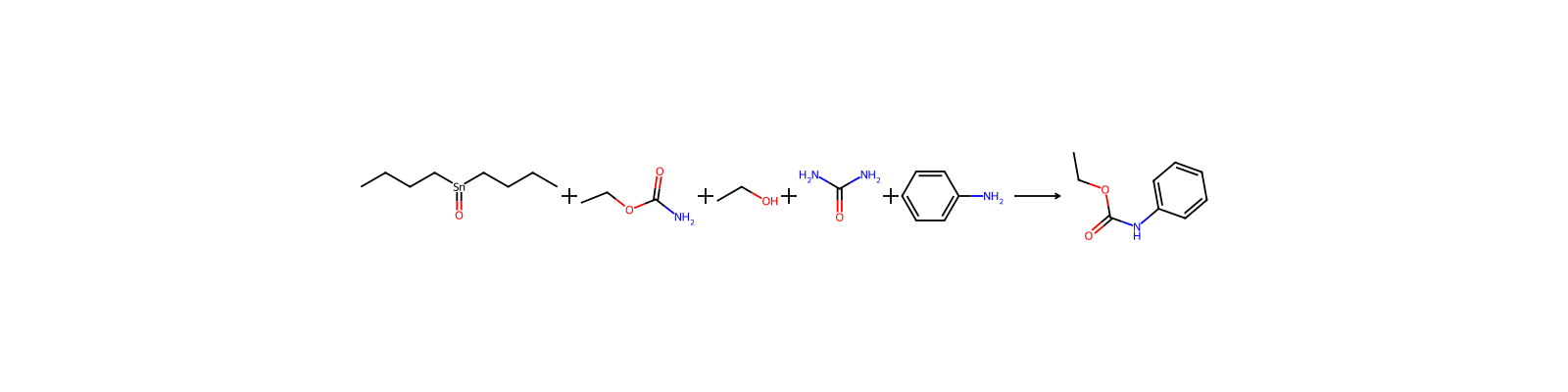
반응 기록 만들기
HRID 66329 반응식
HRID 66329반응물로uspto-grants-1978_12
HRID 108571 반응식
HRID 108571생성물로Training data from https://doi.org/10.1039/C8SC04228D (2/10)
HRID 124177 반응식
HRID 124177생성물로Training data from https://doi.org/10.1039/C8SC04228D (2/10)
HRID 150425 반응식
HRID 150425반응물로Training data from https://doi.org/10.1039/C8SC04228D (9/10)
HRID 187409 반응식
HRID 187409생성물로Training data from https://doi.org/10.1039/C8SC04228D (6/10)
HRID 282617 반응식
HRID 282617반응물로Training data from https://doi.org/10.1039/C8SC04228D (8/10)
HRID 320367 반응식
HRID 320367생성물로Training data from https://doi.org/10.1039/C8SC04228D (8/10)
HRID 596236 반응식
HRID 596236반응물로uspto-grants-1977_03
1 / 5 페이지

화합물 노트

불러오는 중…

이 페이지에서기본 정보이름 및 식별자물성안전 및 규제화학 및 산업관련 반응화합물 노트
더보기
새 노트새 반응견적 요청하기
Vapor Pressure · 2건

0.02 [mmHg]

0.027 mm Hg at 25 °C /Estimated/

물리화학적 성질

녹는점
47 · 47-51 °C
끓는 점
237 °C · 237 °C
밀도
1 · 1,106 g/cm3
굴절률
1.5375 · 1.5375
인화점
237 °C · 237°C
저장 조건
Sealed in dry,Room Temperature
수용성
물에 거의 녹지 않음
물리적 상태
powder to crystal
산도 계수 (pKa)
13.86 · 13.86±0.70(Predicted)
색상
White to Orange to Green
생물학적 소스
fish skin
Merck
14 · 14,7320
BRN
1942785 · 1942785
Henry's Law Constant
3.4 · 3.4×102 mol/(m3Pa) at 25℃, HSDB (2015)
Dielectric constant
2.7 · 2.7(Ambient)
EPA
Carbamic acid, phenyl-, ethyl ester (101-99-5)

화학적 성질

colorless to almost white needles

Environmental Fate · 3건

TERRESTRIAL FATE: Based on a classification scheme(1), an estimated Koc value of 420(SRC), determined from a log Kow of 2.30 and a regression-derived equation(3), indicates that ethyl N-phenylcarbamate is expected to have moderate mobility in soil(SRC). Volatilization of ethyl N-phenylcarbamate from moist soil surfaces is not expected to be an important fate process(SRC) given an estimated Henry's Law constant of 2.9X10⁻⁸ atm-cu m/mole(SRC), using a fragment constant estimation method(4). Ethyl N-phenylcarbamate is not expected to volatilize from dry soil surfaces(SRC) based upon an estimated vapor pressure of 0.027 mm Hg(SRC), determined from a fragment constant method(5). No biodegradation data were available(SRC, 2005).

AQUATIC FATE: Based on a classification scheme(1), an estimated Koc value of 420(SRC), determined from a log Kow of 2.30(2) and a regression-derived equation(3), indicates that ethyl N-phenylcarbamate is expected to adsorb to suspended solids and sediment(SRC). Volatilization from water surfaces is not expected(3) based upon an estimated Henry's Law constant of 2.9X10⁻⁸ atm-cu m/mole(SRC), developed using a fragment constant estimation method(4). According to a classification scheme(5), an estimated BCF of 12(SRC), from its log Kow(2) and a regression-derived equation(6), suggests the potential for bioconcentration in aquatic organisms is low(SRC). Hydrolysis is not expected to be an important fate process since carbamates tend to hydrolyze slowly under environmental conditions. A base-catalyzed second-order hydrolysis rate constant of 2.6X10⁻⁴ L/mole-sec(SRC) was estimated using a structure estimation method; this corresponds to half-lives of 840 and 84 years at pH values of 7 and 8, respectively(7). No biodegradation data were available(SRC, 2005).

ATMOSPHERIC FATE: According to a model of gas/particle partitioning of semivolatile organic compounds in the atmosphere(1), ethyl N-phenylcarbamate, which has an estimated vapor pressure of 0.027 mm Hg at 25 °C(SRC), determined from a fragment constant method(2), is expected to exist solely as a vapor in the ambient atmosphere. Vapor-phase ethyl N-phenylcarbamate is degraded in the atmosphere by reaction with photochemically-produced hydroxyl radicals(SRC); the half-life for this reaction in air is estimated to be 2.7 hours(SRC), calculated from its rate constant of 4.7X10⁻¹¹ cu cm/molecule-sec at 25 °C(SRC) that was derived using a structure estimation method(3). The photooxidation products of ethyl N-phenylcarbamate in benzene solution were identified as ethyl o-aminobenzoate, ethyl p-aminobenzoate, aniline, water, carbon dioxide, azo compounds, and other colored material(4). Ethyl N-phenylcarbamate does not contain chromophores that absorb at wavelengths <290 nm and therefore is not expected to be susceptible to direct photolysis by sunlight(SRC).

Soil Adsorption/Mobility · 1건

The Koc of ethyl N-phenylcarbamate is estimated as 420(SRC), using a log Kow of 2.30 and a regression-derived equation(2). According to a classification scheme(3), this estimated Koc value suggests that ethyl N-phenylcarbamate is expected to have moderate mobility in soil.

Artificial Pollution Sources · 1건

Ethyl N-phenylcarbamate's production and use as a chemical intermediate(1) may have resulted in its release to the environment through various waste streams(SRC). Its former use as a plant growth regulator(2) resulted in its direct release to the environment(SRC).

Environmental Bioconcentration · 1건

An estimated BCF of 12 was calculated for ethyl N-phenylcarbamate(SRC), using a log Kow of 2.30(1) and a regression-derived equation(2). According to a classification scheme(3), this BCF suggests the potential for bioconcentration in aquatic organisms is low(SRC).

Volatilization from Water/Soil · 1건

The Henry's Law constant for ethyl N-phenylcarbamate is estimated as 2.9X10⁻⁸ atm-cu m/mole(SRC) using a fragment constant estimation method(1). This Henry's Law constant indicates that ethyl N-phenylcarbamate is expected to be essentially nonvolatile from water surfaces(2). Ethyl N-phenylcarbamate's Henry's Law constant indicates that volatilization from moist soil surfaces will not occur(SRC). Ethyl N-phenylcarbamate is not expected to volatilize from dry soil surfaces(SRC) based upon an estimated vapor pressure of 0.027 mm Hg(SRC), determined from a fragment constant method(3).

Environmental Abiotic Degradation · 1건

The rate constant for the vapor-phase reaction of ethyl N-phenylcarbamate with photochemically-produced hydroxyl radicals has been estimated as 4.7X10⁻¹¹ cu cm/molecule-sec at 25 °C(SRC) using a structure estimation method(1). This corresponds to an atmospheric half-life of about 2.7 hours at an atmospheric concentration of 5X10+5 hydroxyl radicals per cu cm(1). Hydrolysis is not expected to be an important fate process since carbamates tend to hydrolyze slowly under environmental conditions. A base-catalyzed second-order hydrolysis rate constant of 2.6X10⁻⁴ L/mole-sec(SRC) was estimated using a structure estimation method; this corresponds to half-lives of 840 and 84 years at pH values of 7 and 8, respectively(2). In general, most carbamates made with aliphatic alcohols would not hydrolyze under environmental conditions(3). The compound may undergo sensitized photolysis. Using a high-pressure quartz mercury vapor lamp with Pyrex glass filter, the photooxidation products of ethyl N-phenylcarbamate in benzene solution were identified as ethyl o-aminobenzoate, ethyl p-aminobenzoate, aniline, water, carbon dioxide, azo compounds, and other colored material(4). The photodegradation rate is dependent on the solvent, with a rate 7 to 10 times slower in a polar solvent (ethanol) than in a nonpolar solvent (cyclohexane)(4). Using the cyclohexane solvent, ethyl N-phenylcarbamate was mostly degraded after 3 hrs(4). Ethyl N-phenylcarbamate does not contain chromophores that absorb at wavelengths <290 nm and therefore is not expected to be susceptible to direct photolysis by sunlight(SRC).

Probable Routes of Human Exposure · 1건

Occupational exposure to ethyl N-phenylcarbamate occured through inhalation and dermal contact with this compound at workplaces where ethyl N-phenylcarbamate was produced or used. General population exposure should be low or non-existent since ethyl N-phenylcarbamate is no longer used in the US (May, 2005). (SRC)

Environmental Fate/Exposure Summary · 1건

Ethyl N-phenylcarbamate's production and use as a chemical intermediate may have resulted in its release to the environment through various waste streams; its former use as a plant growth regulator resulted in its direct release to the environment. If released to air, an estimated vapor pressure of 0.027 mm Hg at 25 °C indicates ethyl N-phenylcarbamate will exist solely as a vapor in the atmosphere. Vapor-phase ethyl N-phenylcarbamate will be degraded in the atmosphere by reaction with photochemically-produced hydroxyl radicals; the half-life for this reaction in air is estimated to be 2.7 hours. Ethyl N-phenylcarbamate does not contain chromophores that absorb at wavelengths <290 nm and therefore is not expected to be susceptible to direct photolysis by sunlight. If released to soil, ethyl N-phenylcarbamate is expected to have moderate mobility based upon an estimated Koc of 420. No biodegradation data were available. Volatilization from moist soil and water surfaces is not expected to be an important fate process based upon an estimated Henry's Law constant of 2.9X10⁻⁸ atm-cu m/mole. Ethyl N-phenylcarbamate will not volatilize from dry soil surfaces based upon its estimated vapor pressure. If released into water, ethyl N-phenylcarbamate is expected to adsorb moderately to suspended solids and sediment based upon the estimated Koc. An estimated BCF of 12 suggests the potential for bioconcentration in aquatic organisms is low. Hydrolysis is not expected to be an important fate process since carbamates tend to hydrolyze slowly under environmental conditions. A base-catalyzed second-order hydrolysis rate constant of 2.6X10⁻⁴ L/mole-sec was estimated using a structure estimation method; this corresponds to half-lives of 840 and 84 years at pH values of 7 and 8, respectively. Occupational exposure to ethyl N-phenylcarbamate occured through inhalation and dermal contact with this compound at workplaces where ethyl N-phenylcarbamate was produced or used. General population exposure should be low or non-existent since ethyl N-phenylcarbamate is no longer used in the US (May, 2005). (SRC)

Antidote and Emergency Treatment · 2건

Skin contamination should be treated promptly by washing with soap and water. Contamination of the eyes should be treated immediately by prolonged flushing of the eyes with large amounts of clean water. If dermal or ocular irritation persists, medical attention should be obtained without delay. /Other Herbicides/

If serious dehydration and electrolyte depletion have occurred as a result of vomiting and diarrhea, monitor blood electrolytes and and fluid balance and administer intravenous infusions of glucose, normal saline ringer's solution, or ringer's lactate to restore extracellular fluid volume and electrolytes. Follow this with oral nutrients as soon as fluids can be retained. Fluids serve to support excretion of the toxicants. Supportive measures are ordinarily sufficient for successful management of excessive exposures to these herbicides. /Other Herbicides/

Non-Human Toxicity Values · 2건

LD50 Mouse ip 350 mg/kg

LD50 Mouse iv 400 mg/kg

안전 데이터

tsca
TSCA listed
rtecs
FD8925000
독성
mouse,LD50,intraperitoneal,350mg/kg (350mg/kg),"Handbook of Toxicology," 4 vols., Philadelphia, W.B. Saunders Co., 1956-59Vol. 5, Pg. 45, 1959.
HS 번호
29242990
risk_code
40
hazard_code
Xn
safety_code
36/37-24/25
위험 등급
IRRITANT
유해 물질 데이터
101-99-5(Hazardous Substances Data)

용도 및 제조

Uses · 6건

Used as plant growth regulator (formerly in the US), chemical intermediate, and research chemical (experimental neoplastic agent and citrus fungicide); [HSDB]

Farming (Pesticides) [Category: Industry]

RESEARCH CHEM (EXPTL NEOPLASTIC AGENT, CITRUS FUNGICIDE)

PLANT GROWTH REGULATOR (FORMER USE)

Chemical intermediate

Plant regulator /Former use in USA/

U.S. Exports · 2건

(1979) No data

(1981) No data

U.S. Imports · 2건

(1979) No data

(1981) No data

U.S. Production · 2건

(1979) NO EVIDENCE OF COMMERCIAL PRODN IN U.S.

(1981) NO EVIDENCE OF COMMERCIAL PRODN IN U.S.

Methods of Manufacturing · 2건

Made by the action of aniline on ethyl chloroformate.

Action of ethanol on phenylisocyanate

General Manufacturing Information · 2건

Carbamic acid, N-phenyl-, ethyl ester: INACTIVE

...ETHYL N-PHENYLCARBAMATE PROVIDES ETHYL AMINOBENZOATES /UNDER ENERGETIC IRRADIATION/.

상·하류 제품 정보

하류 제품

SULFAPHENAZOLE아목사핀N-메틸-N-페닐루레테인퀴나졸린1-페닐세미카르브아지드4-Phenylsemicarbazide