홈MCP워크벤치Skills
홈워크벤치알림마이페이지
llms.txt · MCP 가이드개인정보처리방침 · 이용약관 · 지원v1.8.0
  1. 홈
  2. /화합물

메틸 아세토아세테이트

Methyl acetoacetate
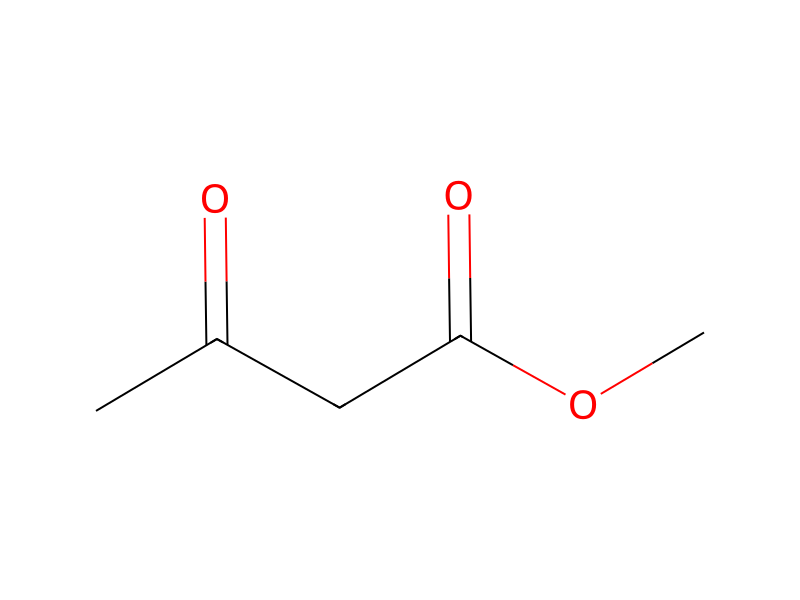
HCID 7757
새 노트새 반응견적 요청하기
인쇄 미리보기
기본 정보개요이름 및 식별자물성안전 및 규제화학 및 산업관련 반응화합물 노트
부분 구조 검색유사 구조 찾기

기본 정보

CAS
105-45-3
표준 SMILES
COC(=O)CC(C)=O
InChIKey
WRQNANDWMGAFTP-UHFFFAOYSA-N
분자식
C5H8O3
평균 분자량
116.11 g/mol
단동위원소 질량
116.04734412

개요

Methyl acetoacetate appears as a clear colorless liquid. Flash point 158 °F. Denser than water and slightly soluble in water. Vapors heavier than air.

이름 및 식별자

우선 이름
Methyl acetoacetate
IUPAC
methyl 3-oxobutanoate
현지명
메틸 아세토아세테이트
영어명
Methyl acetoacetate
분자식
C5H8O3
분자량
116.12

이름 및 동의어

METHYL ACETOACETATEMethyl 3-oxobutanoate105-45-3MethylacetoacetateMethyl acetylacetateAcetoacetic acid methyl esterMethyl 3-oxobutyrate3-Oxobutanoic acid methyl esterMethyl acetylacetonateButanoic acid, 3-oxo-, methyl esterAcetoacetic methyl ester1-Methoxybutane-1,3-dione
이름 더 보기
메틸아세토아세테이트메틸아세토아세트산부탄산3-옥소메틸에스테르메틸3-옥소부탄산염,에틸아세트아세트산아세토아세트산메틸에스테르메틸3-옥소부티르산염3-옥소부탄산메틸에스테르아세트초산메틸메틸아세토아세트산메틸 아세토아세테이트3-옥소부타논산, 메틸-메틸 3-옥소부타노에이트MAAACMMETHYL ACETOACETATMolybdic acid monohydrate3-OXOBUTYRIC ACID METHYL ESTER3,6&
Acetoacetic acid, methyl esterMethylester kyseliny acetoctoveDTXSID9026716CW4I82QAX1DTXCID706716RefChem:817587203-299-8Methylacetoacetic acid

데이터베이스 식별자

CAS
105-45-3
PubChem CID
7757
DTXSID
DTXSID9026716
ChEMBL
CHEMBL3186053
ChEBI
CHEBI:166454
UNII
CW4I82QAX1
EC Number
203-299-8
Nikkaji
J45.957G

물성

구조 계산 물성

XLogP
0
극성 표면적
43.4 Ų
수소 결합 공여자 수
0
수소 결합 수용자 수
3
회전 가능 결합 수
3
무거운 원자 수
8
형식 전하
0
복잡도
106

실험 및 물리화학적 성질

SolventsSolvents -> Esters (<C12)
SpringerMaterials PropertiesBoiling point
FragrancesFragrance Ingredient (Methyl acetoacetate) -> IFRA transparency List
LogP · 2건

log Kow = -0.69 /Estimated/

-0.26

OdorAgreeable odor
Density · 4건

1.076 (USCG, 1999) - Denser than water; will sink

1.0762 g/cu cm at 20 °C

Bulk density: 9 lb/gal at 20 °C

Relative density (water = 1): 1.08

Flavoring AgentsEU Flavoring substances
Viscosity1.704 cPa at 20 °C
Color/FormColorless liquid
Solubility · 4건

Soluble in 2 parts water; miscible with alcohol and ether

SOLUBILITY IN WATER: 38 G/100 ML

500.0 mg/mL

Solubility in water, g/100ml: 50

Flash Point

안전 및 규제

안전 정보는 참고용이며, 공급업체의 물질안전보건자료(SDS), 관련 법규 및 전문가 평가를 대체하지 않습니다.

GHS 분류

GHS Classification · 6건

Warning

H319: Causes serious eye irritation [Warning Serious eye damage/eye irritation]

P264+P265, P280, P305+P351+P338, and P337+P317 (click each P-code to see the statement)

This chemical does not meet GHS hazard criteria for 0.6% (12 of 1934) of reports.

Warning

H319 (95.7%): Causes serious eye irritation [Warning Serious eye damage/eye irritation]

유해성 정보

Regulatory Information · 5건

Chemical: Butanoic acid, 3-oxo-, methyl ester

Commission Regulation (EC) No 1565/2000 (Repealed by Com. Implementing Reg. (EU) No 872/2012)

Butanoic acid, 3-oxo-, methyl ester is listed on the EPA's Chemical Data Reporting (CDR) system. Manufacturers and importers of Butanoic acid, 3-oxo-, methyl ester are required to report information about their production and use of this chemical to the EPA under the Toxic Substances Control Act (TSCA). (40 eCFR Part 711)

Status: Active Update: 09-02-2022 https://echa.europa.eu/registration-dossier/-/registered-dossier/13864

Methyl acetoacetate: Does not have an individual approval but may be used under an appropriate group standard

DOT LabelCombustible Liquid
Fire Hazards · 2건

Excerpt from ERG Guide 128 [Flammable Liquids (Water-Immiscible)]:

Combustible. Above 77 °C explosive vapour/air mixtures may be formed.

Fire PotentialFIRE HAZARD: Moderate, when exposed to heat or flame.
Health HazardsMay be harmful by inhalation, ingestion, or skin absorption. Causes eye irritation. May cause skin irritation. (USCG, 1999)
Hazards SummaryA skin, eye, and respiratory tract irritant; May cause CNS depression; [ICSC] An eye irritant; [CAMEO] A severe eye irritant based on animal studies; [CHEMINFO] An irritant; [MSDSonline]

화학 및 산업

약리 정보

Metabolism/MetabolitesAlthough... similar to other acetates, hydrolysis and metabolic degradation occur rapidly, especially since acetoacetic acid is a common mammalian metabolite.
Absorption, Distribution and ExcretionLike other esters, /methyl acetoacetate/ is potentially skin-absorbable.

용도 및 제조

Uses · 6건

Used for organic synthesis and as solvent for cellulose ethers; [HSDB]

Solvent for cellulose ethers; component of solvent mixtures for cellulose esters; chemical intermediate for org compounds.

Used in synthesis of nifedipine.

Principal Uses: herbicides, pesticides, chemical synthesis, protection of NH2 groups. /From table/

Principal outlets for MAA are the manufacture of the organophosphorus insecticide diazinon and the uracil herbicides bromacil and terbacil.

... Amine protecting agent in the manufacture of antibiotics and synthetic sweeteners.

U.S. Production · 4건

2023: 1,000,000 - <2,500,000 lb

Butanoic acid, 3-oxo-, methyl ester is listed as a High Production Volume (HPV) chemical (65FR81686). Chemicals listed as HPV were produced in or imported into the U.S. in >1 million pounds in 1990 and/or 1994. The HPV list is based on the 1990 Inventory Update Rule. (IUR) (40 CFR part 710 subpart B; 51FR21438).

(1972) PROBABLY GREATER THAN 9.08X10+5 GRAMS

(1975) PROBABLY GREATER THAN 4.54X10+5 GRAMS

Consumer UsesInsulators
Industry UsesIntermediate
Methods of Manufacturing · 2건

Reaction of methyl acetate with sodium methoxide

Acetoacetic esters are generally made from diketene and the corresponding alcohol as a solvent in the presence of a catalyst. In the case of liquid alcohols, manufacturing is carried out by continuous reaction in a tubular reactor with carefully adjusted feeds of diketene, alcohol, and catalyst, or alcohol-catalyst blend followed by continuous purification. For solid alcohol, an inert solvent is used. Catalysts used include strong acids, tertiary amines, salts such as sodium acetate, organophosphorus compounds, and organometallic compounds. /Acetoacetic Esters/

관련 반응

987건
반응 기록 만들기
HRID 1255 반응식
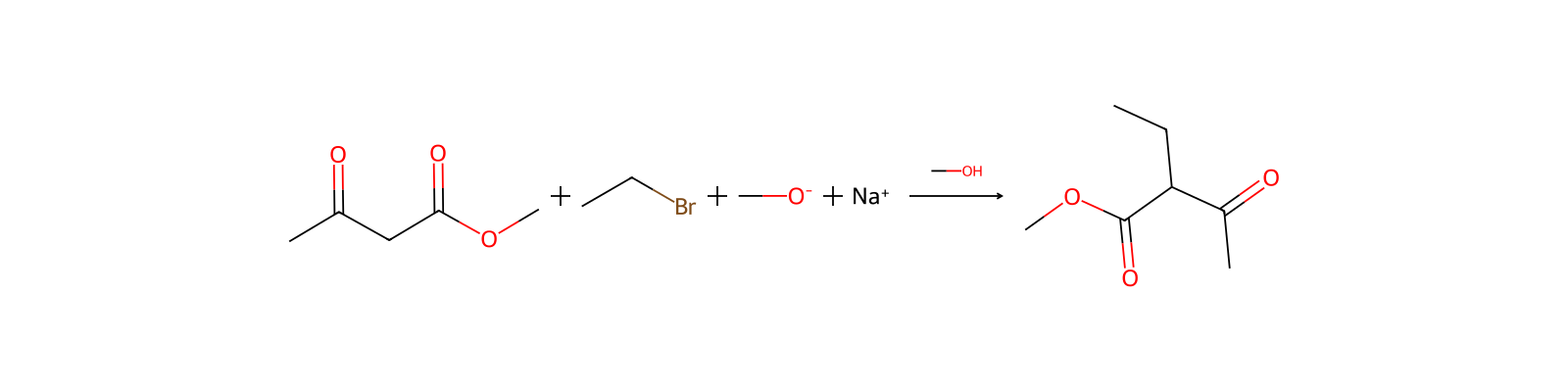
HRID 1255반응물로uspto-grants-1998_03
HRID 4658 반응식
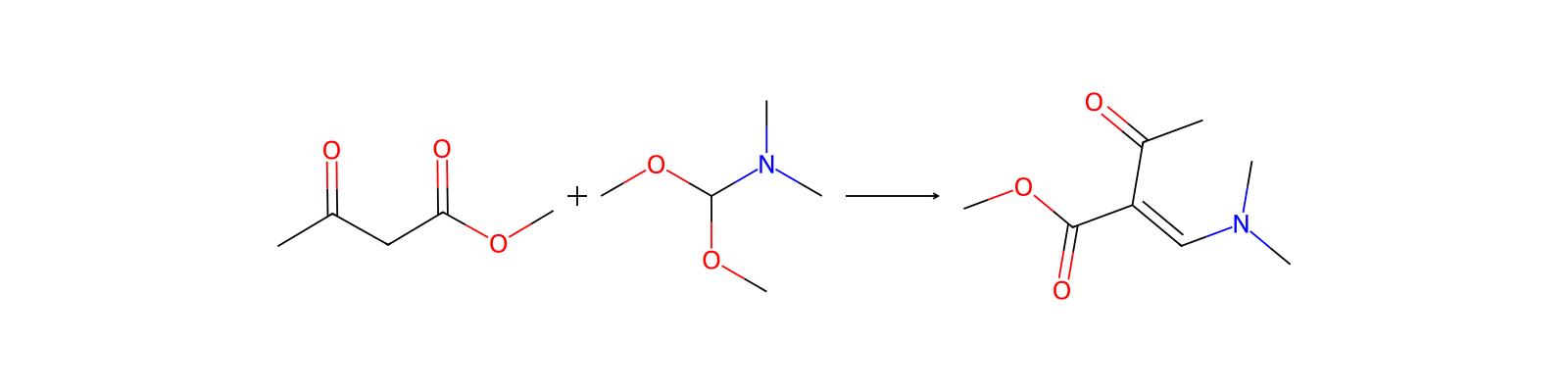
HRID 4658반응물로uspto-grants-1988_02
HRID 4669 반응식
HRID 4669반응물로uspto-grants-1988_02
HRID 5619 반응식
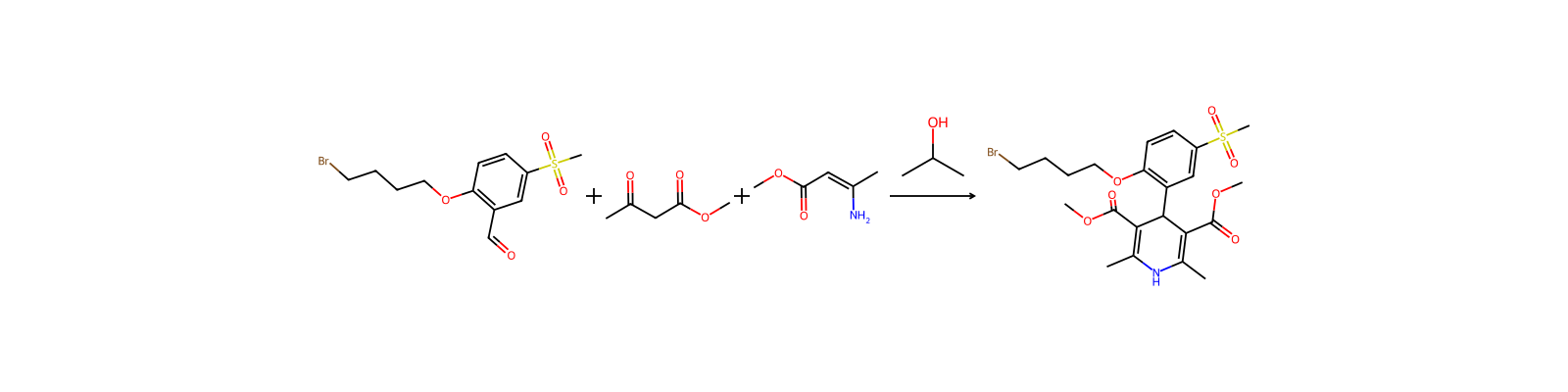
HRID 5619반응물로uspto-grants-1993_09
HRID 5624 반응식
HRID 5624반응물로uspto-grants-1993_09
HRID 10834 반응식
HRID 10834반응물로uspto-grants-2006_08
HRID 12866 반응식
HRID 12866반응물로uspto-grants-2010_06
HRID 18700 반응식
HRID 18700반응물로uspto-grants-2010_06
1 / 124 페이지

화합물 노트

불러오는 중…

이 페이지에서기본 정보개요이름 및 식별자물성안전 및 규제화학 및 산업관련 반응화합물 노트
더보기
새 노트새 반응견적 요청하기
· 3건

158 °F (USCG, 1999)

170 °F (77 °C) (open cup)

77 °C c.c.

Boiling Point · 4건

336 to 338 °F at 760 mmHg (USCG, 1999)

171.7 °C

169.00 °C. @ 760.00 mm Hg

171.7 °C

물리화학적 성질

녹는점
-80 °C · -80 °C (lit.)
끓는 점
169 · 169-170 °C/70 mmHg (lit.)
밀도
1.076 g/mL · 1.076 g/mL at 25 °C (lit.)
증기 밀도
4 · 4 (vs air)
증기압
1 hPa · 1 hPa (20 °C)
굴절률
20 · n20/D 1.419(lit.)
인화점
158 °F · 158 °F
저장 조건
2 · 2-8°C
용해도
460 g/L · 460g/L(20°C)
산도 계수 (pKa)
10.67 · 10.67±0.46(Predicted)
물리적 상태
액체
색상
20 · APHA: ≤20
냄새
100 %에서 · 100.00%에서. 신선한 과일 감귤류 녹색
수소이온지수(pH)
3.8 · 3.8 (863g/l, H2O, 20℃)
폭발한계
1.3 · 1.3-14.2%(V)
냄새 유형
과일 같은
수용성
460 g/L · 460g/L(20℃)
Merck
14 · 14,6009
BRN
506727 · 506727
Henry's Law Constant
6.4 · 6.4×100 mol/(m3Pa) at 25℃, \vS (2002)
화장품 원료 기능
향수
InChI
1S/C5H8O3/c1-4(6)3-5(7)8-2/h3H2,1-2H3
InChIKey
WRQNANDWMGAFTP-UHFFFAOYSA-N
SMILES
COC(=O)CC(C)=O
LogP
0.185 · 0.185 (est)
NIST
3 · Butanoic acid, 3-oxo-, methyl ester(105-45-3)
EPA
Methyl acetoacetate (105-45-3)

화학적 성질

Colorless, clear liquid

Reactive GroupEsters, Sulfate Esters, Phosphate Esters, Thiophosphate Esters, and Borate Esters
EC ClassificationSymbol: Xi; R: 36; S: (2)-26
Special Reports · 3건

OPDYKE DL J; MONOGRAPHS ON FRAGRANCE RAW MATERIALS. METHYL ACETOACETATE; FOOD COSMET TOXICOL 16 (SUPPL 1): 815 (1978). A REVIEW WITH 12 REFERENCES ON METHYL ACETOACETATE INCL TOXICITY, IRRITATION, SENSITIZATION & NUTRITION.

EPA/Office of Pollution Prevention and Toxics; High Production Volume (HPV) Challenge Program's Robust Summaries and Test Plans. Available from: http://www.epa.gov/chemrtk/viewsrch.htm on Methyl acetoacetate as of November 2, 2004.

The U.S. high production volume (HPV) chemicals are those which are manufactured in or imported into the United States in amounts equal to or greater than one million pounds per year. Robust Summaries include health effects, ecotoxicity data, and environmental fate information for selected chemicals. EPA/Office of Pollution Prevention and Toxics; High Production Volume (HPV) Challenge Program's Robust Summaries and Test Plans. Available from: http://www.epa.gov/chemrtk/viewsrch.htm on Methyl acetoacetate as of November 2, 2004.

Reactivity Profile · 1건

METHYL ACETOACETATE is an ester. Esters react with acids to liberate heat along with alcohols and acids. Strong oxidizing acids may cause a vigorous reaction that is sufficiently exothermic to ignite the reaction products. Heat is also generated by the interaction of esters with caustic solutions. Flammable hydrogen is generated by mixing esters with alkali metals and hydrides

Atmospheric Standards · 1건

This action promulgates standards of performance for equipment leaks of Volatile Organic Compounds (VOC) in the Synthetic Organic Chemical Manufacturing Industry (SOCMI). The intended effect of these standards is to require all newly constructed, modified, and reconstructed SOCMI process units to use the best demonstrated system of continuous emission reduction for equipment leaks of VOC, considering costs, non air quality health and environmental impact and energy requirements. Methyl acetoacetate is produced, as an intermediate or a final product, by process units covered under this subpart.

Chemical DangersDecomposes on burning. This produces irritating fumes. Reacts with oxidants.

안전 및 보호

Fire Fighting · 2건

Excerpt from ERG Guide 128 [Flammable Liquids (Water-Immiscible)]:

Use alcohol-resistant foam, powder, carbon dioxide.

First Aid Measures · 4건

Fresh air, rest. Refer for medical attention.

Remove contaminated clothes. Rinse skin with plenty of water or shower.

First rinse with plenty of water for several minutes (remove contact lenses if easily possible), then refer for medical attention.

Rinse mouth. Do NOT induce vomiting. Give one or two glasses of water to drink. Refer for medical attention .

First AidINHALATION: Call for medical aid. Remove to fresh air. If not breathing, give aritificial respiration. If breathing is difficult, give oxygen.
Safe StorageSeparated from oxidants.
Fire Fighting Procedures · 2건

... /Use/ foam, carbon dioxide, dry chemical.

If material on fire or involved in fire: Do not extinguish fire unless flow can be stopped. Use water in flooding quantities as fog. Solid streams of water may be ineffective. Cool all affected containers with flooding quantities of water. Apply water from as far a distance as possible. Use "alcohol" foam, dry chemical or carbon dioxide.

Nonfire Spill ResponseExcerpt from ERG Guide 128 [Flammable Liquids (Water-Immiscible)]:
Disposal Methods · 1건

SRP: The most favorable course of action is to use an alternative chemical product with less inherent propensity for occupational exposure or environmental contamination. Recycle any unused portion of the material for its approved use or return it to the manufacturer or supplier. Ultimate disposal of the chemical must consider: the material's impact on air quality; potential migration in soil or water; effects on animal, aquatic, and plant life; and conformance with environmental and public health regulations.

Spillage Disposal · 1건

Personal protection: filter respirator for organic gases and vapours adapted to the airborne concentration of the substance. Ventilation. Collect leaking and spilled liquid in sealable containers as far as possible. Wash away remainder with plenty of water.

Preventive Measures · 3건

If material not on fire and not involved in fire: Keep sparks, flames, and other sources of ignition away. Keep material out of water sources and sewers. Build dikes to contain flow as necessary. Use water spray to knock-down vapors.

Personnel protection: Avoid breathing vapors. Keep upwind. ... Do not handle broken packages unless wearing appropriate personal protective equipment. Wash away any material which may have contacted the body with copious amounts of water or soap and water.

SRP: The scientific literature for the use of contact lenses in industry is conflicting. The benefit or detrimental effects of wearing contact lenses depend not only upon the substance, but also on factors including the form of the substance, characteristics and duration of the exposure, the uses of other eye protection equipment, and the hygiene of the lenses. However, there may be individual substances whose irritating or corrosive properties are such that the wearing of contact lenses would be harmful to the eye. In those specific cases, contact lenses should not be worn. In any event, the usual eye protection equipment should be worn even when contact lenses are in place.

Isolation and EvacuationExcerpt from ERG Guide 128 [Flammable Liquids (Water-Immiscible)]:
Eye PreventionWear safety goggles.
Fire PreventionNO open flames. Above 77 °C use a closed system and ventilation.

독성 정보

Ecotoxicity Values · 3건

EC50 Daphnia magna (Water flea; Acute immobilization test and reproduction) >236.9 mg/L/48 hr; static; exposure temperature ranged from 20-21 °C, pH ranged from 7.9 to 8.3, and dissolved oxygen ranged from 8.7 to 8.9 mg/L

LC50 Pimephales promelas (Fathead minnow) >111.4 mg/L/96 hr; static; temperature ranged from 19-20 °C, pH ranged from 7.7 to 8.4 and dissolved oxygen ranged from 7.8 to 9.1 mg/L.

EC50 Selenastrum capriconutum (cell growth rate) >978.0 mg/L/24 hr, 48 hr, 72 hr /Conditions of bioassay not specified in source examined/

Environmental Fate · 3건

TERRESTRIAL FATE: Based on a classification scheme(1), an estimated Koc value of 1.0(SRC), determined from a structure estimation method(2), indicates that methyl acetoacetate is expected to have very high mobility in soil(SRC). Volatilization of methyl acetoacetate from moist soil surfaces is expected to be slow(SRC) given an estimated Henry's Law constant of 2.7X10⁻⁷ atm-cu m/mole(SRC), derived from its vapor pressure of 0.892 mm Hg(3), and water solubility, 5X10+5 mg/L(4). A base-catalyzed second-order hydrolysis rate constant of 0.57 L/mole-sec(SRC) was estimated using a structure estimation method(5); this corresponds to half-lives of 140 and 14 days at pH values of 7 and 8, respectively(5). Methyl acetoacetate would be expected to hydrolyze in moist soil under basic conditions(SRC). Methyl acetoacetate is not expected to volatilize from dry soil surfaces(SRC) based upon a vapor pressure of 0.892 mm Hg(3). One screening test observed 78% biodegradation of methyl acetoacetate in 14 days(6); although this study was not specific to soil, it suggests that biodegradation in soil may be rapid(SRC).

AQUATIC FATE: Based on a classification scheme(1), an estimated Koc value of 1.0(SRC), determined from a structure estimation method(2), indicates that methyl acetoacetate is not expected to adsorb to suspended solids and sediment(SRC). Volatilization from water surfaces is expected to be slow(3) based upon an estimated Henry's Law constant of 2.7X10⁻⁷ atm-cu m/mole(SRC), derived from its vapor pressure of 0.892 mm Hg(4), and water solubility, 5X10+5 mg/L(5). A base-catalyzed second-order hydrolysis rate constant of 0.57 L/mole-sec(SRC) was estimated using a structure estimation method(6); this corresponds to half-lives of 140 and 14 days at pH values of 7 and 8, respectively(6). According to a classification scheme(7), an estimated BCF of 3.1(SRC), from an estimated log Kow of -0.69(8) and a regression-derived equation(9), suggests the potential for bioconcentration in aquatic organisms is low(SRC).

ATMOSPHERIC FATE: According to a model of gas/particle partitioning of semivolatile organic compounds in the atmosphere(1), methyl acetoacetate, which has a vapor pressure of 0.892 mm Hg at 25 °C(2), is expected to exist solely as a vapor in the ambient atmosphere. Vapor-phase methyl acetoacetate is degraded in the atmosphere by reaction with photochemically-produced hydroxyl radicals(SRC); the half-life for this reaction in air is estimated to be 5 days(SRC), calculated from its rate constant of 3.25X10⁻¹³ cu cm/molecule-sec at 25 °C(3). Methyl acetoacetate does not absorb light with wavelengths >290 nm(4) and is not expected to be susceptible to direct photolysis by sunlight(SRC).

Adverse EffectsNeurotoxin - Acute solvent syndrome
Exposure RoutesThe substance can be absorbed into the body by inhalation of its vapour.
Signs and Symptoms · 2건

Cough. Dizziness. Drowsiness. Headache. Sore throat.

Redness. Pain.

Soil Adsorption/Mobility · 1건

Using a structure estimation method based on molecular connectivity indices(1), the Koc for methyl acetoacetate can be estimated to be 1.0(SRC). According to a classification scheme(2), this estimated Koc value suggests that methyl acetoacetate is expected to have very high mobility in soil.

Natural Pollution SourcesMethyl acetoacetate was found in the condensed smoke of fires of ponderosa pine sapwood, needles, bark, litter, duff, and humus(1).
Artificial Pollution SourcesMethyl acetoacetate's production and use as a solvent for cellulose ethers and esters and in organic synthesis(1) may result in its release to the environment through various waste streams(SRC).
Environmental Biodegradation · 1건

AEROBIC: Methyl acetoacetate, present at 100 mg/L, reached 78% of its theoretical BOD in 2 weeks using an activated sludge inoculum at 30 mg/L and the Japanese MITI test(1). Methyl acetoacetate was degraded more than 90% in 2 days at 22 °C using activated sludge inoculum in a Zahn-Wellens screening test(2).

Environmental Bioconcentration · 1건

An estimated BCF of 3.1 was calculated for methyl acetatoactate(SRC), using an estimated log Kow of -0.69(1) and a regression-derived equation(2). According to a classification scheme(3), this BCF suggests the potential for bioconcentration in aquatic organisms is low(SRC).

Volatilization from Water/Soil · 1건

The Henry's Law constant for methyl acetoacetate is estimated as 2.7X10⁻⁷ atm-cu m/mole(SRC) derived from its vapor pressure, 0.894 mm Hg(1), and water solubility, 5X10+5 mg/L(2). This Henry's Law constant indicates that methyl acetoacetate is expected to volatilize slowly from water surfaces(3). Methyl acetoacetate's estimated Henry's Law constant indicates that volatilization from moist soil surfaces may occur(SRC). Methyl acetoacetate is not expected to volatilize from dry soil surfaces(SRC) based upon its vapor pressure(1).

Non-Human Toxicity Excerpts · 5건

/LABORATORY ANIMALS: Acute Exposure/ An 8-hr exposure to saturated vapor was not lethal to rats.

/LABORATORY ANIMALS: Acute Exposure/ ...Slightly to moderately irritating to the eyes and skin /of rats/.

/LABORATORY ANIMALS: Acute Exposure/ /Rats/ dosed /orally/ at 1.0 or 2.0 g/kg were observed to be sluggish and unkempt following intubation. Within 48 hr animals returned to normal behavior and appearance. Animals dosed at 2.5 to 4.0 g/kg exhibited lethargy, nasal hemorrhage and dirty, unkempt coats. At 8.0 g/kg all animals became comatose immediately following intubation and succumbed within 15 minutes of exposure. No postmortem or histopathology examinations were performed on any animals.

/LABORATORY ANIMALS: Subchronic or Prechronic Exposure/ /Male and female/ Sprague-Dawley (Crl:CDB BR) /rats were dosed/ daily /by/ oral gavage /for a/ 4-wk exposure with 2-wk recovery for control and high dose subgroups. Dose levels: 0, 100, 300, and 1000 mg/kg/day; controls received vehicle (water). There were no premature deaths during the study. No clinical signs observed were considered to be as a result of treatment with the test substance. There were no notable intergroup body weight, food or water consumption differences in either sex. There were no effects noted in hematology, clinical chemistries or urinalyses considered to be toxicologically significant in either sex. There were no intergroup differences in either organ weights, necropsy or histological findings that were considered to be treatment related in either sex. On completion of 4 weeks of dosing all main study animals were sacrificed and necropsied and given a detailed post mortem examination with organs being weighed ( i.e. adrenals, brain, kidney, liver, ovaries and testis with epididymis) and tissues preserved in fixative (i.e. all abnormal tissue, adrenals, brain, ears, eyes, heart, kidney, liver, lung, marrow smear, optic nerve, ovaries, pituitary, spleen stomach, testis with epididymis, thyroid with parathyroid and urinary bladder). Histological examination was carried out on all control and high dose animals. After the 2 week recovery period all recovery study animals were sacrificed and processed in an identical manner.

For more Non-Human Toxicity Excerpts (Complete) data for METHYL ACETOACETATE (8 total), please visit the HSDB record page.

규제 정보

Atmospheric Standards · 1건

This action promulgates standards of performance for equipment leaks of Volatile Organic Compounds (VOC) in the Synthetic Organic Chemical Manufacturing Industry (SOCMI). The intended effect of these standards is to require all newly constructed, modified, and reconstructed SOCMI process units to use the best demonstrated system of continuous emission reduction for equipment leaks of VOC, considering costs, non air quality health and environmental impact and energy requirements. Methyl acetoacetate is produced, as an intermediate or a final product, by process units covered under this subpart.

안전 데이터

wgk
1
tsca
TSCA listed
rtecs
AK5775000
ridadr
NA1993
독성
LD50 orally in rats: 3.0 g/kg (Smyth, Carpenter)
HS 번호
29183000
risk_code
36
hazard_code
Xi
safety_code
26
위험 등급
CBL
기존화학 물질
KE-27570
자연 발화 온도
536 °F
Hazard Classifications
Eye Dam. 1
스토리지 클래스
10 - Combustible liquids
유해 물질 데이터
105-45-3(Hazardous Substances Data)
Formulations/Preparations/Available as/ liquid grades, assay 98%
Use ClassificationFragrance Ingredients
General Manufacturing Information · 3건

All Other Basic Organic Chemical Manufacturing

Butanoic acid, 3-oxo-, methyl ester: ACTIVE

Total U.S. annual production of MAA and EAA combined is estimated to be 6000-7000 metric tons.

응용 분야

용도Methyl acetoacetate (MAA) is a starting material for the syntheses of alpha-substituted aceto- acetic esters and cyclic compounds, e.g. pyrazole, pyrimidine and coumarin derivatives.

일반 설명A clear colorless liquid. Flash point 158°F. Denser than water and slightly soluble in water. Vapors heavier than air.

제조 방법

생산 방법Methyl acetoacetate is produced by a reaction of methyl acetate with sodium methoxide.

상·하류 제품 정보

상류 원료

아세트초산에틸아세틸 케텐메틸알콜메탄

하류 제품

플루바스타틴나트륨염6-Methyluracil5-메틸-3-페닐이속사졸-4-카르복실산2,2-Dimethylcyclopentanone메빈포스LENAMPICILLIN5-아미노-3-메틸-티오펜-2,4-디카르복실산디메틸에스테르2-아미노-3-시아노-4-메틸-5-카브메톡시티오펜NitrendipineD-(-)-A-4-Hydroxyphenylglycine dane salt methyl potassium4-Chloro-2-methylquinoline펠로디핀4-히드록시-2-메틸퀴놀린나트륨2-프로필펜타노에이트DL-3-Hydroxybutyric acid monosodium saltNIFE디솔케토(3-)-노르말발레리산메틸에스테르3,7,11,15-테트라메틸-1-헥사데켄-3-올피리미포스-메틸다이아지논α-아세틸-γ-부틸올락톤세톡시딤4,6-Dimethylpyrimidine-5-carboxylic acid