
클로로부티릴(4-)클로라이드
4-Chlorobutyryl chloride
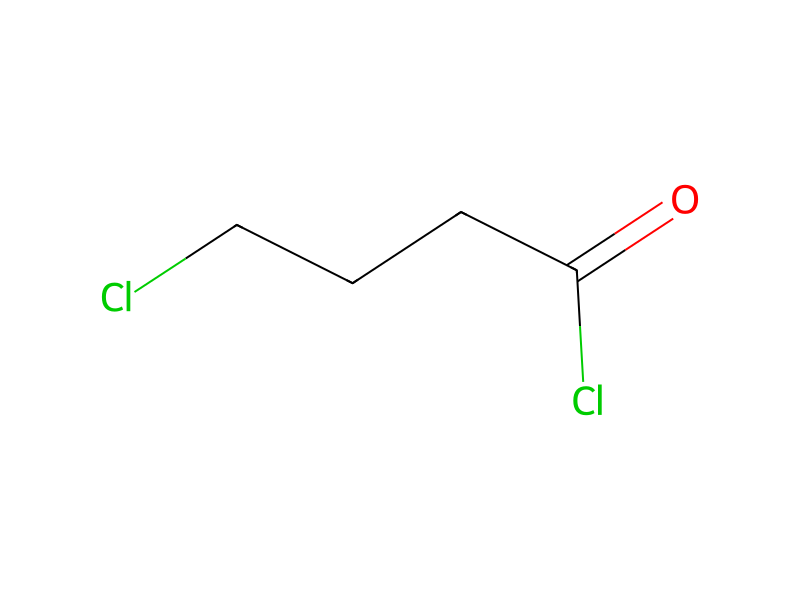
기본 정보
- CAS
4635-59-0- 표준 SMILES
O=C(Cl)CCCCl- InChIKey
CDIIZULDSLKBKV-UHFFFAOYSA-N- 분자식
- C4H6Cl2O
- 평균 분자량
- 140.99 g/mol
- 단동위원소 질량
- 139.97957017
이름 및 식별자
- 우선 이름
- 4-Chlorobutyryl chloride
- IUPAC
- 4-chlorobutanoyl chloride
- 현지명
- 클로로부티릴(4-)클로라이드
- 영어명
- 4-Chlorobutyryl chloride
- 분자식
- C4H6Cl2O
- 분자량
- 141
이름 및 동의어
4-Chlorobutyryl chloride4-Chlorobutanoyl chlorideButanoyl chloride, 4-chloro-4-Chlorobutyroyl chloride4-Chlorobutyric acid chloride4-Chlorobutanoic acid chloridegamma-Chlorobutyryl chlorideButyryl chloride, 4-chloro-gamma-Chlorobutyroyl chlorideHSDB 7299EINECS 225-059-1UNII-3663U0VKRI
이름 더 보기
4-클로로부티릴염화물클로로부티릴(4-)클로라이드4-클로로부티릴염화물(4-CHLOROBUTYRYLCHLORIDE)4-클로로뷰틸일 클로라이드염화 4-클로로부타노일4-CBCMONA-002orobutyryL4-Chlorobutyryl4-Chlorobutyryl chlo4-Chlorbutyrylchlorid-Chlorobutyrylchloride4-chloroprene chloride4-CHLOROBUTRYL CHLORIDE
.gamma.-Chlorobutyryl chloride3663U0VKRI4-Chlorobutyl chlorideDTXSID6052114CDIIZULDSLKBKV-UHFFFAOYSA-.gamma.-Chloro-n-butyryl chlorideEC 225-059-1.OMEGA.-CHLOROBUTYRYL CHLORIDE
데이터베이스 식별자
- CAS
4635-59-0- PubChem CID
- 78370
- DTXSID
DTXSID6052114- UNII
- 3663U0VKRI
- EC Number
- 225-059-1
- Nikkaji
- J26.724D
물성
구조 계산 물성
- XLogP
- 1.7
- 극성 표면적
- 17.1 Ų
- 수소 결합 공여자 수
- 0
- 수소 결합 수용자 수
- 1
- 회전 가능 결합 수
- 3
- 무거운 원자 수
- 7
- 형식 전하
- 0
- 복잡도
- 62.7
실험 및 물리화학적 성질
Chemical ClassesToxic Gases & Vapors -> Acid Halides
SpringerMaterials PropertiesNuclear quadrupole resonance spectroscopy
Density
1.258
1.258 @25 °C
SolubilitySoluble in ethanol
Boiling Point
173.5 °C
173.5 °C @760 [mm Hg]
Vapor Pressure
1.32 [mmHg]
1.32 mm Hg at 25 °C at 25 °C /Estimated/
1.32 [mm Hg] @25 °C
Refractive IndexIndex of refraction = 1.462
Physical DescriptionLight gold liquid; [MSDSonline]
Other Experimental PropertiesHydroxyl radical reaction rate constant = 1.8X10⁻¹² cu cm/molec-sec at 25 °C /Estimated/
물리화학적 성질
- 녹는점
- -47 °C · -47 °C
- 끓는 점
- 173 · 173-174 °C(lit.)
- 밀도
- 1.26 g/mL · 1.26 g/mL at 25 °C(lit.)
- 증기압
- 3 mm · 3 mm Hg ( 20 °C)
- 굴절률
- 20 · n20/D 1.461(lit.)
- 인화점
- 163 °F · 163 °F
- 저장 조건
- 30 °C · Store below +30°C.
- 용해도
- 에 용해됨클로로포름, DMSO(약간 용해됨), 에틸아세테이트(약간 용해됨)
- 물리적 상태
- 액체
- 색상
- 무색~황색으로 투명함
- 폭발한계
- 5.5 · 5.5-11.7%(V)
- 수용성
- 디에틸 에테르, 에탄올에 용해되며 물에 약간 용해됩니다.
- BRN
- 773860 · 773860
- 안정성
- 흡습성, 수분 민감성
- InChI
- 1S/C4H6Cl2O/c5-3-1-2-4(6)7/h1-3H2
- InChIKey
- CDIIZULDSLKBKV-UHFFFAOYSA-N
- SMILES
- ClCCCC(Cl)=O
- NIST
- 4 · Butanoyl chloride, 4-chloro-(4635-59-0)
- EPA
- 4 · Butanoyl chloride, 4-chloro- (4635-59-0)
화학적 성질
Clear colorless to yellow liquid
안전 및 규제
안전 정보는 참고용이며, 공급업체의 물질안전보건자료(SDS), 관련 법규 및 전문가 평가를 대체하지 않습니다.
GHS 분류
GHS Classification
Danger
H290 (67.1%): May be corrosive to metals [Warning Corrosive to Metals]
P234, P260, P264, P270, P271, P280, P284, P301+P317, P301+P330+P331, P302+P361+P354, P304+P340, P305+P354+P338, P316, P320, P321, P330, P363, P390, P403+P233, P405, P406, and P501 (click each P-code to see the statement)
Aggregated GHS information provided per 161 reports by companies from 12 notifications to the ECHA C&L Inventory. Each notification may be associated with multiple companies.
유해성 정보
Regulatory Information
Chemical: Butanoyl chloride, 4-chloro-
Status: Active Update: 27-06-2012 https://echa.europa.eu/registration-dossier/-/registered-dossier/5789
4-Chlorobutyryl chloride: Does not have an individual approval but may be used under an appropriate group standard
Hazards SummaryReacts violently with water; A corrosive substance that can cause injury to the skin, eyes, and respiratory tract; Inhalation may cause edema and chemical pneumonitis; [MSDSonline]
Hazard Classes and CategoriesMet. Corr. 1 (67.1%)
안전 및 보호
Disposal Methods
SRP: The most favorable course of action is to use an alternative chemical product with less inherent propensity for occupational exposure or environmental contamination. Recycle any unused portion of the material for its approved use or return it to the manufacturer or supplier. Ultimate disposal of the chemical must consider: the material's impact on air quality; potential migration in soil or water; effects on animal, aquatic, and plant life; and conformance with environmental and public health regulations.
Protective Action Criteria (PAC)
0.43 [mg/m3]
4.8 [mg/m3]
29 [mg/m3]
독성 정보
Environmental FateAQUATIC FATE: 4-Chlorobutyryl chloride 2,4 is expected to hydrolyze rapidly in water to form 4-chlorobutyric acid(1).
Adverse EffectsDermatotoxin - Skin burns.
Non-Human Toxicity Excerpts
/LABORATORY ANIMALS: Acute Exposure/ In a further acute toxicity study in rats, the LD50 was determined as 1350 mg/kg body weight following oral administration of a 4.3- to 92.8 percent solution of the substances in olive oil and a 14 day observation period (male rats approximately 1500 mg/kg body weight, female rats 1210 mg/kg body weight; 5 male and 5 female rats). The LD100 was 2150 mg/kg body weight (death occurring within 1 hour), while the LD0 was 215 mg/kg body weight. The clinical signs of toxicity observed included staggering, tremors, apathy, dyspnoea, atonia, exsiccosis and paresis. Autopsy revealed atrial dilatation of the heart and congestive hyperemia, acinar pattern of the liver as well as several instances of hemorrhagic eschar formatio on the gastric mucosa and pronounced reddening of the intestinal mucosa. All animals sacrificed at the end of the test were found to have adhesions between the forestomach and the spleen, the liver and the peritoneum.
/LABORATORY ANIMALS: Acute Exposure/ In mice, exposure to 4-chlorobutanoic acid chloride vapors causes sensory irritation of the upper respiratory tract with biphasic impairment of respiratory rate.
/LABORATORY ANIMALS: Acute Exposure/ The application of the neat substance to the skin and eyes of rabbits produces a very severe corrosive effect.
/LABORATORY ANIMALS: Acute Exposure/ Groups of 5 male and 5 female Wistar rats each (average initial weights 317 g and 197 g, respectively) inhaled 4-chlorobutanoic acid chloride (purity of test substance 99.5%) at concentrations of 510, 650 and 870 mg/cu m in a single exposure lasting 4 hours. The observation period was 14 days. The signs of toxicity included labored breathing, closed eyes, piloerection, hunched posture and during the observation period a deteriorated general condition, irregular breathing, encrustations around the nares, including wounded noses, and encrustations around the eyes. Of all 10 rats exposed to the highest concentration (870 mg/cu m), 8 died or had to be killed in extremis in the course of the observation period. No deaths occurred in the other two concentration groups (650 and 510 mg/cu m). Body weight was extremely low in most of the animals which died and was also markedly decreased in the surviving animals up to day 7 of observation, though normal weight was regained by day 14 of the observation period. Post-mortems on the deceased rats revealed considerable abnormalities of the lungs (swellings, atelectasis, irregular surface markings, spongy appearance), and some of the rats which were sacrificed at the end of the observation period were found to have greyish, pale or spotted lungs. In addition, the gastrointestinal tracts of several of the deceased rats were filled with air. ...
For more Non-Human Toxicity Excerpts (Complete) data for 4-CHLOROBUTYRYL CHLORIDE (7 total), please visit the HSDB record page.
Environmental Abiotic Degradation4-Chlorobutyryl chloride 2,4 is expected to hydrolyze rapidly in water to form 4-chlorobutyric acid(1).
Antidote and Emergency Treatment
Basic treatment: Establish a patent airway. Suction if necessary. Watch for signs of respiratory insufficiency and assist respirations if necessary. Administer oxygen by nonrebreather mask at 10 to 15 L/min. Monitor for pulmonary edema and treat if necessary ... . Monitor for shock and treat if necessary ... . For eye contamination, flush eyes immediately with water. Irrigate each eye continuously with normal saline during transport ... . Do not use emetics. For ingestion, rinse mouth and administer 5 ml/kg up to 200 ml of water for dilution if the patient can swallow, has a strong gag reflex, and does not drool. Activated charcoal is not effective ... . Do not attempt to neutralize because of exothermic reaction. Cover skin burns with dry, sterile dressings after decontamination ... . /Organic acids and related compounds/
Advanced treatment: Consider orotracheal or nasotracheal intubation for airway control in the patient who is unconscious, has severe pulmonary edema, or is in respiratory arrest. Early intubation, at the first sign of upper airway obstruction, may be necessary. Positive pressure ventilation techniques with a bag valve mask device may be beneficial. Monitor cardiac rhythm and treat arrhythmias as necessary ... . Start an IV with D5W /SRP: "To keep open", minimal flow rate/. Use lactated Ringer's if signs of hypovolemia are present. Watch for signs of fluid overload. Consider drug therapy for pulmonary edema ... . For hypotension with signs of hypovolemia, administer fluid cautiously. Consider vasopressors if patient is hypotensive with a normal fluid volume. Watch for signs of fluid overload ... . Use proparacaine hydrochloride to assist eye irrigation ... . /Organic acids and related compounds/
Toxicity DataLC50 (rat) = 650 mg/m3/4h
Non-Human Toxicity Values
LC50 Rat inhalation 650 to 870 mg/cu m/4hr
LD50 Rat oral 1350 mg/kg bw
LD50 Rat oral 1510 mg/kg bw
안전 데이터
- wgk
- 1
- tsca
- TSCA listed
- rtecs
- EM1406000
- ridadr
- UN 3390 6.1/PG 1
- HS 번호
- 29159080
- risk_code
- 22-23-35
- hazard_code
- T,C
- safety_code
- 26-28-36/37/39-45-28A
- 포장분류
- II
- 위험 등급
- 6.1
- 위험 참고 사항
- Toxic/Corrosive/Moisture Sensitive
- 자연 발화 온도
- 824 °F
- Hazard Classifications
- Acute Tox. 2 InhalationAcute Tox. 4 OralAquatic Acute 1Eye Dam. 1Met. Corr. 1Skin Corr. 1A
- 스토리지 클래스
- 6.1A - Combustible acute toxic Cat. 1 and 2very toxic hazardous materials
- 유해 물질 데이터
- 4635-59-0(Hazardous Substances Data)
- 함량 및 규제정보
- 물질구분: 유독물질; 혼합물(제품)함량정보: 염화 4-클로로부타노일 및 이를 1% 이상 함유한 혼합물
- 유해화학물질 필터링
- 2017-1-792(신규화학물질)
화학 및 산업
용도 및 제조
General Manufacturing InformationButanoyl chloride, 4-chloro-: ACTIVE
응용 분야
용도4-Chlorobutyryl chloride (4-CBCl) is mainly used in the production of pharmaceuticals and agrochemicals. It is used as pyrazinamide intermediate.
상·하류 제품 정보
상류 원료
하류 제품
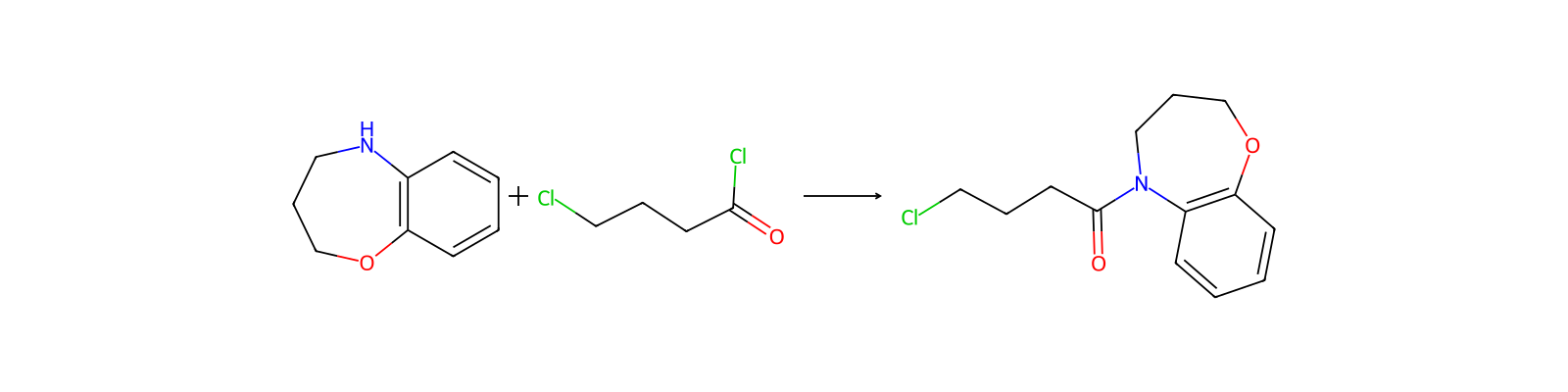
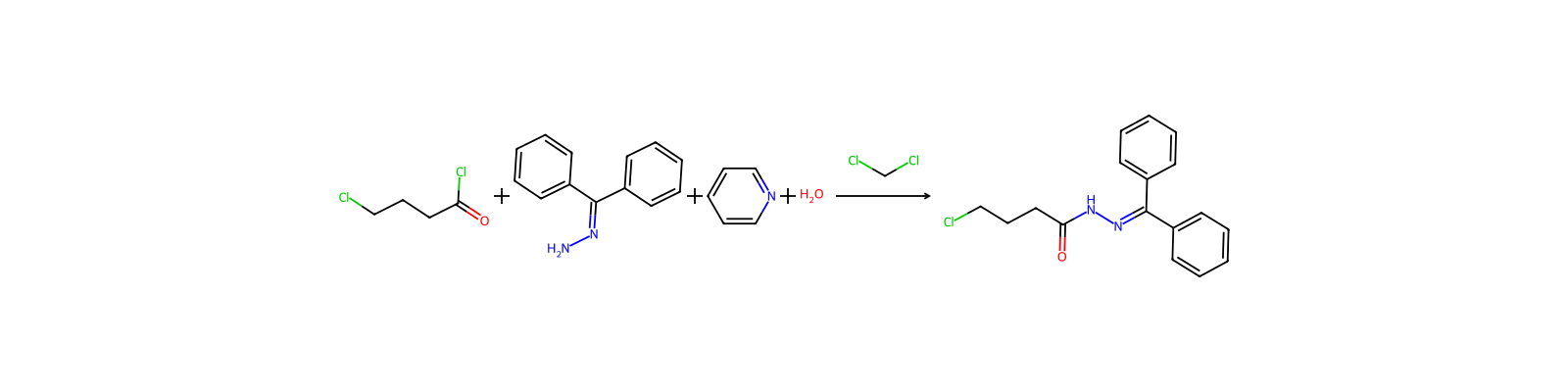
관련 반응
564건




화합물 노트
불러오는 중…