홈MCP워크벤치Skills
홈워크벤치알림마이페이지
llms.txt · MCP 가이드개인정보처리방침 · 이용약관 · 지원v1.8.0
  1. 홈
  2. /화합물

Propargyl alcohol

HCID 7859
새 노트새 반응견적 요청하기
인쇄 미리보기
기본 정보개요이름 및 식별자물성안전 및 규제화학 및 산업관련 반응화합물 노트
부분 구조 검색유사 구조 찾기

기본 정보

CAS
107-19-7
표준 SMILES
C#CCO
InChIKey
TVDSBUOJIPERQY-UHFFFAOYSA-N
분자식
C3H4O
평균 분자량
56.06 g/mol
단동위원소 질량
56.02621475

개요

Propargyl alcohol appears as a clear colorless liquid with a geranium-like odor. Flash point 97 °F. Vapors are heavier than air. Used to make other chemicals, as a corrosion inhibitor and a soil fumigant.

이름 및 식별자

우선 이름
Propargyl alcohol
IUPAC
prop-2-yn-1-ol
영어명
Propargyl alcohol
분자식
C3H4O
분자량
56.06326

이름 및 동의어

PROPARGYL ALCOHOLProp-2-yn-1-ol2-Propyn-1-ol107-19-71-Propyn-3-ol2-Propynyl alcoholEthynylcarbinol2-PropynolEthynyl carbinolPropynyl alcoholMethanol, ethynyl-3-Propynol
이름 더 보기
1-Hydroxy-2-propyne3-Hydroxy-1-propyneAcetylenylcarbinolAcetylene carbinolAgrisynth PAPropiolic alcoholprop-2-yne-1-olRCRA waste number P102

데이터베이스 식별자

CAS
107-19-7、201740-99-0
PubChem CID
7859
DTXSID
DTXSID5021883
ChEMBL
CHEMBL1563026
ChEBI
CHEBI:28905
UNII
E920VF499L
EC Number
203-471-2、875-818-1
Nikkaji
J13B

물성

구조 계산 물성

XLogP
-0.4
극성 표면적
20.2 Ų
수소 결합 공여자 수
1
수소 결합 수용자 수
1
회전 가능 결합 수
0
무거운 원자 수
4
형식 전하
0
복잡도
38.5

실험 및 물리화학적 성질

Chemical Classes · 2건

Other Classes -> Other Toxic Gases & Vapors

Flammable agents - 3rd degree

SpringerMaterials PropertiesBoiling point
PesticidesPesticide -> EPA IRIS
LogP · 2건

log Kow = -0.38

-0.38

OdorMild, geranium odor
Density · 6건

0.9485 at 68 °F (USCG, 1999) - Less dense than water; will float

0.9715 at 20 °C/4 °C

Relative density (water = 1): 0.97

0.9485

0.9478 @ 20°C

0.97

Viscosity1.68 centipoise at 20 °C
Color/Form · 2건

Colorless liquid

Colorless to straw-colored liquid

Solubility · 6건

Miscible (NIOSH, 2024)

Miscible with benzene, chloroform, ethanol, 1,2-dichloroethane, ether, acetone, dioxane, tetrahydrofuran, pyridine; moderately sol in carbon tetrachloride

IMMISCIBLE WITH ALIPHATIC HYDROCARBONS

Miscible with water

안전 및 규제

안전 정보는 참고용이며, 공급업체의 물질안전보건자료(SDS), 관련 법규 및 전문가 평가를 대체하지 않습니다.

GHS 분류

GHS Classification · 6건

Danger

H226: Flammable liquid and vapor [Warning Flammable liquids]

P210, P233, P240, P241, P242, P243, P260, P261, P262, P264, P270, P271, P273, P280, P301+P316, P301+P330+P331, P302+P352, P302+P361+P354, P303+P361+P353, P304+P340, P305+P354+P338, P316, P321, P330, P361+P364, P363, P370+P378, P391, P403+P233, P403+P235, P405, and P501 (click each P-code to see the statement)

Danger

H226 (100%): Flammable liquid and vapor [Warning Flammable liquids]

P210, P233, P240, P241, P242, P243, P260, P261, P262, P264, P264+P265, P270, P271, P273, P280, P284, P301+P316, P301+P330+P331, P302+P352, P302+P361+P354, P303+P361+P353, P304+P340, P305+P354+P338, P316, P317, P319, P320, P321, P330, P361+P364, P363, P370+P378, P391, P403+P233, P403+P235, P405, and P501 (click each P-code to see the statement)

유해성 정보

Regulatory Information · 5건

Chemical: 2-Propyn-1-ol

2-Propyn-1-ol is listed on the EPA's Chemical Data Reporting (CDR) system. Manufacturers and importers of 2-Propyn-1-ol are required to report information about their production and use of this chemical to the EPA under the Toxic Substances Control Act (TSCA). (40 eCFR Part 711)

Status: Active Update: 22-06-2022 https://echa.europa.eu/registration-dossier/-/registered-dossier/15851

2-Propyn-1-ol: HSNO Approval: HSR003069 Approved with controls

The New Jersey Worker and Community Right to Know Act requires public and private employers to provide information about hazardous substances at their workplaces. (N.J.S.A. 34:5A-1 et. seq.)

DOT LabelFlammable Liquid Poison
Fire Hazards · 2건

Special Hazards of Combustion Products: Acrid smoke, fumes (USCG, 1999)

Flammable. Above 33 °C explosive vapour/air mixtures may be formed.

Fire Potential · 2건

... Moderate fire risk.

화학 및 산업

약리 정보

Metabolism/Metabolites · 5건

... While oxidative metabolism of low molecular weight primary alcohols is generally ... catalyzed by alcohol dehydrogenase, propargyl alcohol is a relatively poor substrate for this enzyme ... The catalase alternative pathway /was studied/. Bovine liver catalase was used, to measure the rate of oxidative bioactivation of propargyl alcohol to 2-propyn-l-al ... /It was/ found the rate to be higher than predicted ... and hypothesized that the oxidative biotransformation of propargyl alcohol to the more reactive alpha, beta-unsaturated aldehyde by liver catalase might be the initial step in propargyl alcohol induced liver injury.

Chromatographic analysis indicated that propargyl alcohol is extensively metabolized and one metabolite was identified as a glutathione conjugate. It was assumed that there are multiple glutathione conjugates across the triple bond ...

... Inactivation of catalase in isolated hepatocytes only partially inhibited the toxicity of propargyl alcohol /was shown/ ... Propargyl alcohol-induced cytotoxicity, rapid GSH depletion and reactive oxygen species (ROS) formation involves metabolic activation by cytochrome P450 rather than catalase or alcohol dehydrogenase /was demonstrated/. Using specific induction and depletion ... /it was shown/ that CYP 2E1 was the enzyme responsible for activation of propargyl alcohol to its aldehyde, 2-propyn-I-al ... /A model was proposed that/ propargyl alcohol is oxidized primarily by CYP 2E1, with a minor contribution by alcohol dehydrogenase, to 2-propyn-l-al. The aldehyde is a chemically active species that can attack vital cellular macromolecules but reacts preferentially with glutathione to form conjugates that undergo urinary excretion. An alternative pathway for the aldehyde is further enzymatic oxidation via aldehyde dehydrogenase to propiolic acid, which could be further, oxidized, conjugated and excreted, or be converted back into the aldehyde ... Depletion of glutathione and formation of ROS (reactive oxygen species), which lends support to the proposed mechanism, /was demonstrated/ ...

Male Sprague-Dawley rats were dosed orally with 40 mg/kg mixture of (1,2,3-(13)C)propargyl alcohol and (1,2-(14)C)propargyl alcohol. Approximately 60% of the dose was excreted in the urine by 96 hr. Major metabolites were identified in the urine by 1- and 2-D NMR and confirmed by isolation and purification of the individual metabolites followed by (13)C FT-NMR and mass spectometry. The proposed pathway involves oxidation of propargyl alcohol to 2-propynoic acid and glutathione conjugation, the first example of multiple glutathione additions to a triple bond. The following final products were identified: 3-((2-(acetylamino)-2-carboxyethyl)thio)-2-propenoic acid, S-S-(3-hydroxypropylidene)-bis(N-acetylcysteine), and 3-((2-(acetylamino)-2-carboxyethyl)-sulfinyl)-3-((2-(acetylamino)-2-carboxyethyl)thio)1-propanol.

관련 반응

1,159건
반응 기록 만들기
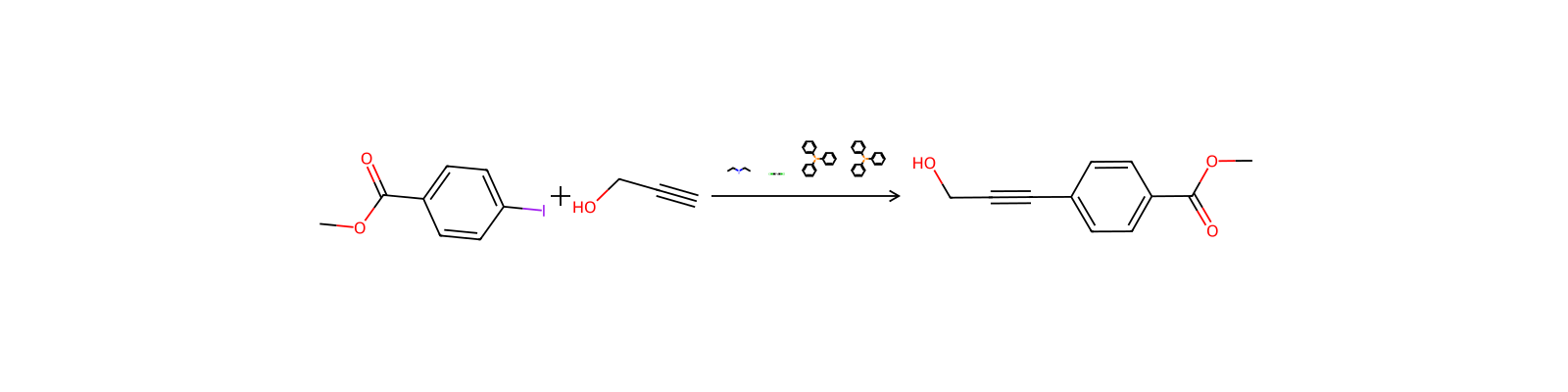
HRID 1730 반응식
HRID 1730반응물로uspto-grants-1998_03
HRID 4170 반응식
HRID 4170반응물로uspto-grants-1988_02
HRID 4305 반응식
HRID 4305용매로uspto-grants-1988_02
HRID 4306 반응식
HRID 4306용매로uspto-grants-1988_02
HRID 5034 반응식
HRID 5034반응물로uspto-grants-1993_09
HRID 12006 반응식
HRID 12006반응물로uspto-grants-2010_06
HRID 21215 반응식
HRID 21215반응물로uspto-grants-2010_06
HRID 24931 반응식
HRID 24931반응물로uspto-grants-2005_02
1 / 145 페이지

화합물 노트

불러오는 중…

이 페이지에서기본 정보개요이름 및 식별자물성안전 및 규제화학 및 산업관련 반응화합물 노트
더보기
새 노트새 반응견적 요청하기

Solubility in water: miscible

Miscible

Flash Point · 6건

91 °F (NTP, 1992)

97 °F

97 °F (36 °C) (Open cup)

33 °C c.c.

97 °F (open cup)

(oc) 97 °F

Boiling Point · 6건

236.5 °F at 760 mmHg (NTP, 1992)

114-115 °C at 760 mm Hg; 100 °C at 490.3 mm Hg; 70 °C at 147.6 mm Hg; 20 °C at 11.6 mm Hg

114 °C

236.5 °F

113.6 °C @760 [mm Hg]

237 °F

Melting Point · 6건

-54 °F (NTP, 1992)

-48 to -52 °C

-48 - -52 °C

-62 °F

-51.8 °C

-62 °F

물리화학적 성질

녹는점
-52 · -52--48 °C
끓는 점
20 °C · 20 °C(Press: 11.6 Torr)
밀도
0.9715 g/cm3 · 0.9715 g/cm3
산도 계수 (pKa)
13.21 · 13.21±0.10(Predicted)

Flammable liquid.

Health Hazards · 1건

Severe health hazard. Central nervous system depressant. May be fatal is absorbed through skin or inhaled. Causes severe irritation. High concentrations are extremely destructive to mucous membranes, upper respiratory tract, eyes and skin. Symptoms of exposure may include burning sensation, coughing, wheezing, laryngitis, shortness of breath, headache, nausea, and vomiting. (USCG, 1999)

Hazards Summary · 1건

Liquid causes second degree burns after contact for a few minutes. [CHRIS] Toxic to liver and kidneys in rats after repeated exposure to concentrations of 80 ppm; TLV Basis: Eye irritation and liver & kidney damage; A TLV–TWA of 1 ppm (2.3 mg/m3) is recommended for occupational exposure to propargyl alcohol, based on the structural and apparent toxicological similarity to allyl alcohol . . . [ACGIH] A lachrymator; [CHEMINFO] See Allyl alcohol.

DOT ID and Guide1986 131
Reactive GroupAlcohols and Polyols
EC ClassificationSymbol: T, N; R: 10-23/24/25-34-51/53; S: (1/2)-26-28-36-45-61
UN ClassificationUN Hazard Class: 6.1; UN Subsidiary Risks: 3; UN Pack Group: II
Special Reports · 1건

EPA/Office of Pollution Prevention and Toxics; High Production Volume (HPV) Challenge Program's Robust Summaries and Test Plans for Propargyl alcohol (December 2002). Provides information on usage patterns, toxicity, and environmental effects supplied by industry to the U.S. EPA's HPV CHallenge Program. Available from: http://cfpub.epa.gov/hpv-s/ as of September 07, 2006.

RCRA Requirements · 1건

P102; As stipulated in 40 CFR 261.33, when propargyl alcohol, as a commercial chemical product or manufacturing chemical intermediate or an off-specification commercial chemical product or a manufacturing chemical intermediate, becomes a waste, it must be managed according to federal and/or state hazardous waste regulations. Also defined as a hazardous waste is any container or inner liner used to hold this waste or any residue, contaminated soil, water, or other debris resulting from the cleanup of a spill, into water or on dry land, of this waste. Generators of small quantities of this waste may qualify for partial exclusion from hazardous waste regulations (40 CFR 261.5(e)).

안전 및 보호

Fire Fighting · 2건

Excerpt from ERG Guide 131 [Flammable Liquids - Toxic]:

Use water spray, powder, alcohol-resistant foam, carbon dioxide. In case of fire: keep drums, etc., cool by spraying with water.

First Aid Measures · 4건

Fresh air, rest. Refer for medical attention.

Remove contaminated clothes. Rinse skin with plenty of water or shower. Refer for medical attention . Wear protective gloves when administering first aid.

First rinse with plenty of water for several minutes (remove contact lenses if easily possible), then refer for medical attention.

Rinse mouth. Rest. Refer for medical attention .

First Aid · 2건

EYES: First check the victim for contact lenses and remove if present. Flush victim's eyes with water or normal saline solution for 20 to 30 minutes while simultaneously calling a hospital or poison control center. Do not put any ointments, oils, or medication in the victim's eyes without specific instructions from a physician. IMMEDIATELY transport the victim after flushing eyes to a hospital even if no symptoms (such as redness or irritation) develop.

(General first aid procedures)

Safe StorageFireproof. Separated from strong oxidants and food and feedstuffs. Keep in the dark. Well closed.
Firefighting Hazards · 3건

A harmful contamination of the air can be reached very quickly on evaporation of this substance at 20 °C.

Vapors are heavier than air and may travel to a source of ignition and flash back.

The odour warning when the exposure limit value is exceeded is insufficient. Vapours are uninhibited and may polymerize, blocking valves and vents.

Exposure Control and Personal Protection2.0 [ppm]
Fire Fighting Procedures · 2건

Use water spray, dry chemical, "alcohol resistant" foam, or carbon dioxide. Use water spray to keep fire-exposed containers cool. Fight fire from protected location or maximum possible distance.

If material or fire or involved in fire: Do not extinguish fire unless flow can be stopped. Use water in flooding quantities as fog. Solid streams of water may ineffective. Cool all affected containers with flooding quantities of water. Apply water from as far a distance as possible. Use "alcohol" foam, dry chemical or carbon dioxide.

Storage Conditions · 2건

Fireproof. Separated from strong oxidants, food and feedstuffs. Keep in the dark. Well closed.

Store in a cool, dry, well-ventilated location. Store away from heat, oxidizing materials, acids, alkalies, and sunlight.

Cleanup Methods · 2건

Personal protection: complete protective clothing including self-contained breathing apparatus. Do NOT let this chemical enter the environment. Collect leaking and spilled liquid in sealable containers as far as possible. Absorb remaining liquid in sand or inert absorbent and remove to safe place.

Eliminate all ignition sources. Stop or control the leak if this can be done without undue risk. Use water spray to cool and disperse vapors, protect personnel, and dilute spills to form nonflammable mixtures. Absorb in noncombustible material for proper disposal.

Nonfire Spill ResponseExcerpt from ERG Guide 131 [Flammable Liquids - Toxic]:
Disposal Methods · 2건

[40 CFR 240-280, 300-306, 702-799 (7/1/2006)] Generators of waste (equal to or greater than 100 kg/mo) containing this contaminant, EPA hazardous waste number P102, must conform with USEPA regulations in storage, transportation, treatment and disposal of waste.

A good candidate for liquid injection incineration at a temperature range of 650 to 1,600 °C and a residence time of 0.1 to 2 seconds. A good candidate for rotary kiln incineration at a temperature range of 820 to 1,600 °C and residence times of seconds for liquids and gases, and hours for solids. A good candidate for fluidized bed incineration at a temperature range of 450 to 980 °C and residence times of seconds for liquids and gases, and longer for solids.

Spillage Disposal · 1건

Personal protection: complete protective clothing including self-contained breathing apparatus. Do NOT let this chemical enter the environment. Collect leaking and spilled liquid in sealable containers as far as possible. Absorb remaining liquid in sand or inert absorbent. Then store and dispose of according to local regulations.

독성 정보

Target Organs · 2건

Hepatic

Skin, respiratory system, central nervous system, liver, kidneys

Ecotoxicity Values · 5건

LC50 Pimephales promelas (fathead minnow) 1.44 mg/l/96 hr (confidence limit 1.25-1.67 mg/l), flow-through bioassay with measured concentrations, 24.7 °C, dissolved oxygen 6.9 mg/l, hardness 42.8 mg/l calcium carbonate, alkalinity 40.6 mg/l calcium carbonate, and pH 7.7.

EC50 Pimephales promelas (fathead minnow) 1.44 mg/l/96 hr (confidence limit 1.25-1.67 mg/l), flow-through bioassay with measured concentrations, 24.7 °C, dissolved oxygen 6.9 mg/l, hardness 42.8 mg/l calcium carbonate, alkalinity 40.6 mg/l calcium carbonate, and pH 7.7. Effect: loss of equilibrium.

LC50 Pimephales promelas (fathead minnow) 1.53 mg/l/96 hr (confidence limit 1.49-1.56 mg/l), flow-through bioassay with measured concentrations, 25.7 °C, dissolved oxygen 6.8 mg/l, hardness 43.4 mg/l calcium carbonate, alkalinity 40.8 mg/l calcium carbonate, and pH 7.72.

EC50 Pimephales promelas (fathead minnow) 1.53 mg/l/96 hr (confidence limit 1.49-1.56 mg/l), flow-through bioassay with measured concentrations, 25.7 °C, dissolved oxygen 6.8 mg/l, hardness 43.4 mg/l calcium carbonate, alkalinity 40.8 mg/l calcium carbonate, and pH 7.72. Effect: loss of equilibrium.

For more Ecotoxicity Values (Complete) data for PROPARGYL ALCOHOL (13 total), please visit the HSDB record page.

Environmental Fate · 3건

TERRESTRIAL FATE: Based on a classification scheme(1), an estimated Koc value of 14(SRC), determined from a log Kow of -0.38(2) and a regression-derived equation(3), indicates that propargyl alcohol is expected to have very high mobility in soil(SRC). Volatilization of propargyl alcohol from moist soil surfaces is expected to be an important fate process(SRC) given an estimated Henry's Law constant of 1.1X10⁻⁶ atm-cu m/mole(SRC), derived from its extrapolated vapor pressure, 15.6 mm Hg(4), and water solubility, 1X10+6 mg/L (miscible)(5). Volatilization from dry soils is expected(SRC), given the extrapolated vapor pressure(4). The half-life of propargyl alcohol in an alkaline sandy silt loam (61.5% sand, 31.1% silt, 7.4% clay, pH 7.8, 3.25% organic carbon) from Texas was 12.6 days and 13 days from an acidic sandy loam (68% sand, 23.4% silt, 8.6% clay, pH 4.8, 0.94% organic carbon) from Mississippi(6).

AQUATIC FATE: Based on a classification scheme(1), an estimated Koc value of 14(SRC), determined from a log Kow of -0.38(2) and a regression-derived equation(3), indicates that propargyl alcohol is not expected to adsorb to suspended solids and sediment(SRC). Volatilization from water surfaces is expected(3) based upon an estimated Henry's Law constant of 1.1X10⁻⁶ atm-cu m/mole(SRC), derived from its extrapolated vapor pressure, 15.6 mm Hg(4), and water solubility, 1X10+6 mg/L (miscible) (5). Using this Henry's Law constant and an estimation method(3), volatilization half-lives for a model river and model lake are 16 and 176 days, respectively(SRC). According to a classification scheme(6), an estimated BCF of 3(SRC), from its log Kow(2) and a regression-derived equation(7), suggests the potential for bioconcentration in aquatic organisms is low(SRC). Biodegradation in aerobic water may occur for propargyl alcohol based on biodegradation half-lives of 12.6 and 13 days in two soils(8). In addition, propargyl alcohol achieved 95% of its theoretical BOD in a screening study using an activated sludge inoculum(9), suggesting this compound will degrade under aerobic condictions.

ATMOSPHERIC FATE: According to a model of gas/particle partitioning of semivolatile organic compounds in the atmosphere(1), propargyl alcohol, which has an extrapolated vapor pressure of 15.6 mm Hg at 25 °C(2), is expected to exist solely as a vapor in the ambient atmosphere. Vapor-phase propargyl alcohol is degraded in the atmosphere by reaction with photochemically-produced hydroxyl radicals(SRC); the half-life for this reaction in air is estimated to be 37 hours(SRC), calculated from its rate constant of 1X10-11 cu cm/molecule-sec at 25 °C (SRC) that was derived using a structure estimation method(3). Propargyl alcohol is also degraded in the atmosphere by reaction with ozone; however, the half-life of this reaction is long compared to the reaction with hydroxyl radicals and is not environmentally relevant(SRC). The half-life for this reaction in air is estimated as 380 days from its theoretical rate constant of 3X10-20 cu cm/molecule-sec(SRC), that was derived using a structure estimation method(3). Propargyl alcohol does not contain chromophores that absorb at wavelengths >290 nm and therefore is not expected to/may be susceptible to direct photolysis by sunlight(4).

Adverse EffectsOccupational hepatotoxin - Secondary hepatotoxins: the potential for toxic effect in the occupational setting is based on cases of poisoning by human ingestion or animal experimentation.
Exposure Routes · 2건

The substance can be absorbed into the body by inhalation of its vapour, through the skin and by ingestion.

inhalation, skin absorption, ingestion, skin and/or eye contact

Signs and Symptoms · 4건

Cough. Sore throat.

MAY BE ABSORBED! Redness.

Pain. Severe deep burns.

irritation skin, mucous membrane; central nervous system depression; In Animals: liver, kidney damage

Ongoing Test Status · 1건

The following link will take the user to the National Toxicology Program (NTP) Test Agent Search Results page, which tabulates all of the "Standard Toxicology & Carcinogenesis Studies", "Developmental Studies", and "Genetic Toxicity Studies" performed with this chemical. Clicking on the "Testing Status" link will take the user to the status (i.e., in review, in progress, in preparation, on test, completed, etc.) and results of all the studies that the NTP has done on this chemical. [http://ntp-apps.niehs.nih.gov/ntp_tox/index.cfm?fuseaction=ntpsearch.searchresults&searchterm=107-19-7]

ICSC Environmental DataThe substance is toxic to aquatic organisms.
EPA IRIS Information · 3건

Propargyl alcohol

Hepatic

2 x 10 ^-3 mg/kg-day

Soil Adsorption/Mobility · 1건

The Koc of propargyl alcohol is estimated as 14(SRC), using a log Kow of -0.38(1) and a regression-derived equation(2). According to a classification scheme(3), this estimated Koc value suggests that propargyl alcohol is expected to have very high mobility in soil(SRC).

Human Toxicity Excerpts · 3건

/SIGNS AND SYMPTOMS/ Irritating to skin, mucous membranes.

/SIGNS AND SYMPTOMS/ ACUTE ... SYMPTOMS: Inhalation--cough, sore throat; Skin--MAY BE ABSORBED! Redness; Eyes--pain, severe deep burns.

/SIGNS AND SYMPTOMS/ EFFECTS OF SHORT-TERM EXPOSURE: ... /Propargyl alcohol/ is irritating to the eyes, the skin and the respiratory tract. The vapor irritates the eyes, the skin and the respiratory tract. The substance may cause effects on the liver and kidneys, resulting in impaired functions. Exposure above the occupational exposure limit (OEL) may result in death.

Artificial Pollution Sources · 1건

Propargyl alcohol's production and use as a corrosion inhibitor, solvent stabilizer, and laboratory reagent(1) may result in its release to the environment through various waste streams(SRC). Its former use as a soil fumigant(1) would have resulted in its direct release to the environment(SRC).

규제 정보

RCRA Requirements · 1건

P102; As stipulated in 40 CFR 261.33, when propargyl alcohol, as a commercial chemical product or manufacturing chemical intermediate or an off-specification commercial chemical product or a manufacturing chemical intermediate, becomes a waste, it must be managed according to federal and/or state hazardous waste regulations. Also defined as a hazardous waste is any container or inner liner used to hold this waste or any residue, contaminated soil, water, or other debris resulting from the cleanup of a spill, into water or on dry land, of this waste. Generators of small quantities of this waste may qualify for partial exclusion from hazardous waste regulations (40 CFR 261.5(e)).

TSCA Requirements · 1건

Pursuant to section 8(d) of TSCA, EPA promulgated a model Health and Safety Data Reporting Rule. The section 8(d) model rule requires manufacturers, importers, and processors of listed chemical substances and mixtures to submit to EPA copies and lists of unpublished health and safety studies. 2-Propyn-1-ol is included on this list.

CERCLA Reportable Quantities · 1건

Persons in charge of vessels or facilities are required to notify the National Response Center (NRC) immediately, when there is a release of this designated hazardous substance, in an amount equal to or greater than its reportable quantity of 1000 lb or 454 kg. The toll free number of the NRC is (800) 424-8802. The rule for determining when notification is required is stated in 40 CFR 302.4 (section IV. D.3.b).

안전 데이터

ridadr
2929
포장분류
II
위험 등급
6.1

For more Metabolism/Metabolites (Complete) data for PROPARGYL ALCOHOL (7 total), please visit the HSDB record page.

Absorption, Distribution and Excretion · 3건

Propargyl alcohol is quickly distributed and excreted following an iv dose. The majority of the radioactivity ((14)C-labeled test material) was excreted in the urine and as carbon dioxide in the breath of both rats and mice. Oral dosing resulted in a similar rapid (but slower than after iv dosing) excretion pattern, with the bulk of radioactivity being excreted in the urine and exhaled carbon dioxide. Dermal absorption was low due to the volatility of propargyl alcohol. Inhalation exposure resulted in 55 to 63% absorption of inhaled propargyl alcohol at 1 or 10 ppm and only 23 to 33% absorption at 100 ppm. Both species eliminated the majority of the inhaled dose in urine.

... /Propargyl alcohol/ can be absorbed into the body by inhalation of its vapor, through the skin and by ingestion.

Male Sprague-Dawley rats were dosed orally with 40 mg/kg mixture of (1,2,3-(13)C)propargyl alcohol and (1,2-(14)C)propargyl alcohol. Approximately 60% of the dose was excreted in the urine by 96 hr ...

용도 및 제조

Uses · 6건

Used in steel and chemical production; Also used as a solvent stabilizer, fumigant, and corrosion inhibitor; [ACGIH]

Steel Producing [Category: Industry]

Has been used to prevent hydrogen embrittlement of steel; as corrosion inhibitor; solvent stabilizer; soil fumigant /former/; chemical intermediate; lab reagent

PHARMCEUTICALS

Chemical synthesis; alloys

/Propargyl alcohol/ is used as an inhibitor for the corrosion of steel by hydrochloric acid, as a stabilizer in certain chlorinated hydrocarbon formulations, as a soil fumigant ...

U.S. Imports(1984) 1.85X10+8 g
U.S. Production · 3건

2023: 250,000 - <400,000 lb

This chemical is listed as a High Production Volume (HPV) (65FR81686). Chemicals listed as HPV were produced in or imported into the U.S. in >1 million pounds in 1990 and/or 1994. The HPV list is based on the 1990 Inventory Update Rule. (IUR) (40 CFR part 710 subpart B; 51FR21438).

Production volumes for non-confidential chemicals reported under the Inventory Update Rule. [Table#5685]

Industry UsesIntermediate
Methods of Manufacturing · 3건

Prepared by heating beta-bromoallyl alcohol with concentrated KOH; ... from formaldehyde and sodium acetylide ... from epichlorohydrin + sodium ... from acetylene and formaldehyde.

Derived from acetylene by high-pressure synthesis.

... Formed as a byproduct (~5%) in the butynediol synthesis from acetylene and formaldehyde ... Copper acetylide serves as catalyst. The reaction can be controlled in such a way that either propargyl alcohol (high acetylene pressure, low formaldehyde concentration) or 2-butyne-1,4-diol (excess formaldehyde) is formed preferentially.

Formulations/Preparations · 2건

Grade: Technical; 75% solution.

97% MIN. ACTIVITY GRADE

Household ProductsInformation on 7 consumer products that contain Propargyl alcohol in the following categories is provided:
General Manufacturing Information · 4건

All Other Basic Organic Chemical Manufacturing

2-Propyn-1-ol: ACTIVE

In the usual high-pressure butynediol process, about 5% of the product is propargyl alcohol. Some processes give higher proportions of propargyl alcohol.

By-product of butynediol manufacture