홈MCP워크벤치Skills
홈워크벤치알림마이페이지
llms.txt · MCP 가이드개인정보처리방침 · 이용약관 · 지원v1.8.0
  1. 홈
  2. /화합물

숙신산무수물

Succinic anhydride

HCID 7922
새 노트새 반응견적 요청하기
인쇄 미리보기
기본 정보개요이름 및 식별자물성안전 및 규제화학 및 산업관련 반응화합물 노트
부분 구조 검색유사 구조 찾기

기본 정보

CAS
108-30-5
표준 SMILES
O=C1CCC(=O)O1
InChIKey
RINCXYDBBGOEEQ-UHFFFAOYSA-N
분자식
C4H4O3
평균 분자량
100.07 g/mol
단동위원소 질량
100.01604399

개요

Succinic anhydride appears as colorless needles or white crystalline solid. Melting point 237 °F. Sublimes at 239 °F at 5 mmHg pressure; and at 198 °F and 1 mmHg pressure. Moderately toxic and an irritant.

이름 및 식별자

우선 이름
Succinic anhydride
IUPAC
oxolane-2,5-dione
현지명
숙신산무수물
영어명
Succinic anhydride
분자식
C4H4O3
분자량
100.07

이름 및 동의어

SUCCINIC ANHYDRIDE108-30-5oxolane-2,5-dioneSuccinic acid anhydrideSuccinyl oxideDihydro-2,5-furandione2,5-DiketotetrahydrofuranButanedioic anhydrideSuccinyl anhydride2,5-Furandione, dihydro-Rikacid SATetrahydro-2,5-dioxofuran
이름 더 보기
석신산무수물숙신무수물숙신산무수물숙신무수물무수숙신산바이닐브로마이드SANsuccinicSAATetrahydrofuran-2,5-dioneSAA15-Furandione,dihydro-2Dihydro-furan-2,5-dione
2,5-DioxotetrahydrofuranTetrahydro-2,5-furandioneNCI-C55696DTXSID70212876RF4O17Z8JNSC-8518DTXCID701287CHEBI:36595

데이터베이스 식별자

CAS
108-30-5、68412-02-2
PubChem CID
7922
DTXSID
DTXSID7021287
ChEMBL
CHEMBL1370164
ChEBI
CHEBI:36595
UNII
6RF4O17Z8J
EC Number
203-570-0
Nikkaji
J3.248D

물성

구조 계산 물성

XLogP
-0.5
극성 표면적
43.4 Ų
수소 결합 공여자 수
0
수소 결합 수용자 수
3
회전 가능 결합 수
0
무거운 원자 수
7
형식 전하
0
복잡도
102

실험 및 물리화학적 성질

PolymersPlastics & Rubber -> Acid Anhydrides, Cyclic
SpringerMaterials PropertiesSchoenflies notation
OdorODORLESS
TasteBURNING TART TASTE
Food AdditivesUse unspecified -> FDA Substance added to food
Density · 5건

1.234 at 68 °F (NTP, 1992) - Denser than water; will sink

1.503 (also given as 1.104 and 1.234)

Bulk density: 47.2 lb/cu ft

Relative density (water = 1): 1.503

1.104 @25 °C

Color/Form · 4건

NEEDLES FROM ALC; RHOMBIC PYRAMIDS FROM CHLOROFORM OR CARBON TETRACHLORIDE

COLORLESS OR LIGHT-COLORED NEEDLES OR FLAKES

Orthorhombic prisms from abs alc.

Succinic anhydride forms rhombic pyramidal or bipyramidal crystals.

Solubility · 5건

less than 1 mg/mL at 70 °F (NTP, 1992)

Insoluble in water

IN ETHANOL AT 25 °C: 2.56 G/100 ML; IN ETHER AT 25 °C: 0.64 G/100 ML; IN CHLOROFORM AT 25 °C: 0.87 G/100 ML

Soluble in chloroform, carbon tetrachloride, alcohol; very slightly soluble in ether and water.

Solubility in water: none

안전 및 규제

안전 정보는 참고용이며, 공급업체의 물질안전보건자료(SDS), 관련 법규 및 전문가 평가를 대체하지 않습니다.

GHS 분류

GHS Classification · 6건

Danger

H302: Harmful if swallowed [Warning Acute toxicity, oral]

P233, P260, P261, P264, P264+P265, P270, P271, P272, P280, P284, P301+P317, P301+P330+P331, P302+P352, P302+P361+P354, P304+P340, P305+P354+P338, P316, P317, P321, P330, P333+P317, P342+P316, P362+P364, P363, P403, P405, and P501 (click each P-code to see the statement)

This chemical does not meet GHS hazard criteria for 0.2% (2 of 1275) of reports.

Danger

H302 (98.5%): Harmful if swallowed [Warning Acute toxicity, oral]

유해성 정보

Regulatory Information · 5건

Chemical: 2,5-Furandione, dihydro-

Hazard Traits - Respiratory Toxicity

2,5-Furandione, dihydro- is listed on the EPA's Chemical Data Reporting (CDR) system. Manufacturers and importers of 2,5-Furandione, dihydro- are required to report information about their production and use of this chemical to the EPA under the Toxic Substances Control Act (TSCA). (40 eCFR Part 711)

REACH registered substance: Succinic anhydride (EC: 203-570-0)

Succinic anhydride: Does not have an individual approval but may be used under an appropriate group standard

Fire Hazards · 2건

Flash point data for this compound are not available, however, it is probably combustible. (NTP, 1992)

Combustible. Gives off irritating or toxic fumes (or gases) in a fire. Finely dispersed particles form explosive mixtures in air.

Fire PotentialCombustible
Health HazardsSYMPTOMS: Symptoms of exposure to this chemical may include eye, skin, mucous membrane and respiratory tract irritation; it may blister and burn the skin on contact.
Hazards Summary · 1건

A skin, eye, and respiratory tract irritant; [HSDB] May cause blisters and burns to skin; [CAMEO] The substance is severely irritating to the eyes and is irritating to the respiratory tract. [ICSC] An irritant (severe to eyes); [MSDSonline] See ACID ANHYDRIDES.

화학 및 산업

약리 정보

Cellular LocationsCytoplasm

용도 및 제조

Uses · 6건

Used as an acidulant and dehydrating agent (food processing), cross-linking agent (epoxy resins and ion exchange membranes), and in gas and water treatment; Also used to make adhesives, paint drying oils, dyes, pharmaceuticals, esters, elastomers (cable coverings and extruded articles), hardeners for resins, starch modifiers in foods, succinylated monoglyceride food emulsifiers, silver haloid photographic emulsions, detergents, cosmetics, plant growth regulators, textiles, surface-active agents, lubricant additives, fire-retardants for paper, insect repellants, and herbicides; [HSDB]

Textiles (Fiber & Fabric Manufacturing) [Category: Industry]

Acidulant in processed foods

Dehydrating agent in dry food mixtures

Chemical intermediate for adhesives, dyes; elastomers for special tubings, cable coverings, and extruded articles.

Manufacture of chemicals, pharmaceuticals, esters; hardener for resins, starch modifier in foods.

U.S. Exports · 3건

(1972) No Data

(1975) No Data

(1984) 2.07X10+8 g /Anhydrides, Acyl Halides, and their derivatives/

U.S. Imports · 3건

(1972) 4.5X10+6 G (PRINCPL CUSTOMS DISTS)

(1974) 2.7X10+6 G (PRINCPL CUSTOMS DISTS)

(1984) 1.99X10+9 g /Organic acid anhydrides/

U.S. Production · 6건

2023: 50,000 - <250,000 lb

2,5-Furandione, dihydro- is listed as a High Production Volume (HPV) chemical (65FR81686). Chemicals listed as HPV were produced in or imported into the U.S. in >1 million pounds in 1990 and/or 1994. The HPV list is based on the 1990 Inventory Update Rule. (IUR) (40 CFR part 710 subpart B; 51FR21438).

(1972) PROBABLY GREATER THAN 4.54X10+5 G

(1975) PROBABLY GREATER THAN 9.08X10+5 G

(1986) No Data

For more U.S. Production (Complete) data for SUCCINIC ANHYDRIDE (9 total), please visit the HSDB record page.

관련 반응

1,303건

반응 기록 만들기
HRID 1267 반응식
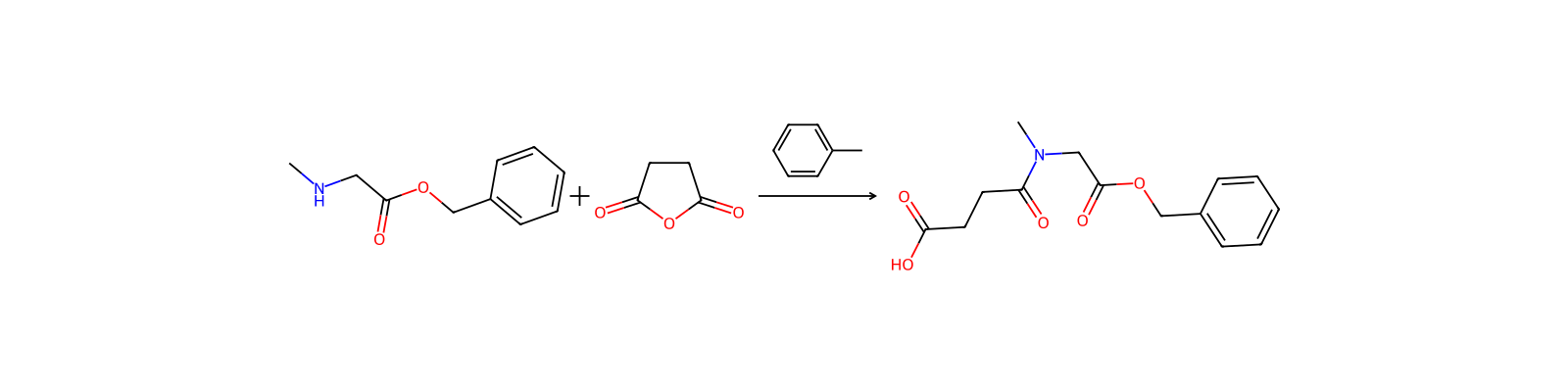
HRID 1267반응물로uspto-grants-1998_03
HRID 1501 반응식
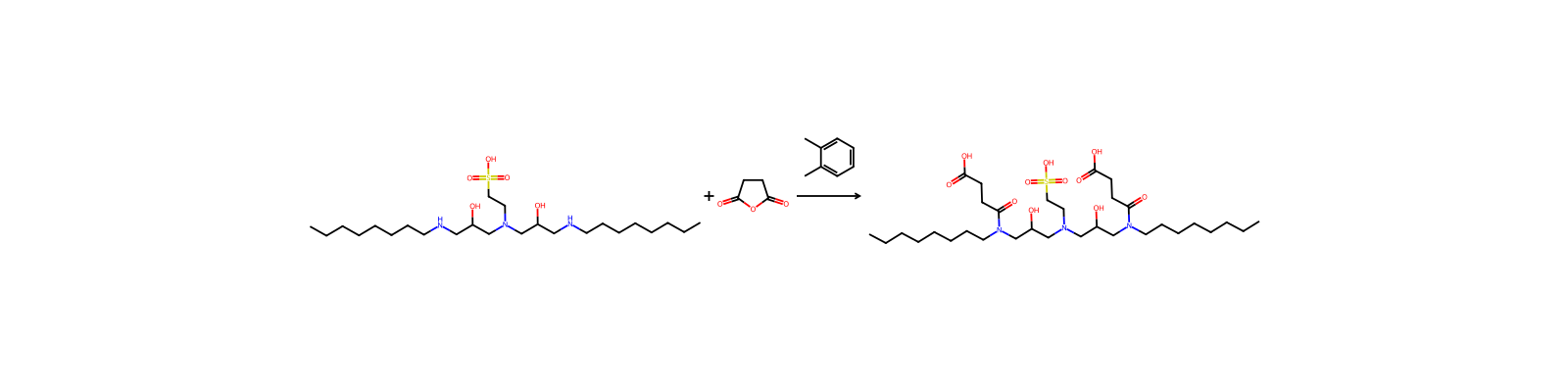
HRID 1501반응물로uspto-grants-1998_03
HRID 1568 반응식
HRID 1568반응물로uspto-grants-1998_03
HRID 1716 반응식
HRID 1716반응물로uspto-grants-1998_03
HRID 2073 반응식
HRID 2073반응물로uspto-grants-1998_03
HRID 2114 반응식
HRID 2114반응물로uspto-grants-1998_03
HRID 2240 반응식
HRID 2240반응물로uspto-grants-1998_03
HRID 2886 반응식
HRID 2886반응물로uspto-grants-1998_03
1 / 163 페이지

화합물 노트

불러오는 중…

이 페이지에서기본 정보개요이름 및 식별자물성안전 및 규제화학 및 산업관련 반응화합물 노트
더보기
새 노트새 반응견적 요청하기
Flash Point · 2건

157 °C

157 °C

Boiling Point · 4건

502 °F at 760 mmHg (NTP, 1992)

261 °C at 760 mm Hg

261 °C

261 °C @760 [mm Hg]

DecompositionWhen heated to decomposition it emits acrid smoke and irritating fumes.
Melting Point · 5건

247.3 °F (NTP, 1992)

119.6 °C

119 °C

119.6 °C

119.6 °C

물리화학적 성질

녹는점
118 · 118-120 °C (lit.)
끓는 점
261 °C · 261 °C (lit.)
밀도
1 · 1,572 g/cm3
증기 밀도
3.5 · 3.5 (vs air)
증기압
1 mm · 1 mm Hg ( 92 °C)
굴절률
1.4688 · 1.4688 (estimate)
인화점
157 °C · 157°C
저장 조건
30 °C · Store below +30°C.
용해도
62.9 g/l · 62.9g/l 가수분해
물리적 상태
고체
산도 계수 (pKa)
4.67 · 4.67[at 20 ℃]
색상
흰색에서 황백색까지
Specific Gravity
1.234 · 1.2340 (20℃)
수소이온지수(pH)
2.7 · 2.7 (10g/l, H2O)
냄새
Odorless
수용성
21 °C에서 · 21°C에서 <0.1g/100mL(분해)
Merck
14 · 14,8870
BRN
108441 · 108441
안정성
안정적인. 산화제, 강산, 강염기, 알코올, 아민과 호환되지 않습니다. 물이나 습기에 노출되지 않도록 하세요.
InChI
1S/C4H4O3/c5-3-1-2-4(6)7-3/h1-2H2
InChIKey
RINCXYDBBGOEEQ-UHFFFAOYSA-N
SMILES
O=C1CCC(=O)O1
LogP
2.44 at · 2.44 at 40℃
NIST
2 · 2,5-Furandione, dihydro-(108-30-5)
EPA
Succinic anhydride (108-30-5)
화학적 성질 · 2건

fine white crystalline solid

Succinic anhydride is an odourless, colourless needle-like or white crystalline solid natural product. Molecular formula C4H4O3, molecular weight 100.07 g/mol, relative density 1.503, melting point 237 °F. 239 °F at 5 mmHg, 239 °F at 198 °F and 1 mmHg. Soluble in chloroform, carbon tetrachloride, and ethanol; very slightly soluble in ether and water (insoluble in water). Moderately toxic and irritating, emits pungent and irritating fumes when heated to decomposition.

Reactive GroupAnhydrides
EC ClassificationSymbol: Xi; R: 36/37; S: (2)-25
Special ReportsDHHS/NTP; Toxicology & Carcinogenesis Studies of Succinic Anhydride in F344/N Rats and B6C3F1 Mice (Gavage Studies) Technical Report Series No. 373 (1990) NIH Publication No. 90-2828
Reactivity Profile · 1건

SUCCINIC ANHYDRIDE reacts exothermically with water. Reactions are usually slow, but might become violent if local heating accelerates their rate. Acids accelerate the reaction with water. Incompatible with acids, strong oxidizing agents, alcohols, amines, and bases.

Chemical DangersDecomposes on heating. This produces irritating fumes.
Air and Water ReactionsReacts slowly with water. Insoluble in water.
Other Hazardous ReactionsEvaporation at 20 °C is negligible; a harmful concentration of airborne particles can, however, be reached quickly when dispersed.

안전 및 보호

Fire Fighting · 2건

Fires involving this compound should be controlled using a Halon, carbon dioxide, or dry chemical extinguisher. A water spray may also be used. (NTP, 1992)

Use water spray, powder, alcohol-resistant foam, carbon dioxide.

First Aid Measures · 4건

Fresh air, rest.

Rinse and then wash skin with water and soap.

First rinse with plenty of water for several minutes (remove contact lenses if easily possible), then refer for medical attention.

Rinse mouth. Give one or two glasses of water to drink.

First Aid · 1건

EYES: First check the victim for contact lenses and remove if present. Flush victim's eyes with water or normal saline solution for 20 to 30 minutes while simultaneously calling a hospital or poison control center. Do not put any ointments, oils, or medication in the victim's eyes without specific instructions from a physician. IMMEDIATELY transport the victim after flushing eyes to a hospital even if no symptoms (such as redness or irritation) develop.

Cleanup MethodsRemove all ignition sources. Sweep spilled substance into covered containers; if appropriate, moisten first to prevent dusting.
Nonfire Spill Response · 1건

SMALL SPILLS AND LEAKAGE: If a spill of this chemical occurs, FIRST REMOVE ALL SOURCES OF IGNITION, then you should dampen the solid spill material with acetone and transfer the dampened material to a suitable container. Use absorbent paper dampened with acetone to pick up any remaining material. Seal your contaminated clothing and the absorbent paper in a vapor-tight plastic bag for eventual disposal. Solvent wash all contaminated surfaces with acetone followed by washing with a soap and water solution. Do not reenter the contaminated area until the Safety Officer (or other responsible person) has verified that the area has been properly cleaned.

Disposal Methods · 1건

SRP: The most favorable course of action is to use an alternative chemical product with less inherent propensity for occupational exposure or environmental contamination. Recycle any unused portion of the material for its approved use or return it to the manufacturer or supplier. Ultimate disposal of the chemical must consider: the material's impact on air quality; potential migration in soil or water; effects on animal, aquatic, and plant life; and conformance with environmental and public health regulations.

Spillage DisposalPersonal protection: particulate filter respirator adapted to the airborne concentration of the substance. Sweep spilled substance into covered containers. If appropriate, moisten first to prevent dusting.
Preventive Measures · 3건

Prevent dispersion of dust!

Inhalation /exposure can be prevented by/ local exhaust or breathing protection. Skin /exposure can be prevented by/ protective gloves. Eye /exposure can be prevented by/ safety goggles, or eye protection in combination with breathing protection if powder. /from table/

Do not eat, drink, or smoke during work. /from table/

Eye PreventionWear safety goggles or eye protection in combination with breathing protection if powder.
Fire PreventionNO open flames.
Inhalation RiskA harmful concentration of airborne particles can be reached quickly when dispersed, especially if powdered.
Skin PreventionProtective gloves.

독성 정보

Environmental Fate · 3건

TERRESTRIAL FATE: The half-life for the hydrolysis of succinic anhydride is 4.3 minutes(SRC), based on a rate constant of 0.0027 1/sec at 25 °C(1). The major fate of succinic anhydride in soil is expected to be hydrolysis (SRC). Succinic anhydride is not expected to volatilize from dry soil surfaces(SRC) based upon a vapor pressure of 1.5X10⁻³ mm Hg(2).

AQUATIC FATE: The half-life for the hydrolysis of succinic anhydride is 4.3 minutes(SRC), based on a rate constant of 0.0027 1/sec at 25 °C(1). The major fate of succinic anhydride in aquatic environments is expected to be hydrolysis(SRC). Bioconcentration of succinic anhydride in aquatic organisms is unlikely due its rapid hydrolysis(SRC). Approximately 78% of the succinic anhydride added to activated sewage sludge was biodegraded within five days(2,3); however, hydrolysis is expected to be the principal fate of succinic anhydride in water(SRC).

ATMOSPHERIC FATE: According to a model of gas/particle partitioning of semivolatile organic compounds in the atmosphere(1), succinic anhydride, which has a vapor pressure of 1.5X10⁻³ mm Hg at 25 °C(2) is expected to exist solely as a vapor in the ambient atmosphere. Vapor-phase succinic anhydride is degraded in the atmosphere by reaction with photochemically-produced hydroxyl radicals(SRC); the half-life for this reaction in air is estimated to be 70 days (SRC), calculated from its rate constant of 4.56X10⁻¹³ cu cm/molecule-sec at 25 °C(SRC) that was derived using a structure estimation method(3).

Adverse EffectsDermatotoxin - Skin burns.
Exposure RoutesThe substance can be absorbed into the body by inhalation and by ingestion.
Signs and Symptoms · 3건

Cough. Shortness of breath. Sore throat.

Redness. Pain.

Diarrhoea. Nausea. Vomiting.

Ongoing Test Status · 1건

The following link will take the user to the National Toxicology Program (NTP) Test Agent Search Results page, which tabulates all of the "Standard Toxicology & Carcinogenesis Studies", "Developmental Studies", and "Genetic Toxicity Studies" performed with this chemical. Clicking on the "Testing Status" link will take the user to the status (i.e., in review, in progress, in preparation, on test, completed, etc.) and results of all the studies that the NTP has done on this chemical. [http://ntp-apps.niehs.nih.gov/ntp_tox/index.cfm?fuseaction=ntpsearch.searchresults&searchterm=108-30-5]

Soil Adsorption/MobilityAdsorption of succinic anhydride in soil is unlikely due its rapid hydrolysis(1).
Human Toxicity Excerpts · 2건

/SIGNS AND SYMPTOMS/ The substance irritates the eyes, the skin and the respiratory tract.

/SIGNS AND SYMPTOMS/ Inhalation /may cause/ cough, shortness of breath, sore throat. Skin or eye /exposure may cause/ redness, pain. Ingestion /may cause/ diarrhea, nausea, vomiting. /from table/

Artificial Pollution Sources · 1건

Succinic anhydride's production and use as a chemical reactant and intermediate, in the manufacture of pharmaceuticals and esters, as a hardener for resin(1), and as an acidulant in foods(2) may result in its release to the environment through various waste streams(SRC).

Environmental Biodegradation · 1건

AEROBIC: Approximately 78% of the succinic anhydride added to activated sewage sludge at 50 ug/L was biodegraded within five days at 25 °C (1,2); however, hydrolysis is expected to be the principal fate of succinic anhydride in water and these results are probably for succinic acid, the hydrolysis product(SRC).

Carcinogen Classification · 6건

Succinic anhydride

Group 3: Not classifiable as to its carcinogenicity to humans

Volume 15: (1977) Some Fumigants, the Herbicides 2,4-D and 2,4,5-T, Chlorinated Dibenzodioxins and Miscellaneous Industrial Chemicals

1987

1987

Succinic Anhydride

Environmental Bioconcentration · 1건

Bioconcentration of succinic anhydride in aquatic organisms is unlikely due its rapid hydrolysis(1). Experimental bioconcentration factors (chemical concentration in fish/chemical concentration in water) of succinic anhydride in fish (Golden ide) were less than 10(2,3).

Volatilization from Water/SoilHydrolysis is expected to be the predominate fate of succinic anhydride in moist soil and water(1). Succinic anhydride is not expected to volatilize from dry soil surfaces(SRC) based upon a vapor pressure of 1.5X10⁻³ mm Hg(2).

안전 데이터

wgk
1
tsca
TSCA listed
rtecs
WN0875000
ridadr
UN 3261 8 / PGII
독성
LD50 orally in Rabbit: 1510 mg/kg
HS 번호
29171990
risk_code
36/37-22
hazard_code
Xi,Xn
safety_code
25-46
위험 등급
8
기존화학 물질
KE-10664
F 고인화성물질
21
자연 발화 온도
480 °C
Hazard Classifications
Acute Tox. 4 OralEye Dam. 1Resp. Sens. 1Skin Corr. 1BSkin Sens. 1
스토리지 클래스
8A - Combustible corrosive hazardous materials
유해 물질 데이터
108-30-5(Hazardous Substances Data)
Industry UsesCorrosion inhibitor
Methods of Manufacturing · 4건

Hydrogenation of maleic anhydride or fumaric acid; heating of succinic acid at elevated temperature and pressure.

...By treating succinic acid with diketene, succinyl chloride or acetic anhydride, or by reacting diethyl ester with boron chloride.

... Warming succinic acid with acetic anhydride, acetyl chloride, or phosphorus oxychloride.

Succinic anhydride is manufactured by catalytic hydrogenation of maleic anhydride. In the most widely used commercial process this reaction is performed in the liquid phase, at temperatures of 120-180 °C and at moderate pressures, in the range of 500-4000 kPa (72-580 psi). Catalysts mentioned in the patent literature include nickel, Raney nickel, palladium on different carriers, and palladium complexes.

Formulations/Preparations · 3건

Grade: distilled.

...Available in US as commercial grade containing at least 99.5% of pure chemical, with maximum of 0.5% unsaturated compound...0.15% chlorides, 0.04% sulfates...and 20 mg/kg heavy metals.

Flake

General Manufacturing Information · 4건

Plastics Material and Resin Manufacturing

2,5-Furandione, dihydro-: ACTIVE

Anhydrous dentifrices containing an acid anhydride to maintain sweetener stability reported. Toothpaste containing 0.50 parts succinic anhydride is an example.

Succinic anhydride is...very useful dehydrating agent for removal of small amounts of moisture in...dry food mixtures which are later to be admixed with water. ...It is capable of taking up 20% of its weight of water, and the acid formed is desirable flavoring agent in many foods.

응용 분야 · 5건

용도이 제품은 접착력과 내수성을 향상시키기 위해 알키드 수지와 불포화 폴리 에스테르 수지의 개질제로 사용할 수 있습니다. 의학 용 원료로도 쓰인다. 이온 교환 수지 용 가교제. 1. 제약 산업은 진통제, 이뇨제, 진통제, 해열제 및 항염증제, 피임약, 항암제 및 기타 의약품 제조에 사용됩니다. 2. 유기 산업은 유기 화합물의 합성을위한 중간체로 사용된다. 3. 합성 수지 산업은 알키드 수지 및 이온 교환 수지를 제조하는 데 사용됩니다. 4. 염료 산업은 가수 분해에 의해 합성 염료의 원료로 사용될 수 있습니다. 5. 플라스틱 산업은 유리 섬유 강화 플라스틱 제조에 사용됩니다. 6. 살충제 산업은 식물 생장 조절자를 만드는 데 사용됩니다. 7. 분석 화학은 알칼리 방법의 적정 표준으로 사용됩니다.

개요Succinic anhydride, also called di hydro - 2,5- furandione , is an organic compound with the molecular formula C4H4O3.This colorless solid is the acid anhydride of succinic acid.

용도Succinic Anhydride is an acidulant that hydrolyzes very slowly to succinic acid in water. it has thermal stability and a low melting point of 118°c which permits it to be used in products at compara- tively low temperatures. it is used as a leavening acidulant for bak- ing powder.

일반 설명Colorless needles or white crystalline solid. Melting point 237°F. Sublimes at 239°F at 5 mm Hg pressure; and at 198°F and 1 mm Hg pressure. Moderately toxic and an irritant.

일반 설명Succinic anhydride is a cyclic anhydride of succinic acid with a five-membered ring. It is widely used in the manufacture of polymeric materials, pharmaceuticals, agrochemicals, dyes, surface-active agents, and organic flame-retardant materials. It also finds application as a cross-linking agent in ion-exchange membranes and a curing agent for epoxy resins.

제조 방법 · 2건

생산 방법The compound is produced from succinic anhydride and hydrogen peroxide . This material must be stabilized by using a dehydrating agent such as disodium sulfate or magnesium sulfate.

A solution of succinic acid (500 mg, 42 mmol) and triethylamine (1.23 mL, 42 mmol) in anhydrous THF (120 mL) was allowed to react with triphosgene (42 mg, 7.0 mmol) at ice-water temperature for 10 min. The reaction mixture was subsequently stirred for a further 15 min at room temperature. The solution was then filtered, and the filtrate was concentrated to dryness. The residue was crystallized from ethyl acetate to afford the desired product as white crystals (370 mg, 85%).

상·하류 제품 정보

상류 원료

Molybdate말레산 무수물포스포러스옥시클로라이드테트라히드로나프탈렌1.4-다이옥세인Dehydrolyzing agent수소숙신산산화알루미늄

하류 제품

에틸숙신일클로라이드N-히드록시석신이미드4-(2-Thienyl)butyric acid1-피렌부틸산6-(3,5-다이클로로-4-메틸페닐)-3-(2H)-피리다지논3-(4-Oxo-3,5,6,7-tetrahydro-4H-cyclopenta[4,5]thieno[2,3-d]pyrimidin-2-yl)propanoic acidErythromycin ethylsuccinate3-(4-아세틸아미노벤조일)프로판산3-(4-Methoxybenzoyl)propionic acidFenbufenArtesunate4-옥소-4-(2-티에닐)부티르산숙시남산3-Benzoylpropionic acid4-(4-Methoxyphenyl)butyric acid다이에틸세바케이트3-(4-Chlorobenzoyl)propionic acid다미노지드메틸4-(4-(BIS(2-HYDROXYETHYL)AMINO)페닐)부티레이트Trepibutone감마-클로로부티로페논(4S)-Hydroxy-3-methyl-2-(2-propenyl)-2-cyclopentene-1-oneMono-methyl succinate이마조단이타코닐산3-(4-플루오로벤조일)프로피오닉 산4-(4-Aminophenyl)butyric acid뷰티로락톤메틸4-(4-(BIS(2-클로로에틸)아미노)페닐)부티레이트