

기본 정보
- 표준 SMILES
C1=COCCC1- InChIKey
BUDQDWGNQVEFAC-UHFFFAOYSA-N- 분자식
- C5H8O
- 평균 분자량
- 84.12 g/mol
- 단동위원소 질량
- 84.05751488
개요
Dihydro-2h-pyran appears as a clear colorless liquid with an ethereal odor. Less dense than water. Vapors heavier than air.
이름 및 식별자
- 우선 이름
- 3,4-dihydro-2H-pyran
- IUPAC
- 3,4-dihydro-2H-pyran
- 현지명
- 3,4-다이하이드로피란
- 영어명
- 3,4-Dihydro-2H-pyran
- 분자식
- C5H8O
- 분자량
- 84.12
이름 및 동의어
3,4-Dihydro-2H-pyran110-87-2DIHYDROPYRAN3,4-Dihydropyran2,3-Dihydro-4H-pyran2H-3,4-Dihydropyran5,6-Dihydro-4H-pyran2H-Pyran, 3,4-dihydro-delta2-DihydropyranPyran, dihydro-DTXSID6041426T6V9N71IHX
이름 더 보기
2,3-다이하이드로피란2,3-디하이드로피란2,3-디히드로피란3,4-다이하이드로피란DHP3,4-Dihydro-2H-pyraneDIHYDROPYRANE3,4-Dihydro-2-pyran3,4-dihydro-2h-pyra
NSC-57860NSC-73472DTXCID4021426RefChem:910852,3-DIHYDRO-GAMMA-PYRAN203-810-4Dihydro-2H-pyran2,3-Dihydropyran
데이터베이스 식별자
- CAS
110-87-2、25512-65-6、3174-74-1- PubChem CID
- 8080
- DTXSID
DTXSID6041426- ChEMBL
CHEMBL3184439- UNII
- T6V9N71IHX
- EC Number
- 203-810-4
- Nikkaji
- J43.463I
물성
구조 계산 물성
- XLogP
- 0.7
- 극성 표면적
- 9.2 Ų
- 수소 결합 공여자 수
- 0
- 수소 결합 수용자 수
- 1
- 회전 가능 결합 수
- 0
- 무거운 원자 수
- 6
- 형식 전하
- 0
- 복잡도
- 57
실험 및 물리화학적 성질
Chemical Classes
Other Classes -> Ethers, Other
Flammable agents - 3rd degree
SpringerMaterials PropertiesCoriolis coupling
LogP0.69
Density0.922 @ 19°C
Flash Point0 °F (NFPA, 2010)
Physical Description
Dihydro-2h-pyran appears as a clear colorless liquid with an ethereal odor. Less dense than water. Vapors heavier than air.
Liquid
Clear colorless liquid with an ethereal odor; [CAMEO] Unpleasant odor; [Alfa Aesar MSDS]
물리화학적 성질
- 녹는점
- -70 °C · -70 °C (lit.)
- 끓는 점
- 86 °C · 86 °C (lit.)
- 밀도
- 0.922 g/mL · 0.922 g/mL at 25 °C (lit.)
- 증기 밀도
- 2.9 · 2.9 (vs air)
- 증기압
- 77.8 hPa · 77.8 hPa (20 °C)
- 굴절률
- 20 · n20/D 1.440(lit.)
- 인화점
- 4 °F · 4 °F
- 저장 조건
- 30 °C · Store below +30°C.
- 용해도
- 7.7 g/L · 7.7g/L
- 물리적 상태
- 액체
- 색상
- 무색~황색으로 투명함
- 수소이온지수(pH)
- 7 · 7 (5g/l, H2O, 20℃)
- 폭발한계
- 1.1 · 1.1-13.8%(V)
- 수용성
- 20 g/L · 20g/L(20℃)
- BRN
- 103493 · 103493
- 안정성
- 휘발성 물질
- InChI
- 1S/C5H8O/c1-2-4-6-5-3-1/h2,4H,1,3,5H2
- InChIKey
- BUDQDWGNQVEFAC-UHFFFAOYSA-N
- SMILES
- C1COC=CC1
- LogP
- 0.69 · 0.690
- NIST
- 2 H-Pyran, · 2H-Pyran, 3,4-dihydro-(110-87-2)
- EPA
- 2 H-Pyran, · 2H-Pyran, 3,4-dihydro- (110-87-2)
화학적 성질
colorless to light yellow liqui
안전 및 규제
GHS 분류
GHS Classification
Danger
H225 (100%): Highly Flammable liquid and vapor [Danger Flammable liquids]
P210, P233, P240, P241, P242, P243, P261, P264, P264+P265, P272, P280, P302+P352, P303+P361+P353, P305+P351+P338, P321, P332+P317, P333+P317, P337+P317, P362+P364, P370+P378, P403+P235, and P501 (click each P-code to see the statement)
Aggregated GHS information provided per 180 reports by companies from 12 notifications to the ECHA C&L Inventory. Each notification may be associated with multiple companies.
Warning
H317: May cause an allergic skin reaction [Warning Sensitization, Skin]
유해성 정보
Regulatory Information
Chemical: 2H-Pyran, 3,4-dihydro-
2H-Pyran, 3,4-dihydro- is listed on the EPA's Chemical Data Reporting (CDR) system. Manufacturers and importers of 2H-Pyran, 3,4-dihydro- are required to report information about their production and use of this chemical to the EPA under the Toxic Substances Control Act (TSCA). (40 eCFR Part 711)
Status: Active Update: 29-11-2022 https://echa.europa.eu/registration-dossier/-/registered-dossier/12042
2H-Pyran, 3,4-dihydro-: HSNO Approval: HSR001129 Approved with controls
The New Jersey Worker and Community Right to Know Act requires public and private employers to provide information about hazardous substances at their workplaces. (N.J.S.A. 34:5A-1 et. seq.)
DOT LabelFlammable Liquid
Fire Hazards
Excerpt from ERG Guide 127 [Flammable Liquids (Water-Miscible)]:
· HIGHLY FLAMMABLE: Will be easily ignited by heat, sparks or flames.
Health Hazards
Excerpt from ERG Guide 127 [Flammable Liquids (Water-Miscible)]:
· Inhalation or contact with material may irritate or burn skin and eyes.
Hazards SummaryA skin and strong eye irritant; [Alfa Aesar MSDS]
DOT ID and Guide2376 127
Reactive GroupEthers
Reactivity AlertsHighly Flammable
Reactivity Profile
Ethers, such as DIHYDRO-2H-PYRAN, can act as bases. They form salts with strong acids and addition complexes with Lewis acids. The complex between diethyl ether and boron trifluoride is an example. Ethers may react violently with strong oxidizing agents. In other reactions, which typically involve the breaking of the carbon-oxygen bond, ethers are relatively inert.
DOT Hazard Classification
2,3-Dihydropyran
UN2376
Class 3 Flammable and combustible liquid (49 eCFR § 173.120)
PG II: the degree of danger presented by the material is medium
Air and Water ReactionsHighly flammable. Slightly soluble in water.
Hazard Classes and Categories
Flam. Liq. 2 (100%)
Flammable liquids - Category 2
Skin sensitization - Category 1B
Flammable agents - 3rd degree, Reactive agents - 1st degree
안전 및 보호
Fire FightingExcerpt from ERG Guide 127 [Flammable Liquids (Water-Miscible)]:
Accidental Release Measures
· CALL 911. Then call emergency response telephone number on shipping paper. If shipping paper not available or no answer, refer to appropriate telephone number listed on the inside back cover.
· ELIMINATE all ignition sources (no smoking, flares, sparks or flames) from immediate area.
First Aid
Excerpt from ERG Guide 127 [Flammable Liquids (Water-Miscible)]:
General First Aid:
Exposure Control and Personal Protection· Wear positive pressure self-contained breathing apparatus (SCBA).
Nonfire Spill ResponseExcerpt from ERG Guide 127 [Flammable Liquids (Water-Miscible)]:
Isolation and Evacuation
Excerpt from ERG Guide 127 [Flammable Liquids (Water-Miscible)]:
Immediate precautionary measure
Protective Action Criteria (PAC)
14 [mg/m3]
150 [mg/m3]
910 [mg/m3]
Personal Protective Equipment (PPE)Excerpt from ERG Guide 127 [Flammable Liquids (Water-Miscible)]:
Emergency Response Planning GuidelinesCAUTION: The majority of these products have a very low flash point. Use of water spray when fighting fire may be inefficient.
독성 정보
Toxicity DataLC50 (rat) > 10,700 mg/m3/4hr
안전 데이터
- wgk
- 3
- tsca
- TSCA listed
- rtecs
- UP7700000
- ridadr
- UN 2376
- 독성
- LD50 orally in Rabbit: > 4000 mg/kg
- HS 번호
- 29329995
- risk_code
- 11-36/37/38-36/38-19
- hazard_code
- F,Xi
- safety_code
- 16-26-36-37/39-33-7/9
- 포장분류
- II
- 위험 등급
- 3
- 기존화학 물질
- 2012-3-5381
- 위험 참고 사항
- Highly Flammable/Irritant
- 자연 발화 온도
- 240 °C
- Hazard Classifications
- Aquatic Chronic 3Eye Irrit. 2Flam. Liq. 2Skin Irrit. 2Skin Sens. 1B
- 스토리지 클래스
- 3 - Flammable liquids
화학 및 산업
용도 및 제조
UsesPermitted for use as an inert ingredient in non-food pesticide products; [EPA] Used in organic syntheses; [REPROTOX]
U.S. Production2023: 75,000 - <500,000 lb
Industry UsesIntermediate
General Manufacturing Information
All Other Basic Organic Chemical Manufacturing
2H-Pyran, 3,4-dihydro-: ACTIVE
응용 분야
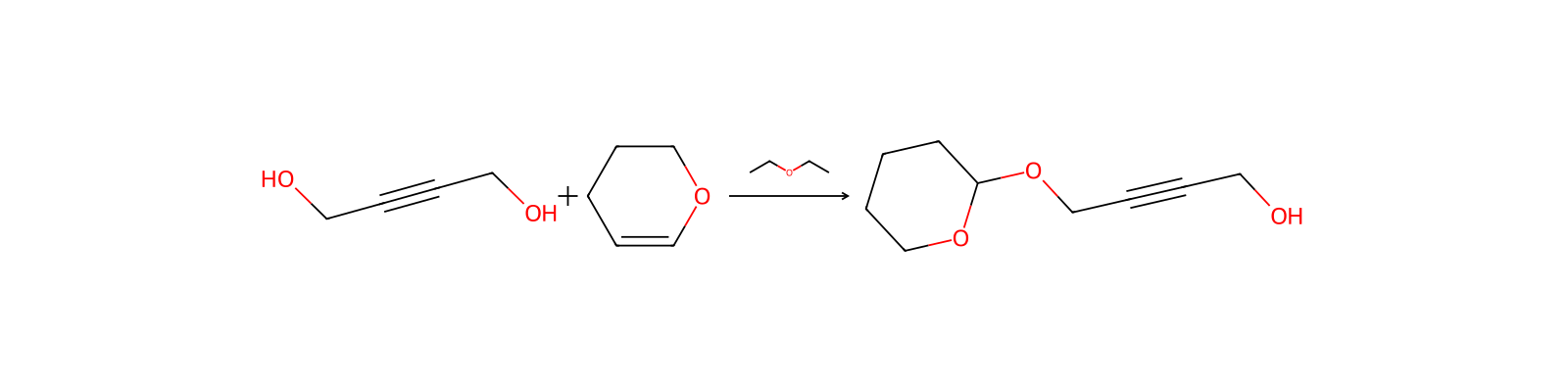
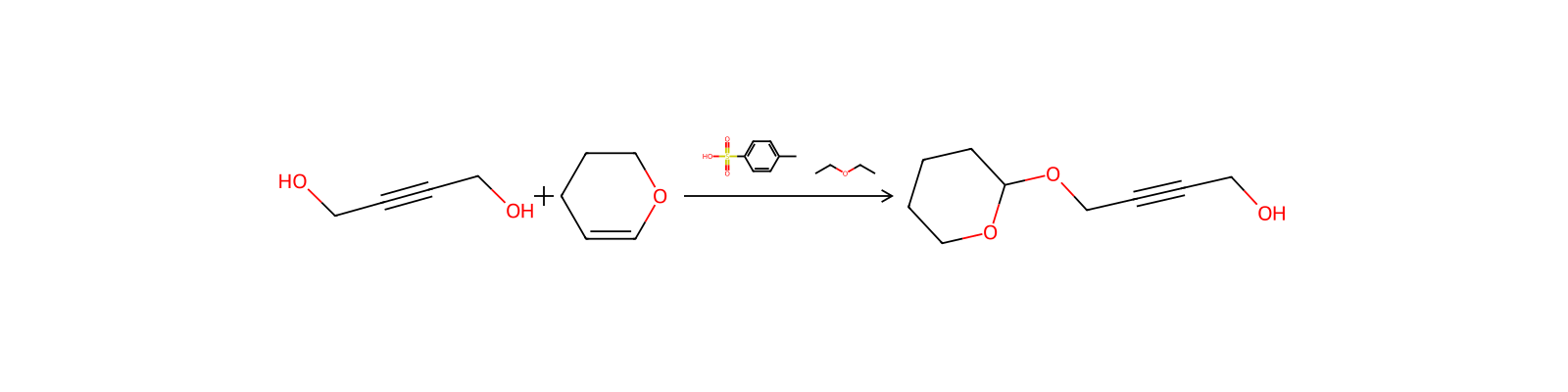
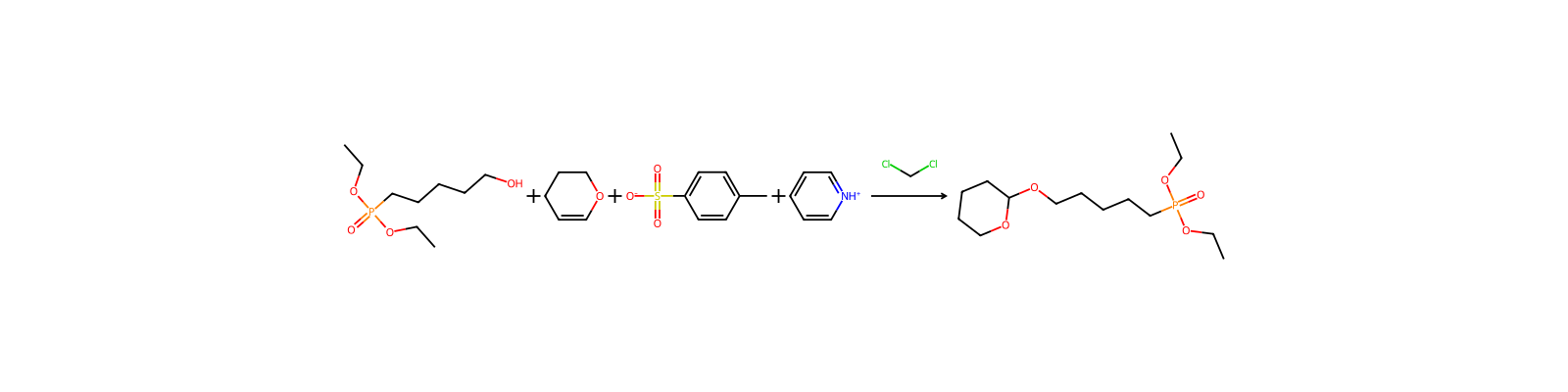
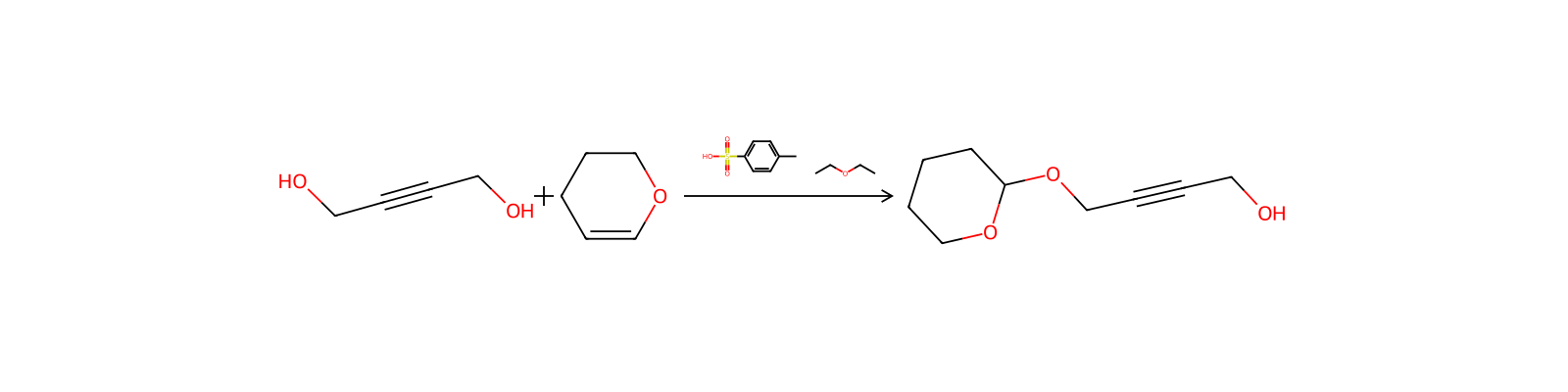
용도Widely used hydroxyl-protecting reagent3,4-Dihydro-2H-pyran is used as a hydroxyl-protecting reagent in organic synthesis. It acts as an intermediate in synthetic chemistry. It is used to protect various reactive functional groups. It is involved in the polymerization reaction either alone or with unsaturated compound and finds application in polymer industries. Further, it is employed in the preparation of bicyclic compounds of epoxide-fused, halo compounds and allenic alcohols.
상·하류 제품 정보
상류 원료
하류 제품
공급사50 곳
国药集团化学试剂有限公司86-21-63210123 · [email protected]
梯希爱(上海)化成工业发展有限公司021-67121386 · [email protected]
衢州润东化工有限公司0570-8789886 18892685668 · [email protected]
上海阿拉丁生化科技股份有限公司400-6206333 13167063860 · [email protected]
爱斯特(成都)生物制药股份有限公司+86-28-85122536 85324413 · [email protected]
张家港博迈化学有限公司15601563028
北京安司莫森技术有限公司010-82954736 13391601435 · [email protected]
科瑞迪化学400-821-5857 021-64326257 · [email protected]
Syntechem Co.,Ltd[email protected]
上海迈瑞尔生化科技有限公司4006356688 18621169109 · [email protected]
阿法埃莎(中国)化学有限公司400-6106006 · [email protected]
上海德默医药科技有限公司400-021-7337 2355568890 · [email protected]
安耐吉化学&3A(安徽泽升科技股份有限公司)400-0056266 · [email protected]
上海瀚鸿科技股份有限公司021-54306202 13764082696 · [email protected]
上海景颜化工科技有限公司13817811078 · [email protected]
嘉兴市艾森化工有限公司0573-85285100 18627885956 · [email protected]
上海隆盛化工有限公司58099637 13585536065 · [email protected]
上海攀鸿化工科技有限公司021-56491756 13512199871 · [email protected]
孝感深远化工有限公司15527621225; 15527621225 · [email protected]
山东西亚化学有限公司13355009207 13355009207 · [email protected]
玛雅试剂+86 (573) 82222445 (0)18006601000 452520369 · [email protected]
四川库利南科技有限公司400-1166-196 18981987031 · [email protected]
上海耐士化工科技有限公司400-188-0725 +86 21 34310725 13611771617
天津希恩思生化科技有限公司400 638 7771 · [email protected]
武汉科美沃化工有限公司027-85736489 · [email protected]
南京维奥化工有限公司Please Send Email 18652950785 · [email protected]
斯百全化学(上海)有限公司021-021-021-67601398-809-809-809 15221380277 · [email protected]
北京泰亚杰科技有限公司021-33690831-8001 13552411790;18616022633 · [email protected]
艾科试剂4008-755-333 18080918076 · [email protected]
上海思域化工科技有限公司86-21-34053660 · [email protected]
赛默飞世尔科技(中国)有限公司800-810-5118 · [email protected]
北京伊诺凯科技有限公司400-810-7969 010-59572699 · [email protected]
张家港保税区凯利特化工有限公司18606289633 15862625988 · [email protected]
临沂福德精细化工有限公司0539-2361189 18653979428
南京诺利斯医药科技有限公司13901585132 · [email protected]
江苏艾康生物医药研发有限公司025-66113011 13913916777 · [email protected]
TCI AMERICA800-4238616 · [email protected]
TOKYO CHEMICAL INDUSTRY CO., LTD.03-36680489 · [email protected]
TCI Europe320-37350700 · [email protected]
卡迪亚医药科技有限公司0371-86615086 18203638366 0371-86159066 13526786601
上海贤鼎生物科技有限公司4009209199 · [email protected]
深圳振强药物研发有限公司0755-66853366 13670046396 · [email protected]
深圳康特腾科技有限公司86-0755-86635001 · [email protected]
越林试剂021-62960152 · [email protected]
无锡中坤生化科技有限公司+86 0510-85629785
上海泽信化工科技有限公司021-60136491 15901897992
Chempioneer Limited+86-398-3831668 · [email protected]
北京环宇世纪化学科技有限公司hysj_bj.com
湖北鑫源顺医药化工有限公司13971561712, 13995564702, 027-50664929 · [email protected]
上海湄水化工科技有限公司021-60549325 18616193163
관련 반응
1,906건



연결된 노트
불러오는 중…