홈MCP워크벤치Skills
홈워크벤치알림마이페이지
llms.txt · MCP 가이드개인정보처리방침 · 이용약관 · 지원v1.8.0
  1. 홈
  2. /화합물

다이에틸렌트라이아민

Diethylenetriamine

HCID 8111
새 노트새 반응견적 요청하기
인쇄 미리보기

데이터를 보충하는 중입니다. 잠시 후 페이지를 새로 고치면 최신 내용을 볼 수 있습니다

기본 정보개요이름 및 식별자물성안전 및 규제화학 및 산업관련 반응화합물 노트
부분 구조 검색유사 구조 찾기

기본 정보

CAS
111-40-0
표준 SMILES
NCCNCCN
InChIKey
RPNUMPOLZDHAAY-UHFFFAOYSA-N
분자식
C4H13N3
평균 분자량
103.17 g/mol
단동위원소 질량
103.11094742

개요

Diethylenetriamine appears as a yellow liquid with an ammonia-like odor. Less dense than water. Corrosive to metals and tissue. Vapors heavier than air. Burns, although possibly difficult to igntie. Toxic oxides of nitrogen produced during combustion. Used as a solvent for plastics and dyes and in chemical synthesis.

이름 및 식별자

우선 이름
Diethylenetriamine
IUPAC
N'-(2-aminoethyl)ethane-1,2-diamine
현지명
다이에틸렌트라이아민
영어명
Diethylenetriamine
분자식
C4H13N3
분자량
103.17

이름 및 동의어

DIETHYLENETRIAMINE111-40-0Bis(2-aminoethyl)amine2,2'-Diaminodiethylamine1,4,7-TriazaheptaneDETADiethylene triamineBarsamide 115Epicure TAncamine DETA3-Azapentane-1,5-diamineAminoethylethandiamine
이름 더 보기
1,4,7-트리아자헵탄2,2-디아미노디에틸아민2,2-이미노비스(에탄아민)N-(2-아미노에틸)-1,2-에탄디아민N-(2-아미노에틸)에틸렌디아민비스(2-아미노에틸)아민비스(베타-아미노에틸)아민1,2-에탄디아민,N-(2-아미노에틸)-다이에틸렌트라이아민디에틸렌트리아민디에틸렌트리아민(DETA)디에틸렌트리아민1,4,7-트라이아자헵탄2,2'-다이아미노다이에틸아민2,2'-다이아미노에틸아민2,2'-이미노다이에틸아민2,2'-이미노비스(에탄아민)3-아자-1,5-펜탄다이아민ChS-P 1 DETAN-(2-아미노에틸)에틸렌다이아민N1-(2-aMinoethyl)ethane-1,2-diaMineDIENDIETHYLENTRIAMINEDETA DiethylenetriamineDiethylenetriamindiethylenetriamine(deta)
N,N-Bis(2-aminoethyl)amine1,5-Diamino-3-azapentaneImino-bis-ethylamine1,2-Ethanediamine, N-(2-aminoethyl)-ChS-P 12,2'-Iminobis(ethanamine)N-(2-Aminoethyl)-1,2-ethanediamineBis(beta-aminoethyl)amine

데이터베이스 식별자

CAS
111-40-0、75037-24-0
PubChem CID
8111
DTXSID
DTXSID2025050
ChEMBL
CHEMBL303429
ChEBI
CHEBI:30629
UNII
03K6SX4V2J
EC Number
203-865-4、616-182-5
Nikkaji
J5.108J

물성

구조 계산 물성보충 중

XLogP
-2.1
극성 표면적
64.1 Ų
수소 결합 공여자 수
3
수소 결합 수용자 수
3
회전 가능 결합 수
4
무거운 원자 수
7
형식 전하
0
복잡도
26.1

실험 및 물리화학적 성질

Chemical Classes · 2건

Nitrogen Compounds -> Amines, Aliphatic

Corrosives

pHSTRONGLY ALKALINE
SpringerMaterials Properties15N nuclear magnetic resonance spectrum
LogP · 2건

-1.3

-1.3

Odor · 2건

AMMONIACAL ODOR

... Strong, ammonia-like odor ...

Food AdditivesPROCESSING AID -> FDA Substance added to food
Density · 6건

0.954 at 68 °F (USCG, 1999) - Less dense than water; will float

0.9586 @ 20 °C/20 °C

Relative density (water = 1): 0.96

0.96

0.9586 @ 20°C

0.96

Viscosity0.0714 POISE @ 20 °C
Color/Form · 3건

YELLOW LIQUID

Colorless liquid

Colorless to yellow liquid ... [Note: Hygroscopic (i.e., absorbs moisture from the air)].

Solubility

안전 및 규제

안전 정보는 참고용이며, 공급업체의 물질안전보건자료(SDS), 관련 법규 및 전문가 평가를 대체하지 않습니다.

GHS 분류

GHS Classification · 6건

Danger

H302: Harmful if swallowed [Warning Acute toxicity, oral]

P260, P261, P264, P270, P272, P280, P301+P317, P301+P330+P331, P302+P352, P302+P361+P354, P304+P340, P305+P354+P338, P316, P317, P321, P330, P333+P317, P362+P364, P363, P405, and P501 (click each P-code to see the statement)

This chemical does not meet GHS hazard criteria for < 0.1% (2 of 3716) of reports.

Danger

H302 (> 99.9%): Harmful if swallowed [Warning Acute toxicity, oral]

유해성 정보

Regulatory Information · 5건

Chemical: 1,2-Ethanediamine, N-(2-aminoethyl)-

1,2-Ethanediamine, N1-(2-aminoethyl)- is listed on the EPA's Chemical Data Reporting (CDR) system. Manufacturers and importers of 1,2-Ethanediamine, N1-(2-aminoethyl)- are required to report information about their production and use of this chemical to the EPA under the Toxic Substances Control Act (TSCA). (40 eCFR Part 711)

Status: Active Update: 14-04-2023 https://echa.europa.eu/registration-dossier/-/registered-dossier/15883

Diethylene triamine: HSNO Approval: HSR002966 Approved with controls

The New Jersey Worker and Community Right to Know Act requires public and private employers to provide information about hazardous substances at their workplaces. (N.J.S.A. 34:5A-1 et. seq.)

Other Safety InformationIMAP assessments - 1,2-Ethanediamine, N-(2-aminoethyl)-: Environment tier I assessment
DOT LabelCorrosive
Fire Hazards · 3건

Special Hazards of Combustion Products: Irritating vapors are generated when heated. (USCG, 1999)

· Non-combustible, substance itself does not burn but may decompose upon heating to produce corrosive and/or toxic fumes.

Combustible. Gives off irritating or toxic fumes (or gases) in a fire. Above 97 °C explosive vapour/air mixtures may be formed.

화학 및 산업

약리 정보

Mechanism of Action... The mechanism of action /for pulmonary or dermal sensitization/ is probably a cross-linking of proteins with bifunctional amine groups.
MeSH Pharmacological Classification · 1건

A diverse group of agents, with unique chemical structures and biochemical requirements, which generate NITRIC OXIDE. These compounds have been used in the treatment of cardiovascular diseases and the management of acute myocardial infarction, acute and chronic congestive heart failure, and surgical control of blood pressure. (Adv Pharmacol 1995;34:361-81)

Absorption, Distribution and Excretion · 1건

Diethylenetriamine is readily absorbed through the gastrointestinal tract and 96% of the administered dose is excreted withing 48 hr. Roughly equal amounts are excreted in the feces and urine with at least 4 metabolites being detected (but not identified) in the latter. Only a small proportion (<2%) was recovered as expired carbon dioxide. Any residual remaining in the animal was found primarily in kidney, liver, bladder and large intestine.

Cellular LocationsCytoplasm

용도 및 제조

Uses · 6건

Used as a solvent, fuel component, and saponification agent; [ACGIH] Used in the production of epoxy resin curing agents and reactive polyamide resins; [HSDB]

Plastic Composites Manufacturing [Category: Industry]

CHEM INT FOR REACTIVE POLYAMIDE RESINS, FATTY AMINOAMIDES, FATTY IMIDAZOLINES.

SOLVENT FOR SULFUR, ACID GASES, VARIOUS RESINS, DYES; SAPONIFICATION AGENT FOR ACIDIC MATERIALS.

In the synthesis of polymer antistatic agents for textiles

In synthesis of 2-part epoxy amine hardeners

U.S. Production · 4건

2023: 50,000,000 - <100,000,000 lb

(1972) 1.47X10+10 G

(1974) 1.47X10+10 G (SALES)

(1992) 38,941,000 kgs

관련 반응

93건
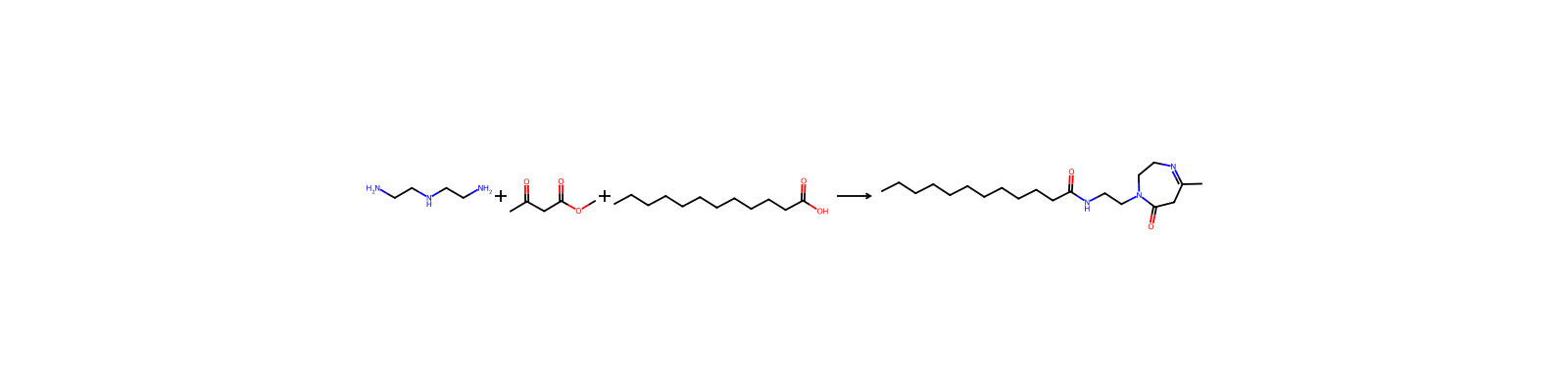
반응 기록 만들기
HRID 2671 반응식
HRID 2671반응물로uspto-grants-1998_03
HRID 67666 반응식
HRID 67666반응물로uspto-grants-1982_08
HRID 67667 반응식
HRID 67667반응물로uspto-grants-1982_08
HRID 67668 반응식
HRID 67668반응물로uspto-grants-1982_08
HRID 67678 반응식
HRID 67678반응물로uspto-grants-1982_08
HRID 67681 반응식
HRID 67681반응물로uspto-grants-1982_08
HRID 231982 반응식
HRID 231982반응물로uspto-grants-1989_07
HRID 241240 반응식
HRID 241240반응물로uspto-grants-2014_02
1 / 12 페이지

화합물 노트

불러오는 중…

이 페이지에서기본 정보개요이름 및 식별자물성안전 및 규제화학 및 산업관련 반응화합물 노트
더보기
새 노트새 반응견적 요청하기
· 6건

Very soluble (NTP, 1992)

SOL IN ALL PROP IN WATER & ALC; INSOL IN ETHER; SOL IN PETROLEUM ETHER

SOL IN HYDROCARBONS

miscible with water, methanol, acetone, ether, and benzene, but insoluble in heptane

water solubility = 1X10+6 mg/l

1000 mg/mL

Flash Point · 6건

215 °F (NTP, 1992)

101 °C

101.7 °C (Open cup)

97 °C c.c., 102 °C o.c.

208 °F

208 °F

Boiling Point · 6건

405 °F at 760 mmHg (NTP, 1992)

207 °C @ 760 MM HG

207.00 °C. @ 760.00 mm Hg

207 °C

405 °F

207 °C @760 [mm Hg]

물리화학적 성질

녹는점
-40 °C · -40 °C
끓는 점
206 °C · 206 °C
밀도
0.955 g/mL · 0.955 g/mL at 25 °C(lit.)
증기 밀도
3.6 · 3.6 (vs air)
증기압
0.08 mm · 0.08 mm Hg ( 20 °C)
굴절률
20 · n20/D 1.484(lit.)
인화점
90 °C · 90 °C
저장 조건
30 °C · Store below +30°C.
용해도
클로로포름, 메탄올(약간)에 용해됨
산도 계수 (pKa)
1 · pK1:4.42(+3);pK2:9.21(+2);pK3:10.02(+1) (25°C)
물리적 상태
액체
색상
투명한
냄새
강한 암모니아성; 약하게 암모니아성.
수소이온지수(pH)
12 · >12 (100g/l, H2O, 20℃)
폭발한계
1 · 1-10%(V)
수용성
혼용 가능
비열
2.46 J/ · Cp(liquid): 2.46 J/(g·K), at 25℃
BRN
605314 · 605314
Henry's Law Constant
9.9 · 9.9×108 mol/(m3Pa) at 25℃, HSDB (2015)
안정성
안정적이지만 공기 중 이산화탄소를 흡수합니다. 강한 산화제, 구리 및 그 합금과 호환되지 않습니다.
InChI
1S/C4H13N3/c5-1-3-7-4-2-6/h7H,1-6H2
InChIKey
RPNUMPOLZDHAAY-UHFFFAOYSA-N
SMILES
NCCNCCN
LogP
-1.58 at · -1.58 at 20℃
NIST
1 · 1,2-Ethanediamine, N-(2-aminoethyl)-(111-40-0)
EPA
Diethylenetriamine (111-40-0)

화학적 성질

Diethylenetriamine is a corrosive yellow liquid and a solvent. It has a strong ammonia odor and is prone to absorbing moisture. It can dissolve in water, acetone, benzene, ether, methanol, but is not soluble in n-heptane.

Fire PotentialLOW, WHEN EXPOSED TO HEAT OR FLAME
Health Hazards · 2건

Prolonged breathing of vapors may cause asthma. Liquid burns skin and eyes. A skin rash can form. (USCG, 1999)

· TOXIC and/or CORROSIVE; inhalation, ingestion or skin contact with material may cause severe injury or death.

Hazards Summary · 1건

Corrosive to skin; [Quick CPC] Liquid causes first degree burns on short exposure; [CHRIS] DETA can cause severe corneal injuries and sensitization of the skin and respiratory tract. [ACGIH] Allergic contact dermatitis reported in workers using ultrasonic baths, synthetic lubricants, and carbonless copy paper. [Kanerva, p. 1782] Repeated or prolonged contact may cause skin sensitization or asthma. Inhalation may cause pulmonary edema. [ICSC] Prolonged inhalation can cause asthma. [CAMEO] Danger of skin sensitization; [MAK]

DOT ID and Guide · 2건

2079 154

2079 154

Reactive GroupAmines, Phosphines, and Pyridines
EC ClassificationSymbol: C; R: 21/22-34-43; S: (1/2)-26-36/37/39-45
TSCA Requirements · 2건

Section 8(a) of TSCA requires manufacturers of this chemical substance to report preliminary assessment information concerned with production, use, and exposure to EPA as cited in the preamble in 51 FR 41329.

Pursuant to section 8(d) of TSCA, EPA promulgated a model Health and Safety Data Reporting Rule. The section 8(d) model rule requires manufacturers, importers, and processors of listed chemical substances and mixtures to submit to EPA copies and lists of unpublished health and safety studies. Diethylenetriamine is included on this list.

Reactivity Profile · 1건

DIETHYLENETRIAMINE neutralizes acids in exothermic reactions to form salts plus water. May be incompatible with isocyanates, halogenated organics, peroxides, phenols (acidic), epoxides, anhydrides, and acid halides. Flammable gaseous hydrogen may be generated in combination with strong reducing agents, such as hydrides.

안전 및 보호

Fire Fighting · 2건

Excerpt from ERG Guide 154 [Substances - Toxic and/or Corrosive (Non-Combustible)]:

Use water spray, powder, alcohol-resistant foam, carbon dioxide. In case of fire: keep drums, etc., cool by spraying with water.

First Aid Measures · 4건

Fresh air, rest. Half-upright position. Artificial respiration may be needed. Refer immediately for medical attention.

First rinse with plenty of water for at least 15 minutes, then remove contaminated clothes and rinse again. Refer immediately for medical attention .

Rinse with plenty of water for several minutes (remove contact lenses if easily possible). Refer immediately for medical attention.

Rinse mouth. Do NOT induce vomiting. Rest. Refer immediately for medical attention.

Accidental Release Measures · 2건

· CALL 911. Then call emergency response telephone number on shipping paper. If shipping paper not available or no answer, refer to appropriate telephone number listed on the inside back cover.

· ELIMINATE all ignition sources (no smoking, flares, sparks or flames) from immediate area.

First Aid · 3건

EYES: First check the victim for contact lenses and remove if present. Flush victim's eyes with water or normal saline solution for 20 to 30 minutes while simultaneously calling a hospital or poison control center. Do not put any ointments, oils, or medication in the victim's eyes without specific instructions from a physician. IMMEDIATELY transport the victim after flushing eyes to a hospital even if no symptoms (such as redness or irritation) develop.

General First Aid:

(General first aid procedures)

Safe StorageSeparated from strong oxidants, acids, organic nitro compounds and food and feedstuffs. Keep in a well-ventilated room.
Exposure Control and Personal Protection· Wear positive pressure self-contained breathing apparatus (SCBA).
Fire Fighting Procedures · 3건

Use water spray, dry chemical, alcohol foam or carbon dioxide. Discharge is effective for cooling of container, dilution, prevention of spread of the fire.

If material on fire or involved in fire: Do not extinguish fire unless flow can be stopped. Use water in flooding quantities as fog. Solid streams of water may be ineffective. Cool all affected containers with flooding quantities of water. Apply water from as far a distance as possible. Use "alcohol" foam, carbon dioxide or dry chemical.

Wear goggles, self-contained breathing apparatus, and rubber overclothing (including gloves). ... Water or foam may cause frothing.

Storage ConditionsProtect containers against physical damage. Store in cool, dark, well-ventilated place away from sources of ignition.
Cleanup MethodsOverspread sufficient sodium bisulfate and sprinkle water. Drain into the sewer with abundant water.
Nonfire Spill ResponseExcerpt from ERG Guide 154 [Substances - Toxic and/or Corrosive (Non-Combustible)]:
Disposal Methods · 2건

SRP: At the time of review, criteria for land treatment or burial (sanitary landfill) disposal practices are subject to significant revision. Prior to implementing land disposal of waste residue (including waste sludge), consult with environmental regulatory agencies for guidance on acceptable disposal practices.

Incinerate in admixture with flammable solvent in furnace equipped with afterburner and scrubber. Recommendable method: Incineration. Peer-review: Mix with excess fuel due to low carbon content and high nitrogen content. (Peer-review conclusions of an IRPTC expert consultation (May 1985))

Spillage Disposal · 1건

Personal protection: complete protective clothing including self-contained breathing apparatus. Collect leaking and spilled liquid in sealable containers as far as possible. Absorb remaining liquid in sand or inert absorbent. Then store and dispose of according to local regulations.

독성 정보

Target OrgansEyes, skin, respiratory system
Environmental Fate · 3건

TERRESTRIAL FATE: If released on land, diethylenetriamine would principally leach into the ground. The only circumstance where biodegradation would be significant is where the microorganisms at the site are well acclimated. Some of the diethylenetriamine may volatilize from the soil surface. (SRC)

AQUATIC FATE: The fate of diethylenetriamine released into water is unknown. Volatilization and adsorption to sediment will not be significant loss mechanisms. Biodegradation would not be expected to be significant unless the microorganisms at the site were well acclimated. (SRC)

ATMOSPHERIC FATE: Diethylenetriamine emitted to the atmosphere will degrade by reaction with photochemically produced hydroxyl radicals. The estimated half-life for this reaction is 2.7 hr(1,SRC).

Adverse EffectsDermatotoxin - Skin burns.
Exposure Routes · 2건

The substance can be absorbed into the body by inhalation of its vapour, through the skin and by ingestion.

inhalation, skin absorption, ingestion, skin and/or eye contact

Signs and Symptoms · 5건

Sore throat. Cough. Burning sensation. Laboured breathing. Symptoms may be delayed.

Pain. Serious skin burns.

Pain. Severe deep burns. Loss of vision.

Burning sensation. Abdominal pain. Shock or collapse.

irritation eyes, skin, mucous membrane, upper respiratory system; dermatitis, skin sensitization; eye, skin necrosis; cough, dyspnea (breathing difficulty), pulmonary sensitization

ICSC Environmental DataEnvironmental effects of the substance have been adequately investigated, but no significant effects have been found.
Medical Surveillance/Protect/ from exposure those individuals with allergies and diseases of skin and lungs.
Soil Adsorption/Mobility · 1건

The Koc for diethylenetriamine estimated from molecular structure is 88(1). Therefore, it would not be expected to adsorb significantly to soil or sediment. According to a suggested classification scheme(2), this estimated Koc suggests that diethylenetriamine would be highly mobile in soil(SRC).

TSCA Test Submissions · 5건

The mutagenicity of diethylenetriamine (DETA) was evaluated in Salmonella tester strains TA98, TA100, TA1535, TA1537 and TA1538, both in the presence and absence of added metabolic activation by Aroclor-induced rat liver S9 fraction. Based on preliminary bacterial toxicity determinations, DETA, diluted with water, was tested for mutagenicity at concentrations up to 10 ul/plate using the quantitative overlay method. DETA caused a reproducible increase in revertants without activation in bacterial testers strain TA1537 at all concentrations tested ranging from 0.001 - 10 ul/plate and in tester strain TA1538 without activation at 0.01, 1, 5, and 10 ul/plate. No dose related response was obtained. DETA did not cause a reproducible positive response in any of the other bacterial tester strains, either with or without activation, or in strains TA1537 and TA1538 with activation.

The mutagenicity of diethylenetriamine (DETA) was evaluated in Salmonella bacterial tester strains TA98, TA100, TA1535, TA1537 and TA1538, and the yeast Saccharomyces cerevisiae tester strain D4, both in the presence and absence of added metabolic activation by Aroclor-induced rat liver S9 fraction. Based on preliminary bacterial toxicity determinations, DETA, diluted with DMSO, was tested for mutagenicity at concentrations up to 10 ul/plate using the agar incorporation method. DETA did not cause a positive response in any of the bacterial or yeast tester strains, either with or without metabolic activation.

The ability of diethylenetriamine (DETA) to induce mutations at the HGPRT gene locus in Chinese Hamster Ovary (CHO) cells in vitro was evaluated in the presence and absence of Aroclor-induced rat liver S9 metabolic activation. Based on preliminary toxicity determinations, DETA was tested for mutagenicity at 6 concentrations over the range of 0.0125 - 0.400% (v/v), with cell survival ranging from 80 - 101% without activation and 110 - 135% with activation. There were no significant differences between treated and control cultures with respect to mutation frequencies at any of the concentrations tested, either with or without activation.

The effect of diethylenetriamine (high purity grade) was examined in the rat hepatocyte primary culture/DNA repair assay following administration at concentrations ranging from 1x10E-4 to 0.1% (v/v). The test article induced statistically significant (Duncans MR analysis, p <0.05), but non-dose related increases in the amount of radioactive label bound to isolated nuclear DNA at the 1x10E-4 and 3x10E-3 % levels, and an increase in the amount of radioactive label bound to nuclei at the 1x10E-4 level. In a preliminary cytotoxicity test, all cells died when exposed to 0.4% diethylenetriamine.

For more TSCA Test Submissions (Complete) data for DIETHYLENETRIAMINE (11 total), please visit the HSDB record page.

Human Toxicity Excerpts · 5건

Diethylenetriamine is characterized by its capacity to cause severe corneal injury and pulmonary and cutaneous sensitization in humans. Solutions of from 15% to 100% caused lasting corneal damage; 5% only minor injury; and unless properly controlled, the vapor and liquid cause sensitization of the respiratory tract and skin with relatively high frequency. Pulmonary and cutaneous sensitization occur with relatively high frequency unless adequate measures are taken to control all contacts. ... Little exposure is necessary in some cases to induce a high degree of sensitivity.

IT IS A POTENT PRIMARY SKIN IRRITANT, CAUSING EDEMA & SOMETIMES NECROSIS. THE SKIN IRRITATION IS FREQUENTLY COMPLICATED BY A HIGH INCIDENCE OF ALLERGIC SKIN SENSITIZATION. THE MAJORITY OF WORKERS CHRONICALLY EXPOSED TO IT BECOME SENSITIZED.

Symptoms: Conjunctivitis, keratitis (inflammation of the cornea), dermatitis, irritation of respiratory tract; asthmatic breathing, nausea, vomiting.

In addition to being an irritant, the polyamines typified by ... diethylenetriamine ... have been reported to cause dermal and pulmonary sensitization.

For more Human Toxicity Excerpts (Complete) data for DIETHYLENETRIAMINE (6 total), please visit the HSDB record page.

Artificial Pollution Sources · 1건

Diethylenetriamine may be released in emissions and wastewater during its manufacture and use as a chemical intermediate in the manufacture of wet strength resins, surfactant-softeners, corrosion inhibitors, gas and lube additives, epoxy curing agents, chelating agents, polyamide resins, and asphalt emulsifiers(1). Spills during transport, storage and use would also result in releases(SRC).

Environmental Biodegradation · 1건

Chemicals containing two terminal amino groups on a noncyclic compound are associated with persistance in 5-day BOD tests(4). Diamines, such as diethylenetriamine, in which the 2 nitrogen groups were not separated by at least 3 carbon atoms were recalcitrant and did not support bacterial growth as a sole source of carbon, nitrogen, and energy(6). No degradation of diethylenetriamine was observed in a 5-day BOD test using an acclimated sewage inoculum(4). Diethylenetriamine is listed as resistant to biodegradation according to the biodegradability test of the Japanese Ministry of International Trade and Industry(1). This test utilizes a mixed inoculum containing sewage, soil and surface water. The BOD was 0% of theoretical in 20 days when incubated with sewage(2). However, the BOD increased to 70% theoretical when an inoculum composed of treated petrochemical effluent, sewage and soil was used that had previously been acclimated for 45-60 days(2). In other BOD tests, 55% of the diethylenetriamine in wastewater biodegraded in 6 weeks(3) and 0% degraded in 2 weeks(5).

규제 정보

TSCA Requirements · 2건

Section 8(a) of TSCA requires manufacturers of this chemical substance to report preliminary assessment information concerned with production, use, and exposure to EPA as cited in the preamble in 51 FR 41329.

Pursuant to section 8(d) of TSCA, EPA promulgated a model Health and Safety Data Reporting Rule. The section 8(d) model rule requires manufacturers, importers, and processors of listed chemical substances and mixtures to submit to EPA copies and lists of unpublished health and safety studies. Diethylenetriamine is included on this list.

안전 데이터

OEB
B
OEL
TWA: 1 ppm (4 mg/m3) [skin]
wgk
2
tsca
TSCA listed
rtecs
IE1225000
ridadr
UN 2079
독성
LD50 orally in Rabbit: 1540 mg/kg
HS 번호
29212900
risk_code
21/22-34-43-37-26
hazard_code
C,T+
safety_code
26-36/37/39-45-28
포장분류
II
위험 등급
8
기존화학 물질
KE-01357
자연 발화 온도
676 °F
Hazard Classifications
Acute Tox. 2 InhalationAcute Tox. 4 DermalAcute Tox. 4 OralEye Dam. 1Skin Corr. 1BSkin Sens. 1BSTOT SE 3
스토리지 클래스
6.1A - Combustible acute toxic Cat. 1 and 2very toxic hazardous materials
유해 물질 데이터
111-40-0(Hazardous Substances Data)
Consumer UsesHardener
Industry UsesNot Known or Reasonably Ascertainable
Methods of ManufacturingREACTION OF ETHYLENE DICHLORIDE AND AMMONIA
Formulations/PreparationsGrade: Technical
Household ProductsInformation on 14 consumer products that contain Diethylenetriamine in the following categories is provided:
General Manufacturing Information · 2건

Paper Manufacturing

1,2-Ethanediamine, N1-(2-aminoethyl)-: ACTIVE

응용 분야 · 3건

용도디 에틸렌 트리 아민 (DETA)은 종이 습식 강도 수지, 부식 방지제, 연료 첨가제, 에폭시 경화제, 섬유 유연제 및 아스팔트 첨가제의 제조에 일반적으로 사용됩니다.

개요Diethylenetriamine is a hardener in epoxy resins of the Bisphenol A type. It has been reported as a sensitizer in ultrasonic baths for cleaning jewels, in synthetic lubricants and in carbonless copy paper.

일반 설명A yellow liquid with an ammonia-like odor. Less dense than water. Corrosive to metals and tissue. Vapors heavier than air. Burns, although possibly difficult to igntie. Toxic oxides of nitrogen produced during combustion. Used as a solvent for plastics and dyes and in chemical synthesis.

제조 방법

생산 방법Diethylenetriamine is produced by the reaction of ethylene dichloride with ammonia. Diethylenetriamine is used in biological studies, for polyamines inhibition to carbonic anhydrases by anchoring to the zinc-coordinated water molecule.

상·하류 제품 정보

상류 원료

1,2-디클로로에탄Polyethylene-polyamines트라이에틸렌테트라민이염화에탄테트라에틸렌펜트아민

하류 제품

1-(2-아미노에틸)이미다졸리딘-2-온TEGO103GDye-fixing agent,no formaldehydeadhesive FWR유연제ISsoftening agent EST펜타나트륨 펜텐산1-히드록시에틸리덴-1,1-디포스포닌산사이클렌스테아르아미드디에틸렌트리아민펜타아세트산Dioctyl divinyltriamino glycinecorrosion inhibitor 581softening agent SCI-Awater proofing agent YSN,N-비스[2-(옥틸아미노)에틸]-글리신염산염antirust agent T-703폴리아마이드 수지트라이에틸렌테트라민Softener ES트리에틸렌디아민wet strength agent used for paper PAE