홈MCP워크벤치Skills
홈워크벤치알림마이페이지
llms.txt · MCP 가이드개인정보처리방침 · 이용약관 · 지원v1.8.0
  1. 홈
  2. /화합물

N-페닐-2-나프틸아민

N-phenyl-2-naphthylamine
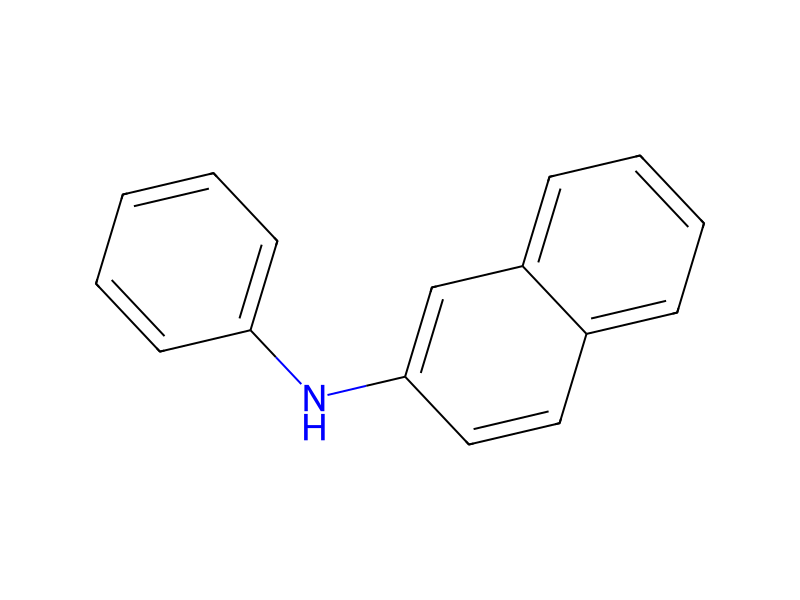
HCID 8679
새 노트새 반응견적 요청하기
인쇄 미리보기
기본 정보개요이름 및 식별자물성안전 및 규제화학 및 산업관련 반응화합물 노트
부분 구조 검색유사 구조 찾기

기본 정보

CAS
135-88-6
표준 SMILES
c1ccc(Nc2ccc3ccccc3c2)cc1
InChIKey
KEQFTVQCIQJIQW-UHFFFAOYSA-N
분자식
C16H13N
평균 분자량
219.28 g/mol
단동위원소 질량
219.10479942

개요

N-phenyl-2-naphthylamine is a light gray to gray powder. Solutions show blue fluorescence. (NTP, 1992)

이름 및 식별자

우선 이름
N-phenyl-2-naphthylamine
IUPAC
N-phenylnaphthalen-2-amine
현지명
N-페닐-2-나프틸아민
영어명
N-(2-Naphthyl)aniline
분자식
C16H13N
분자량
219.28

이름 및 동의어

N-Phenyl-2-naphthylamine135-88-6N-Phenylnaphthalen-2-amineN-(2-Naphthyl)anilineAgeRite PowderNeozoneAceto PBNAntioxidant 1162-Anilinonaphthalene2-NaphthylphenylamineStabilizator ARAnilinonaphthalene
이름 더 보기
2-나프틸아민,N-페닐-N-페닐-2-나프틸아민N-페닐-베타-나프틸아민N-페닐-베타-나프틸아민N-2-나프틸아닐린2-나프틸아민, N-페닐-N-(2-나프틸)아닐린Nonox DN-Phenyl-2-naphthalenamineN-PHENYL-BETA-NAPHTHYLAMINEN-Phenyl-Beta-Naphtylamineak1nonoxd
PBNANeozone DAntioxidant PBN2-Phenylaminonaphthalene2-Naphthalenamine, N-phenyl-Neosone DVulkanox PBNNeozon D

데이터베이스 식별자

CAS
135-88-6
PubChem CID
8679
DTXSID
DTXSID4021131
ChEMBL
CHEMBL1543632
ChEBI
CHEBI:34877
UNII
456KT854AJ
EC Number
205-223-9
Nikkaji
J3.627G

물성

구조 계산 물성

XLogP
5.1
극성 표면적
12 Ų
수소 결합 공여자 수
1
수소 결합 수용자 수
1
회전 가능 결합 수
2
무거운 원자 수
17
형식 전하
0
복잡도
232

실험 및 물리화학적 성질

Chemical ClassesNitrogen Compounds -> Naphthylamines
SpringerMaterials PropertiesAngular frequency
LogP · 4건

log Kow = 4.38

4.38

4.38

4.38

Density · 5건

1.24 (NTP, 1992) - Denser than water; will sink

1.24

1.2 g/cm³

1.24

1.24

Color/Form · 4건

NEEDLES FROM METHANOL

WHITE TO YELLOWISH CRYSTALS

GRAY TO TAN FLAKES OR POWDER

White to yellow crystals or gray tan flakes or powder [Note: Commercial product may contain 20-30 ppm of beta naphthylamine].

Solubility · 5건

less than 1 mg/mL at 66 °F (NTP, 1992)

SOLUBILITY IN ETHANOL 50 G/L, IN BENZENE 27 G/L, IN ACETONE 640 G/L

INSOL IN WATER; SOL IN ALC, ETHER, ACETIC ACID (BLUISH FLUORESCENCE)

Solubility in water at 25 °C: none

Insoluble

Boiling Point · 5건

743 °F at 760 mmHg (NTP, 1992)

395.5 °C

395.5 °C

743 °F

743 °F

Decomposition

안전 및 규제

안전 정보는 참고용이며, 공급업체의 물질안전보건자료(SDS), 관련 법규 및 전문가 평가를 대체하지 않습니다.

GHS 분류

GHS Classification · 6건

Warning

H315: Causes skin irritation [Warning Skin corrosion/irritation]

P203, P261, P264, P264+P265, P272, P273, P280, P302+P352, P305+P351+P338, P318, P321, P332+P317, P333+P317, P337+P317, P362+P364, P391, P405, and P501 (click each P-code to see the statement)

Warning

H315 (100%): Causes skin irritation [Warning Skin corrosion/irritation]

P203, P261, P264, P264+P265, P272, P273, P280, P302+P352, P305+P351+P338, P318, P321, P332+P317, P333+P317, P337+P317, P362+P364, P391, P405, and P501 (click each P-code to see the statement)

유해성 정보

Regulatory Information · 3건

Chemical: 2-Naphthalenamine, N-phenyl-

REACH registered substance: N-2-naphthylaniline (EC: 205-223-9)

N-Phenyl-2-naphthylamine: Does not have an individual approval but may be used under an appropriate group standard

Other Safety InformationIMAP assessments - 2-Naphthalenamine, N-phenyl-: Human health tier II assessment
DOT LabelCorrosive
Fire Hazards · 2건

Literature sources indicate that this chemical is combustible. (NTP, 1992)

Combustible. Finely dispersed particles form explosive mixtures in air.

Fire PotentialFIRE HAZARD: MODERATE, WHEN EXPOSED TO HEAT OR FLAME... CAN REACT WITH OXIDIZING MATERIALS.
Health HazardsExcerpt from NIOSH Pocket Guide for N-Phenyl-beta-naphthylamine:
Hazards SummaryAllergic contact dermatitis reported in rubber workers; [Kanerva, p. 1826] Danger of skin sensitization; [MAK]

화학 및 산업

약리 정보

Metabolism/Metabolites · 5건

AMT RANGING FROM 0-10 UG 2-NAPHTHYLAMINE WAS DETECTED IN URINE OF DOGS GIVEN SINGLE DOSE OF 5 MG/KG...N-PHENYL-2-NAPHTHYLAMINE...

Hepatic microsomal preparations from rat, hamster, dog, monkey, and humans catalyze PBNA biotransformation in vitro to 6-hydroxy-N-phenyl-2-naphthylamine and 4'-hydroxy-N-phenyl-2-naphthylamine.

A dose dependent relationship between the concn of parent compound and its BNA metabolite in rat urine was observed after oral doses of 50 or 100 mg PBNA/kg/day for 4 days. Some 34 ug BNA was recovered in rat urine after a total PBNA dose of 400 mg.

Experimental evidence from human volunteers ingesting PBNA at a single 10-50 mg dose and from workers inhaling PBNA dust show that BNA is eliminated in the urine as a metabolite of PBNA.

The carcinogenic antioxidants, N-phenyl-1-naphthylamine (P1NA) and phenyl-2-naphthylamine (P2NA) were examined in vitro for biotransformation by rat hepatic microsomes and in freshly isolated hepatocytes. HLPC analysis of hepatocyte incubations revealed that phenols were the major metabolites in both cases. P1NA formed one phenolic metabolite only, while incubation with P2NA yielded two phenols identified as 6-hydroxy-P2NA and 4'-hydroxy-P2NA by chromatography with authentic samples. beta-Naphthylamine, a metabolite indicating dephenylation of P2NA was not detectable. Metabolism studies with microsomes revealed that the phenols were formed by cytochrome p450 dependent monooxygenases. Pretreatment of animals with phenobarbital and 3-methylcholanthrene both incr the rate of microsomal metabolism of P1NA and P2NA, indicating that more than one p450 enzyme mediate the oxygenation reaction. Animal pretreatment with single and repeated doses of P1NA and P2NA did not markedly stimulate metabolism, but induced ethylmorphine demethylation in males and females and benzo(a)pyrene hydroxylation in females.

Absorption, Distribution and Excretion · 5건

IN DOGS GIVEN SINGLE ORAL DOSES OF 5 MG/KG...(1,4,5 ,8-(14)C)-N-PHENYL-2-NAPHTHYLAMINE ALONE OR FOLLOWING REPEATED DOSES OF 400 MG/ANIMAL...N-PHENYL-2-NAPHTHYLAMINE ON 5 DAYS A WK FOR 4 WK, MORE THAN 90% OF RADIOACTIVITY...EXCRETED OVER 3 DAYS, MAINLY IN FECES. ONLY 2.8% OF RADIOACTIVITY WAS EXCRETED IN URINE.

NO INCR EXCRETION OF LABELED 2-NAPHTHYLAMINE...OBSERVED FOLLOWING 4 WK PRETREATMENT WITH 400 MG/ANIMAL UNLABELED N-PHENYL-2-NAPHTHYLAMINE...

2-NAPHTHYLAMINE WAS FOUND @ LEVEL OF 3-4 UG IN 24-HR SAMPLES OF URINE FROM 2 VOLUNTEERS WHO INGESTED 50 MG N-PHENYL-2-NAPHTHYLAMINE CONTAINING 0.7 UG 2-NAPHTHYLAMINE & FROM WORKERS (UNSPECIFIED NUMBER) EST TO HAVE INHALED 30 MG N-PHENYL-2-NAPHTHYLAMINE...

관련 반응

27건
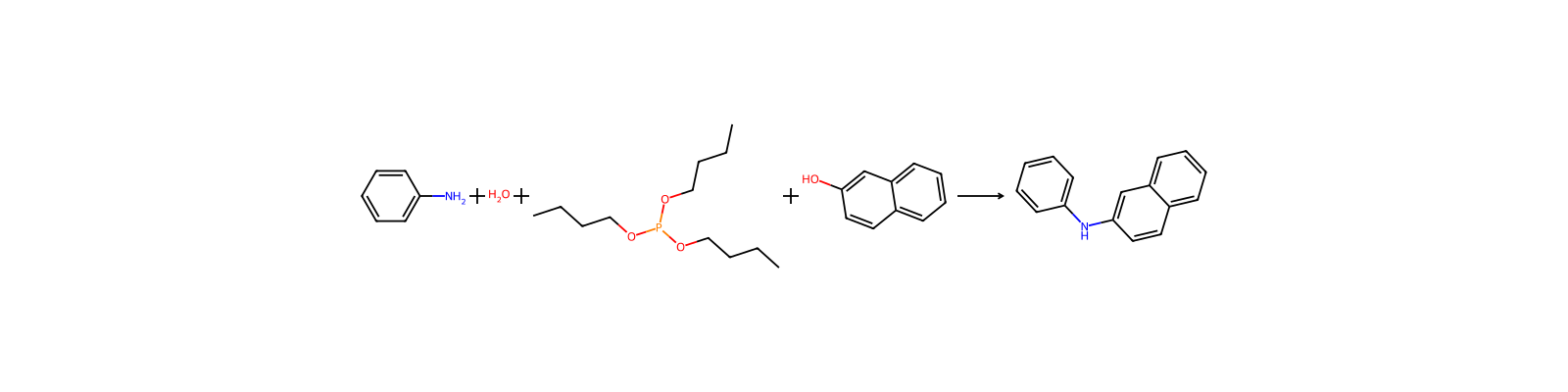
반응 기록 만들기
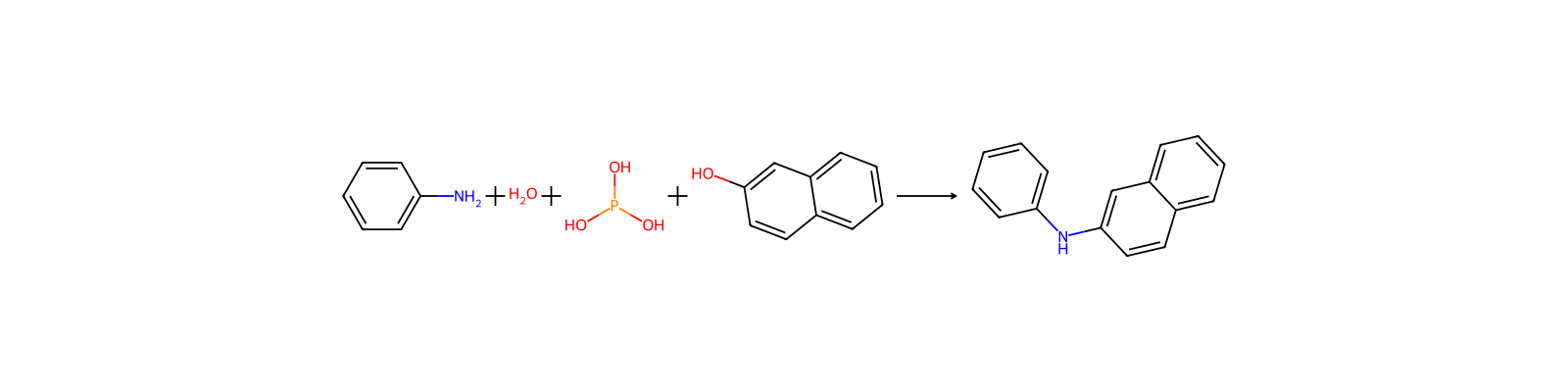
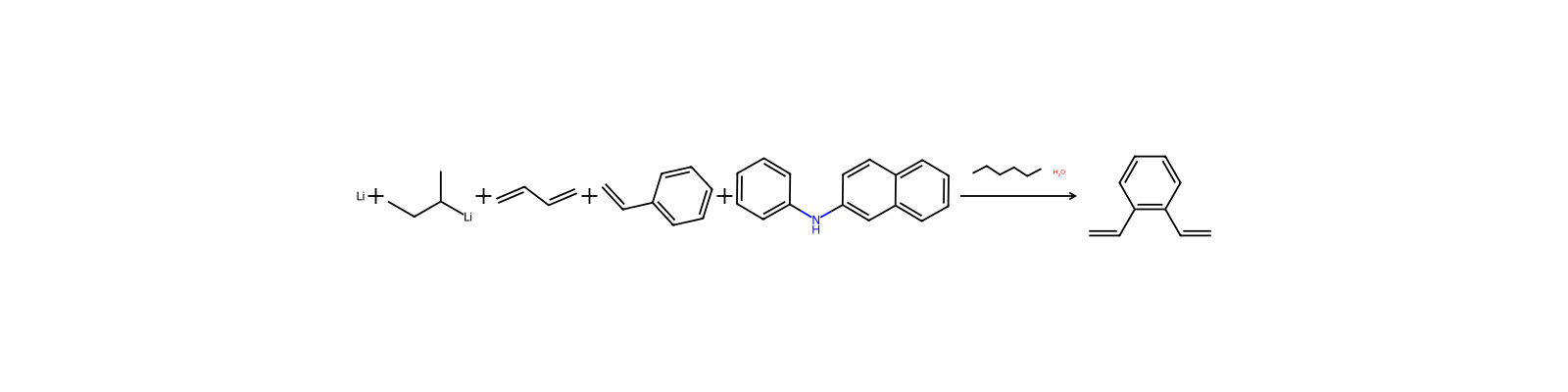
HRID 5006 반응식
HRID 5006촉매로uspto-grants-1993_09
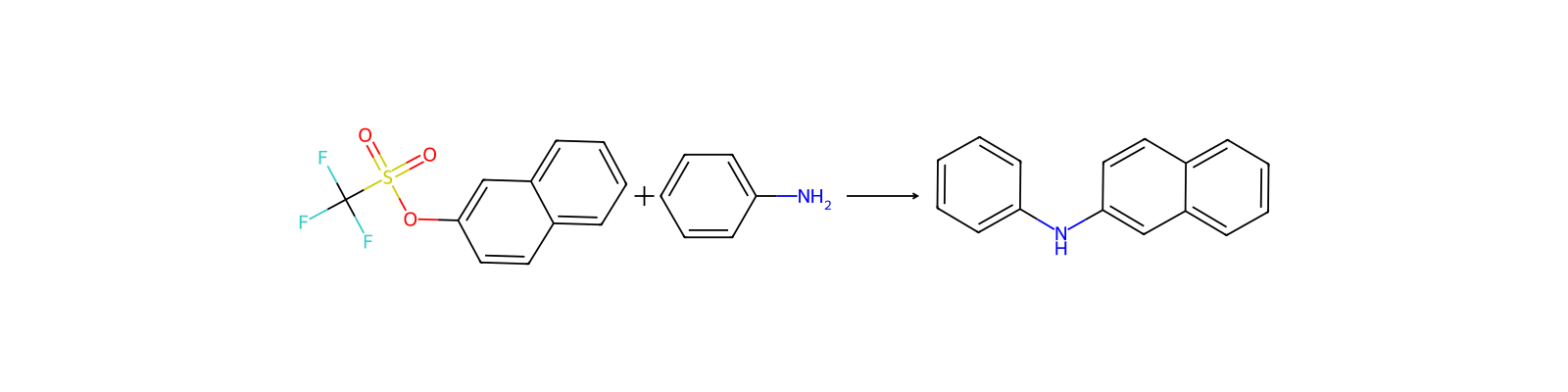
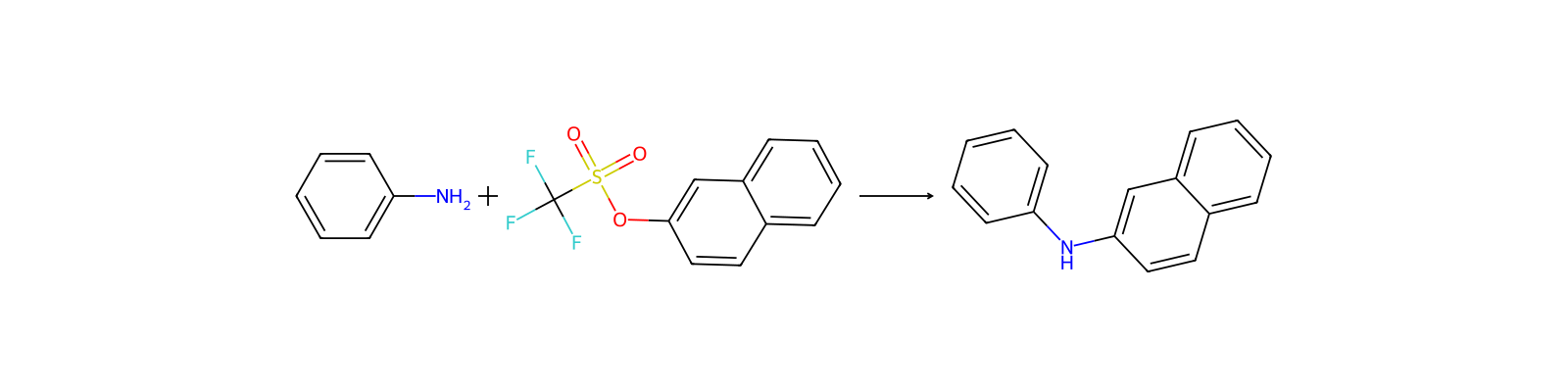
HRID 134284 반응식
HRID 134284생성물로Training data from https://doi.org/10.1039/C8SC04228D (9/10)
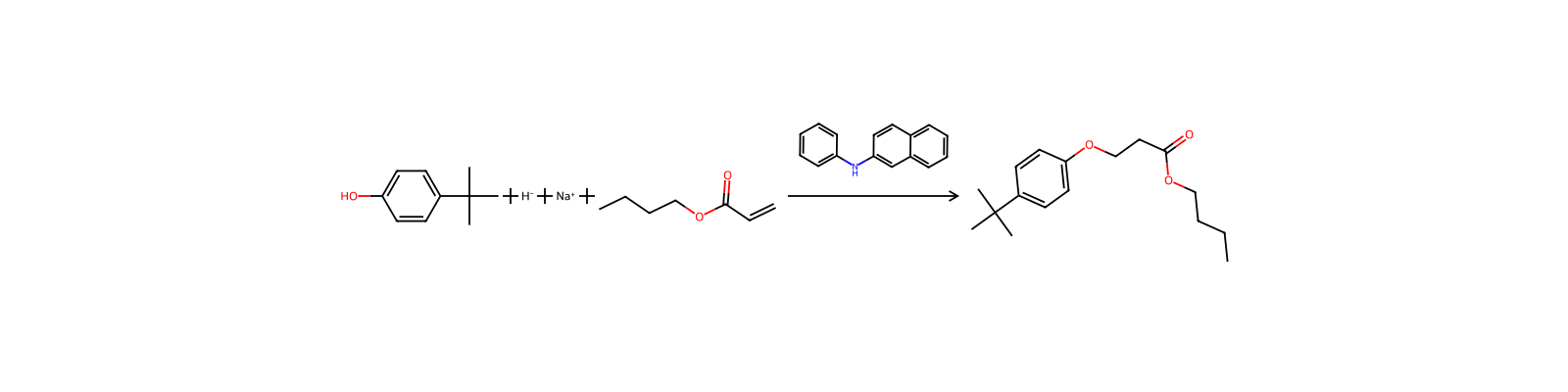
HRID 160397 반응식
HRID 160397생성물로Training data from https://doi.org/10.1039/C8SC04228D (9/10)
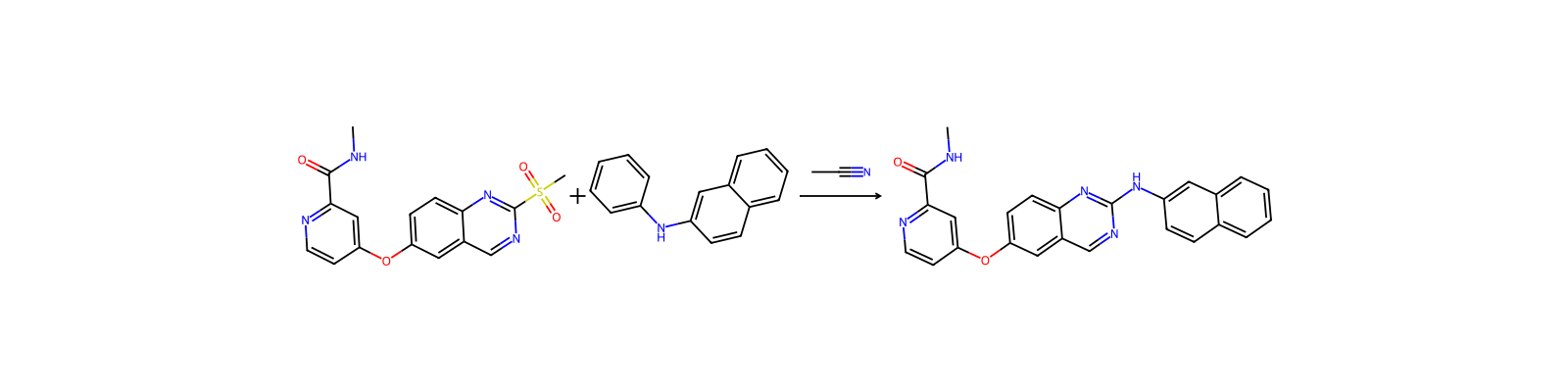
HRID 399306 반응식
HRID 399306생성물로uspto-grants-1998_10
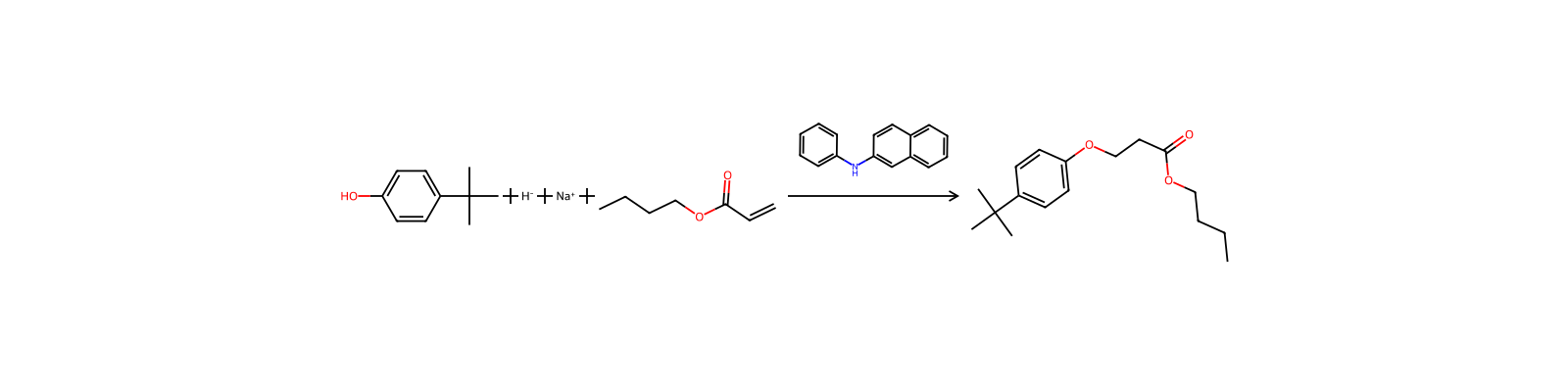
HRID 544592 반응식
HRID 544592촉매로uspto-grants-1984_05
HRID 639359 반응식
HRID 639359반응물로uspto-grants-2010_04
HRID 745829 반응식
HRID 745829반응물로uspto-grants-1986_07
HRID 802120 반응식
HRID 802120생성물로Test data from https://doi.org/10.1039/C8SC04228D
1 / 4 페이지

화합물 노트

불러오는 중…

이 페이지에서기본 정보개요이름 및 식별자물성안전 및 규제화학 및 산업관련 반응화합물 노트
더보기
새 노트새 반응견적 요청하기
WHEN HEATED TO DECOMP, IT EMITS TOXIC FUMES OF /NITROGEN OXIDES/.
Melting Point · 6건

226 °F (NTP, 1992)

108 °C

108 °C

108 °C

226 °F

226 °F

Vapor Pressure0.00000829 [mmHg]
Food Contact SubstancesFCS -> FDA Inventory of Food Contact Substances Listed in 21 CFR
Physical Description · 6건

N-phenyl-2-naphthylamine is a light gray to gray powder. Solutions show blue fluorescence. (NTP, 1992)

White to yellow crystals or gray to tan flakes or powder. [Note: Commercial product may contain 20-30 ppm of Beta-Naphthylamine.]; [NIOSH]

Solid

WHITE-TO-GREY SOLID IN VARIOUS FORMS.

White to yellow crystals or gray to tan flakes or powder.

White to yellow crystals or gray to tan flakes or powder. [Note: Commercial product may contain 20-30 ppm of β-Naphthylamine.]

물리화학적 성질

녹는점
105 · 105-108 °C (lit.)
끓는 점
395 · 395-395.5 °C (lit.)
밀도
1.24 · 1.24
증기압
0.001 Pa · 0.001Pa at 20℃
굴절률
1.702 · 1.7020 (estimate)
저장 조건
-20 °C · -20°C
용해도
클로로포름(약간 용해됨), 메탄올(매우 소량)
산도 계수 (pKa)
0.78 · 0.78±0.30(Predicted)
물리적 상태
회색에서 황갈색 플레이크 또는 분말
색상
페일베이지부터 페일그레이까지
생물학적 소스
mouse
수용성
19 · 불용성. 19ºC에서 <0.1g/100mL
BRN
2211188 · 2211188
안정성
안정적인. 산화제와 호환되지 않습니다.
InChI
1S/C16H13N/c1-2-8-15(9-3-1)17-16-11-10-13-6-4-5-7-14(13)12-16/h1-12,17H
InChIKey
KEQFTVQCIQJIQW-UHFFFAOYSA-N
SMILES
N(c1ccccc1)c2ccc3ccccc3c2
LogP
3.2 at · 3.2 at 23℃ and pH7.9-8.3
NIST
2 · 2-Naphthyl phenyl amine(135-88-6)
EPA
-2 · N-Phenyl-2-naphthylamine (135-88-6)

화학적 성질

light grey powder or crystals

Reactive Group
Amines, Phosphines, and Pyridines
UN ClassificationUN Hazard Class: 9; UN Pack Group: III
Special Reports · 3건

DHHS/NTP; Toxicology & Carcinogenesis Studies of N-Phenyl-2-naphthylamine in F344/N Rats and B6C3F1 Mice (Feed Studies) Technical Report Series No. 333 (1988) NIH Publication No. 88-2589

DISCUSSES CARCINOGENIC RISK OF PBNA TO HUMAN SUBJECTS.[BATTEN PL, HATHWAY DE; BR J CANCER 35 (3): 342-346 (1977)]

Scmidt E et al; Zeitschr Gesamte Hyg 29 (8): 452-6 (1983). Toxicological evaluation of vulcanization vapors with special reference to nitrogen containing aging preventative agents.

Reactivity Profile · 1건

N-PHENYL-2-NAPHTHYLAMINE may react with strong oxidizing agents (NTP, 1992). Neutralizes acids in exothermic reactions to form salts plus water. May be incompatible with isocyanates, halogenated organics, peroxides, phenols (acidic), epoxides, anhydrides, and acid halides. Flammable gaseous hydrogen may be generated in combination with strong reducing agents, such as hydrides.

Chemical DangersReacts with oxidants. Decomposes on burning. This produces toxic and corrosive fumes.

안전 및 보호

Fire Fighting · 2건

Fires involving this compound can be controlled using a dry chemical, carbon dioxide or Halon extinguisher. (NTP, 1992)

Use water spray, powder, foam, carbon dioxide.

First Aid Measures · 4건

Fresh air, rest. Seek medical attention if you feel unwell.

Remove contaminated clothes. Rinse and then wash skin with water and soap.

First rinse with plenty of water for several minutes (remove contact lenses if easily possible), then refer for medical attention.

Seek medical attention if you feel unwell.

First Aid · 2건

EYES: First check the victim for contact lenses and remove if present. Flush victim's eyes with water or normal saline solution for 20 to 30 minutes while simultaneously calling a hospital or poison control center. Do not put any ointments, oils, or medication in the victim's eyes without specific instructions from a physician. IMMEDIATELY transport the victim after flushing eyes to a hospital even if no symptoms (such as redness or irritation) develop.

(General first aid procedures)

Safe StorageSeparated from oxidants. Provision to contain effluent from fire extinguishing. Store in an area without drain or sewer access.
Storage Conditions · 1건

...MATERIALS WHICH ARE TOXIC AS STORED OR WHICH...DECOMP INTO TOXIC COMPONENTS DUE TO CONTACT WITH HEAT...SHOULD BE STORED IN COOL, WELL-VENTILATED PLACE, OUT OF DIRECT RAYS OF SUN, AWAY FROM AREAS OF HIGH FIRE HAZARD, &...PERIODICALLY INSPECTED & MONITORED.

Nonfire Spill Response · 1건

SMALL SPILLS AND LEAKAGE: If a spill of this chemical occurs, FIRST REMOVE ALL SOURCES OF IGNITION, then you should dampen the solid spill material with acetone and transfer the dampened material to a suitable container. Use absorbent paper dampened with acetone to pick up any remaining material. Seal your contaminated clothing and the absorbent paper in a vapor-tight plastic bag for eventual disposal. Solvent wash all contaminated surfaces with acetone followed by washing with a soap and water solution. Do not reenter the contaminated area until the Safety Officer (or other responsible person) has verified that the area has been properly cleaned.

Disposal Methods · 1건

SRP: At the time of review, criteria for land treatment or burial (sanitary landfill) disposal practices are subject to significant revision. Prior to implementing land disposal of waste residue (including waste sludge), consult with environmental regulatory agencies for guidance on acceptable disposal practices.

Spillage Disposal · 1건

Personal protection: particulate filter respirator adapted to the airborne concentration of the substance. Do NOT let this chemical enter the environment. Sweep spilled substance into covered containers. If appropriate, moisten first to prevent dusting. Carefully collect remainder. Then store and dispose of according to local regulations. Do NOT wash away into sewer.

Preventive Measures · 4건

The worker should immediately wash the skin when it becomes contaminated.

The worker should wash daily at the end of each work shift.

Work clothing that becomes wet or significantly contaminated should be removed and replaced.

Workers whose clothing may have become contaminated should change into uncontaminated clothing before leaving the work premises.

Isolation and EvacuationExcerpt from ERG Guide 154 [Substances - Toxic and/or Corrosive (Non-Combustible)]:
Eye PreventionWear safety goggles.
Fire PreventionNO open flames. Closed system, dust explosion-proof electrical equipment and lighting. Prevent deposition of dust. Prevent build-up of electrostatic charges (e.g., by grounding).

독성 정보

Cancer Sites[bladder cancer]
Target OrgansEyes, skin, bladder
Environmental Fate · 3건

TERRESTRIAL FATE: One screening study observed that N-phenyl-2-naphthylamine is readily biodegradable to beta-naphthylamine at concns <5 ppm(2). Higher concns appear to be toxic to microorganisms(2,SRC). Because N-phenyl-2-naphthylamine absorbs UV light >290 nm(3), photolysis may be important if N-phenyl-2-naphthylamine is spilled on terrestrial surfaces(SRC). By analogy to other aromatic amines(1), when released to soil, N-phenyl-2-naphthylamine may undergo covalent chemical bonding with humic materials which can result in its chemical alteration to a latent form and result in tight adsorption. When covalently bound in this latent form, leaching in soil systems is not expected to occur. This covalent bonding proceeds in two steps: a rapid and reversible bonding followed by a slower and much less reversible reaction(1,SRC). In the absence of covalent bonding, leaching would not be possible based on an estimated Koc of 12,500(4-6).

AQUATIC FATE: Based on analogy to other aromatic amines(1), N-phenyl-2-naphthylamine may undergo covalent bonding with humic materials in the water column and in sediment; therefore, partitioning from the water column to sediment and suspended material may be important. N-Phenyl-2-naphthylamine may be susceptible to photooxidation via hydroxyl and peroxy radicals based on analogy to other aromatic amines(2,SRC). Because N-phenyl-2-naphthylamine abosorbs UV light >290 nm(4), photolysis may be important in near-surface water. A BCF value of 147(3,SRC) suggests that N-phenyl-2-naphthylamine will have low potential to bioconcentrate in aquatic organisms(SRC). Aquatic hydrolysis and volatilization do not appear to be environmentally important removal processes of N-phenyl-2-naphthylamine in water(SRC). It appears that N-phenyl-2-naphthylamine is readily biodegradable to beta-naphthylamine at concns <5 ppm(5).

ATMOSPHERIC FATE: Based on a modified regression-derived equation(1,SRC), the vapor pressure for N-phenyl-2-naphthylamine can be estimated to be 8.3X10⁻⁶ mm Hg at 25 °C(SRC). According to a suggested classification scheme(2), this vapor pressure value suggests that N-phenyl-2-naphthylamine will exist in both the vapor and particulate phases in the ambient atmosphere. Particulate-phase N-phenyl-2-naphthylamine will probably be removed from air via dry deposition. Vapor-phase N- phenyl-2-naphthylamine is degraded rapidly in an average ambient atmosphere by reaction with photochemically produced hydroxyl radicals at an estimated half-life of about 55 minutes(3,SRC).

Adverse EffectsSkin Sensitizer - An agent that can induce an allergic reaction in the skin.
Exposure Routes · 2건

The substance can be absorbed into the body by inhalation, by ingestion and through the skin.

inhalation, skin absorption, ingestion, skin and/or eye contact

Signs and Symptoms · 3건

Redness.

Redness. Pain.

Irritation; leucoplakia; acne, hypersensitivity to sunlight; [potential occupational carcinogen]

Ongoing Test Status · 1건

The following link will take the user to the National Toxicology Program (NTP) Test Agent Search Results page, which tabulates all of the "Standard Toxicology & Carcinogenesis Studies", "Developmental Studies", and "Genetic Toxicity Studies" performed with this chemical. Clicking on the "Testing Status" link will take the user to the status (i.e., in review, in progress, in preparation, on test, completed, etc.) and results of all the studies that the NTP has done on this chemical. [http://ntp-apps.niehs.nih.gov/ntp_tox/index.cfm?fuseaction=ntpsearch.searchresults&searchterm=135-88-6]

ICSC Environmental DataThe substance is toxic to aquatic organisms. Bioaccumulation of this chemical may occur in fish. The substance may cause long-term effects in the aquatic environment.
Soil Adsorption/Mobility · 1건

Aromatic amines have been observed to undergo rapid and reversible covalent bonding with humic materials in aqueous solution; the initial bonding reaction is followed by a slower and much less reversible reaction believed to represent the addition of the amine to quinoidal structures followed by oxidation of the product to give an amino-substituted quinone; these processes represent pathways by which aromatic amines may be converted to latent forms in the biosphere(4). In the absence of covalent bonding, one can estimate the adsorption potential based on the Koc value. Based on an experimental log octanol-water partition coefficient of 4.38(2) and a recommended regression-derived equation(1), the Koc value for N-phenyl-2-naphthylamine can be estimated to be 12,500(SRC). According to a suggested classification scheme(3), this Koc value indicates that N-phenyl-2-naphthylamine will be immobile in soil.

Human Toxicity Excerpts · 5건

LEUCOPLAKIA, ACNE & HYPERSENSITIVITY TO SUNLIGHT...OBSERVED IN 36 WORKERS EXPOSED FOR PROLONGED PERIODS TO N-PHENYL-2-NAPHTHYLAMINE...

OUT OF 57 CU-SMELTING WORKERS SUFFERING FROM INFLAMMATORY LESIONS OF MUCOUS MEMBRANE & SKIN OF LIPS, 22 HAD INCR SENSITIVITY TO RUBBER AS MAIN CAUSE OF CHEILITIS.

OCCUPATIONAL ALLERGIC DERMATOSIS WAS OBSERVED IN RUBBER WORKERS DUE TO ADDITIVES SUCH AS NEOZON D.

IT HAS BEEN REPORTED THAT COMMERCIAL N-PHENYL-2-NAPHTHYLAMINE IS CONTAMINATED WITH 20-30 MG/KG OF CARCINOGEN 2-NAPHTHYLAMINE...

For more Human Toxicity Excerpts (Complete) data for 2-NAPHTHYLAMINE, N-PHENYL- (6 total), please visit the HSDB record page.

Artificial Pollution SourcesN-Phenyl-2-naphthylamine is used as an antioxidant, lubricant, and inhibitor(1) and, therefore, it may be released to the environment during its production and use(SRC).
Environmental Biodegradation · 1건

Using an initial concn of 100 mg/L N-phenyl-2-naphthylamine, 0 %BOD was observed after a 2 week period in a biodegradation screening test using 30 mg/L sludge(1). N-Phenyl-2-naphthylamine, initial concn of 100 ppm, exhibited a 0-29 % Theoretical BOD in a Japanese MITI test after 14 days of incubation at 25 °C(2). N-phenyl-2-naphthylamine was shown to degrade to beta-naphthylamine in a screening study using activated sludge inoculum at 21 °C(3). In this study, 44.2 and 9.3 %CO2 production was observed in 1 day at initial concns of 2 and 5 ppm, respectively(3). At an initial concn of 8 ppm, N-phenyl-2-naphthylamine was observed to be inhibitory to microorganisms under the same test conditions(3). Furthermore, adsorption to solids was found to occur and, hence, reduce biodegradation(3).

안전 데이터

wgk
2
tsca
TSCA listed
rtecs
QM4550000
ridadr
3077
독성
mouse,LD50,oral,1450mg/kg (1450mg/kg),BEHAVIORAL: SOMNOLENCE (GENERAL DEPRESSED ACTIVITY),Hygiene and Sanitation Vol. 31(1-3), Pg. 183, 1966.
HS 번호
29214500
risk_code
36/38-40-43-51/53-53-51
hazard_code
Xn,N
safety_code
22-24/25-61-36/37-26
포장분류
III
위험 등급
6.1(b)
기존화학 물질
KE-28288
Hazard Classifications
Aquatic Chronic 2Carc. 2Eye Irrit. 2Skin Irrit. 2Skin Sens. 1
스토리지 클래스
11 - Combustible Solids
유해 물질 데이터
135-88-6(Hazardous Substances Data)

IN 4 WORKERS EXPOSED TO N-PHENYL-2-NAPHTHYLAMINE DUSTS (EST INTAKE, 40 MG)... EST TO CONTAIN 32 NG 2-NAPHTHYLAMINE, 3-8 UG 2-NAPHTHYLAMINE...FOUND IN 24-HR URINE SAMPLES...

IN 19 VOLUNTEERS GIVEN 10 MG N-PHENYL-2-NAPHTHYLAMINE CONTAINING 8 NG 2-NAPHTHYLAMINE (0.8 MG/KG), FROM 0.4-3 UG 2-NAPHTHYLAMINE WERE FOUND IN 24-HR URINE SAMPLES FROM 7 SUBJECTS, 6 OF WHICH WERE NON-SMOKERS.

Cellular LocationsMembrane

용도 및 제조

Uses · 4건

No longer used in the United States because of carcinogenic potential; in the past used as a antioxidant for rubber, grease, and oils; also used as a component of rocket fuels and as a stabilizer in dyes and silicone enamels; [ACGIH] Used as an antioxidant in the production of rubber, polymers, greases, oils; as an inhibitor of polymerization; as a stabilizer in silicon enamels; and as a catalyst and chemical intermediate; Also used in rocket fuels, surgical plasters, and tin electroplating baths; [CHEMINFO]

Electroplating [Category: Plate]

RUBBER ANTIOXIDANT; LUBRICANT; INHIBITOR (BUTADIENE)

STABILIZER IN ELECTRICAL-INSULATING SILICONE ENAMELS; HEAT & LIGHT STABILIZER; VULCANIZATION ACCELERATOR; COMPONENT OF ROCKET FUELS; IN SURGICAL PLASTERS; IN TIN-ELECTROPLATING BATHS; CHEM INTERMEDIATE; IN DYES; CATALYST & POLYMERIZATION INHIBITOR

ImpuritiesCommercial product may contain 20-30 ppm beta-naphthylamine
U.S. Exports · 2건

(1972) No Data

(1975) No Data

U.S. Imports · 3건

(1972) 4.00X10+5 GRAMS

(1975) 7.58X10+7 GRAMS

Imports through the principal U.S. customs districts totaled 18,166 pounds in 1983.

U.S. Production · 2건

(1972) 2.05X10+9 GRAMS

(1975) 7.09X10+8 GRAMS

Methods of Manufacturing · 1건

...WAS PREPARED BY GRAEBE IN 1880 BY HEATING 2-NAPHTHOL WITH ANILINE HYDROCHLORIDE (PRAGER ET AL, 1929). METHOD...CURRENTLY...USED IN JAPAN (THE CHEM DAILY CO LTD, 1976) & IN US (KEHE & KOURIS, 1965) IS CONDENSATION OF 2-NAPHTHOL & ANILINE IN PRESENCE OF A CATALYST.

Formulations/Preparations · 2건

UNTIL RECENTLY...WAS AVAILABLE IN US AS COMMERCIAL GRADE...PURITY, 97.0% MIN; SET-POINT, 106.0 °C MIN; ASH CONTENT, 0.5% MAX; 2-NAPHTHOL CONTENT, 0.5% MAX.

/IT IS/...AVAILABLE IN US IN VARIETY OF FORMULATIONS, COMPOUNDED WITH OTHER ANTIOXIDANTS, EG, PARA-ISOPROPOXYDIPHENYLAMINE & DIPHENYL-PARA-PHENYLENEDIAMINE...

General Manufacturing Information · 6건

2-Naphthalenamine, N-phenyl-: ACTIVE

...DETECTED IN EXTRACTS FROM WIDE VARIETY OF ANIMAL, PLANT & MICROBIAL LIPIDS. IT HAS BEEN SHOWN, HOWEVER, THAT IT WAS CONTAMINANT OF SOLVENTS USED TO EXTRACT THEM, WHICH HAD COME INTO CONTACT WITH RUBBER CONTAINING THE ANTIOXIDANT...

IT IS BELIEVED THAT NO US COMPANIES ARE CURRENTLY PRODUCING THIS COMPD COMMERCIALLY

...IS USED PRIMARILY AS ANTIOXIDANT (GENERALLY @ LEVELS OF 1-2%) IN RUBBER PROCESSING...TO IMPART HEAT, OXIDN & FLEX-CRACKING RESISTANCE IN NATURAL RUBBER, SYNTHETIC RUBBERS & LATEXES...

.../IT/ HAS BEEN USED AS CHEM INTERMEDIATE IN PRODN OF RUBBER ANTIOXIDANT, N-PHENYL-2-NAPHTHYLAMINE-ACETONE CONDENSATE, & IN PRODN OF 7 DYES...OF WHICH...CI ACID BLUE 98.../IS/ OF COMMERCIAL WORLD SIGNIFICANCE...

N-Phenyl-2-naphthylamine, an antioxidant in rubber processing, is gradually being displaced by improved products.

응용 분야 · 3건

개요Phenyl-naphtylamine is an amine coumpound. Sensitization was reported in patients with hypersensitivity to rubber.

용도N-Phenyl-2-naphthylamine is used as an antioxidant in rubber processing; provides oxidation and flex-cracking resistance in natural rubber, synthetic rubbers, and latexes; stabilizer in electrical-insulating silicone enamels; antioxidant in otiJer polymers, greases, lubricating oils, and transformer oils; heat and light stabilizer; vulcanization accelerator; catalyst; polymerization inhibitor; component of rocket fuels, surgical plasters, and tin-electroplating batiJs; chemical intermediate; an inhibitor for butadiene; in the production of seven dyes; in rubber products made of natural rubber, styrene-butadiene, nitrile, butadiene, and chloroprene.

일반 설명Light gray to gray powder. Solutions show blue fluorescence.

상·하류 제품 정보

상류 원료

아닐린염산2-나프톨

하류 제품

N,N'-비스(나프탈렌-2-일)-N,N'-비스(페닐)벤지딘2-[[4-[에틸(2-하이드록시에틸)아미노]페닐]아조]-6-메톡시-3-메틸벤조티아졸륨Benzo[a]phenazinium, 9-(diethylamino)-5-[[4-(diethylamino)phenyl]amino]-7-phenyl-, chloride4,6-Dibenzothiophenedisulfonic acid, 3,7-bis[[2-(phenylamino)-1-naphthalenyl]azo]-, 5,5-dioxide, disodium saltAcid blue 98 (C.I. 50335)N-페닐-1,2,3,4-테트라하이드로-2-아미노나프탈렌