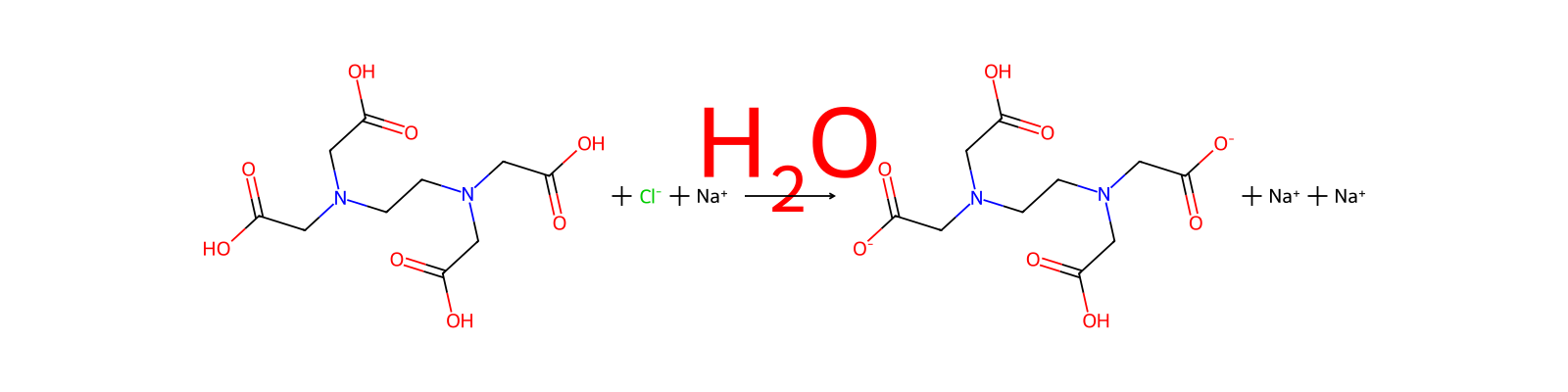
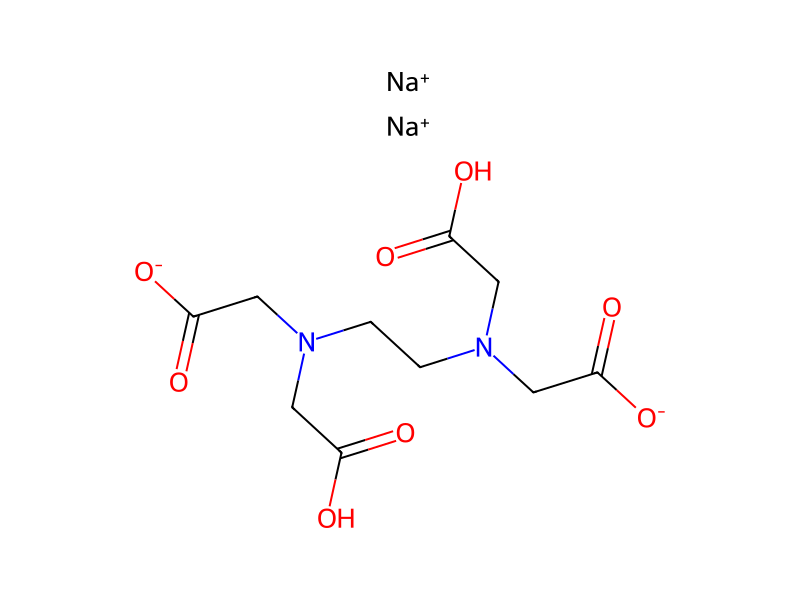
기본 정보
- 표준 SMILES
O=C([O-])CN(CCN(CC(=O)[O-])CC(=O)O)CC(=O)O.[Na+].[Na+]- InChIKey
ZGTMUACCHSMWAC-UHFFFAOYSA-L- 분자식
- C10H14N2Na2O8
- 평균 분자량
- 336.21 g/mol
개요
See also: Edetate Disodium (annotation moved to); Edetate Sodium (annotation moved to); Ethylenediaminetetraacetic Acid (annotation moved to).
이름 및 식별자
- 우선 이름
- EDTA disodium salt
- IUPAC
- disodium;2-[2-[carboxylatomethyl(carboxymethyl)amino]ethyl-(carboxymethyl)amino]acetate
이름 및 동의어
139-33-3EDTA disodium saltDisodium EDTAEdta disodiumTitriplex IIIDisodium edta, anhydrousDisodium ethylenediaminetetraacetateEndrate disodiumEdetic Acid, Disodium SaltEthylenediaminetetraacetic acid, disodium saltDisodium (ethylenedinitrilo)tetraacetateEDTA-Na2
이름 더 보기
EDTA disodium salt (anhydrous)Endrate (TN)MFCD00070672Disodium edathamildisodium 2-({2-[(carboxylatomethyl)(carboxymethyl)amino]ethyl}(carboxymethyl)amino)acetateTetracemate disodiumNa2-EDTAE.D.T.A. disodique [French]
데이터베이스 식별자
- CAS
139-33-3- PubChem CID
- 8759
- DTXSID
DTXSID9027073- UNII
- 8NLQ36F6MM
물성
구조 계산 물성
- 극성 표면적
- 161 Ų
- 수소 결합 공여자 수
- 2
- 수소 결합 수용자 수
- 10
- 회전 가능 결합 수
- 9
- 무거운 원자 수
- 22
- 형식 전하
- 0
- 복잡도
- 336
실험 및 물리화학적 성질
Chemical ClassesOther Uses -> Chelating Agents
Cosmetics
Cosmetic ingredients (Disodium EDTA) -> CIR (Cosmetic Ingredient Review)
Viscosity controlling; Chelating
Food AdditivesFoods, Drugs -> FDA Regulatory Status of Color Additives
Color/FormWhite crystalline powder
Flash PointFlash point is> 100 °C,
Animal DrugsPharmaceuticals -> UK Veterinary Medicines Directorate List
Decomposition
Disodium EDTA decomposes at 252 °C.
When heated to decomposition it emits toxic fumes of /nitrogen oxides and sodium oxides/.
Melting PointMP: 242 °C /EDTA disodium dihydrate/
Physical Description
CBI; Other Solid; Dry Powder
White odorless solid; [JECFA] White odorless crystals; [Mallinckrodt Baker MSDS]
Other Experimental PropertiesCrystals, mp 252 °C (decomposes). pH about 5.3. Solublilty in water at 20 °C: 108 g/100 mL /EDTA disodium dihydrate/
안전 및 규제
유해성 정보
Regulatory Information
Chemical: Glycine, N,Nâ²-1,2-ethanediylbis[N-(carboxymethyl)-, sodium salt (1:2)
Glycine, N,N'-1,2-ethanediylbis[N-(carboxymethyl)-, sodium salt (1:2) is listed on the EPA's Chemical Data Reporting (CDR) system. Manufacturers and importers of Glycine, N,N'-1,2-ethanediylbis[N-(carboxymethyl)-, sodium salt (1:2) are required to report information about their production and use of this chemical to the EPA under the Toxic Substances Control Act (TSCA). (40 eCFR Part 711)
Disodium EDTA: Does not have an individual approval but may be used under an appropriate group standard
Other Safety InformationIMAP assessments - Glycine, N,N'-1,2-ethanediylbis[N-(carboxymethyl)-, disodium salt: Human health tier I assessment
Hazards Summary
Causes convulsions in oral lethal-dose studies of rats; Causes other changes of the liver and kidney in 30-day intermittent oral studies of rabbits; [RTECS] Acceptable daily intake (ADI) of 0-2.5 mg/kg; [JECFA] A mild irritant; [Mallinckrodt Baker MSDS] See Edetic acid.
FDA RequirementsThe Approved Drug Products with Therapeutic Equivalence Evaluations identifies discontinued drug products. Edetate disodium is included on this list.
FIFRA Requirements
Residues of the following chemical substances are exempted from the requirement of a tolerance when used in accordance with good manufacturing practice as ingredients in an antimicrobial pesticide formulation, provided that the substance is applied on a semi-permanent or permanent food-contact surface (other than being applied on food packaging) with adequate draining before contact with food. ... (b) The following chemical substances when used as ingredients in an antimicrobial pesticide formulation may be applied to: Dairy processing equipment, and food-processing equipment and utensils. Ethylenediaminetetraacetic acid (EDTA), disodium salt is included on this list. Limit: When ready for use, the end-use concentration is not to exceed 1400 ppm.
Residues of the following chemical substances are exempted from the requirement of a tolerance when used in accordance with good manufacturing practice as ingredients in an antimicrobial pesticide formulation, provided that the substance is applied on a semi-permanent or permanent food-contact surface (other than being applied on food packaging) with adequate draining before contact with food. ... (c) The following chemical substances when used as ingredients in an antimicrobial pesticide formulation may be applied to: Food-processing equipment and utensils. Ethylenediaminetetraacetic acid (EDTA), disodium salt is included on this list. Limit: When ready for use, the end-use concentration is not to exceed 1400 ppm.
As the federal pesticide law FIFRA directs, EPA is conducting a comprehensive review of older pesticides to consider their health and environmental effects and make decisions about their continued use. Under this pesticide reregistration program, EPA examines newer health and safety data for pesticide active ingredients initially registered before November 1, 1984, and determines whether the use of the pesticide does not pose unreasonable risk in accordance to newer saftey standards, such as those described in the Food Quality Protection Act of 1996. Pesticides for which EPA had not issued Registration Standards prior to the effective date of FIFRA '88 were divided into three lists based upon their potential for human exposure and other factors, with List B containing pesticides of greater concern than those on List C, and with List C containing pesticides of greater concern than those on List D. Ethylenediaminetetraacetic acid, disodium salt is found on List D. Case No: 4036; Pesticide type: insecticide, fungicide, herbicide, antimicrobial; Case Status: None of the active ingredients in the case are being supported for reregistration by their registrants. All are unsupported, or some are unsupported and some are cancelled. Cases described as "unsupported" generally are being processed for cancellation.; Active ingredient (AI): Ethylenediaminetetraacetic acid, disodium salt; AI Status: The active ingredient is no longer contained in any registered products ... "cancelled."
History and Incidents
/OTHER TOXICITY INFORMATION/ Fatal medication errors have occurred that involve confusion between edetate calcium disodium (calcium EDTA) and edetate disodium (no longer commercially available in the US). Children and adults have mistakenly received edetate disodium instead of edetate calcium disodium; at least 5 deaths have occurred as a result of inadvertent administration of edetate disodium. Although both edetate calcium disodium and edetate disodium are heavy metal antagonists, the 2 drugs were originally approved by the US Food and Drug Administration (FDA) for different uses and have different effects; edetate disodium was formerly FDA approved for use in selected patients for the emergency treatment of hypercalcemia or for the control of ventricular arrhythmias associated with cardiac glycoside toxicity. Use of edetate disodium may result in a substantial, and sometimes fatal, decrease in serum calcium concentrations. In June 2008, FDA withdrew its prior approval for edetate disodium because of safety concerns following a review of the risk-benefit profile of the drug. FDA stated that it was not considering additional action regarding edetate calcium disodium at that time; most of the fatalities following administration of an EDTA drug have involved medication errors in which edetate disodium was administered instead of edetate calcium disodium. FDA has not received reports of any fatalities resulting from the administration of edetate calcium disodium that involve a medication error.
Hazardous Reactivities and Incompatibilities
Disodium edentate behaves as a weak acid, displacing carbon dioxide from carbonates and reacting with metals to form hydrogen. It is incompatible with strong oxidizing agents, strong bases, metal ions, and metal alloys.
Additives may be incompatible with the reconstituted (diluted) solution required for intravenous infusion. Consult with pharmacist, if available. When introducing additives, use aseptic technique, mix thoroughly and do not store.
안전 및 보호
Fire Fighting Procedures
Water spray, dry chemical, carbon dioxide, or foam as appropriate for surrounding fire and materials.
This material is assumed to be combustible. As with all dry powders, it is advisable to ground mechanical equipment in contact with dry material to dissipate the potential buildup of static electricity.
Storage Conditions
Store at 25 °C (77 °F) with excursions permitted between 15 to 30 °C (59 to 86 °F).
Store in tight container as defined in the USP-NF. This material should be handled and stored per label instructions to ensure product integrity. Store in a refrigerator.
Cleanup Methods
Wear approved respiratory protection, chemically compatible gloves, and protective clothing. Wipe up spillage or collect spillage using a high-efficiency vacuum cleaner. Avoid breathing dust. Place spillage in appropriately labeled container for disposal. Wash spill site.
Disposal Methods
SRP: The most favorable course of action is to use an alternative chemical product with less inherent propensity for occupational harm/injury/toxicity or environmental contamination. Recycle any unused portion of the material for its approved use or return it to the manufacturer or supplier. Ultimate disposal of the chemical must consider: the material's impact on air quality; potential migration in soil or water; effects on animal and plant life; and conformance with environmental and public health regulations.
Preventive Measures
As with all fires, evacuate personnel to a safe area. Firefighters should use self-contained breathing equipment and protective clothing.
As a general rule, when handling USP Reference Standards avoid all contact and inhalation of dust, mists, and/or vapors associated with the material. Wash thoroughly after handling.
/Wear/ chemically compatible gloves /and/ safety glasses or goggles. Protect exposed skin.
Allowable Tolerances
Residues of the following chemical substances are exempted from the requirement of a tolerance when used in accordance with good manufacturing practice as ingredients in an antimicrobial pesticide formulation, provided that the substance is applied on a semi-permanent or permanent food-contact surface (other than being applied on food packaging) with adequate draining before contact with food. ... (b) The following chemical substances when used as ingredients in an antimicrobial pesticide formulation may be applied to: Dairy processing equipment, and food-processing equipment and utensils. Ethylenediaminetetraacetic acid (EDTA), disodium salt is included on this list. Limit: When ready for use, the end-use concentration is not to exceed 1400 ppm.
Residues of the following chemical substances are exempted from the requirement of a tolerance when used in accordance with good manufacturing practice as ingredients in an antimicrobial pesticide formulation, provided that the substance is applied on a semi-permanent or permanent food-contact surface (other than being applied on food packaging) with adequate draining before contact with food. ... (c) The following chemical substances when used as ingredients in an antimicrobial pesticide formulation may be applied to: Food-processing equipment and utensils. Ethylenediaminetetraacetic acid (EDTA), disodium salt is included on this list. Limit: When ready for use, the end-use concentration is not to exceed 1400 ppm.
Protective Action Criteria (PAC)
6.0 [mg/m3]
66 [mg/m3]
400 [mg/m3]
Personal Protective Equipment (PPE)
Engineering controls such as exhaust ventilation are recommended.
Use a NIOSH-approved respirator, if it is determined to be necessary by an industrial hygiene survey involving air monitoring. In the event that a respirator is not required, an approved dust mask should be used.
독성 정보
Interactions
/Investigators/ reported that Disodium EDTA (10 mg/mL) increased the intestinal absorption of neutral, basic, and acidic compounds in the male Sprague-Dawley rat. The chelating agent increased the absorption of (14)C-mannitol and (14)C-inulin from <2% to 7%-b 1%, the absorption of (14)C-N-methyldecamethonium from 2%-3% to 11%-15%, and the absorption of sulfanilic acid from 11%-14% to 26%-32%. Plasma concentrations of the drugs were increased as much as five- or sixfold, compared to controls.
Disodium EDTA at a concentration of 1% (w/v; 24 mM) increased the in situ drug absorption of acetazolamide from the small intestine of male Charles River rats when administered with 1% (w/v) reduced glutathione. Intestinal absorption was increased by 1.5 to 2 times; however, absorption from the stomach was not affected by treatment with EDTA and glutathione. The investigators suggested that Disodium EDTA altered the aqueous permeability of the intestinal epithelium by the chelation of magnesium and calcium ions, thereby separating the epithelial cells.
Toxicity SummarySafe in the present practices of use and concentration. Ingredient, concentration, and use information are available in documents discoverable at https://cir-reports.cir-safety.org
Human Toxicity Excerpts
/HUMAN EXPOSURE STUDIES/ /Investigators/ treated 19 patients for acrosclerosis with iv Disodium EDTA given over a 4- to 6-hour period. A majority of the patients received 2.5 to 3.0 g of Disodium EDTA in 500 cc 5% dextrose and water for 15 days. The doses were adjusted for children. Objective improvement occurred in 7/19 patients, 4 were questionably improved and 8/19 did not improve. Improvement was subjectively determined as healing of gangrenous ulcers, increased joint mobility, decreased pain, softer and more pliable sclerodermatous areas, and decreased dysphagia. One patient developed renal irritation characterized by albuminuria and granular casts that cleared up completely when the drug was discontinued. This was the only patient that received the dose of Disodium EDTA over a 2.5-hour period.
/HUMAN EXPOSURE STUDIES/ The irritancy potential of Disodium EDTA using a 4-hour patch test /was investigated/. A mass of 0.2 g of the powder was applied to the skin of the upper outer arm using a 25-mm Plain Hill Top Chamber containing a moistened Webril pad. To avoid the production of "high reactions", the test material was applied progressively from 15 to 30 minutes to 4 hour. The treatment sites were evaluated at 24, 48, and 72 hours after patch removal for signs of irritancy and graded using a 4-point scale. The positive control was 0.2 mL of 20% sodium dodecyl sulfate. None of the 26 volunteers treated with Disodium EDTA had irritation, compared to 21 of the 26 volunteers treated with SDS.
/HUMAN EXPOSURE STUDIES/ Disodium EDTA was administered iv intermittently in 5-day courses over a 15-month period to four patients with severe, noncalcific acrosclerosis. Each patient received 0.5 g/30 lb body weight dissolved in 500 cc of 5% glucose water and infused slowly over an hour. The total dose ranged from 132 to 212 g. Side effects were minimal and did not require discontinuation of therapy. Eight patients with progressive systemic sclerosis (PSS) served as untreated histologic controls. Five patients served as untreated chemical controls and skin from the forearms of 11 individuals without scleroderma were also chemically analyzed. The four patients treated with Disodium EDTA cooperated well and had subjective and objective softening of the skin. At microscopic examination, untreated cases of scleroderma had severe changes. Three of the four patients treated with Disodium EDTA had a return toward normal in their skin. All EDTA cases had definite softening of the skin clinically. Microscopically, this was observed as increased vascularity, return of fixed tissue cells, and the loosening of the collagen bundles in the dermis and the stratum corneum of the epidermis. Normal calcium values from the 11 donors were not statistically significant from the scleroderma average. The magnesium values for the normal donors were 0.19 +/- 0.05 pg/mg dry tissue and for the scleroderma group, 0.17 +/- 0.05 pg/mg dry tissue.
/HUMAN EXPOSURE STUDIES/ /Investigators/ treated 81 subjects (normal or with cardiac arrhythmias) with 2000 consecutive infusions of Disodium EDTA over a 2-year period. The chelating agent was administered as a 3-g dose and infused as a 0.5% solution in saline. The test solution was injected over a 2 1/2- to 3-hour period on alternate days, 3 days per week. After the first 20 injections, treatment was discontinued for 6 to 8 weeks. The procedure was then repeated until 2000 injections had been given. Four patients died after receiving 60, 33, 22, and 8 infusions of Disodium EDTA; at necropsy, no evidence of nephrosis was observed. Hypotension, hypocalcemia, burning at the injection site, thrombophlebitis, and GI symptoms were reported by the remaining subjects. The investigators did not observe systemic reactions, histamine-like reactions, anemia, dermatitis, hyperglycemia (or glycosuria), or bone decalcification.
For more Human Toxicity Excerpts (Complete) data for Disodium EDTA (17 total), please visit the HSDB record page.
Non-Human Toxicity Excerpts
/LABORATORY ANIMALS: Acute Exposure/ Five male guinea pigs were injected intracutaneously with a volume of 0.1 mL, then 9 volumes of 0.2 mL Disodium EDTA on alternate days. A challenge injection (0.1 mL) was given 2 weeks after the last induction injection, and the treatment sites were evaluated 24 hours later. The guinea pigs had no signs of allergic reactions.
/LABORATORY ANIMALS: Acute Exposure/ /Investigators/ determined the lethal dose of Disodium EDTA when administered as a single iv injection to rats under ether anesthesia. Disodium EDTA always caused death within 1 minute. The calcium equivalent of the lethal dose was 0.45 mg Ca/100 g rat. Chronic infusion of Disodium EDTA at a rate of 0.05 mL every 20 seconds for 2 to 80 minutes resulted in 0.96 to 1.76 mg Ca/100 g of rat calcium "chelated or removed" before death.
/LABORATORY ANIMALS: Acute Exposure/ Seven dogs per group had blood collected from the femoral artery at a rate of 2 mL/kg/min for a total loss of 30 mL/kg. Thirty minutes later, the blood was added to 4.5% isotonic Disodium EDTA, and the blood was returned to the right femoral vein at rates of 4.6 to 10 mL/kg/min, the final EDTA concentrations were 0.09% and 0.18%. The dogs were evaluated for 15 minutes and 24 hours after the termination of retransfusion. None of the dogs of the low-dose group died as a result of treatment. Venous pressure did not "rise unduly" and arterial pressure returned to normal. Five of the seven dogs of the high-dose group did not have increased arterial pressure, but the venous pressure increased such that the dogs died. In the remaining two dogs of this group, the arterial pressure returned to normal after transfusion and the venous pressure increased only for 10 minutes, then decreased.
/LABORATORY ANIMALS: Acute Exposure/ The acute oral LD50 of Disodium EDTA was 3.7 g/kg for both male and female Wistar rats. Signs of toxicity included ataxia, convulsions, and diarrhea. Changes in tissues were not reported during this study.
For more Non-Human Toxicity Excerpts (Complete) data for Disodium EDTA (23 total), please visit the HSDB record page.
Populations at Special Risk
Clinical studies of edetate disodium did not include sufficient numbers of patients aged 65 and over to determine whether they respond differently from younger subjects. Other reported clinical experience has not identified differences in responses between elderly and younger patients. In general, dose selection for an elderly patient should be cautious, reflecting the greater frequency of decreased hepatic, renal, or cardiac function, and of concomitant disease or other drug therapy.
This drug is known to be substantially excreted by the kidney, and the risk of toxic reactions to this drug may be greater in patients with impaired renal function. Because elderly patients are more likely to have decreased renal function, care should be taken in dose selection, and it may be useful to monitor renal function.
Antidote and Emergency Treatment
Nephrotoxicity (e.g., acute tubular necrosis, proteinuria, and hematuria) may be minimized by adequate hydration, establishment of adequate urine flow, avoidance of excessive doses, and limitation of continuous administration to 5 or fewer days. Laboratory assessment of renal function should be performed daily during treatment for severe intoxication and after the second and fifth days in other cases.
/SRP:/ Immediate first aid: Ensure that adequate decontamination has been carried out. If patient is not breathing, start artificial respiration, preferably with a demand valve resuscitator, bag-valve-mask device, or pocket mask, as trained. Perform CPR if necessary. Immediately flush contaminated eyes with gently flowing water. Do not induce vomiting. If vomiting occurs, lean patient forward or place on the left side (head-down position, if possible) to maintain an open airway and prevent aspiration. Keep patient quiet and maintain normal body temperature. Obtain medical attention. /Poisons A and B/
/SRP:/ Basic treatment: Establish a patent airway (oropharyngeal or nasopharyngeal airway, if needed). Suction if necessary. Watch for signs of respiratory insufficiency and assist ventilations if needed. Administer oxygen by nonrebreather mask at 10 to 15 L/min. Monitor for pulmonary edema and treat if necessary ... . Monitor for shock and treat if necessary ... . Anticipate seizures and treat if necessary ... . For eye contamination, flush eyes immediately with water. Irrigate each eye continuously with 0.9% saline (NS) during transport ... . Do not use emetics. For ingestion, rinse mouth and administer 5 mL/kg up to 200 mL of water for dilution if the patient can swallow, has a strong gag reflex, and does not drool ... . Cover skin burns with dry sterile dressings after decontamination ... . /Poisons A and B/
/SRP:/ Advanced treatment: Consider orotracheal or nasotracheal intubation for airway control in the patient who is unconscious, has severe pulmonary edema, or is in severe respiratory distress. Positive-pressure ventilation techniques with a bag valve mask device may be beneficial. Consider drug therapy for pulmonary edema ... . Consider administering a beta agonist such as albuterol for severe bronchospasm ... . Monitor cardiac rhythm and treat arrhythmias as necessary ... . Start IV administration of D5W /SRP: "To keep open", minimal flow rate/. Use 0.9% saline (NS) or lactated Ringer's if signs of hypovolemia are present. For hypotension with signs of hypovolemia, administer fluid cautiously. Watch for signs of fluid overload ... . Treat seizures with diazepam or lorazepam ... . Use proparacaine hydrochloride to assist eye irrigation ... . /Poisons A and B/
Non-Human Toxicity Values
LD50 Mouse oral 400 mg/kg
LD50 Rat oral 3.7 g/kg
LD50 Rabbit iv 47 mg/kg
LD50 Rabbit oral 2300 mg/kg
For more Non-Human Toxicity Values (Complete) data for Disodium EDTA (8 total), please visit the HSDB record page.
규제 정보
FDA RequirementsThe Approved Drug Products with Therapeutic Equivalence Evaluations identifies discontinued drug products. Edetate disodium is included on this list.
FIFRA Requirements
Residues of the following chemical substances are exempted from the requirement of a tolerance when used in accordance with good manufacturing practice as ingredients in an antimicrobial pesticide formulation, provided that the substance is applied on a semi-permanent or permanent food-contact surface (other than being applied on food packaging) with adequate draining before contact with food. ... (b) The following chemical substances when used as ingredients in an antimicrobial pesticide formulation may be applied to: Dairy processing equipment, and food-processing equipment and utensils. Ethylenediaminetetraacetic acid (EDTA), disodium salt is included on this list. Limit: When ready for use, the end-use concentration is not to exceed 1400 ppm.
Residues of the following chemical substances are exempted from the requirement of a tolerance when used in accordance with good manufacturing practice as ingredients in an antimicrobial pesticide formulation, provided that the substance is applied on a semi-permanent or permanent food-contact surface (other than being applied on food packaging) with adequate draining before contact with food. ... (c) The following chemical substances when used as ingredients in an antimicrobial pesticide formulation may be applied to: Food-processing equipment and utensils. Ethylenediaminetetraacetic acid (EDTA), disodium salt is included on this list. Limit: When ready for use, the end-use concentration is not to exceed 1400 ppm.
As the federal pesticide law FIFRA directs, EPA is conducting a comprehensive review of older pesticides to consider their health and environmental effects and make decisions about their continued use. Under this pesticide reregistration program, EPA examines newer health and safety data for pesticide active ingredients initially registered before November 1, 1984, and determines whether the use of the pesticide does not pose unreasonable risk in accordance to newer saftey standards, such as those described in the Food Quality Protection Act of 1996. Pesticides for which EPA had not issued Registration Standards prior to the effective date of FIFRA '88 were divided into three lists based upon their potential for human exposure and other factors, with List B containing pesticides of greater concern than those on List C, and with List C containing pesticides of greater concern than those on List D. Ethylenediaminetetraacetic acid, disodium salt is found on List D. Case No: 4036; Pesticide type: insecticide, fungicide, herbicide, antimicrobial; Case Status: None of the active ingredients in the case are being supported for reregistration by their registrants. All are unsupported, or some are unsupported and some are cancelled. Cases described as "unsupported" generally are being processed for cancellation.; Active ingredient (AI): Ethylenediaminetetraacetic acid, disodium salt; AI Status: The active ingredient is no longer contained in any registered products ... "cancelled."
화학 및 산업
약리 정보
Mechanism of Action
Edetate disodium injection forms chelates with the cations of calcium and many divalent and trivalent metals. Because of its affinity for calcium, edetate disodium will produce a lowering of the serum calcium level during intravenous infusion. Slow infusion over a protracted period may cause mobilization of extracirculatory calcium stores. Edetate disodium exerts a negative inotropic effect upon the heart.
Edetate disodium likewise forms chelates with other polyvalent metals and produces increases in urinary excretion of magnesium, zinc and other trace elements. It does not form a chelate with potassium but may reduce the serum level and increase urinary loss of potassium.
Biological Half-LifeAfter intravenous administration, the chelate formed is excreted in the urine with 50% appearing in 1 hour and over 95% in 24 hours.
Absorption, Distribution and Excretion
After intravenous administration, the chelate formed is excreted in the urine with 50% appearing in 1 hour and over 95% in 24 hours.
Disodium edentate ... /is/ poorly absorbed from the gastrointestinal tract and /is/ associated with few adverse effects when used as an excipient in pharmaceutical preparations.
Twenty male Sprague-Dawley rats were divided into four groups of five animals each. Rats in group 1 received ip injections of (14)C Disodium EDTA, group 2 received this compound on depilated skin, rats in group 3 received this compound on depilated and abraded skin (abraded every 2 or 3 cm over treated area), and group 4 was the control group. The specific activity of the (14)C Disodium EDTA was 21.6 mCi/mM and it was dissolved in saline to yield a final solution of 50 pCi/mL. Animals that received ip injections got 0.5 mL of this solution, or 25 pCi of (14)C Disodium EDTA. Animals that had the compound applied to the skin received 25 pCi of (14)C Disodium EDTA in the form of an ointment (modulan, mineral oil, petrolatum, cetyl alcohol 35:21 :25:12) spread over an area of 50 sq cm spread over a sheet of thin polyethylene. This sheet was taped to the trunk of each animal. A collar was fixed around the neck of the rats. All animals were decapitated 24 hours after treatment. The tissue distribution (per 100 mg wet organ weight) of (14)C Disodium EDTA 24 hours after ip administration was as follows: liver 577+/- 13, small intestine 631 +/- 25, large intestine 696 +/- 19, and kidney 1964 +/- 220. Twenty-four hours after application on normal skin the tissue distribution was as follows: liver 6 +/- 4, small intestine 99 +/- 22, large intestine 107 +/- 24, and kidneys 29 +/- 12. Twenty-four hours after application on abraded skin the tissue distribution was as follows: liver 139 +/- 34, small intestine 214 +/- 76, large intestine 309 +/- 115, and kidneys 222 +/- 30.
/Investigators/ reported that rats fed 0.5%, 1.0%, and 5.0% Disodium EDTA for 12 weeks excreted 82.2%, 44.5%, and 45.4%, respectively, of the ingested dose in the urine and feces. The feces contained 99.4%, 98.2%, and 97.5% of the excreted material and the urine contained 0.6%, 1.8%, and 2.5% of the material for the respective doses.
For more Absorption, Distribution and Excretion (Complete) data for Disodium EDTA (7 total), please visit the HSDB record page.
용도 및 제조
Uses
CIR ingredient: Disodium EDTA
Formerly registered in the US for use as a disinfectant and component of contact lens solutions; [NPIRS] Used as a preservative, color retention agent, antioxidant, flavoring agent for foods, anticoagulant for blood collection, and chelating agent in personal care products; Also used in the pulp and paper industry, in laboratory titrimetric analysis of metals, and as a therapeutic chelating agent; [Merck Index] Used in the agricultural, chemical, paper-pulp-board, textile processing, detergent, and cosmetics industries; Used as a cleaning/washing agent, disinfectant, coloring agent, complexing agent, stabilizer, and micro-nutrient; [IUCLID]
Pulp and Paper Processing [Category: Industry]
For disodium EDTA (USEPA/OPP Pesticide Code: 039115) there are 0 labels match. /SRP: Not registered for current use in the U.S., but approved pesticide uses may change periodically and so federal, state and local authorities must be consulted for currently approved uses./
The active ingredient is no longer contained in any registered products ... "cancelled."
Disodium EDTA is a preservative, sequestrant, and stabilizer ... Disodium EDTA is permitted in the feed and drinking water of animals and/or for the treatment of food-producing animals. ... Disodium EDTA is not expected to contain preservatives, antioxidants, or sequestering agents for the purposes of stabilization.
Impurities
Disodium EDTA is not expected to contain pesticides, 1,4-dioxane, free ethylene oxide, monochloroacetic acid, sulfite, organic solvents, nitrosamines, or other substances. The maximum concentration of heavy metals and formaldehyde is 10 ppm and 100 ppm, respectively.
U.S. Production
2023: 4,000,000 - <5,500,000 lb
Glycine, N,N'-1,2-ethanediylbis[N-(carboxymethyl)-, disodium salt is listed as a High Production Volume (HPV) chemical (65FR81686). Chemicals listed as HPV were produced in or imported into the U.S. in >1 million pounds in 1990 and/or 1994. The HPV list is based on the 1990 Inventory Update Rule. (IUR) (40 CFR part 710 subpart B; 51FR21438).[EPA/Office of Pollution Prevention and Toxics; High Production Volume (HPV) Challenge Program. Glycine, N,N'-1,2-ethanediylbis
Production volumes for non-confidential chemicals reported under the Inventory Update Rule. [Table#7960]
Production volume for non-confidential chemicals reported under the 2006 Inventory Update Rule. Chemical: Glycine, N,N'-1,2-ethanediylbis[N-(carboxymethyl)-, sodium salt (1:2). Aggregated National Production Volume: 1 to < 10 million lbs.[US EPA; Non-Confidential 2006 Inventory Update Reporting. National Chemical Information. Glycine, N,N'-1,2-ethanediylbis
Consumer UsesChelating agent
Industry UsesCBI
Methods of Manufacturing
All of the industrially used methods of manufacture of EDTA and its salts involve the addition of formaldehyde and hydrogen cyanide or an alkali metal cyanide to an aqueous solution of EDTA. The salts, or edetates, are then formed by hydrolysis. EDTA can also be formed by heating tetrahydroxyethylethylenediamine with sodium or potassium hydroxide using a cadmium oxide catalyst. Disodium EDTA was prepared by dissolving EDTA into a hot solution that contained two equivalents of sodium hydroxide. The solution was then allowed to crystallize.
(Ethylenedinitrilo)tetraacetic acid is dissolved in a hot solution containing two equivalents of NaOH, and the disodium salt is allowed to crystallize.
Formulations/Preparations
Disodium EDTA is a substituted diamine ... it contains 76.0% to 77.5% EDTA. When dried, the cosmetic-grade material contains not less than 99.0% of Disodium EDTA ... The pharmaceutical-grade material contains not less than 99.0% and not more than 101.0% /disodium EDTA/, calculated on a dried basis.
Endrate (Edetate Disodium Injection, USP) is supplied in 20 mL (3 g) ampuls
Household ProductsInformation on 1150 consumer products that contain Disodium EDTA in the following categories is provided:
Use Classification
Food Additives -> ANTIOXIDANT_SYNERGIST; PRESERVATIVE; SEQUESTRANT; SYNERGIST -> JECFA Functional Classes
Food Additives -> ANTIOXIDANT_SYNERGIST; PRESERVATIVE; SEQUESTRANT; SYNERGIST -> JECFA Functional Classes
Cosmetics -> Viscosity controlling; Chelating
General Manufacturing Information
Soap, Cleaning Compound, and Toilet Preparation Manufacturing
Glycine, N,N'-1,2-ethanediylbis[N-(carboxymethyl)-, sodium salt (1:2): ACTIVE
Disodium edetate, Na2EDTA, and ... closely related compounds have been used as industrial and analytical reagents because they chelate many divalent & trivalent metals
관련 반응
66건


연결된 노트
불러오는 중…