홈MCP워크벤치Skills
홈워크벤치알림마이페이지
llms.txt · MCP 가이드개인정보처리방침 · 이용약관 · 지원v1.8.0
  1. 홈
  2. /화합물

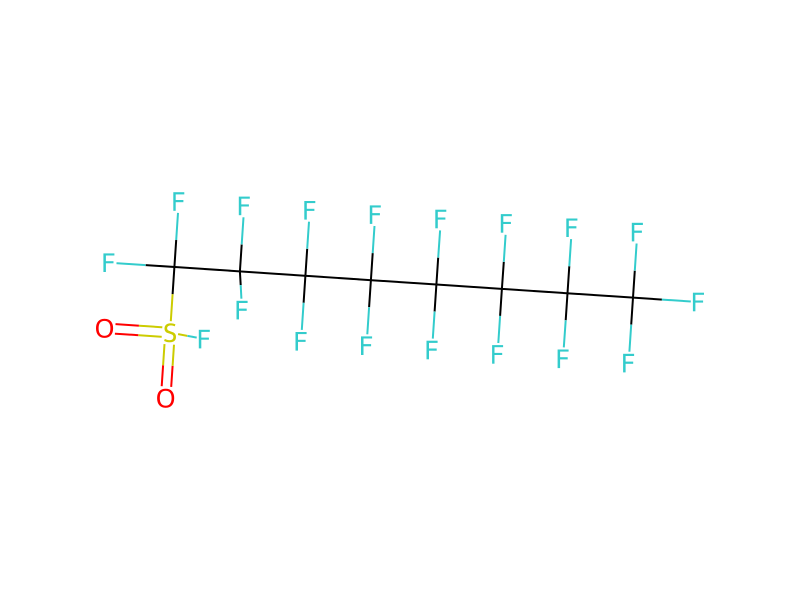
Perfluorooctanesulfonyl fluoride

HCID 9388
새 노트새 반응견적 요청하기
인쇄 미리보기

데이터를 보충하는 중입니다. 잠시 후 페이지를 새로 고치면 최신 내용을 볼 수 있습니다
기본 정보개요이름 및 식별자물성안전 및 규제화학 및 산업관련 반응화합물 노트
부분 구조 검색유사 구조 찾기

기본 정보

CAS
307-35-7
표준 SMILES
O=S(=O)(F)C(F)(F)C(F)(F)C(F)(F)C(F)(F)C(F)(F)C(F)(F)C(F)(F)C(F)(F)F
InChIKey
BHFJBHMTEDLICO-UHFFFAOYSA-N
분자식
C8F18O2S
평균 분자량
502.12 g/mol
단동위원소 질량
501.9331582

개요

Perfluorooctylsulfonyl fluoride is a sulfonic acid derivative.

이름 및 식별자

우선 이름
Perfluorooctanesulfonyl fluoride
IUPAC
1,1,2,2,3,3,4,4,5,5,6,6,7,7,8,8,8-heptadecafluorooctane-1-sulfonyl fluoride
영어명
Perfluoro-1-octanesulfonyl fluoride
분자식
C8F18O2S
분자량
502.12

이름 및 동의어

Perfluorooctanesulfonyl fluoride307-35-7PERFLUOROOCTYLSULFONYL FLUORIDEperfluorooctane sulfonyl fluorideHeptadecafluorooctanesulphonyl fluorideN-Perfluorooctanesulfonyl fluorideKPV81L86O0DTXSID50271401-Octanesulfonyl fluoride, 1,1,2,2,3,3,4,4,5,5,6,6,7,7,8,8,8-heptadecafluoro-1,1,2,2,3,3,4,4,5,5,6,6,7,7,8,8,8-HEPTADECAFLUORO-1- OCTANESULFONYL FLUORIDERefChem:171671206-200-6
이름 더 보기
posf1,1,2,2FX-8FC-850KG/DRUMFluorad FX-8xinjihuangsuanfuperfluorooctylfluoride
Perfluoro-1-octanesulfonyl fluoride1,1,2,2,3,3,4,4,5,5,6,6,7,7,8,8,8-heptadecafluorooctane-1-sulfonyl fluorideheptadecafluorooctane-1-sulfonyl fluorideMFCD00012016Perfluorooctylsulfonyl Fluoride (~90%)PFOSFC8F18O2SHSDB 5561

데이터베이스 식별자

CAS
307-35-7
PubChem CID
9388
DTXSID
DTXSID5027140
ChEBI
CHEBI:81538
UNII
KPV81L86O0
EC Number
206-200-6
Nikkaji
J57.758H

물성

구조 계산 물성보충 중

XLogP
6
극성 표면적
42.5 Ų
수소 결합 공여자 수
0
수소 결합 수용자 수
20
회전 가능 결합 수
7
무거운 원자 수
29
형식 전하
0
복잡도
724

실험 및 물리화학적 성질

Chemical ClassesOther Classes -> Other Organic Compounds
PFAS · 6건

PFAS

PFAS -> OECD Category

PFAS -> Perfluoroalkane sulfonyl fluoride (PASF)-based substances

PFAS -> Other/unspecified

PFAS -> Other/unspecified

PFAS -> Other/unspecified

Density1.824 g/mL at 25 °C
Color/FormLiquid
Boiling Point154 °C
Vapor Density>1 (Air = 1)
Physical DescriptionClear liquid; [MSDSonline]

물리화학적 성질

녹는점
-1 °C · -1 °C
끓는 점
154 · 154-155 °C(lit.)
밀도
1.824 g/mL · 1.824 g/mL at 25 °C(lit.)
증기 밀도
1 · >1 (vs air)
증기압
10 mm · <10 mm Hg ( 20 °C)

안전 및 규제

안전 정보는 참고용이며, 공급업체의 물질안전보건자료(SDS), 관련 법규 및 전문가 평가를 대체하지 않습니다.

GHS 분류

GHS Classification · 6건

Danger

H301 (47.4%): Toxic if swallowed [Danger Acute toxicity, oral]

P203, P260, P261, P264, P264+P265, P270, P271, P273, P280, P301+P316, P301+P330+P331, P302+P361+P354, P304+P340, P305+P354+P338, P316, P317, P318, P319, P321, P330, P363, P391, P403+P233, P405, and P501 (click each P-code to see the statement)

Aggregated GHS information provided per 78 reports by companies from 4 notifications to the ECHA C&L Inventory. Each notification may be associated with multiple companies.

Danger

H301: Toxic if swallowed [Danger Acute toxicity, oral]

유해성 정보

Regulatory Information · 4건

Chemical: 1-Octanesulfonyl fluoride, 1,1,2,2,3,3,4,4,5,5,6,6,7,7,8,8,8-heptadecafluoro-

S - indicates a substance that is identified in a final Significant New Use Rule.

Status: Cease Manufacture Update: 18-11-2010 https://echa.europa.eu/registration-dossier/-/registered-dossier/12501

Substance: Heptadecafluorooctanesulphonyl fluoride

Other Safety InformationIMAP assessments - Perfluorooctane sulfonate (PFOS) and its Direct Precursors: Human health tier II assessment
Hazards Summary · 1건

Emergency treatment: Fluoride; [HSDB] Repeated high-dose studies have shown the liver to be the primary target organ; Effects observed in reproductive studies include increase in neonatal mortality; Multi-generational studies showed no effects to post-natal neurological development or to fertility in offspring; No evidence of mutagenicity; Perfluorooctanesulfonyl fluoride (POSF) based fluorochemicals can be absorbed into the body and metabolized into perfluorooctanesulfonate (PFOS); Monitoring of PFOS has been used to measure employee exposure to POSF based chemicals in manufacturing; [EPA] See Perfluorooctane sulfonic acid.

TSCA Requirements · 1건

Certain perfluoroalkyl sulfonates. (a) Chemical substances and significant new uses subject to reporting. (1) The chemical substances listed in Table 1 /including 1-Octanesulfonyl fluoride, 1,1,2,2,3,3,4,4,5,5,6,6,7,7,8,8,8-heptadecafluoro-/ ... of this section are subject to reporting under this section for the significant new uses described in paragraph (a)(2) of this section. ... (2) The significant new uses are: ... (ii) Any manufacture or import for any use of any chemical substance listed in Table 2 of paragraph (a)(1) of this section, except as noted in paragraph (a)(3) of this section. ... (3) Manufacture or import of any chemical substance listed in Table 2 ... for the following specific uses shall not be considered as a significant new use subject to reporting under this section: (i) Use as an anti-erosion additive in fire-resistant phosphate ester aviation hydraulic fluids. (ii) Use as a component of a photoresist substance, including a photo acid generator or surfactant, or as a component of an anti-reflective coating, used in a photomicrolithography process to produce semiconductors or similar components of electronic or other miniaturized devices. (iii) Use in coating for surface tension, static discharge, and adhesion control for analog and digital imaging films, papers, and printing plates, or as a surfactant in mixtures used to process imaging films. (iv) Use as an intermediate only to produce other chemical substances to be used solely for the uses listed in paragraph (a)(3)(i), (ii), or (iii) of this section.

화학 및 산업

약리 정보

Absorption, Distribution and Excretion · 1건

Perfluorooctanesulfonate and its salts (PFOS) are derived from perfluorooctanesulfonyl fluoride, the basic chemical building block for many sulfonyl-based fluorochemicals used as surfactants and for their repellent properties. PFOS is highly persistent in the environment and has a long serum elimination half-life in both animals and humans. ... Animal studies indicate that PFOS is well absorbed orally and distributes mainly in blood serum and the liver. ... /Perfluorooctanesulfonate, metabolite/

용도 및 제조

Uses · 3건

Used as a precursor for various perfluorinated amides, alcohols, acrylates, and other fluorochemical polymers; [EPA]

Use as a surfactant, in paper and packaging treatment, and surface protectant

Precursor of many fluorinated sulfonyl surfactants

U.S. Production · 2건

1-Octanesulfonyl fluoride, 1,1,2,2,3,3,4,4,5,5,6,6,7,7,8,8,8-heptadecafluoro- is listed as a High Production Volume (HPV) chemical (65FR81686). Chemicals listed as HPV were produced in or imported into the U.S. in >1 million pounds in 1990 and/or 1994. The HPV list is based on the 1990 Inventory Update Rule. (IUR) (40 CFR part 710 subpart B; 51FR21438).

Production volumes for non-confidential chemicals reported under the Inventory Update Rule.[Table#5436]

Use ClassificationPFAS (per- and polyfluoroalkyl substances) -> OECD Category
General Manufacturing Information1-Octanesulfonyl fluoride, 1,1,2,2,3,3,4,4,5,5,6,6,7,7,8,8,8-heptadecafluoro-: ACTIVE

상·하류 제품 정보

상류 원료

1-옥탄술포닐플루오라이드

관련 반응

22건
반응 기록 만들기
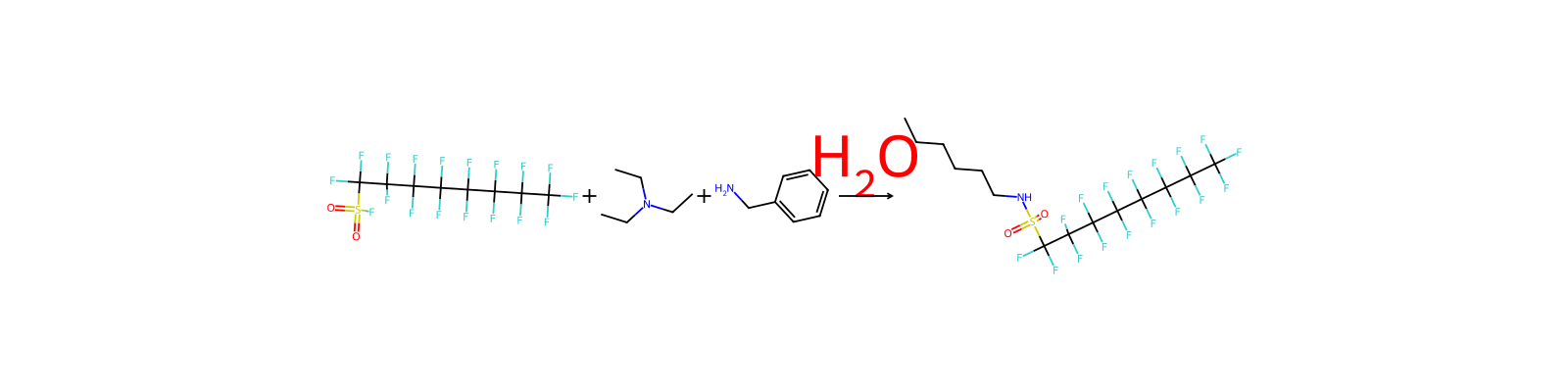
HRID 3954 반응식
HRID 3954반응물로uspto-grants-1988_02
HRID 96847 반응식
HRID 96847반응물로Training data from https://doi.org/10.1039/C8SC04228D (2/10)
HRID 208875 반응식
HRID 208875반응물로Training data from https://doi.org/10.1039/C8SC04228D (6/10)
HRID 315450 반응식
HRID 315450반응물로Training data from https://doi.org/10.1039/C8SC04228D (8/10)
HRID 376220 반응식
HRID 376220반응물로uspto-grants-2000_02
HRID 567640 반응식
HRID 567640반응물로uspto-grants-2001_01
HRID 567641 반응식
HRID 567641반응물로uspto-grants-2001_01
HRID 567642 반응식
HRID 567642반응물로uspto-grants-2001_01
1 / 3 페이지

화합물 노트

불러오는 중…

이 페이지에서기본 정보개요이름 및 식별자물성안전 및 규제화학 및 산업관련 반응화합물 노트
더보기
새 노트새 반응견적 요청하기
굴절률
20 · n20/D 1.301
인화점
100 °C · >100°C
용해도
클로로포름(약간 용해됨), 메탄올(약간 용해됨)
물리적 상태
액체
색상
무색~황색
Specific Gravity
1.81 · 1.81
BRN
1718067 · 1718067
Henry's Law Constant
1.5 · 1.5×10-7 mol/(m3Pa) at 25℃, HSDB (2015)
안정성
흡습성, 수분 민감성
InChI
1S/C8F18O2S/c9-1(10,3(13,14)5(17,18)7(21,22)23)2(11,12)4(15,16)6(19,20)8(24,25)29(26,27)28
InChIKey
BHFJBHMTEDLICO-UHFFFAOYSA-N
SMILES
FC(F)(F)C(F)(F)C(F)(F)C(F)(F)C(F)(F)C(F)(F)C(F)(F)C(F)(F)S(F)(=O)=O
NIST
-1 · Perfluoro-1-octanesulfonyl fluoride(307-35-7)
EPA
Perfluorooctylsulfonyl fluoride (307-35-7)

화학적 성질

clear colourless liquid

Hazard Classes and Categories · 2건

Acute Tox. 3 (47.4%)

Carcinogenicity - category 2

안전 및 보호

Disposal Methods · 1건

SRP: The most favorable course of action is to use an alternative chemical product with less inherent propensity for occupational harm/injury/toxicity or environmental contamination. Recycle any unused portion of the material for its approved use or return it to the manufacturer or supplier. Ultimate disposal of the chemical must consider: the material's impact on air quality; potential migration in soil or water; effects on animal and plant life; and conformance with environmental and public health regulations.

독성 정보

Environmental Fate · 3건

TERRESTRIAL FATE: Based on a classification scheme(1), an estimated Koc value of 3.6X10+5(SRC), determined from a structure estimation method(2), indicates that perfluorooctylsulfonyl fluoride is expected to be immobile in soil(SRC). Volatilization of perfluorooctylsulfonyl fluoride from moist soil surfaces is expected to be an important fate process(SRC) given an estimated Henry's Law constant of 68 atm-cu m/mole(SRC), using a fragment constant estimation method(3). However, adsorption to soil is expected to attenuate volatilization(SRC). Perfluorooctylsulfonyl fluoride is expected to volatilize from dry soil surfaces(SRC) based upon an estimated vapor pressure of 5.8 mm Hg at 25 °C(SRC), determined from a fragment constant method(4). Biodegradation data in soil were not available(2012, SRC).

AQUATIC FATE: Based on a classification scheme(1), an estimated Koc value of 3.6X10+5(SRC), determined from a structure estimation method(2), indicates that perfluorooctylsulfonyl fluoride is expected to adsorb to suspended solids and sediment(SRC). Volatilization from water surfaces is expected(3) based upon an estimated Henry's Law constant of 68 atm-cu m/mole(SRC), developed using a fragment constant estimation method(4). Using this Henry's Law constant and an estimation method(3), volatilization half-lives for a model river and model lake are 6.5 hours and 8.9 days, respectively(SRC). However, volatilization from water surfaces is expected to be attenuated by adsorption to suspended solids and sediment in the water column. The estimated volatilization half-life from a model pond is 845 years if adsorption is considered(5). According to a classification scheme(6), an estimated BCF of 5200(SRC), from an estimated log Kow of 7.84(7) and a regression-derived equation(8), suggests the potential for bioconcentration in aquatic organisms is very high(SRC). Biodegradation data in water were not available(2012, SRC). Perfluorooctylsulfonyl fluoride is expected to undergo hydrolysis in the environment due to the presence of functional groups that hydrolyze under environmental conditions(3). Perfluorooctylsulfonyl fluoride and perfluorooctylsulfonyl fluoride polymers ultimately degrade to perfluorooctane sulfonate(9).

ATMOSPHERIC FATE: According to a model of gas/particle partitioning of semivolatile organic compounds in the atmosphere(1), perfluorooctylsulfonyl fluoride, which has an estimated vapor pressure of 5.8 mm Hg at 25 °C(SRC), determined from a fragment constant method(2), is expected to exist solely as a vapor in the ambient atmosphere. Vapor-phase perfluorooctylsulfonyl fluoride is not expected to react with photochemically-produced hydroxyl radicals or be susceptible to direct photolysis by sunlight(SRC).

Adverse EffectsOccupational hepatotoxin - Secondary hepatotoxins: the potential for toxic effect in the occupational setting is based on cases of poisoning by human ingestion or animal experimentation.
Ecotoxicity Excerpts · 1건

/AQUATIC SPECIES/ Perfluorinated surfactants (PFSs) in Asian freshwater fish species were analyzed to investigate tissue distribution, temporal trends, extent of pollution, and level of PFS exposure through food intake. Freshwater fish species, namely carp, snakehead, and catfish, were collected in Japan, Vietnam, India, Malaysia, and Thailand, and 10 PFSs, including perfluorooctanesulfonate (PFOS) and perfluorooctanoate, were analyzed by liquid chromatography-tandem mass spectrometry. PFSs in carp in Tokyo were more concentrated in kidneys (sum of 10 PFSs = 257 +/- 95 ng/g wet weight [ww]) and livers (119 +/- 36 ng/g ww) than in ovaries (43 +/- 2 ng/g ww) and muscles (24 +/- 17 ng/g ww). Concentrations of PFOS and its precursor, perfluorooctane sulfonamide, in livers of carp and in waters in Tokyo showed a dramatic decrease during the last decade, probably because of 3 M's phasing-out of the manufacture of perfluorooctanesulfonyl-fluoride-based products in 2000. In contrast, continuing contamination by long-chain perfluorocarboxylates (PFCAs) with > or =9 fluorinated carbons was seen in multiple media, suggesting that these compounds continue to be emitted. PFS concentrations in freshwater fish species in tropical Asian countries were generally lower than those in developed countries, such as Japan, e.g., for PFOS in muscle, Vietnam < 0.05-0.3 ng/g ww; India < 0.05-0.2 ng/g ww; Malaysia < 0.05-0.2 ng/g ww; Thailand < 0.05 ng/g ww; and Japan (Tokyo) = 5.1-22 ng/g ww. Daily intake of short-chain PFCAs with < or =8 fluorinated carbons from freshwater fish species in Japan was approximately one order of magnitude lower than that from drinking water, whereas daily intake of PFOS and long-chain PFCAs with > or =9 fluorinated carbons from freshwater fish species was comparable with or greater than that from drinking water. Because the risk posed by exposure to these compounds through intake of fish species is a matter of concern, we recommend the continued monitoring of PFS levels in Asian developing countries. /Perfluorinated surfactants/

Soil Adsorption/Mobility · 1건

Using a structure estimation method based on molecular connectivity indices(1), the Koc of perfluorooctylsulfonyl fluoride can be estimated to be 3.6X10+5(SRC). According to a classification scheme(2), this estimated Koc value suggests that perfluorooctylsulfonyl fluoride is expected to be immobile in soil(SRC).

Human Toxicity Excerpts · 5건

/EPIDEMIOLOGY STUDIES/ Workers with potential high exposure to Perfluorooctanesulfonyl Fluoride (POSF)-related compounds, including perfluorooctanesulfonate (PFOS), had 3 bladder cancer deaths vs. 0.2 expected (SMR 12.8; 95% CI 2.6 +/- 37.4). These compounds have not shown genotoxicity, and toxicology studies (including cancer bioassays) with PFOS and related sulfonamides have not shown bladder effects, but repeat-exposure data was not available for POSF. To further study the association of exposure to bladder cancer, we investigated ... bladder cancer incidence in workers. ... Because of high survivorship, living members (N = 1895) of the study were contacted by mail to answer a questionnaire about bladder cancer, and 74% participated. Validation occurred by medical record or death certificate for those original members deceased (N = 188). Incidence of bladder cancer was compared to expected based on NCI SEER data. Results: 11 bladder cancers were identified. The Standardized Incidence Ratio (SIR) for the entire cohort was 1.3 (95% CI 0.6 +/- 2.3). The SIR for ever working and working for more than one year in a high exposed job were 1.7 (95% CI 0.6 +/- 3.8) and 1.1 (95% CI 0.2 +/- 3.3), respectively. These studies do not support the hypothesis that the excess risk of bladder cancer initially reported was due to exposure to POSF-related materials or PFOS.

/EPIDEMIOLOGY STUDIES/ To determine whether bladder cancer is associated with exposure to perfluorooctane sulfonate (PFOS) in an occupational cohort /of perfluorooctanesulfonyl fluoride manufacturing workers./ Incidence of bladder cancer was ascertained by postal questionnaire to all living current and former employees of the facility (N = 1895) and death certificates for deceased workers (N = 188). Exposure to PFOS was estimated with work history records and weighted with biological monitoring data. Standardized incidence ratios (SIRs) were estimated using U.S. population-based rates as a reference. Bladder cancer risk within the cohort was evaluated using Poisson regression by cumulative PFOS exposure. Questionnaires were returned by 1,400 of the 1895 cohort members presumed alive. Eleven cases of primary bladder cancer were identified from the surveys (n = 6) and death certificates (n = 5). The SIRs were 1.28 (95% confidence interval [CI] = 0.64-2.29) for the entire cohort and 1.74 (95% CI = 0.64-3.79) for those ever working in a high exposed job. Compared with employees in the lowest cumulative exposure category, the relative risk of bladder cancer was 0.83 (95% CI = 0.15-4.65), 1.92 (95% CI = 0.30-12.06), and 1.52 (95% CI = 0.21-10.99). ... /Perfluorooctane sulfonate, metabolite/

/EPIDEMIOLOGY STUDIES/ The observed to expected episodes of care experience of 652 employees at a fluorochemical (perfluorooctanesulfonyl fluoride) production facility was compared with 659 film plant (nonfluorochemical) employees at the same site (Decatur, AL). Episodes of care were defined by a hierarchical analysis of health claims data from 1993 through 1998. The age- and sex-adjusted expected number of episodes of care was calculated from the company's U.S. manufacturing workforce. For a priori interests, the observed to expected episodes of care ratios were comparable for fluorochemical and film plant employees for liver tumors or diseases, bladder cancer, thyroid and lipid metabolism disorders, and reproductive, pregnancy, and perinatal disorders and higher for biliary tract disorders and cystitis recurrence. Non-a priori associations among the fluorochemical plant workers included benign colon polyps, malignant colorectal tumors, and malignant melanoma.

Artificial Pollution Sources · 1건

Perfluorooctylsulfonyl fluoride's production and use as a surfactant, in paper and packaging treatment, and surface protectant(1) may result in its release to the environment through various waste streams(SRC). Perfluorooctylsulfonyl fluoride is also a precursor of many fluorinated sulfonyl surfactants(2).

Environmental BiodegradationBiodegradation data in soil or in water were not available. (2012, SRC)
Environmental Bioconcentration · 1건

An estimated BCF of 5200 was calculated in fish for perfluorooctylsulfonyl fluoride(SRC), using an estimated log Kow of 7.84(1) and a regression-derived equation(2). According to a classification scheme(3), this BCF suggests the potential for bioconcentration in aquatic organisms is very high(SRC).

Volatilization from Water/Soil · 1건

The Henry's Law constant for perfluorooctylsulfonyl fluoride is estimated as 68 atm-cu m/mole(SRC) using a fragment constant estimation method(1). This Henry's Law constant indicates that perfluorooctylsulfonyl fluoride is expected to volatilize rapidly from water surfaces(2). Based on this Henry's Law constant, the volatilization half-life from a model river (1 m deep, flowing 1 m/sec, wind velocity of 3 m/sec)(2) is estimated as 6.5 hours(SRC). The volatilization half-life from a model lake (1 m deep, flowing 0.05 m/sec, wind velocity of 0.5 m/sec)(2) is estimated as 8.9 days(SRC). Perfluorooctylsulfonyl fluoride's Henry's Law constant indicates that volatilization from moist soil surfaces may occur(SRC). The volatilization half-life from a model pond is about 845 years when adsorption is considered(3). Perfluorooctylsulfonyl fluoride is expected to volatilize from dry soil surfaces(SRC) based upon an estimated vapor pressure of 5.8 mm Hg(SRC), determined from a fragment constant method(4).

Non-Human Toxicity Excerpts · 1건

/LABORATORY ANIMALS: Subchronic or Prechronic Exposure/ /The investigators/ investigated potential bladder effects of POSF in rats. ... Rats were exposed by inhalation to 0, 30, 100, or 300 ppm POSF 6 hrs/day, 5 days/week for 4 (0 and 300 ppm) or 13 weeks. Complete urinalysis was done on overnight urines. SEM/X-ray element analysis for crystals/calculi and immediate pH were conducted on fresh morning urines. Sagittal sections of urinary bladder were taken for SEM analysis and assessment of cell proliferation by proliferating cell nuclear antigen (3 sections, 103 cells/section). Results: There were no treatment-related findings with respect to urinalysis parameters, including pH and solids, nor changes of the urothelium, including no exposure-related increase in cell proliferation.

Environmental Abiotic Degradation · 1건

Vapor-phase perfluorooctylsulfonyl fluoride is not expected to react with photochemically-produced hydroxyl radicals or be susceptible to direct photolysis by sunlight(SRC). Hydrolysis of perfluorooctylsulfonyl fluoride is expected due to the presence of functional groups that hydrolyze under environmental conditions(1). Perfluorooctylsulfonyl fluoride and perfluorooctylsulfonyl fluoride polymers ultimately degrade to perfluorooctane sulfonate(2).

Probable Routes of Human Exposure · 1건

Occupational exposure to perfluorooctylsulfonyl fluoride may occur through inhalation and dermal contact with this compound at workplaces where perfluorooctylsulfonyl is produced or used(SRC). Studies have found perfluorooctylsulfonate chemicals in very small quantities in the blood of the general human population as well as in wildlife, indicating that exposure to the chemicals, including pristine environments, is widespread(1).

규제 정보

TSCA Requirements · 1건

Certain perfluoroalkyl sulfonates. (a) Chemical substances and significant new uses subject to reporting. (1) The chemical substances listed in Table 1 /including 1-Octanesulfonyl fluoride, 1,1,2,2,3,3,4,4,5,5,6,6,7,7,8,8,8-heptadecafluoro-/ ... of this section are subject to reporting under this section for the significant new uses described in paragraph (a)(2) of this section. ... (2) The significant new uses are: ... (ii) Any manufacture or import for any use of any chemical substance listed in Table 2 of paragraph (a)(1) of this section, except as noted in paragraph (a)(3) of this section. ... (3) Manufacture or import of any chemical substance listed in Table 2 ... for the following specific uses shall not be considered as a significant new use subject to reporting under this section: (i) Use as an anti-erosion additive in fire-resistant phosphate ester aviation hydraulic fluids. (ii) Use as a component of a photoresist substance, including a photo acid generator or surfactant, or as a component of an anti-reflective coating, used in a photomicrolithography process to produce semiconductors or similar components of electronic or other miniaturized devices. (iii) Use in coating for surface tension, static discharge, and adhesion control for analog and digital imaging films, papers, and printing plates, or as a surfactant in mixtures used to process imaging films. (iv) Use as an intermediate only to produce other chemical substances to be used solely for the uses listed in paragraph (a)(3)(i), (ii), or (iii) of this section.

안전 데이터

wgk
3
tsca
TSCA listed
ridadr
UN 3265 8/PG 2
HS 번호
29041000
risk_code
34
hazard_code
C
safety_code
26-36/37/39-45-25
포장분류
II
위험 등급
8
기존화학 물질
KE-18224
F 고인화성물질
10-21
위험 참고 사항
Corrosive
Hazard Classifications
Acute Tox. 4 InhalationAcute Tox. 4 OralAquatic Chronic 2Carc. 2Lact.Repr. 1BSTOT RE 1
스토리지 클래스
6.1C - Combustible acute toxic Cat.3toxic compounds or compounds which causing chronic effects
유해 물질 데이터
307-35-7(Hazardous Substances Data)
중점관리물질 필터링
별표2-50
Thionane, 1,1-dioxide
Perfluorooctanesulphonyl chloride
1,1,2,2,3,3,4,4,4-노나플로로부탄-1-술포닐 플로라이드
1-Octanesulfonyl Chloride
불산
이산화 2,5-다이하이드로싸이오펜

하류 제품

N-ethyl perfluorooctylsulfonylaminoacetate퍼플루오로카프릴일브로마이드Methyl perfluorooctanoateN-에틸-N-[(헵타데카플루오로옥틸)술포닐]글리신PerfluorooctaneN-96%

/SURVEILLANCE/ Perfluorooctanesulfonyl fluoride (POSF, C8F17SO2F) concentrates in liver and serum and results in hypolipidemia as an early effect of cumulative dosages. Male and female employees of two perfluorooctanyl-manufacturing locations (Antwerp, Belgium and Decatur, Alabama) participated in a periodic medical surveillance program that included hematology, clinical chemistry, thyroid hormone, and urinalysis testing. Serum concentrations of PFOS and perfluorooctanoate (PFOA, C7F15CO2-, used as a fluoropolymer emulsifier) were measured via mass spectrometry methods. The mean serum PFOS and PFOA concentrations for 263 Decatur employees were 1.32 parts per million (ppm; geometric mean 0.91, range 0.06-10.06 ppm) and 1.78 ppm (geometric mean 1.13, range 0.04-12.70 ppm), respectively. Mean concentrations were approximately 50% lower among 255 Antwerp workers. Adjusting for potential confounding factors, there were no substantial changes in hematological, lipid, hepatic, thyroid, or urinary parameters consistent with the known toxicological effects of PFOS or PFOA in cross-sectional or longitudinal analyses of the workers' measured serum fluorochemical concentrations. /Perfluorooctane sulfonate, metabolite/

For more Human Toxicity Excerpts (Complete) data for PERFLUOROOCTYLSULFONYL FLUORIDE (10 total), please visit the HSDB record page.