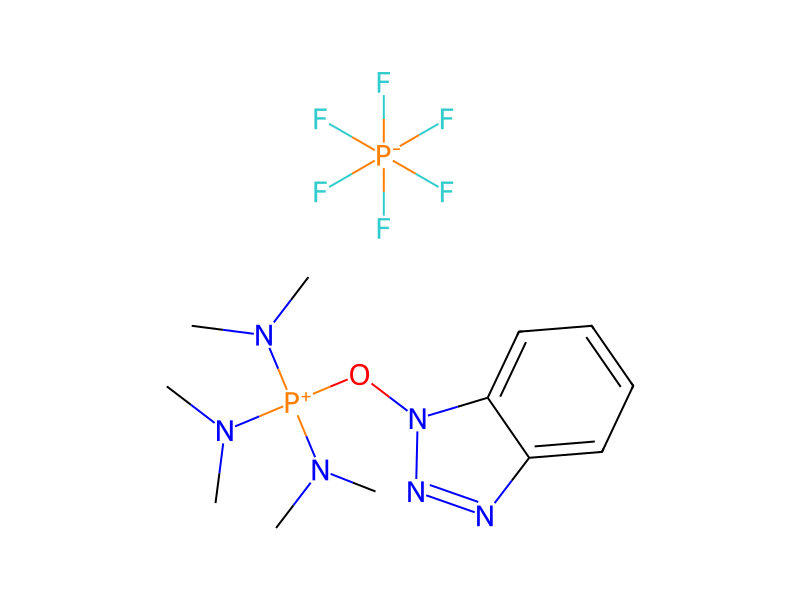
[C:1]([C:4]1[CH:12]=[CH:11][CH:10]=[C:9]2[C:5]=1[CH2:6][C:7](=[O:13])[NH:8]2)([OH:3])=O.[Cl:14][C:15]1[CH:16]=[C:17]([NH2:23])[CH:18]=[CH:19][C:20]=1[O:21][CH3:22].F[P-](F)(F)(F)(F)F.N1(O[P+](N(C)C)(N(C)C)N(C)C)C2C=CC=CC=2N=N1>CN(C)C=O.CN(C)C1C=CN=CC=1.C(OCC)(=O)C>[Cl:14][C:15]1[CH:16]=[C:17]([NH:23][C:1]([C:4]2[C:5]3[CH2:6][C:7](=[O:13])[NH:8][C:9]=3[CH:10]=[CH:11][CH:12]=2)=[O:3])[CH:18]=[CH:19][C:20]=1[O:21][CH3:22]To a solution of 4-carboxy-2-oxindole (200 mg, 1.13 mmol) and 3-chloro-4-methoxyphenylamine (178 mg, 1.13 mmol) in dimethylformamide (15 mL) at room temperature was added benzotriazol-1-yloxytris (dimethylamino)phosphonium hexafluorophosphate (BOP reagent, 997 mg, 2.26 mmol) followed by 4-dimethylaminopyridine (206 mg, 1.69 mmol). The mixture was stirred at room temperature for 72 hours. The reaction was then diluted with ethyl acetate (300 mL), washed with saturated sodium bicarbonate (100 mL), water, 2N hydrochloric acid (100 mL), water (3×200 mL) and brine. It was then dried over magnesium sulfate and concentrated. The residue was triturated with ethyl acetate to give 2-oxo-2,3-dihydro-1H-indole-4-carboxylic acid (3-chloro-4-methoxyphenyl)-amide as a pink solid.