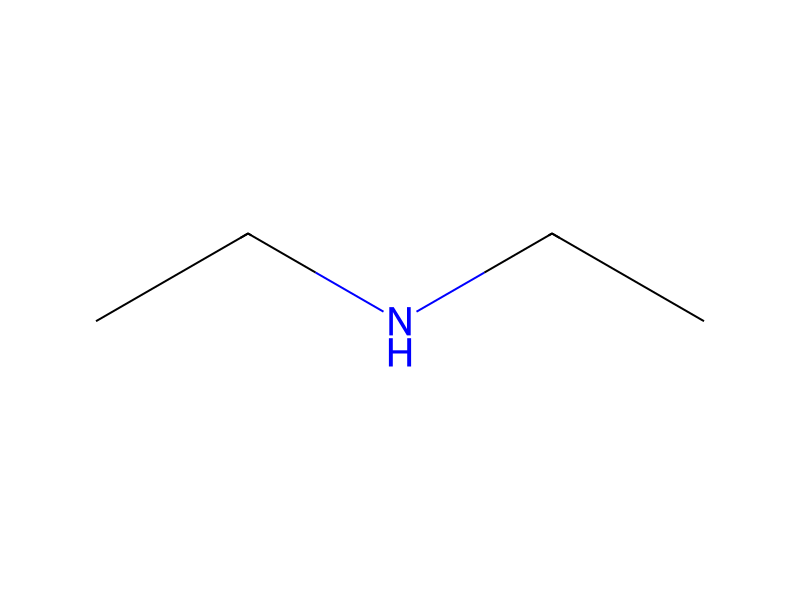
[O:1]=[C:2]1[C:10]2[C:5](=[N:6][C:7]([CH:11]=O)=[CH:8][CH:9]=2)[CH2:4][O:3]1.[CH2:13]([NH:15][CH2:16][CH3:17])[CH3:14].C(O[BH-](OC(=O)C)OC(=O)C)(=O)C.[Na+].C([O-])(O)=O.[Na+]>ClC(Cl)C>[CH2:13]([N:15]([CH2:11][C:7]1[N:6]=[C:5]2[CH2:4][O:3][C:2](=[O:1])[C:10]2=[CH:9][CH:8]=1)[CH2:16][CH3:17])[CH3:14]A solution of 5-oxo-5,7-dihydro-furo[3,4-b]pyridine-2-carbaldehyde (110 mg, 0.68 mmol) in dichloroethane (4 mL) is treated with diethylamine (75 μL, 0.68 mmol) followed by the addition of sodium triacetoxyborohydride (200 mg, 0.94 mmol). The reaction mixture is stirred at room temperature for 1.5 h. and then treated with saturated aqueous NaHCO3 solution. The aqueous layer is extracted twice with EtOAc (2×). The combined organic extracts are dried, and concentrated. The residue is chromatographed (silica gel, EtOAc/hexane). The product containing fractions are concentrated to give the title compound as white solid (90 mg, 61%).