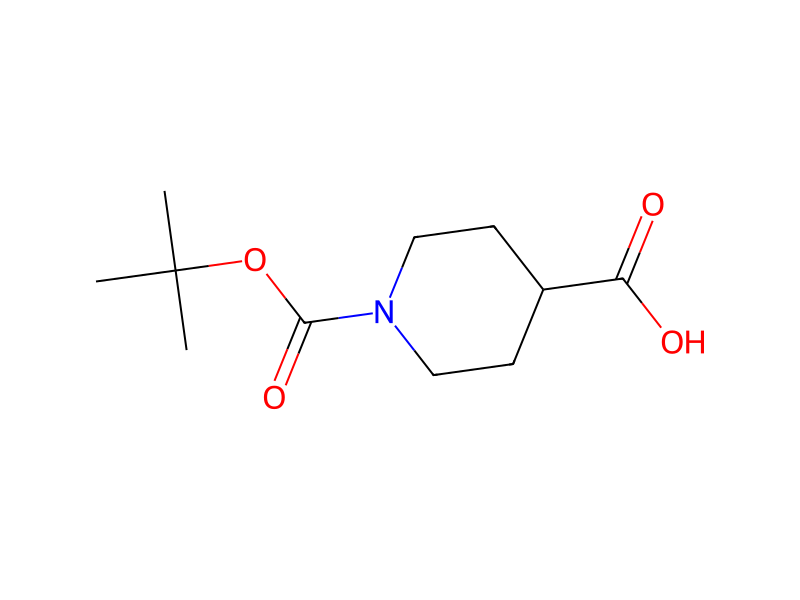
To a solution of N-t-butoxycarbonyl isonipecotic acid (12.0 g, 52.3 mmol) from example 3 step A, in anhydrous CH2Cl2 (100 ml), was added benzyl alcohol (6.0 ml, 58 mmol), followed by EDC (11.04 g, 57.6 mmol), and DMAP (642 mg, 5.25 mmol). The resulting mixture was stirred for 6 hrs, then diluted with CH2Cl2 (150 ml) and washed successively with water, 10% aqueous citric acid, saturated NaHCO3, and brine and dried (MgSO4). Concentration in vacuo afforded a colorless oil which was chromatographed (SiO2, 20% EtOAc in hexanes) to afford the product as a white solid.