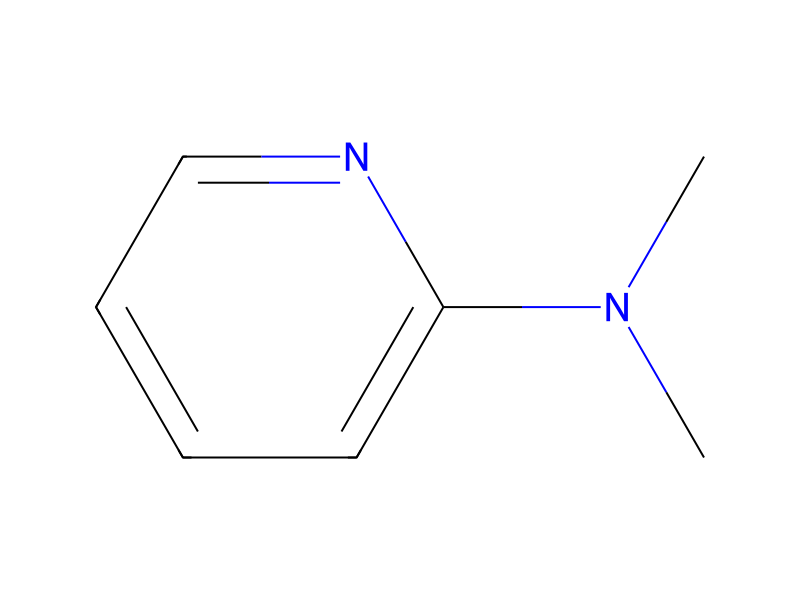
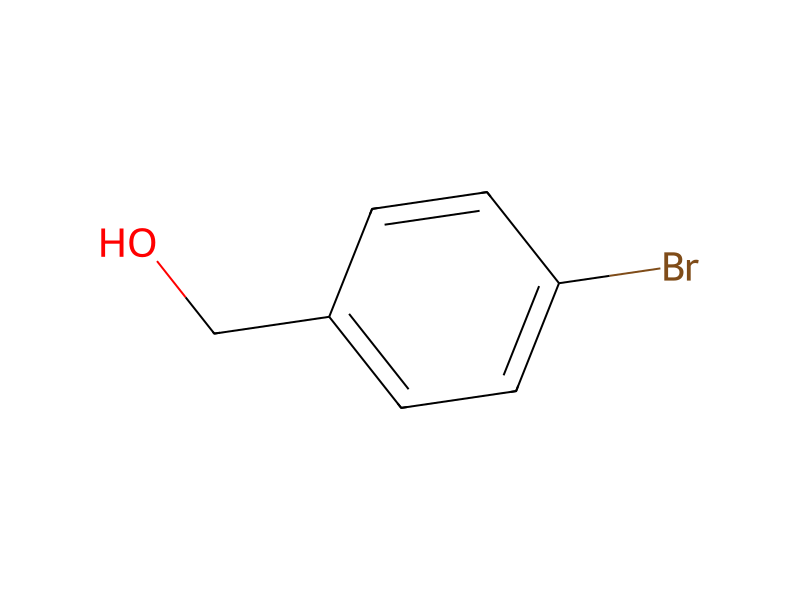
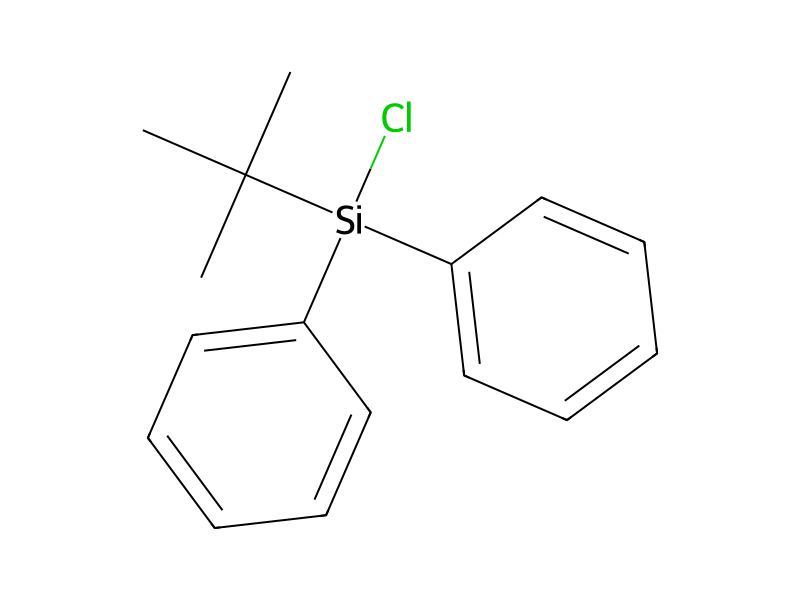
[Si:1](Cl)([C:14]([CH3:17])([CH3:16])[CH3:15])([C:8]1[CH:13]=[CH:12][CH:11]=[CH:10][CH:9]=1)[C:2]1[CH:7]=[CH:6][CH:5]=[CH:4][CH:3]=1.[Br:19][C:20]1[CH:27]=[CH:26][C:23]([CH2:24][OH:25])=[CH:22][CH:21]=1.C(N(CC)CC)C.CN(C1C=CC=CN=1)C>ClCCl>[Si:1]([O:25][CH2:24][C:23]1[CH:26]=[CH:27][C:20]([Br:19])=[CH:21][CH:22]=1)([C:14]([CH3:17])([CH3:16])[CH3:15])([C:8]1[CH:13]=[CH:12][CH:11]=[CH:10][CH:9]=1)[C:2]1[CH:7]=[CH:6][CH:5]=[CH:4][CH:3]=1Tert-butyldiphenylsilyl chloride (10.4 mL, 40.1 mmol) was added to a solution of 4-bromobenzyl alcohol (5.0 g, 26.7 mmol) and 50 mL of dichloromethane. The solution was treated with triethylamine (3.72 mL, 26.7 mmol) and (dimethylamino)pyridine (163 mg, 1.34 mmol) and stirred overnight at room temperature. The solution was diluted with 300 mL of dichloromethane and washed with 50 mL of 10% aqueous HCl. The layers were separated and the aqueous layer was extracted with 50 mL of dichloromethane. The combined organic extracts were washed with brine, and dried (MgSO4), and filtered, and the solvents were removed in vacuo. The residue was filtered through a plug (6@×2@) of silica gel using a solution of 97% hexane/ethyl acetate. After removal of the solvent the residue was heated under vacuum (3 torr) to 170° C. for 1 hour to remove a low-boiling impurity. The remaining material is the title compound.