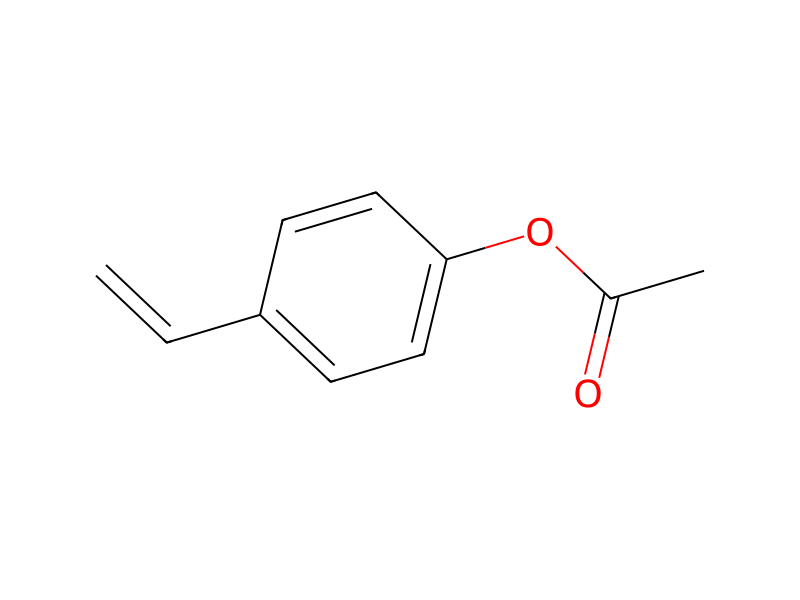
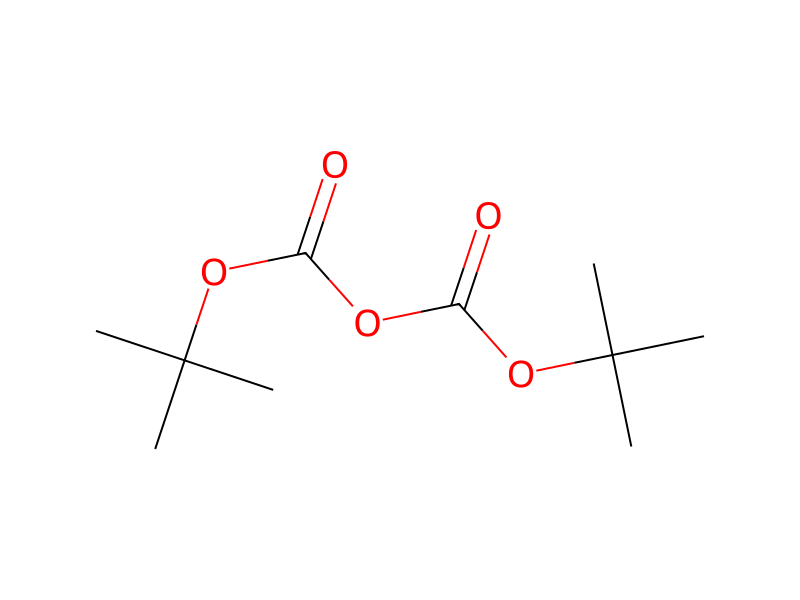
In 200 mL of methylene chloride was dissolved 6.91 g (0.043 m) of 4-acetoxystyrene and 13.10 g (0.060 m) of di-t-butyldicarbonate under nitrogen. To the solution at room temperature was added 14.0 g (0.101 m) of potassium carbonate and the mixture was vigorously stirred for 22 hours, following the reaction by thin layer chromatography. After 22 hours at room temperature 100 mL of THF was added and the reaction was further stirred for 142 hours. It was worked up as in the above Examples. There was a very low yield (less than 10 %) of the product, 4-(t-butoxycarbonyloxy)styrene, under these conditions as analyzed by NMR, HPLC and TLC.