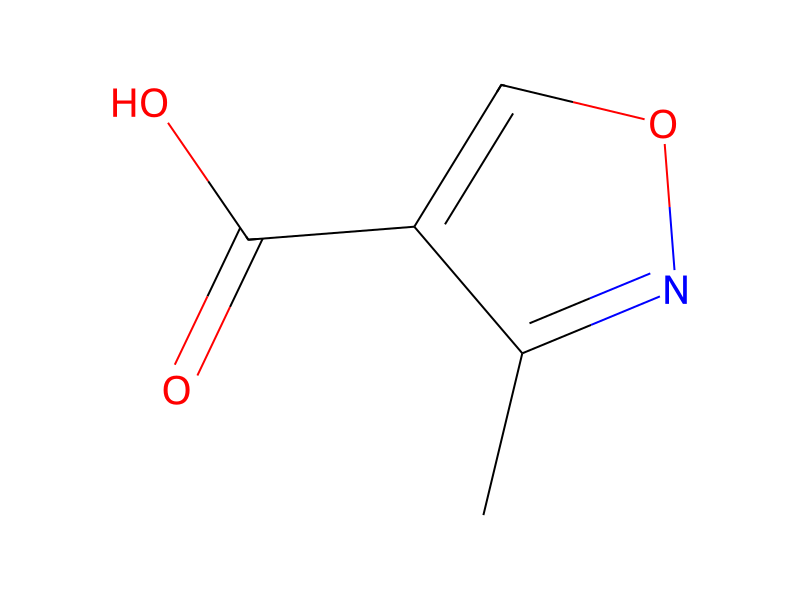
[CH3:1][C:2]1[C:6]([C:7]([OH:9])=O)=[CH:5][O:4][N:3]=1.C(Cl)(=O)C(Cl)=O.[Cl:16][C:17]1[CH:22]=[CH:21][C:20]([O:23][CH3:24])=[CH:19][C:18]=1[C:25]1[C:26]([NH2:32])=[N:27][C:28]([NH2:31])=[CH:29][CH:30]=1.N1C(C)=CC=CC=1C>ClCCl.CN(C)C=O.C(#N)C>[NH2:32][C:26]1[N:27]=[C:28]([NH:31][C:7]([C:6]2[C:2]([CH3:1])=[N:3][O:4][CH:5]=2)=[O:9])[CH:29]=[CH:30][C:25]=1[C:18]1[CH:19]=[C:20]([O:23][CH3:24])[CH:21]=[CH:22][C:17]=1[Cl:16]To a suspension of 3-methylisoxazole-4-carboxylic acid (2.73 g, 21.48 mmol) in dichloromethane (10 ml) was added oxalyl chloride (2.62 ml, 30.1 mmol) followed by 2 drops of dimethylformamide. The reaction was stirred at room temperature for 18 hours before concentration in vacuo. The residue was azeotroped with dichloromethane, dissolved in acetonitrile (15 ml) and added dropwise to a cooled solution of 3-(2-chloro-5-methoxyphenyl)pyridine-2,6-diamine (preparation 1, 5.2 g, 20.82 mmol) and lutidine (3.15 ml, 27.1 mmol) in acetonitrile (150 ml). The reaction was allowed to warm to room temperature and stirred under nitrogen for 30 minutes. The reaction was quenched by the addition of water (100 ml), extracted into ethyl acetate (200 ml), dried (MgSO4) and concentrated in vacuo. The residue was purified by silica gel column chromatography eluting with ethylacetate:heptane 1:2 to furnish a pale yellow solid. This was triturated with t-butylmethylether, filtered, and recrystallised from ethyl acetate to furnish the title product as a white solid.