D-Xylulose → aldehydo-D-Xylose
HRID 1161631
반응식

[CH2:1]([OH:10])[C@@H:2]([C@H:4]([C@@H:6]([CH2:8][OH:9])[OH:7])[OH:5])[OH:3].[OH:11][CH2:12][C:13]([C@H:15]([C@@H:17]([CH2:19][OH:20])[OH:18])[OH:16])=[O:14]>>[CH2:1]([OH:10])[C@@H:2]([C@H:4]([C@@H:6]([CH2:8][OH:9])[OH:7])[OH:5])[OH:3].[O:11]=[CH:12][C@@H:13]([C@H:15]([C@@H:17]([CH2:19][OH:20])[OH:18])[OH:16])[OH:14]참가 물질
4
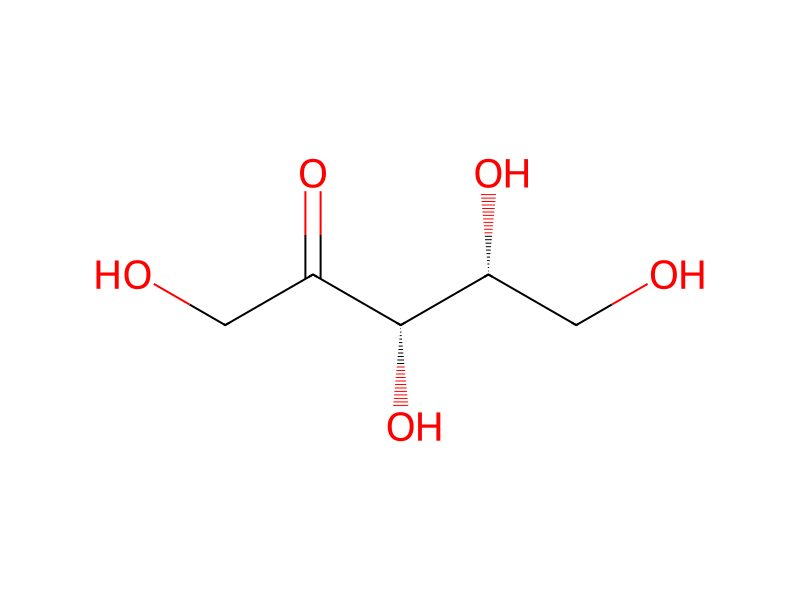
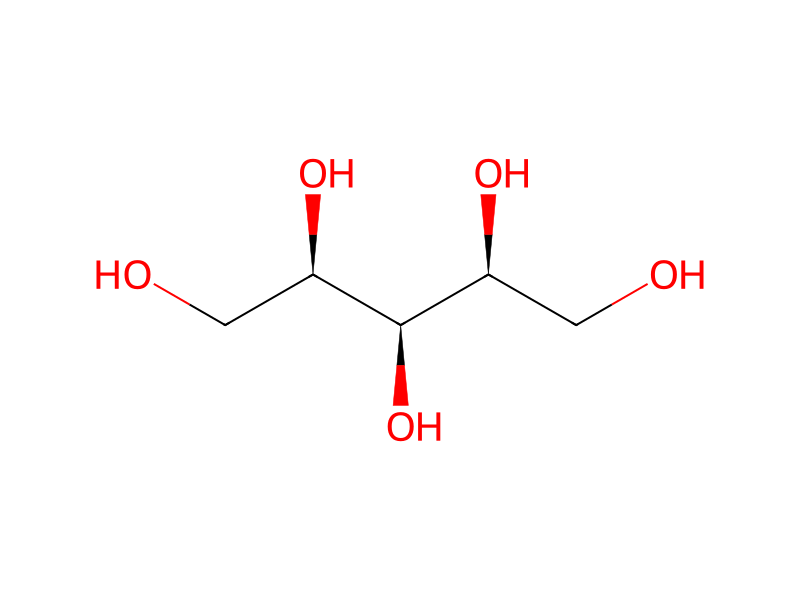
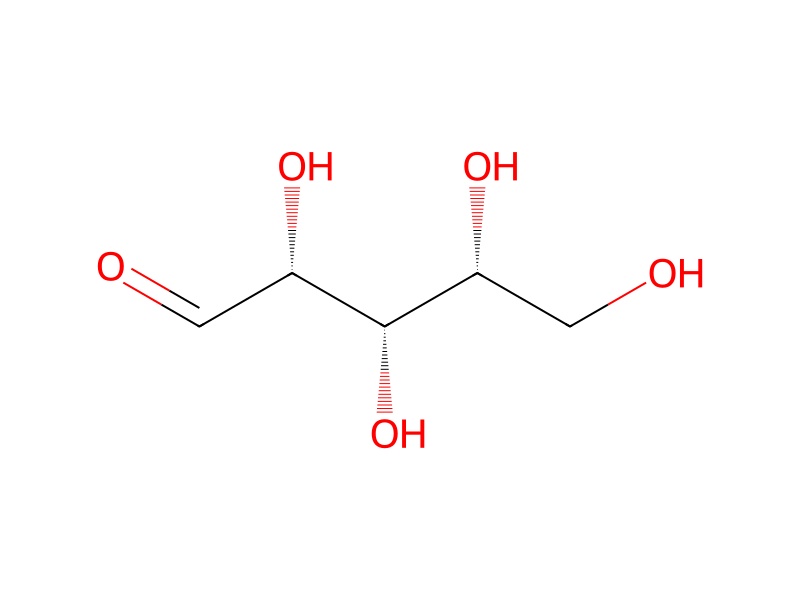
실험 절차
Paying attention to the fact that xylitol produced in Candida sp strains is reduced by its conversion to xylulose by xylitol dehydrogenase, the present inventors have developed xylitol dehydrogenase-inactivated Candida tropicalis mutant, in which xylitol produced from xylose can no longer be used for cell growth, and thus xylose can be bioconverted to xylitol with a theoretical yield of 100% (Ko, B. S. et. al., Appl. Environ. Microbiol. 72:4207-4213, 2006). Thus, the present inventors filed an application for the protection of an invention relating to a method of producing xylitol in high yield using a xylitol-producing strain, in which the expression of xylitol dehydrogenase is inhibited (Korean Patent Application No. 10-2005-0079751, filed on Aug. 30, 2005).