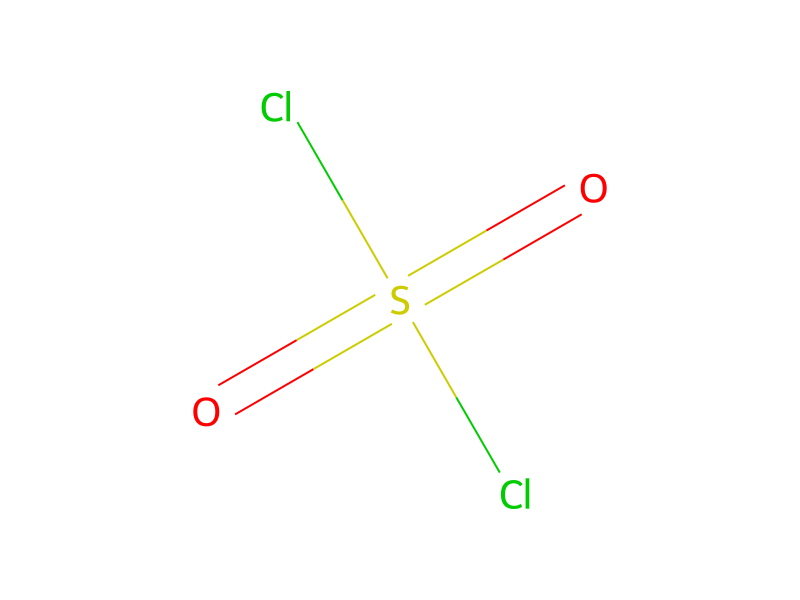
This compound was prepared using the method of T. S. Widlanski and J. Huang, Tet. Lett. 1992, 33: 2657. A solution of triphenylphosphine (17.6 g, 67.4 mmol) in dry CH2Cl2 (90 mL) was cooled to zero degrees C. under nitrogen and treated with neat sulfuryl chloride (5.96 mL, 74.2 mmol) to give a yellow solution. The solution was recooled to 5 degrees C. and crushed solid sodium 2-{[(benzyloxy)carbonyl]amino}ethanesulfonate (12 g, 42.6 mmol) prepared as described by Bricas et al., Biochimica et Biophysica Acta 1955, (18), 358, was added all at once to give a white suspension. The reaction was allowed to warm to room temperature and stirred for 3 hours. The volatiles were removed in vacuo to give an oily/solid residue that was suspended in EtOAc and added to the top of a silica column (3 inches by 150 mm) packed in EtOAc. The product was eluted with EtOAc and the UV active fractions were combined and evaporated to give the product as a white solid.