5-Nitroindole → tert-Butyl 4-(5-nitro-1H-indol-3-yl)-5,6-dihydropyridine-1(2H)-carboxylate
반응식

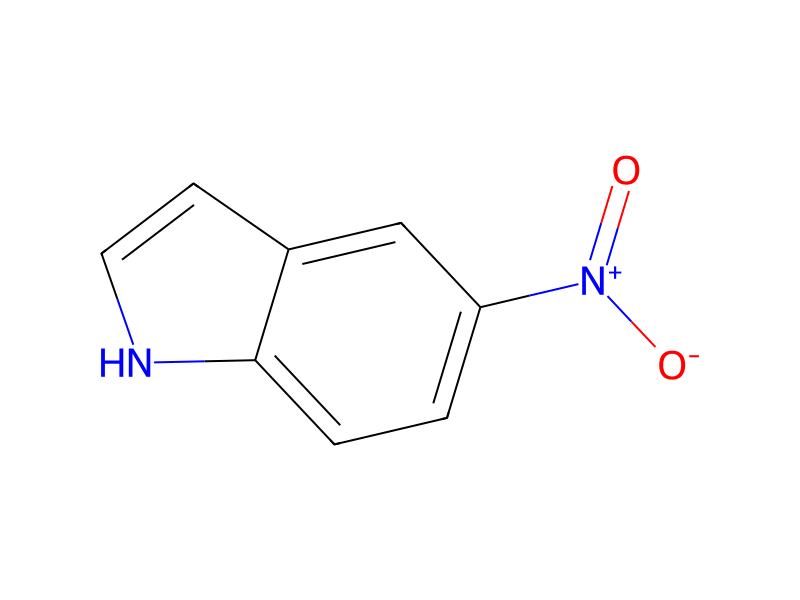
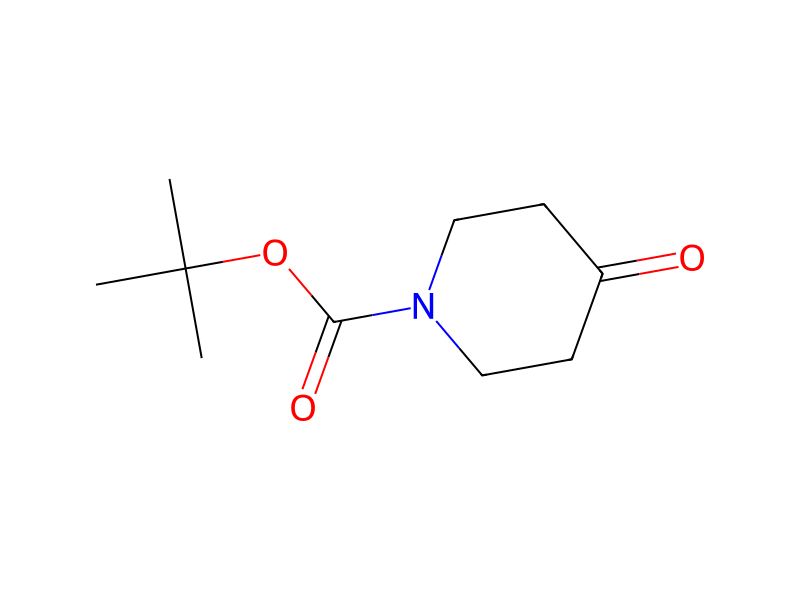
[N+:1]([C:4]1[CH:5]=[C:6]2[C:10](=[CH:11][CH:12]=1)[NH:9][CH:8]=[CH:7]2)([O-:3])=[O:2].O=[C:14]1[CH2:19][CH2:18][N:17]([C:20]([O:22][C:23]([CH3:26])([CH3:25])[CH3:24])=[O:21])[CH2:16][CH2:15]1.N1CCCC1>O>[N+:1]([C:4]1[CH:5]=[C:6]2[C:10](=[CH:11][CH:12]=1)[NH:9][CH:8]=[C:7]2[C:14]1[CH2:19][CH2:18][N:17]([C:20]([O:22][C:23]([CH3:26])([CH3:25])[CH3:24])=[O:21])[CH2:16][CH:15]=1)([O-:3])=[O:2]참가 물질
5



실험 절차
A solution of 5-nitro-1H-indole (1 g, 6.17 mmol), tert-butyl 4-oxopiperidine-1-carboxylate (2.458 g, 12.33 mmol) and pyrrolidine (1.530 mL, 18.50 mmol) were refluxed for 48 hours. The reaction was brought to room temperature, diluted with water (50 mL) and product was extracted into ethyl acetate (2×50 mL). The combined ethyl acetate layer was washed with brine (15 mL) and dried (Na2SO4). Solvent was evaporated and crude was diluted with isopropanol: hexanes, 1:6 (20 mL). After stirring for 15 minutes, the solid was filtered off, washed with hexanes (2×10 mL), and dried to obtain tert-butyl 4-(5-nitro-1H-indol-3-yl)-5,6-dihydropyridine-1(2H)-carboxylate (1.515 g, 71.5%). 1H NMR (CDCl3) δ 8.83 (d, 1H, J=1.5 Hz), 8.60 (brs, 1H), 8.14 (dd, 1H, J=2.1, 9.0 Hz), 7.42 (d, 1H, J=9.0 Hz), 7.31 (d, 1H, J=2.1 Hz), 6.21 (s, 1H), 4.20-4.16 (m, 2H), 3.70 (t, 2H, J=5.7 Hz), 2.60-2.50 (m, 2H), 1.51 (s, 9H).