반응식

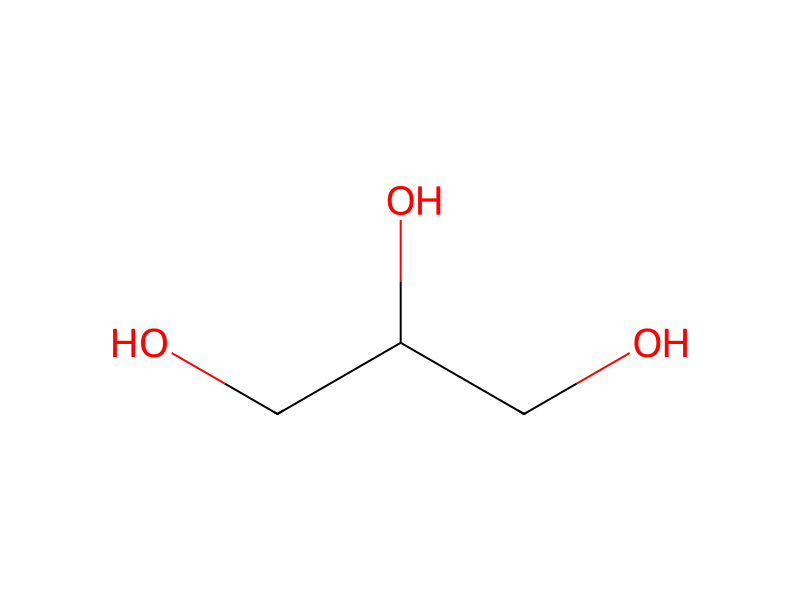
[CH3:1][C:2]([C@@H:4]1[CH2:9][CH:8]=[C:7]([CH2:10][OH:11])[CH2:6][CH2:5]1)=[CH2:3]>O.C(O)C(O)C.OCC(CO)O>[CH3:3][C:2]([C@@H:4]1[CH2:5][CH:6]=[C:7]([CH2:10][OH:11])[CH2:8][CH2:9]1)=[CH2:1].[CH3:10][C:7]1[CH2:8][CH2:9][C@@H:4]([C:2]([CH3:3])=[CH2:1])[CH2:5][CH:6]=1참가 물질




실험 절차
Perillyl alcohol is an oil with a terpenic aroma. It is insoluble in water, is poorly soluble in propylene glycol, and is almost insoluble in glycerine. Perillyl alcohol is soluble in alcohol and is miscible in oil. It is used as a flavoring agent for cosmetics and perfumes, but heretofore, it has not been used as a bactericide. Perillyl alcohol can be produced by the oxidation of limonene as was demonstrated by Blumann in Chemical Abstracts, Volume 63, 1965 on page 1819, and Bardychev in Chemical Abstracts, Volume 80, 1974, page 359. It can be produced by the acetylation of limonene as described by Ansari, Hifzure R. (German Offen 2,513,910 and Canadian Patent No. 1,077,959). Walling made perillyl alcohol (Canadian Patent No. 981,695) from beta pinene by adding benzyl peroxide to beta pinene followed by alkaline hydrolysis to perillyl alcohol.
출처 및 근거
- ORD 기록
- ord-b35cbd246ae24975bec1314e01d4eae7
- 출처 데이터셋
- uspto-grants-1992_05
- 특허 번호
- US05110832
연결된 노트
불러오는 중…