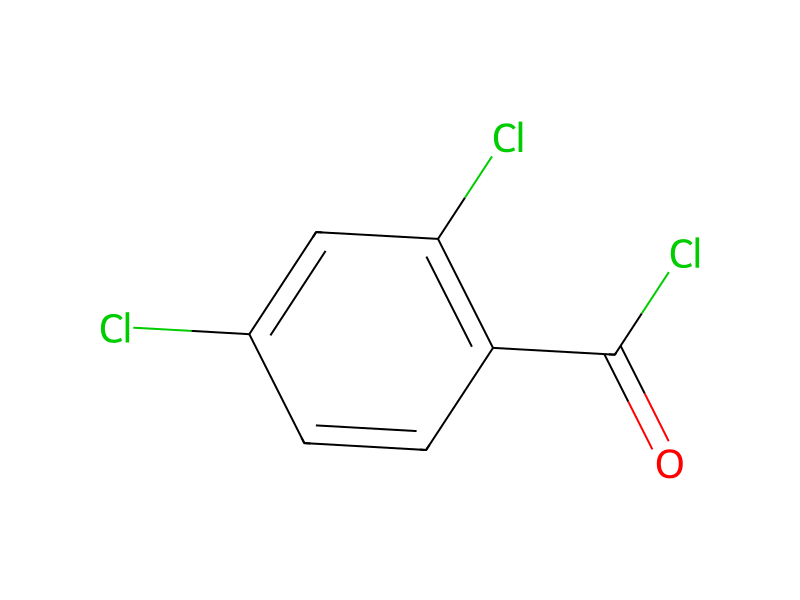
[Cl-].[Al+3].[Cl-].[Cl-].[Cl:5][C:6]1[CH:14]=[C:13]([Cl:15])[CH:12]=[CH:11][C:7]=1[C:8](Cl)=[O:9].[CH3:16][O:17][C:18]([C:20]1[CH:21]=[C:22]2[C:26](=[CH:27][CH:28]=1)[NH:25][C:24]([CH3:29])=[CH:23]2)=[O:19].O>C(Cl)Cl>[Cl:5][C:6]1[CH:14]=[C:13]([Cl:15])[CH:12]=[CH:11][C:7]=1[C:8]([C:23]1[C:22]2[C:26](=[CH:27][CH:28]=[C:20]([C:18]([O:17][CH3:16])=[O:19])[CH:21]=2)[NH:25][C:24]=1[CH3:29])=[O:9]Aluminium chloride (0.86 g) is suspended in methylene chloride (30 ml), to which are added 2,4-dichlorobenzoyl chloride (0.67 g) and then 5-(methoxycarbonyl)-2-methylindole (0.50 g) and stirred at 50° C. for 3 hours and then at room temperature for 41 hours. The reaction mixture is poured into water with ice, and extracted twice with ethyl acetate. The organic layer is washed twice with a saturated aqueous sodium hydrogencarbonate solution and then with a saturated saline solution, and thereafter dried with anhydrous sodium sulfate. The drying agent is removed through filtration, and the filtrate is concentrated under reduced pressure. The resulting crystal is washed with t-butyl methyl ether, and dried to obtain a crystal of 3-(2,4-dichlorobenzoyl)-5-(methoxycarbonyl)-2-methylindole (61) (0.60 g).