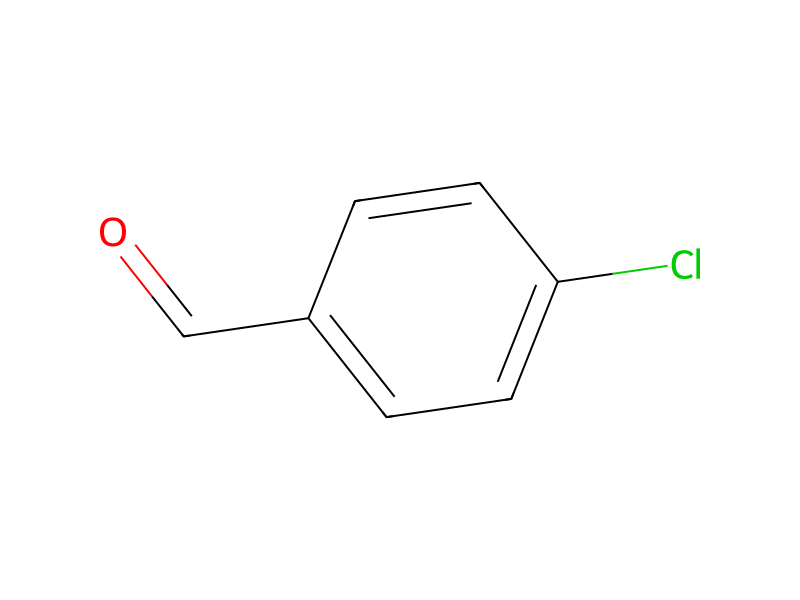
With stirring, 21.6 g of 2,3-dichloro-5-trifluoromethylpyridine, 14.1 g of 4-chlorobenzaldehyde and 2.24 g of 1,3-dimethylimidazolium iodide were added in succession to a suspension of 3.0 g of sodium hydride (80% by weight suspension in mineral oil) in 100 ml of anhydrous dioxane. The mixture was then stirred (under a nitrogen atmosphere) for 11 hours at 50° C. and then for 60 hours at 22° C. The reaction mixture was diluted with 200 ml of water and most of the dioxane was distilled off under reduced pressure. The product was extracted from the residue with methylene chloride (three times 100 ml). The combined organic phases were washed with 50 ml of water, dried over sodium sulfate and finally concentrated. Distillation of the residue at 0.65 mbar (boiling range: 126-139° C.) gave 22.4 g of a colorless oil. Yield: 70% (purity: about 95%); 1H-NMR see Ex. 7.