홈MCPSkills워크벤치OpenChem
홈워크벤치알림마이페이지
llms.txt · skill.md · MCP 가이드개인정보처리방침 · 이용약관 · 지원v1.8.4
  1. 홈
  2. /반응

Dicyclohexylcarbodiimide → Boc-D-Cha-Pro-OH

HRID 1267098
인쇄

반응식

[NH:1]([C:13]([O:15][C:16]([CH3:19])([CH3:18])[CH3:17])=[O:14])[C@@H:2]([C:10]([OH:12])=O)[CH2:3][CH:4]1[CH2:9][CH2:8][CH2:7][CH2:6][CH2:5]1.ON1C(=O)CCC1=O.C1(N=C=NC2CCCCC2)CCCCC1.[NH:43]1[CH2:50][CH2:49][CH2:48][C@H:44]1[C:45]([OH:47])=[O:46].C(N(CC)C(C)C)(C)C>ClCCl>[NH:1]([C:13]([O:15][C:16]([CH3:19])([CH3:18])[CH3:17])=[O:14])[C@@H:2]([C:10]([N:43]1[CH2:50][CH2:49][CH2:48][C@H:44]1[C:45]([OH:47])=[O:46])=[O:12])[CH2:3][CH:4]1[CH2:5][CH2:6][CH2:7][CH2:8][CH2:9]1
참가 물질반응 조건실험 절차후처리출처 및 근거반응 노트

참가 물질

7

반응물 5

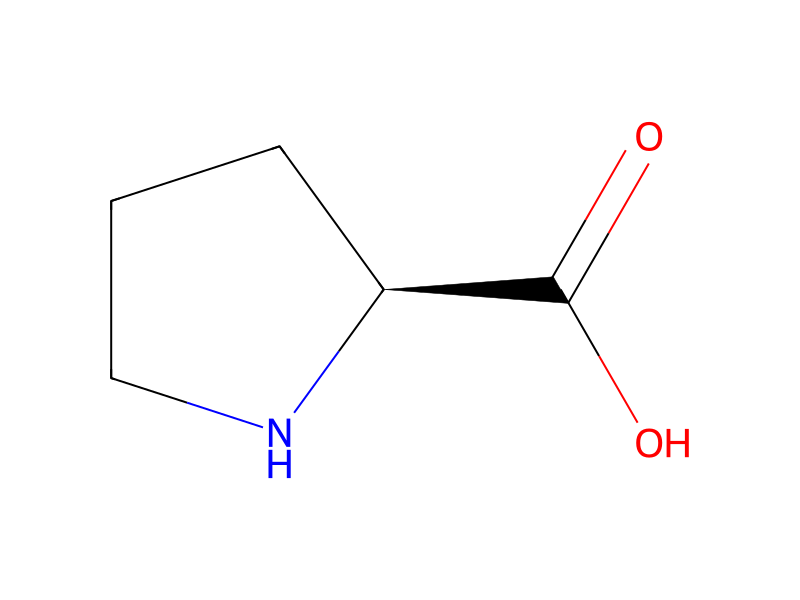
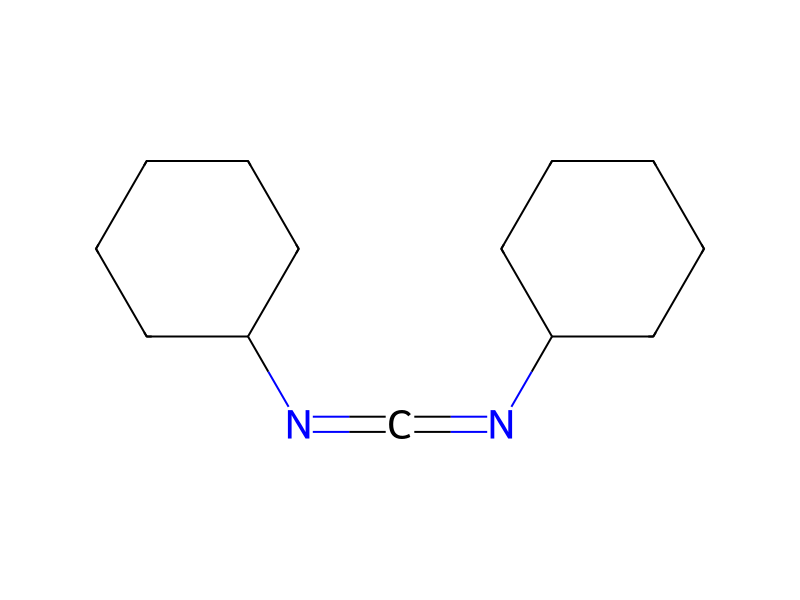
HCID 10868DicyclohexylcarbodiimideHCID 80170N-HydroxysuccinimideHCID 81531DiisopropylethylamineHCID 145742L-ProlineHCID 2755927(2R)-2-{[(tert-butoxy)carbonyl]amino}-3-cyclohexylpropanoic acid

생성물 1

HCID 10642798Boc-D-Cha-Pro-OH수율 73.5%

시약·촉매·용매 1

HCID 6344Dichloromethane용매2회

반응 조건

온도
0 °C

실험 절차

A solution of Boc—D—Cha—OH (50.4 g, 185 mmol) in dichloromethane (360 mL) was cooled to 0° C. and N-hydroxysuccinimide (22.3 g, 194 mmol) was added. Then 1,3-dicyclohexylcarbodiimide (39.0 g, 189 mmol) was added in two portions as a solution in dichloromethane (90 mL). After stirring for 3 h at 0° C., L—Pro—OH (27.6 g, 240 mmol) and N,N-diisopropylethylamine (30.9 g, 239 mmol) were added. After stirring an additional 3 h between 0° C. and 10° C., the mixture was filtered over diatomaceous earth. The filter cake was rinsed with dichloromethane (100 mL); then the combined filtrates were concentrated in vacuo. The residual oil was partitioned between ethyl acetate (100 mL) and 0.625 M aqueous NaHCO3 (320 mL). The layers were separated, and the organic phase was washed with 0.625 M aq. NaHCO3 (80 mL). The combined bicarbonate extracts were then washed with ethyl acetate (100 mL). The aqueous phase was then stirred with ethyl acetate (300 mL) and acidified with 12 N HCl (approximately 37 mL). The layers were separated and the acidic aqueous phase was extracted with ethyl acetate (100 mL). The combined ethyl acetate extracts were concentrated in vacuo. The residue was slurried with a minimal amount of ethyl acetate, filtered, washed again with ethyl acetate and dried to give 50.1 g (73%) of white powder.

후처리

  1. stirringAfter stirring an additional 3 h between 0° C. and 10° C.
  2. filtrationthe mixture was filtered over diatomaceous earth
  3. washThe filter cake was rinsed with dichloromethane (100 mL)
  4. concentrationthen the combined filtrates were concentrated in vacuo
  5. customThe residual oil was partitioned between ethyl acetate (100 mL) and 0.625 M aqueous NaHCO3 (320 mL)
  6. customThe layers were separated
  7. washthe organic phase was washed with 0.625 M aq. NaHCO3 (80 mL)
  8. washThe combined bicarbonate extracts were then washed with ethyl acetate (100 mL)
  9. stirringThe aqueous phase was then stirred with ethyl acetate (300 mL)
  10. customThe layers were separated
  11. extractionthe acidic aqueous phase was extracted with ethyl acetate (100 mL)
  12. concentrationThe combined ethyl acetate extracts were concentrated in vacuo
  13. filtrationfiltered
  14. washwashed again with ethyl acetate
  15. customdried

출처 및 근거

ORD 기록
ord-8d4d3e77beb74dfe8d8abee324b0a673
출처 데이터셋
uspto-grants-2003_04
DOI
10.6084/m9.figshare.5104873.v1
특허 번호
US06552038B1

반응 노트

이 페이지에서참가 물질반응 조건실험 절차후처리출처 및 근거반응 노트