반응식

[O:1]=[CH:2][C@H:3]([C@H:5]([C@@H:7]([CH2:9][OH:10])[OH:8])[OH:6])[OH:4].[O:11]=[CH:12][C@@H:13]([C@H:15]([C@@H:17]([C@@H:19]([CH2:21][OH:22])[OH:20])[OH:18])[OH:16])[OH:14]>>[CH2:9]([OH:10])[C@@H:7]([OH:8])[CH:5]([OH:6])[C@H:3]([OH:4])[CH2:2][OH:1].[O:11]=[CH:12][C@@H:13]([C@H:15]([C@@H:17]([C@@H:19]([CH2:21][OH:22])[OH:20])[OH:18])[OH:16])[OH:14]참가 물질
4

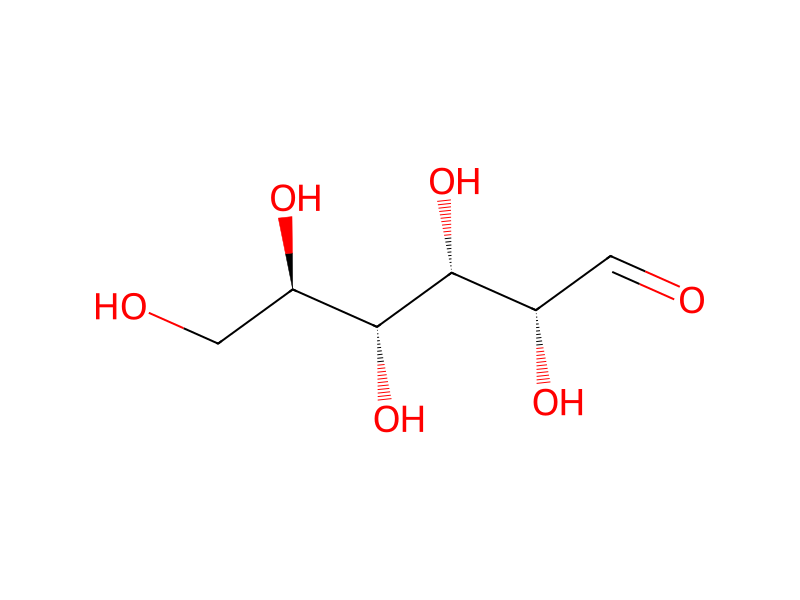

실험 절차
Production of D-lyxose, which is a rare sugar, from D-glucose was carried out. By using yeast Candida famata R28, D-arabitol was produced from D-glucose with a yield of 50%. This reaction was carried out by a fermentation method. The produced D-arabitol was converted into D-xylulose by an acetic acid bacterium Acetobacter aceti IFO 3281 with a yield of almost 100%. This could be isomerized to D-lyxose by using L-ribose isomerase. The product was purified and crystallized by ion exchange chromatography and the like, and it was confirmed to be D-lyxose by an instrumental analysis.
출처 및 근거
- ORD 기록
- ord-f11bcbcc221f45efac1b1f1856eb9007
- 출처 데이터셋
- uspto-grants-2007_04
- 특허 번호
- US07205141B2
연결된 노트
불러오는 중…