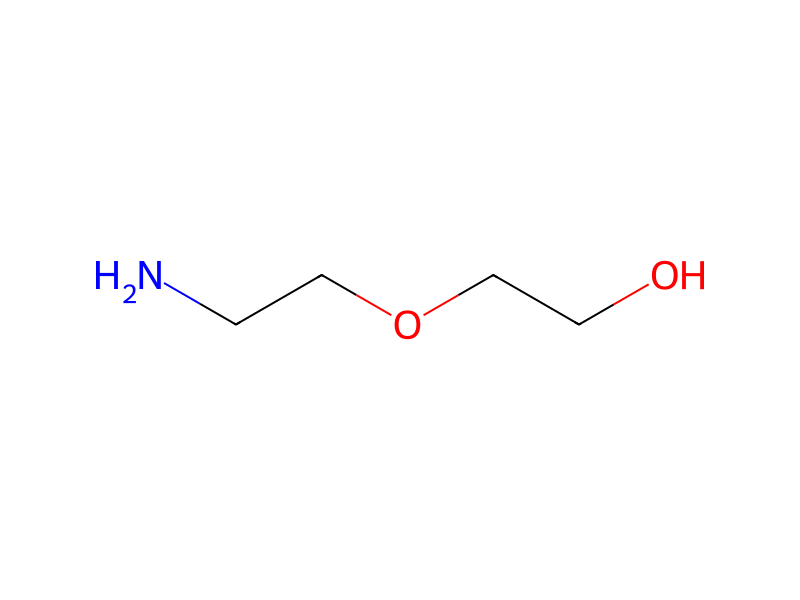
Diglycolamine → 2-Amino-4-[2-(2-hydroxyethoxy)ethylamino]-5-phenylethynyl pyrimidine
HRID 1271036
반응식

Cl[C:2]1[C:7]([C:8]#[C:9][C:10]2[CH:15]=[CH:14][CH:13]=[CH:12][CH:11]=2)=[CH:6][N:5]=[C:4]([N:16]=CN(C(C)C)C(C)C)[N:3]=1.[NH2:25][CH2:26][CH2:27][O:28][CH2:29][CH2:30][OH:31]>C(O)C>[NH2:16][C:4]1[N:3]=[C:2]([NH:25][CH2:26][CH2:27][O:28][CH2:29][CH2:30][OH:31])[C:7]([C:8]#[C:9][C:10]2[CH:11]=[CH:12][CH:13]=[CH:14][CH:15]=2)=[CH:6][N:5]=1참가 물질
4



실험 절차
A mixture of 1.5 g of 4-chloro-2-diisopropylaminomethyleneamino-5-phenylethynylpyrimidine, 20 mL of ethanol and 1.83 g of 2-(2-aminoethoxy)ethanol was refluxed for 18 hours. The tea colored solution was evaporated in vacuo and the residue partitioned between water and dichloromethane. The aqueous layer was washed twice more with dichloromethane and the combined organic extracts washed with water. The organic solution was dried over sodium sulfate, filtered and evaporated in vacuo. The yellow residue obtained was triturated with ether and filtered to give 0.49 g of a yellow solid, 2-amino-4-[2-(2-hydroxyethoxy)ethylamino]-5-phenylethynylpyrimidine. m.p. 128–129° C.