반응식

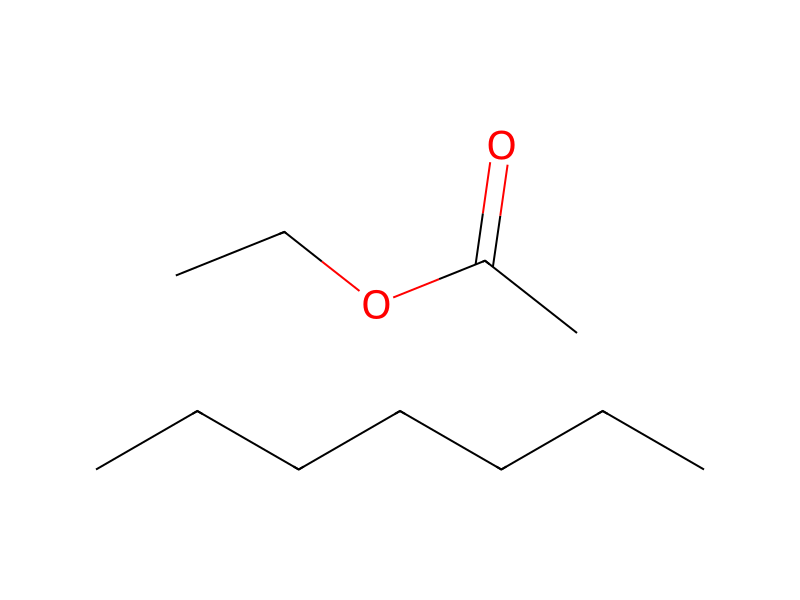
[Br:1][C:2]1[CH:3]=[C:4]([CH:10]=[N:11]O)[S:5][C:6]=1[N+:7]([O-:9])=[O:8].C(OC(=O)C)(=O)C>CCCCCCC.CCOC(C)=O>[Br:1][C:2]1[CH:3]=[C:4]([C:10]#[N:11])[S:5][C:6]=1[N+:7]([O-:9])=[O:8]참가 물질



실험 절차
A 5-L, three neck, round bottom flask equipped with a temperature probe, mechanical stirrer, and a reflux condenser was charged with 4-Bromo-5-nitro-thiophene-2-carbaldehyde oxime (Example 25: step c; 441.0 g, 1.76 mol). Acetic anhydride (2.5 L) was added causing an endothermic reaction from 22° C. to 17° C. The resulting yellow slurry was heated to reflux. At 100° C. the reaction became a black solution. After 2 hours at 130° C., TLC analysis (2:1 heptane/EtOAc) showed reaction completion and the heat was removed. The mixture was transferred to a rotary evaporator and concentrated to dryness. The residue was diluted with CH2Cl2 (3L), and H2O (3L). The layers were separated and the organic layer was washed with H2O (3L), dried over MgSO4, and concentrated to give the desired title compound as a tan solid (350.85 g, 86%). 1H-NMR (DMSO): δ 8.3 (1H, s).
후처리
- customan endothermic reaction from 22° C. to 17° C
- temperatureThe resulting yellow slurry was heated to reflux
- customAt 100° C.
- customreaction completion
- customthe heat was removed
- customThe mixture was transferred to a rotary evaporator
- concentrationconcentrated to dryness
- additionThe residue was diluted with CH2Cl2 (3L), and H2O (3L)
- customThe layers were separated
- washthe organic layer was washed with H2O (3L)
- dry with materialdried over MgSO4
- concentrationconcentrated
출처 및 근거
- ORD 기록
- ord-17af5b82b0ec4253837fcc1170ca83cd
- 출처 데이터셋
- uspto-grants-2008_06
- 특허 번호
- US07385066B2
연결된 노트
불러오는 중…