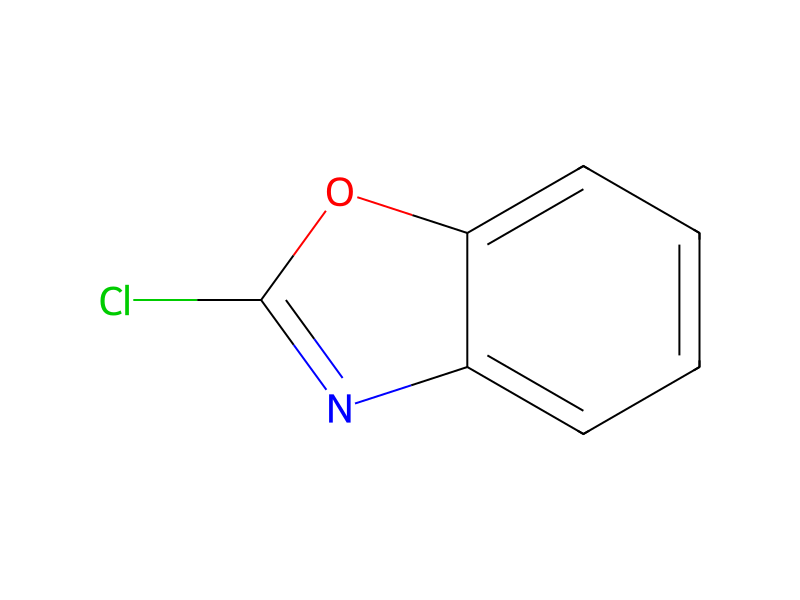
2-Chlorobenzoxazole → Ethyl (4-(2-benzoxazolyl)amino-3-chlorophenyl)acetate
반응식

Cl[C:2]1[O:3][C:4]2[CH:10]=[CH:9][CH:8]=[CH:7][C:5]=2[N:6]=1.[NH2:11][C:12]1[CH:17]=[CH:16][C:15]([CH2:18][C:19]([O:21][CH2:22][CH3:23])=[O:20])=[CH:14][C:13]=1[Cl:24]>C1(C)C(C)=CC=CC=1.C(Cl)(Cl)Cl>[O:3]1[C:4]2[CH:10]=[CH:9][CH:8]=[CH:7][C:5]=2[N:6]=[C:2]1[NH:11][C:12]1[CH:17]=[CH:16][C:15]([CH2:18][C:19]([O:21][CH2:22][CH3:23])=[O:20])=[CH:14][C:13]=1[Cl:24]참가 물질
5




실험 절차
In xylene (10 ml), 2-chlorobenzoxazole (743 μl, 6.51 mmol) and ethyl 4-amino-3-chlorophenylacetate (1.30 g, 6.51 mmol) were heated under reflux for 2 hours. After cooling to room temperature, the reaction mixture was diluted with chloroform (50 ml). The mixture was washed with water, dried over anhydrous sodium sulfate, and distilled under reduced pressure to remove the solvent. The residue was purified by chromatography on a silica gel column, whereby from n-hexane/ethyl acetate (9:1, v/v) eluate fractions, ethyl (4-(2-benzoxazolyl)amino-3-chlorophenyl)acetate (1.70 g, 79%) was obtained as a pale yellow solid.