반응식

[CH3:1][O:2][C:3](=[O:10])[CH2:4][CH:5]([Br:9])[C:6]([CH3:8])=[O:7].COC(=O)CCC(CBr)=O.COC(=O)CC(Br)C(CBr)=O.COC(=O)CCC(C)=O>CO.[H][H]>[BrH:9].[CH3:1][O:2][C:3](=[O:10])[CH2:4][CH2:5][C:6]([CH3:8])=[O:7]참가 물질
반응물 4
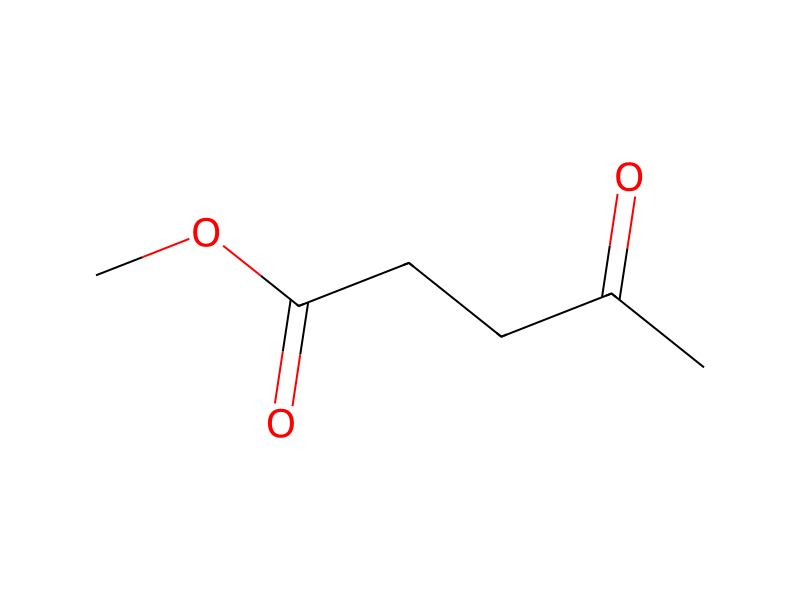


생성물 2

시약·촉매·용매 3


실험 절차
Distillation of the solvent from the combined mother liquors obtained from the low-temperature crystallisation of 5-bromolevulinic acid methyl ester according to Example 1 in vacuo afforded a mixture consisting of 3-bromolevulinic acid methyl ester (61%), 5-bromolevulinic acid methyl ester (23%), 3,5-dibromolevulinic acid methyl ester (8%) and levulinic acid methyl ester (8%). The mixture (5 g) was dissolved in bulk grade methanol (20 ml), a hydrogen catalyst (palladium on carbon) was then added and the mixture was hydrogenated for 5 h while passing in hydrogen at a pressure of 20 bar at 20–25° C. By monitoring the hydrogenation, it was found that the reaction was completed after 5 h (1H-NMR, 13C-NMR) and besides hydrogen bromide only levulinic acid methyl ester has been formed. Water was added (20 ml) and the resulting mixture was extracted with dichloro methane (3×20 ml). The combined organic extracts were washed with saturated aqueous sodium hydrogen carbonate (3×10 ml) and saturated aqueous sodium chloride. Drying of the organic layer with Na2SO4, followed by distillation of the solvent in vacuo yielded 2.5 g (80%) levulinic acid methyl ester. The obtained product may be used for the preparation of 5-bromolevulinic acid methyl ester according to Example 2. The further purification of the obtained levulinic acid methyl ester by distillation is not necessary, so that the raw-product may be directly lead back to the bromination step after removing the hydrogen bromide for the most part.
후처리
- customafforded a mixture
- waitwas completed after 5 h
출처 및 근거
- ORD 기록
- ord-92bbf04f8b9b4f9e8b7fa0cc76b246ca
- 출처 데이터셋
- uspto-grants-2008_03
- 특허 번호
- US07339073B2
연결된 노트
불러오는 중…