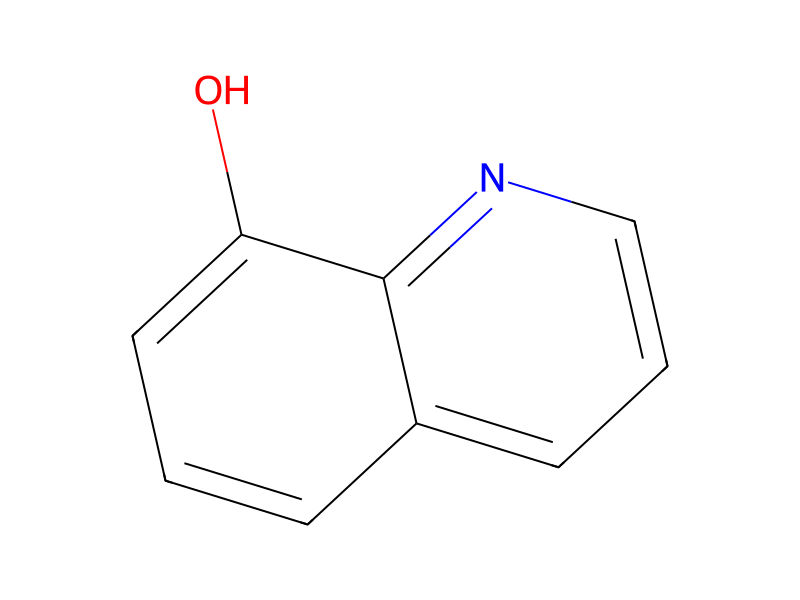
A suspension of 2-bromoaniline (20.9 g) and 5-(methoxymethylene)-2,2-dimethyl-1,3-dioxane-4,6-dione (22.6 g) in 2-propanol (240 ml) was heated to reflux for 1 hour. The reaction solution was cooled to 0° C., and the deposit was then filtrated to obtain a pale yellow solid (35.0 g). A suspension of the obtained pale yellow solid (10.0 g) in Dowtherm (100 ml) was heated at 210° C. for 1 hour. After cooling, hexane (100 ml) was added to the reaction solution, and the deposit was filtrated to obtain 8-bromoquinolin-4(1H)-one (6.3 g). Thionyl chloride (5.9 ml) was added to 8-bromoquinolin-4(1H)-one (9.0 g), and the mixture was heated to reflux for 2 hours. The solvent was distilled off under reduced pressure, and chloroform was added to the residue. The reaction solution was neutralized with an aqueous sodium hydroxide solution with cooling in an ice bath and partitioned into organic and aqueous layers. The organic layer was washed with brine. The organic layer thus washed was dried over anhydrous sodium sulfate. Then, the solvent was distilled off, and the residue was purified by neutral silica gel column chromatography (chloroform/methanol) to obtain 8-bromo-4-chloroquinoline (8.3 g) as a white solid. The obtained 8-bromo-4-chloroquinoline (0.050 g), 4-(1H-imidazol-4-yl)-1-methyl-1H-pyrazole hydrochloride (0.045 g), 8-quinolinol (0.0045 g), copper(I) oxide (0.0015 g), PEG (Mn=3400) (0.010 g), and cesium carbonate (0.17 g) were suspended in DMSO (2.1 ml). The suspension was purged with nitrogen, then sealed in the tube, and stirred at 110° C. for 2 hours. After cooling, the reaction solution was partitioned between ethyl acetate and water. The organic layer was washed with brine and then dried over anhydrous sodium sulfate to obtain 8-bromo-4-(4-(1-methyl-1H-pyrazol-4-yl)-1H-imidazol-1-yl)quinoline as a pale yellow solid (0.073 g). Compound (119) was obtained as a pale yellow solid (yield based on 6 steps: 17%) according to Example 1(5) using the obtained 8-bromo-4-(4-(1-methyl-1H-pyrazol-4-yl)-1H-imidazol-1-yl)quinoline instead of compound (1d).