반응식
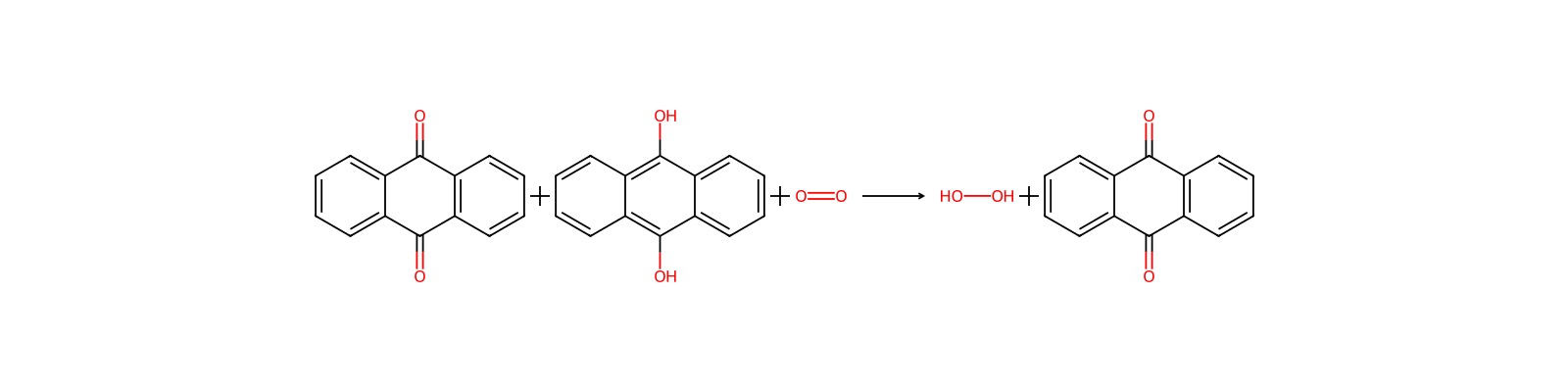
[CH:1]1[C:14]2[C:13](=[O:15])[C:12]3[C:7](=[CH:8][CH:9]=[CH:10][CH:11]=3)[C:6](=[O:16])[C:5]=2[CH:4]=[CH:3][CH:2]=1.C1C=C2C(O)=C3C(=C(O)C2=CC=1)C=CC=C3.[O:33]=[O:34]>>[OH:33][OH:34].[CH:8]1[C:7]2[C:6](=[O:16])[C:5]3[C:14](=[CH:1][CH:2]=[CH:3][CH:4]=3)[C:13](=[O:15])[C:12]=2[CH:11]=[CH:10][CH:9]=1참가 물질


실험 절차
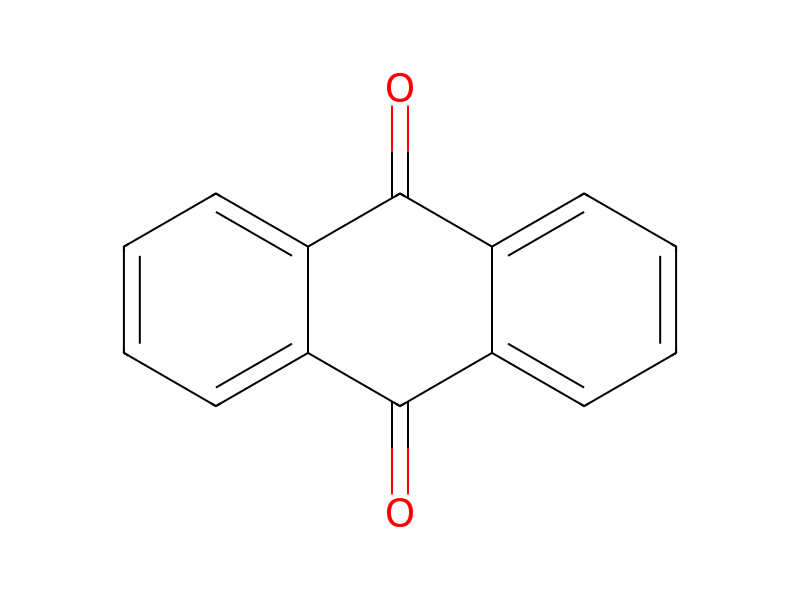
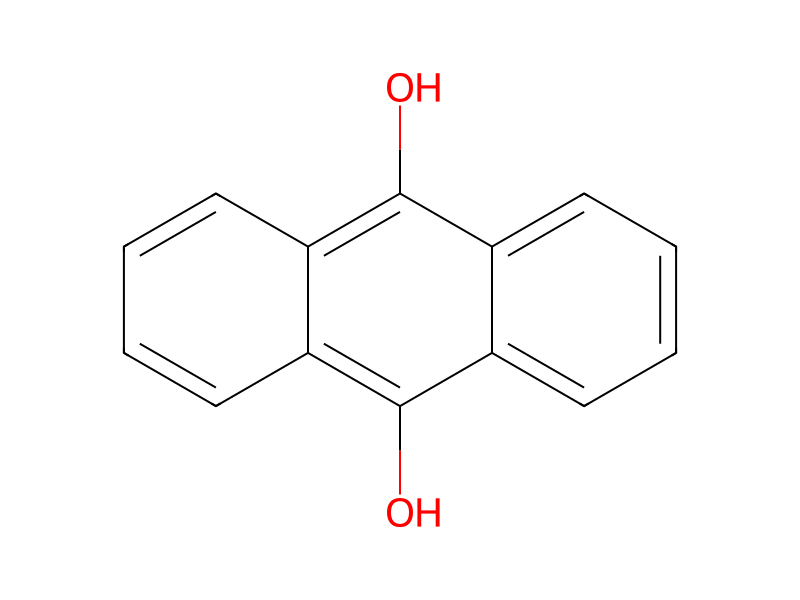
In all previously known anthraquinone processes, the oxidation reaction and the extraction take place in separate steps, and thus also in separate vessels. The oxidation reaction, in which anthrahydroquinone derivatives react with oxygen, forming hydrogen peroxide and anthraquinone derivatives, takes place in the oxidation reactor. From this reactor the organic working solution, which contains dissolved hydrogen peroxide, is directed to another vessel, wherein the hydrogen peroxide is removed by extracting it with water. In the oxidation reactor there are two phases, an organic working solution and an oxygen-containing gas phase. In the extraction vessel there are two liquid phases, an organic solution and an aqueous phase. Two phenomena essential for the process occur in the oxidation reactor, namely the dissolving of oxygen in the organic working solution and the oxidation reaction in the working solution. The key phenomenon occurring in the extraction vessel is the passing of the hydrogen peroxide from the working solution to the aqueous phase.
후처리
- extractionthe extraction
- customThe oxidation reaction
출처 및 근거
- ORD 기록
- ord-9ee6fa21344a4a619edbde84bc508fb3
- 출처 데이터셋
- uspto-grants-1998_03
- 특허 번호
- US05725837
연결된 노트
불러오는 중…