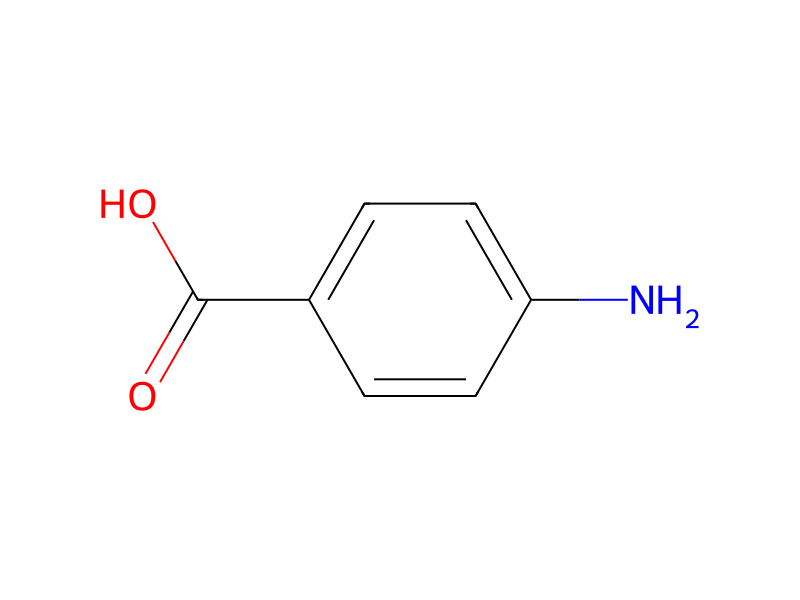
[N:1]([C:4]1[CH:14]=[CH:13][CH:12]=[C:6]2[C:7]([O:9][C:10](=[O:11])[C:5]=12)=O)=[N+:2]=[N-:3].[NH2:15][C:16]1[CH:24]=[CH:23][C:19]([C:20]([OH:22])=[O:21])=[CH:18][CH:17]=1.C(OC(=O)C)(=O)C>O1CCOCC1>[N:1]([C:4]1[CH:14]=[CH:13][CH:12]=[C:6]2[C:7]([N:15]([C:16]3[CH:24]=[CH:23][C:19]([C:20]([OH:22])=[O:21])=[CH:18][CH:17]=3)[C:10](=[O:11])[C:5]=12)=[O:9])=[N+:2]=[N-:3]A solution of 3.78 g (0.02 mol) of 3-azidophthalic anhydride in 50 ml of dioxan is mixed with a solution of 2.74 g (0.02 mol) of p-aminobenzoic acid in 50 ml of dioxan and the mixture is left to stand for 3 hours. 5 ml of acetic anhydride are then added and the reaction mixture is heated for 1 hour at 85° C. After concentrating to dryness, the residue is mixed with water and the resulting crystals are filtered off with suction. 4.8 g (78% of theory) of 4-(3-azidophthalimidyl)-benzoic acid are obtained; melting point 300° C. (with decomposition).
불러오는 중…