Methylparaben → Methyl 4-(cyclopentyloxy)benzoate
HRID 1415683
반응식

[CH3:1][O:2][C:3]([C:5]1[CH:6]=[CH:7][C:8]([OH:11])=[CH:9][CH:10]=1)=[O:4].[CH:12]1(Br)[CH2:16][CH2:15][CH2:14][CH2:13]1.[H-].[Na+]>>[CH:12]1([O:11][C:8]2[CH:9]=[CH:10][C:5]([C:3]([O:2][CH3:1])=[O:4])=[CH:6][CH:7]=2)[CH2:16][CH2:15][CH2:14][CH2:13]1참가 물질
4
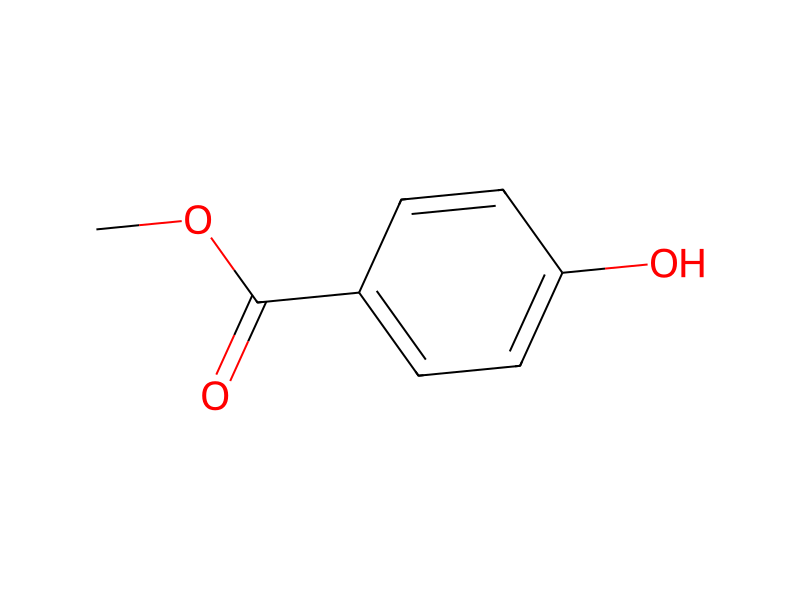



반응 조건
- 온도
- 0 °C
실험 절차
To 50 g of methyl p-hydroxybenzoate were added 82 g of cyclopentyl bromide. The mixture was cooled to 0° C. and 24 g of sodium hydride (in a 50% mineral oil suspension) were added in small portions. Ice bath cooling was continued until the resulting effervescence terminated. The reaction mixture then was heated to 75° C. for four hours, cooled, and 25 mL of ethanol was added dropwise. The resulting mixture was evaporated to dryness, and the residue was dissolved in a mixture of water and ether. The ether layer was separated and washed with cold 5% aqueous sodium hydroxide and then with water. The ether layer then was dried over magnesium sulfate and evaporated to dryness to give about 72 g of crude methyl p-cyclopentyloxybenzoate. The crude ester was added to 400 mL of ethylene glycol containing 100 g of potassium hydroxide. The mixture was refluxed for several hours and then was transferred to a 4 L beaker. A mixture of ice and water was added. The resulting mixture then was placed in a separatory funnel and was washed with ether. The aqueous layer was acidified by addition of concentrated hydrochloric acid. The resulting precipitate was collected by filtration, washed with water, and recrystallized from methanol to obtain 44.1 g of p-cyclopentyloxybenzoic acid. A solution of 8.7 g (0.024 mole) of p-cyclopentyloxybenzoic acid in 250 mL of anhydrous ether was prepared. The solution was cooled to 5° C.-10° C. and 8.85 g of thionyl chloride followed by two drops of pyridine were added. The mixture was allowed to warm to room temperature and was stirred overnight. The mixture then was evaporated to dryness, and the oily residue of p-cyclopentyloxybenzoyl chloride was dissolved in 150 mL of 1,2-dichloroethane for use as described in Example 10 below.