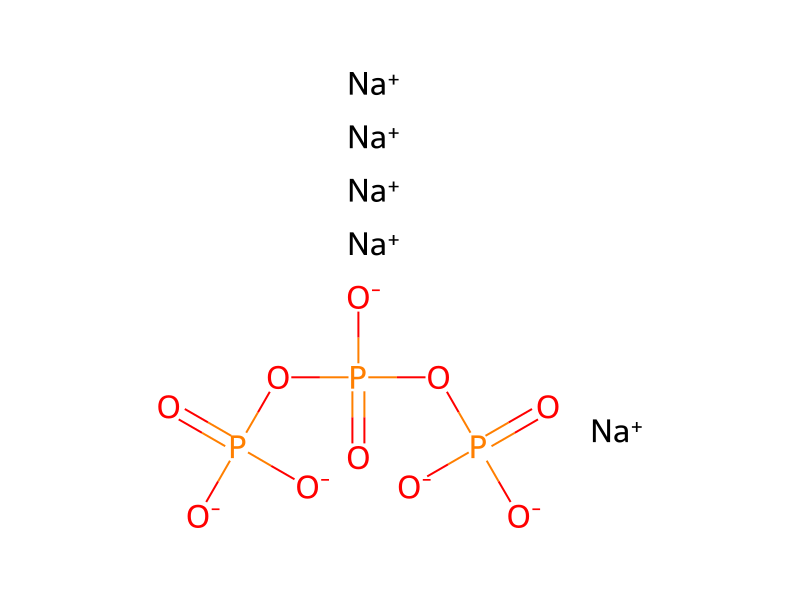
Sodium Tripolyphosphate → Pentasodium triphosphate hexahydrate
반응식

[O-:1][P:2]([O:5][P:6]([O:9][P:10]([O-:13])([O-:12])=[O:11])([O-:8])=[O:7])([O-:4])=[O:3].[Na+:14].[Na+].[Na+].[Na+].[Na+]>O>[OH2:1].[OH2:1].[OH2:1].[OH2:1].[OH2:1].[OH2:1].[O-:13][P:10]([O:9][P:6]([O:5][P:2]([O-:4])([O-:3])=[O:1])([O-:8])=[O:7])([O-:12])=[O:11].[Na+:14].[Na+:14].[Na+:14].[Na+:14].[Na+:14]참가 물질
3


실험 절차
While the drum was rotating at about 6 rpm, the water was sprayed onto the solids at the rate of about 50 ml/min. Spraying was stopped after each 50 ml portion of water was added and the bed of semi-moisturized sodium tripolyphosphate was thoroughly mixed with a large spatula. When the desired amount of water had been added, water addition was stopped and the product was dried in the rotary drum at temperatures of 50°-70° C. by blowing hot air from a heat gun into the rotary. The temperature of the product being dried was measured by a stainless steel thermometer stem placed in the tumbling bed of product. Drying was conducted for about one hour and generally provided a sodium tripolyphosphate hexahydrate product having a free moisture content of less than about 1 weight percent and a total moisture content of between 18 and 22 weight percent.