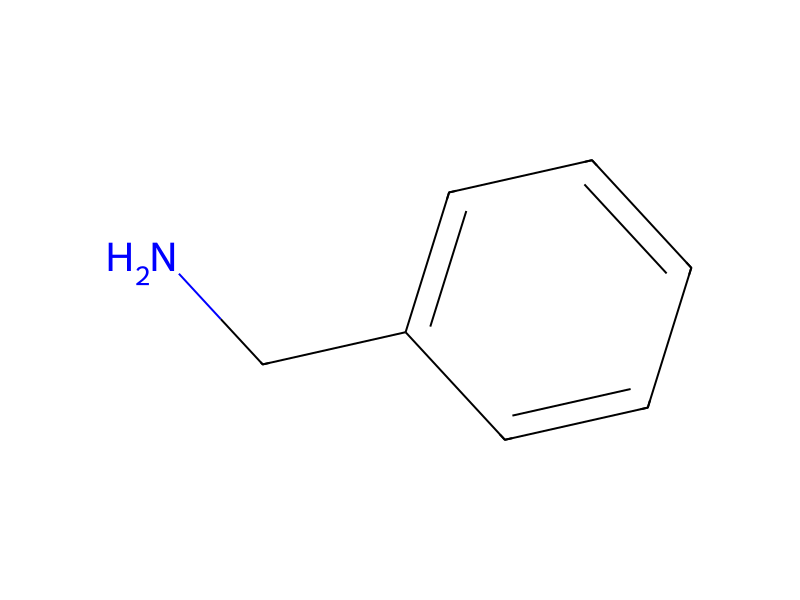
Benzylamine → 2-Benzylamino-4-chloro-5-nitrothiazole
HRID 1461370
반응식

C(=O)([O-])[O-].[K+].[K+].Cl[C:8]1[S:9][C:10]([N+:14]([O-:16])=[O:15])=[C:11]([Cl:13])[N:12]=1.[CH2:17]([NH2:24])[C:18]1[CH:23]=[CH:22][CH:21]=[CH:20][CH:19]=1>C(#N)C>[CH2:17]([NH:24][C:8]1[S:9][C:10]([N+:14]([O-:16])=[O:15])=[C:11]([Cl:13])[N:12]=1)[C:18]1[CH:23]=[CH:22][CH:21]=[CH:20][CH:19]=1참가 물질
5




실험 절차
7.0 g (0.051 mol) of anhydrous potassium carbonate are added to a solution of 12.0 g (0.06 mol) of 2,4-dichloro-5-nitrothiazole in 50 ml of acetonitrile. A mixture of 5.35 g (0.05 mol) of benzylamine and 50 ml of acetonitrile is then added dropwise at 15° C. to 20° C. in the course of about half an hour and the mixture is subsequently stirred at room temperature for a further hour. It is then heated at the reflux temperature for 15 minutes, cooled to room temperature and stirred into about 500 ml of ice-water and the precipitate is filtered off, washed with water and dried. To remove excess 2,4-dichloro-5-nitrothiazole, the product is stirred into 80 ml of petroleum ether at room temperature, filtered off, washed with petroleum ether and dried. 12.9 g (95.7% of theory) of 2-benzylamino-4-chloro-5-nitrothiazole of melting point 195° C. to 196° C. (decomposition) are obtained.