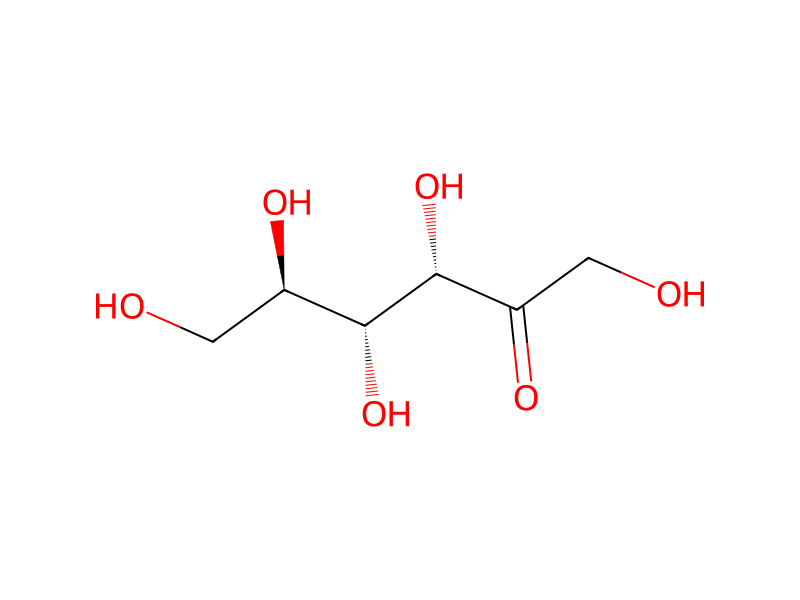
To 200 ml of acetone were added 10.0 g of D-fructose, 99 mg of cuprous chloride and 1 ml of a 2 mole/l of hydrogen chloride in dioxane, and the mixture was stirred for 5 hours under reflux in a warm-water bath at 60° C. The refluxing solvent was continuously dried with 20 g of molecular sieves 3A which was placed between the reaction vessel and the cooling tube. After the conclusion of the reaction, a small amount of aqueous sodium hydrogencarbonate was added to the reaction solution, and the acetone was distilled off under reduced pressure. The residue was dissolved in benzene, and the solution was washed with aqueous sodium hydrogencarbonate and water, and dried over anhydrous magnesium sulfate. When the benzene was distilled off under reduced pressure, there was obtained 10.0 g (68.2%) of 2,3:4,5-di-O-isopropylidene-β-D-fructopyranose. The compound, when recrystallized from n-hexane, showed a melting point of 96° to 98° C.